Guy Chookoorian, Davit Amoo/The Golden Bracelet
Audio Recording

-

MGK Collection

Name/Title

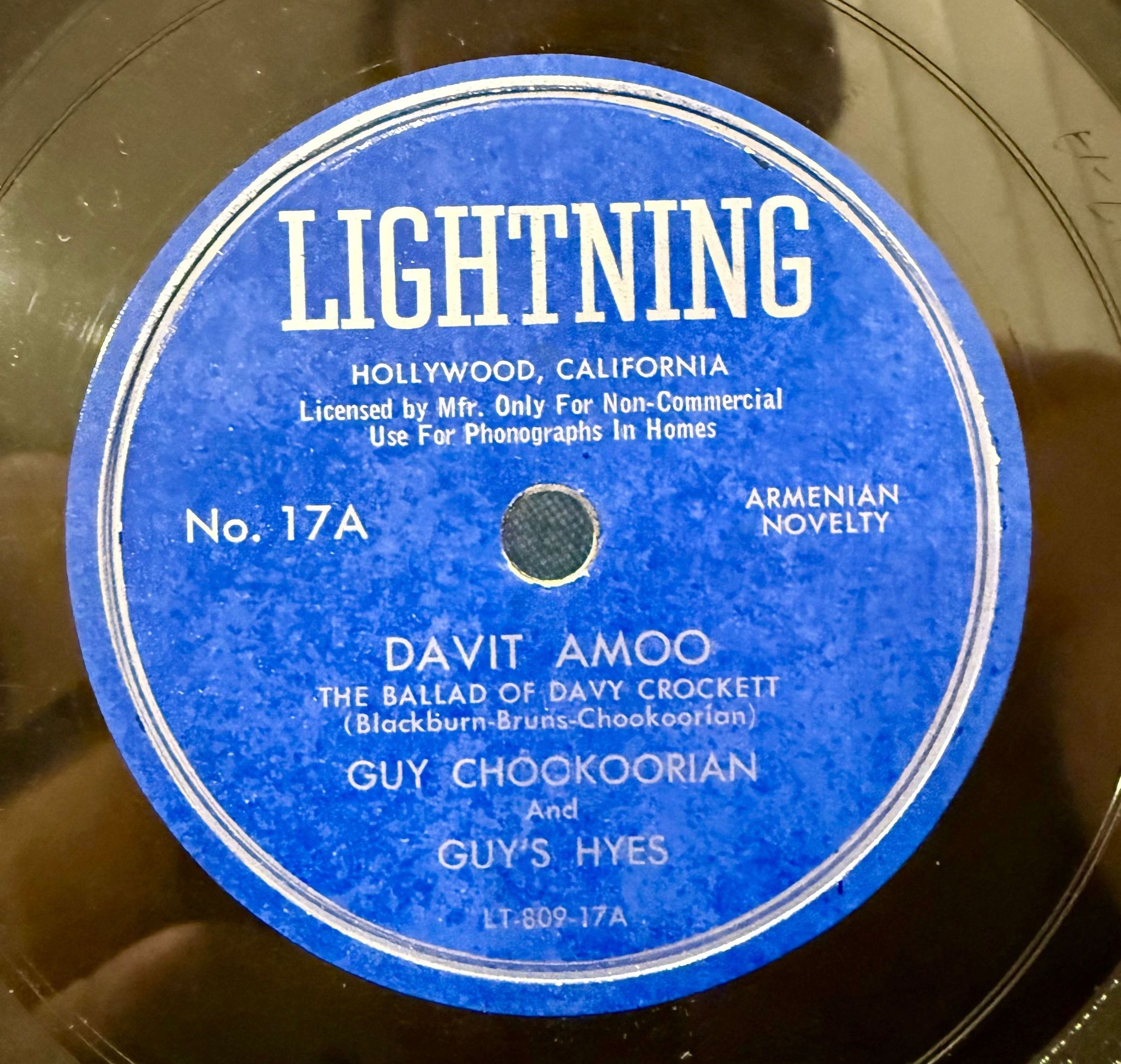
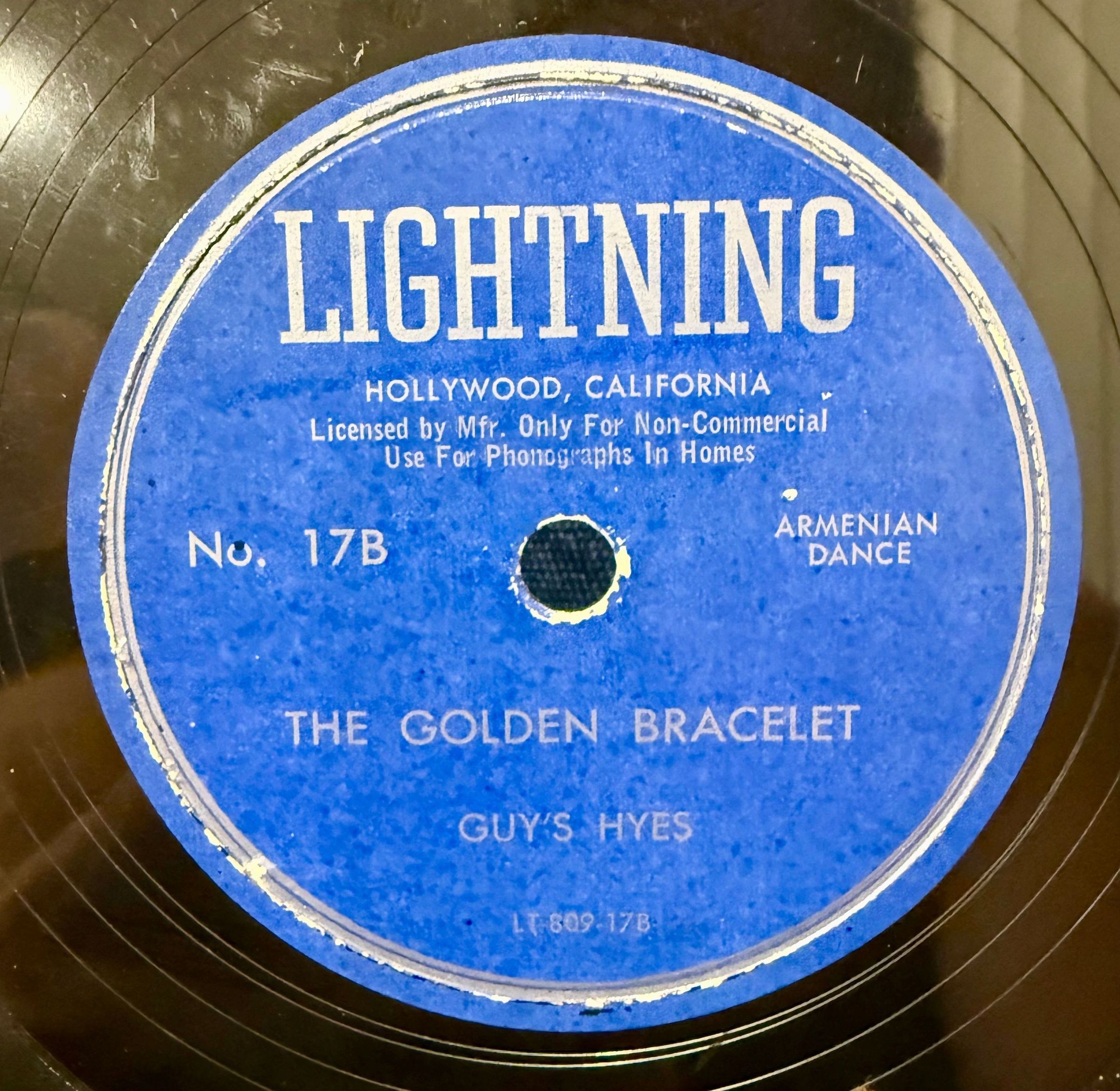
Guy Chookoorian, Davit Amoo/The Golden Bracelet

Description

Gaizag “Guy” Chookoorian was born in November 15, 1923, Kenosha, WI and was a celebrated Armenian-American musician, singer, comedian, and actor. A World War II veteran, he served in the 331st Bomb Squadron of the 94th Bomb Group, flying 32 missions over Europe. The son of Armenian Genocide survivors from Yerzinga (Erzincan), he co-founded the Armenian-American Theater Group in Fresno, CA, in the mid-1940s. Throughout his Hollywood career, he actively promoted Armenian culture, helping preserve the folk songs of his father’s heritage. Guy's contributions to Armenian-American culture and his community spanned many decades. He passed away in January 31, 2021 in Granada Hills, CA. Chookoorian’s songs are infused with humor and cultural references, often featuring Armenian translations of lyrics and playful inside jokes. In 1955, Guy Chookoorian chose to record a final Yerzinga song—the well-known dance Ghosh Bilezik—which, having a Turkish name, he simply titled The Golden Bracelet. It was used as the flipside of one of his best parodies, Davit Amoo (“Uncle David,” a parody of The Ballad of Davy Crockett). In this song, Davit Amoo is a humble Armenian peasant from Kharpert who “killed a bear when he was only three,” came from the yergir (old country) in 1920, bought a vineyard in Fresno, and tried his hand at harvesting raisins—only to lose money when the price of raisins dropped. Our hero then moves to Los Angeles, gets married, starts a rubbish business, makes a fortune, builds a madzoon factory, becomes a millionaire, and finally looks for a vineyard in Fresno to retire on. Davit Amoo is a beautiful example of the Armenian-American entertainer and experience. Chookoorian takes the iconic American frontier ballad and repurposes it into a song about “Uncle David”—our heroic Davit Amoo. The result is a piece that’s both simple and complex: a light-hearted comedic song filled with jokes, yet also an insightful portrait of the Armenian migration to California. His humor is underscored by historical markers, and the musicianship is exceptional, with subtle touches woven throughout the performance. This version of the song contains original lyrics by Chookoorian and features one of the many variations of his orchestra at the time—Guy’s Hyes—alongside others such as the Moosh Mountaineers and the Anoti Four.

Audio Format

78 RPM Record

Recording Type

Music

Category

Vinyl Record

Album Detail

Contributor

Guy Chookoorian and Guy's Hyes

Record Label

Lightning

Release Date

1955

Place Recorded

* Untyped Place Recorded

Hollywood, CA

Language

Armenian

Track Details

Title

Davit Amoo

Date Recorded

1955

Language

Armenian

Transcription

“Uncle David was born in the region of Kharpert,” a province known as the Golden Plains of the Armenian Plateau. At the time of the song, approximately 75% of Armenian-Americans traced their origins to this region. “When he was three years old, in the forest our hero encountered a bear. The bear took one look at David and died from fear.” “He came to this country in the 1920s; in Fresno he bought himself a farm.” By the 1920s, Armenians had won several court cases enabling them to own land. Armenians had been involved in California’s agricultural industry since the 1880s. (Actor Lee Marvin even starred in the TV movie Six Wagons to the Sea, based on the experience of the Seropian Brothers in the 1890s.) The song continues, describing two harvests. The first is a disaster: instead of grapes, only grass grows. The second harvest brings success—grapes by the ton—but alas, the price of raisins drops. (In the first harvest, Guy may be referencing the many droughts that plagued California farmers. The second harvest, though abundant, ends in ruin, echoing the economic hardship caused by collapsing raisin prices that devastated many growers.) Our farmer-hero Davit Amoo then comes to a realization: “David said, ‘Why should one work day and night like a donkey? One needs to leave this town.’” And with that, Davit leaves Fresno for Los Angeles. No, Uncle David didn’t move to LA to challenge Lee Marvin as an actor—instead, he found love and married. But as luck would have it, his wife bore him twenty children. Twenty children! Oh, poor Uncle David! Guy goes on to tell us that Uncle David entered the rubbish business—an industry once dominated by Armenians in Los Angeles. The move proved a success; our hero even opened a madzoon factory. The closing line is bittersweet. Despite all his successes, Uncle Davit: “payts noren aykin gu pundrrer.” “But still, he’s looking for his farm.”

Translation

Uncle David

Title

The Golden Bracelet

Date Recorded

1955

Language

Armenian

Translation

Ghosh Bilezik (original Turkish title)

Relationships

Related Person or Organization

Person or Organization

Guy Chookoorian Collection

Created By

garenkazanc@hotmail.com

Create Date

November 10, 2025

Updated By

garenkazanc@hotmail.com

Update Date

November 10, 2025