Gurun Shawl
Name/Title
Gurun ShawlDescription
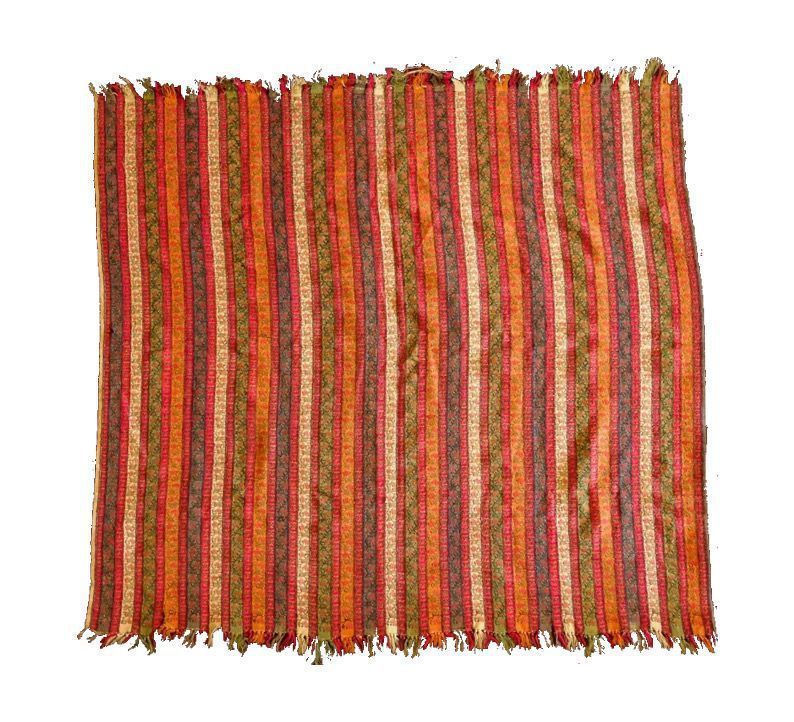
The Gürün Armenian shawl, produced in the village of Gürün near Sivas (Sepastia), stands as one of Anatolia’s most renowned woven textiles. Made from the mohair of the Angora goat, these shawls were admired for their fine quality, intricate patterns, and remarkable craftsmanship. Before 1915—when the Armenian deportations and massacres brought this entire trading network to an end—Gürün was the unrivaled center of shawl weaving in the Ottoman Empire. The craft was primarily sustained by the Armenian population of Gürün, who wove these celebrated shawls on jacquard looms. Traditionally, shawls served as versatile garments for both men and women. A Gürün shawl was a pure woolen cloth, often decorated with vertical stripes and floral motifs. Men used them as belts or sashes, both for warmth and practicality, while women draped them over their shoulders or used them to wrap infants. Among the Armenian families who shaped this industry, the Chokarian and Khiridian families were particularly prominent. Their enterprise functioned as a cottage industry: the merchant supplied wool to local weavers, who worked from their homes and were paid per piece. Wool was partly procured from Kurdish shepherds in Syria and, later, imported from Manchester through Aleppo. The yarns were dyed in copper cauldrons at the Khiridian home in Gürün, using German dyes and recipes carefully recorded in notebooks. The weavers, often known by nicknames such as “the Sage Uncle,” produced shawls of exceptional artistry, especially those of the Ajemy type. The Minassian firm, founded by the innovative entrepreneur Sarkis Minassian, was the chief rival of the Chokarian/Khiridian enterprise. Minassian introduced the region’s first mechanized loom from Manchester and a Jacquard machine from Paris, reflecting the spirit of ingenuity that characterized Gürün’s Armenian artisans. The finished shawls were sold locally and through an extensive commercial network spanning Gürün, Kayseri, Konya, Adana, Aleppo, Beirut, Damascus, and Iskenderun. Kurds were among the main buyers, particularly for use as sashes. Gürün merchants, known for their far-reaching trade, were active across Asia Minor and even advertised their products in Armenian newspapers in Constantinople and Izmir. This Gürün cummerbund shawl, dating from the late 19th century, embodies that lost tradition. Its scrolling floral motifs are delicately rendered, showcasing the refinement and technical mastery that made Gürün shawls the pride of Ottoman textile craftsmanship.Category
Textile