Culinary Pamphlet
Name/Title
Culinary PamphletScope and Content
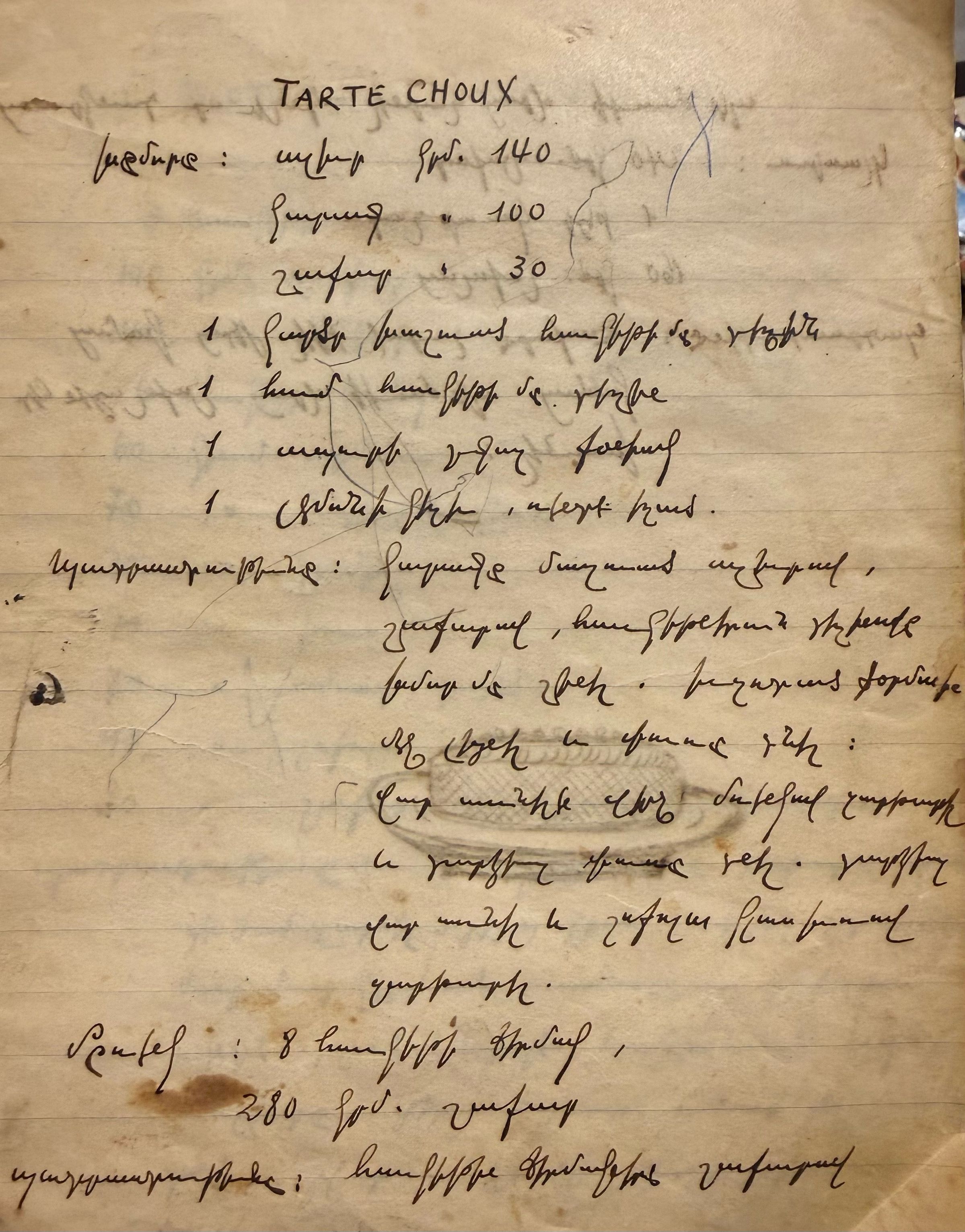
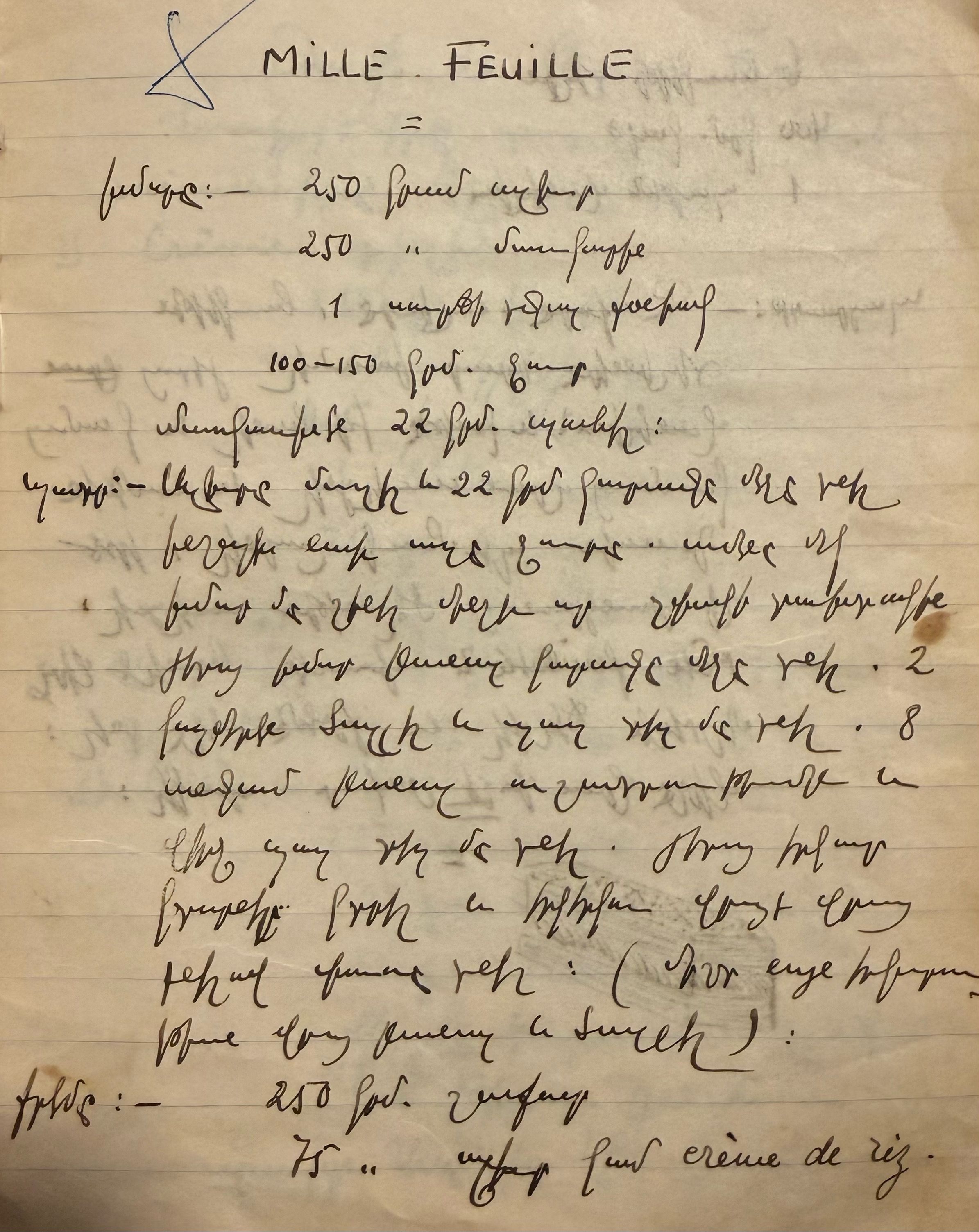
The pamphlet is a slim culinary publication of approximately thirty-two pages, most likely produced around the turn of the twentieth century, circa 1895–1912. It was written by an Ottoman Armenian author and reflects the cosmopolitan dessert culture of the late Ottoman urban milieu, where French and Central European pastry traditions exerted strong influence on domestic cookery. Intended for home use rather than professional kitchens, the work adopts the format of a practical household guide rather than a formal cookbook. The contents focus almost entirely on desserts associated with French pâtisserie and related European traditions. Recipes include mille-feuille, tarte choux, tarte à la tutti frutti, galette à la cannelle, gelée aux oranges, tarte à la royale, gâteau composed of sliced apples, tarte de ménage, brioche à la parisienne, tarte à la florentine, and tarte à la Sacher, alongside festive confections such as stuffed Easter eggs. The presence of Sacher-inspired pastries and tutti-frutti preparations situates the pamphlet firmly within the late nineteenth- and early twentieth-century spread of fashionable Viennese and French desserts beyond their places of origin. Several technical and linguistic features support this dating. All measurements are given in grams, indicating the adoption of the metric system in domestic culinary writing outside France, a practice that became widespread in the late nineteenth century. The text uses the term gélatine rather than earlier substitutes such as isinglass, reflecting modernized dessert techniques common after the 1870s. Culinary terminology such as bain-marie is employed without explanation, suggesting a readership already familiar with French cooking vocabulary. The inclusion of fondant icing, referred to in a phonetic spelling approximating fondant glaçure, points to contemporary cake-finishing methods popular in fin-de-siècle pâtisserie. The language of the pamphlet further reveals its cultural context. French culinary terms are frequently rendered in phonetic or localized spellings, such as koniak for cognac and variants of fondant glaçure, indicating that the author was borrowing prestige terminology from spoken French rather than reproducing standardized professional usage. This pattern is characteristic of late Ottoman Armenian print culture, in which French functioned as a marker of refinement and modernity but was adapted for a multilingual readership. Taken as a whole, the pamphlet represents a concise yet telling artifact of late Ottoman culinary life, illustrating how European dessert fashions were absorbed, adapted, and domesticated within Armenian households in the empire’s final decades. It offers valuable insight into everyday cooking practices, linguistic hybridity, and the circulation of gastronomic trends in the eastern Mediterranean on the eve of the First World War.Category
Pamphlet