Komitas/Shah-Mouradian, Antouni/Bamb Vorotan
Audio Recording

-

MGK Collection

Name/Title

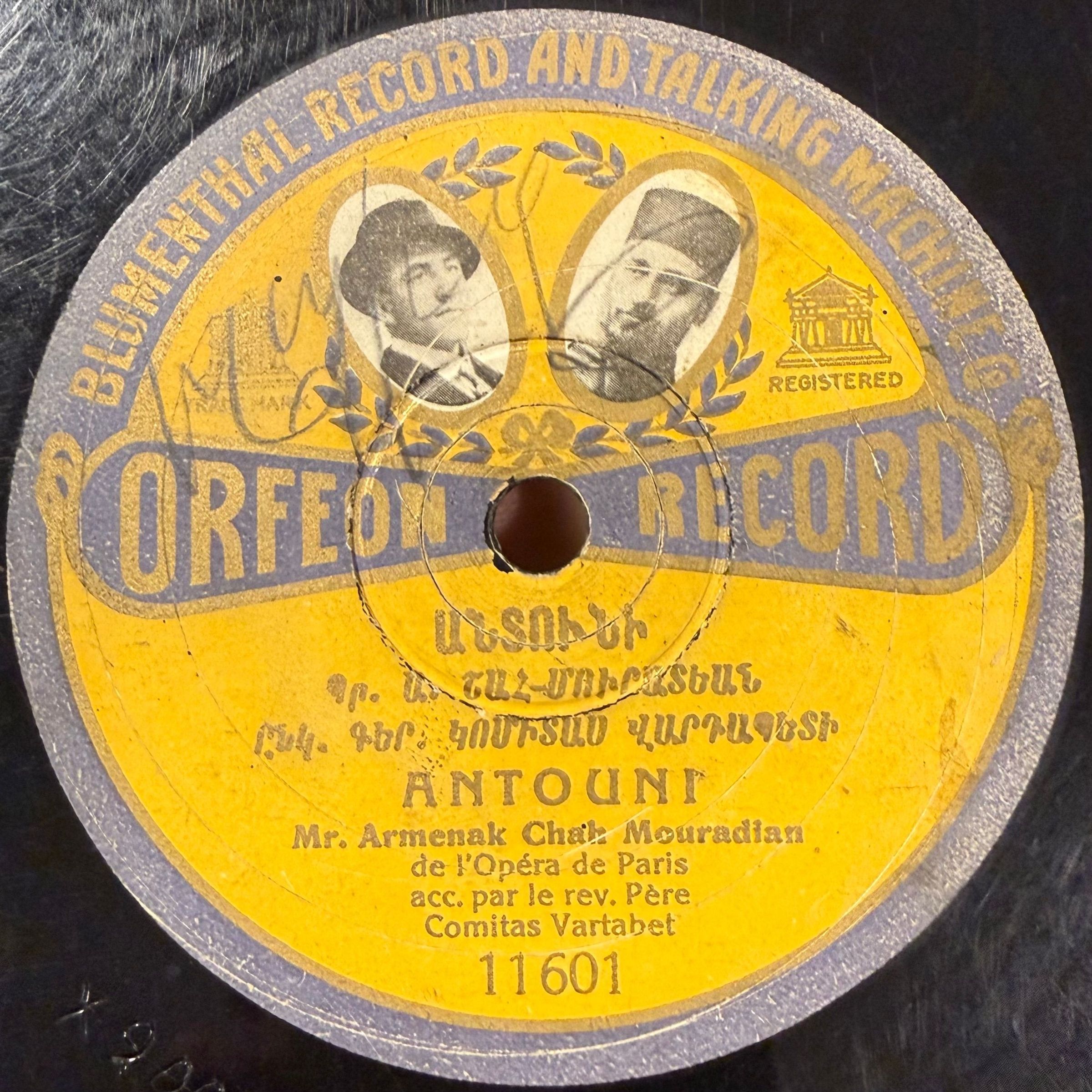
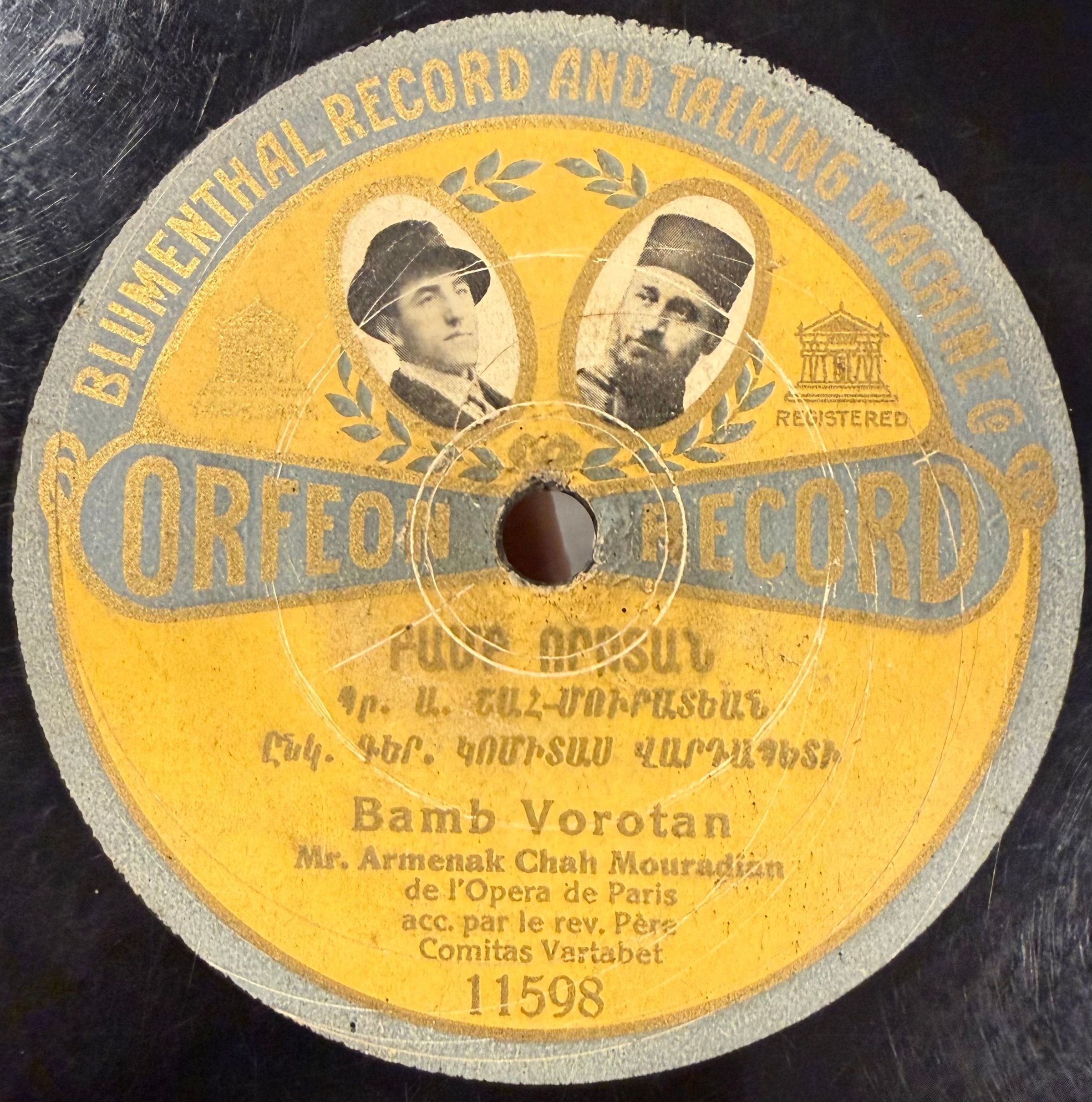
Komitas/Shah-Mouradian, Antouni/Bamb Vorotan
Description

In early 1914, Komitas Vardapet collaborated with Orfeon Records, the first record label established in the Ottoman Empire, to produce a series of significant recordings in Constantinople in the home of Panos Terlemezian on Rue de Pangalti. These sessions featured Armenag Shah-Mouradian, a Paris-trained Armenian tenor and one of Komitas's most accomplished students. The collaboration resulted in 22 recordings, evenly divided between Armenian folk and liturgical songs and European classical pieces. Komitas provided piano or organ accompaniment on all but two tracks. The Armenian selections included patriotic songs and religious hymns, many arranged by Komitas or his mentor, Magar Yegmalian. These recordings were released on a special series of 10.5-inch discs, with labels in French, indicating their international appeal. These recordings are among the earliest audio documents of Komitas's work, capturing his efforts to preserve Armenian musical heritage. They gained popularity not only in Constantinople but also among Armenian diaspora communities, particularly in the United States.

Audio Format

78 RPM Record

Recording Type

Music

Category

Vinyl Record

Album Detail

Record Label

Orfeon

Release Date

1914

Place Recorded

* Untyped Place Recorded

Constantinople

Track Details

Title

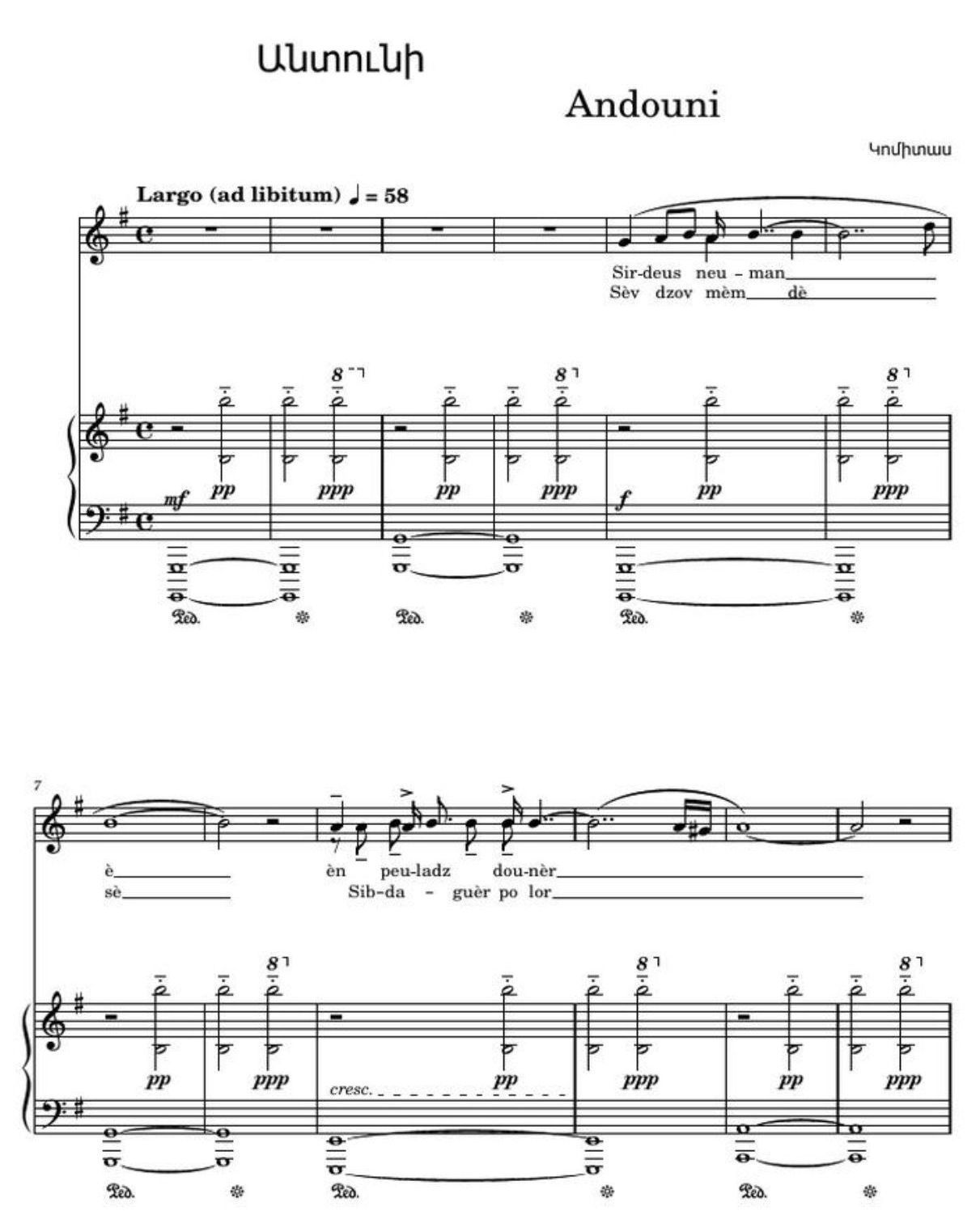
Antouni

Transcription

Սիրտս նըման է էն փլած տըներ, Կոտրեր գերաններ, խախտեր է սըներ, Բուն պիտի դընեն մէջ վայրի հաւքեր, Երթամ ձիկ թալեմ էն ելման գետեր, Ըլնիմ ձըկներու ձագերաց ընկեր: Ա՜յ, տօ լա՜ճ տընաւեր: Սեւ ծով մ՛եմ տետե, սպիտակն էր բոլոր, Ալին կը զարկէր, չէր խառնի յիրոր, Էն ո՞րն է տեսե մէկ ծովն երկթաւոր, Անտունի սիրտն է պղտոր ու մոլոր, Ա՜խ, իսկի մի՛ լնիք սըրտիկ սեւաւոր: Ա՜յ, տօ լա՜ճ տընաւեր:

Track Notes

Rooted in Armenian folk tradition, the song evokes displacement, longing, and the pain of losing one’s home. Although it predates the Armenian Genocide and was not originally composed as a lament for 1915, its themes took on a profound new meaning after the destruction of Armenian communities and the dispersal of their people. Through its mournful melody and imagery of homelessness, Antouni became an enduring expression of collective loss, embodying the grief of a people uprooted from their ancestral lands.

Title

Bamb Vorotan

Transcription

Բամբ որոտան բարձուար բամբինք Այրարատյան դաշտն ի վայր Արի սրանց արյունք եռանդ, առատանան և հրազայր Հրավեր հայրենյաց հռչակի ընդհանուր, Հոգիք հայկազյան բորբոքին ի հուր Որք երկնավորին պսակին եք կարոտ Որք երկնավորին վառաց երկնահորդ , Հապ օն արև սրանց մանկունք Հայրենավրեժքդ հայկազունք Հապօն ի զեն գունդ առ գունդ Հեռեալ ի պար թունդ ի թունդ Իզեն ի վրեժ օն անդր հառաջ Իզեն ի վրեժ մի ձախ մի աջ, Օն անդր հառաջ Մի ձախ մի աջ Օն անդր յառաջ Հառաջ, հառաջ Հապ օն հառաջ:

Track Notes

The phrase «Բա՜մ. փորոտան» can be translated as “Boom! They roar.” The first word, «Բամ», is an onomatopoeic exclamation akin to “Boom!” in English. The second word, «փորոտան», derives from the rare verb փորոտալ, meaning “to roar” or “to blow mightily,” evoking a deep, powerful sound similar to a lion’s roar. Misinterpretation of the title as «Բամբորոտան» has arisen due to the obscurity of the verb փորոտալ and the association of «բամբ» (a term for “bass” favored by Komitas) with deep, resonant sounds. However, փորոտալ is linked to փոր (“belly” or “abdomen”) and suggests diaphragmatic power, as with skilled singers or brass players. This etymological nuance enhances the song’s imagery of a resonant and mighty roar.

Create Date

October 9, 2026

Update Date

October 9, 2026