Astghashen Stones (Artsakh)
Name/Title
Astghashen Stones (Artsakh)Description
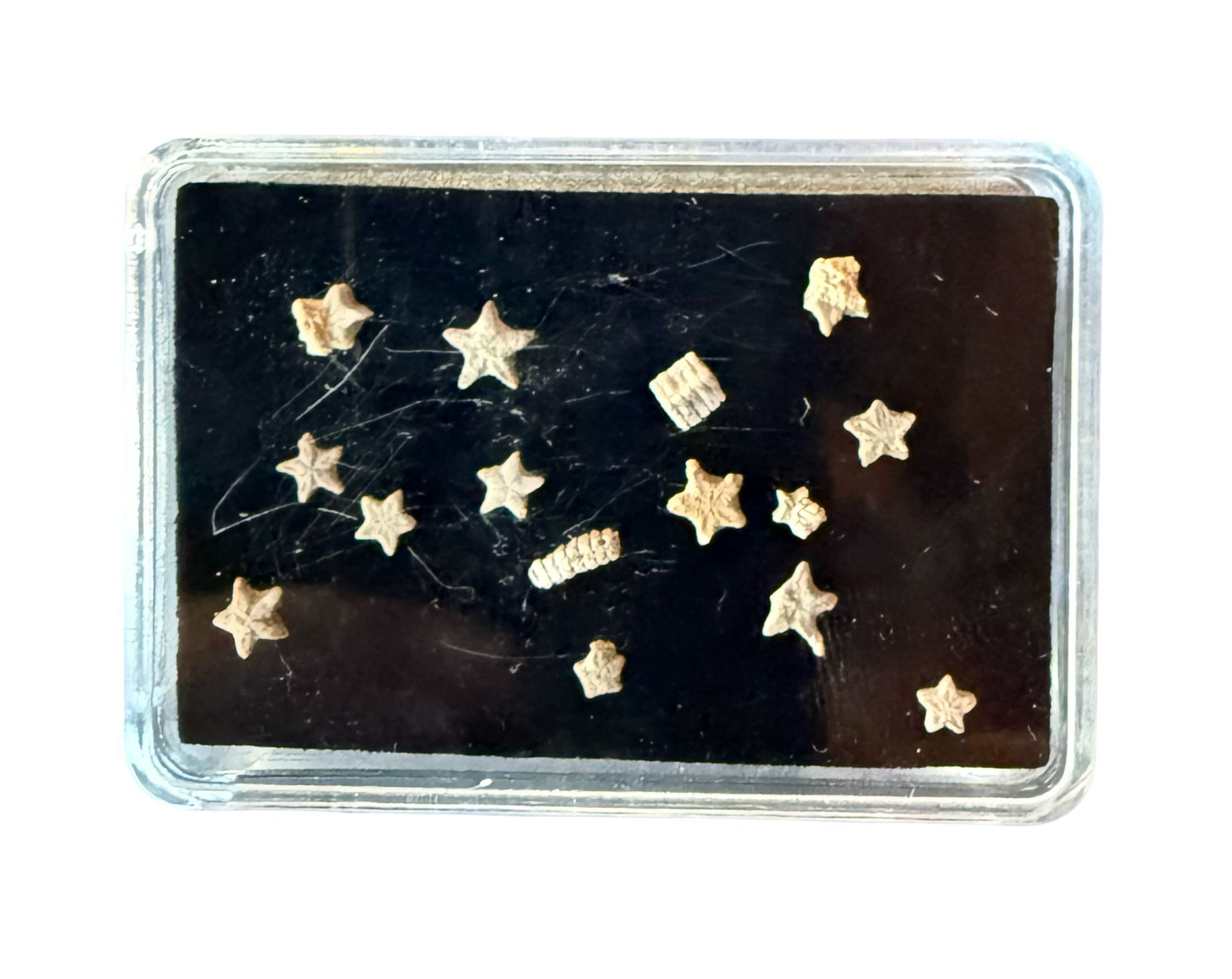
The Astghashen star stones are distinctive star-shaped fossils found in and around the village of Astghashen in the region historically known as Artsakh. Noted for their unusual geometry and widespread presence on the ground surface, these formations have long attracted both scientific interest and local folklore. The village’s name itself derives from the Armenian word astgh (աստղ), meaning “star,” reflecting the prominence of these formations in the surrounding landscape. Scientifically, the “stars” are fossilized remains of marine organisms known as crinoids, specifically of the genus Pentacrinites. Commonly referred to as “sea lilies,” crinoids are not plants but marine animals that thrived during the Jurassic period, approximately 200–150 million years ago. They possessed long, segmented stems composed of stacked, disk-like elements called columnals. These columnals often had naturally occurring star-shaped cross-sections, which, after the organism’s death, accumulated on the seabed and were eventually fossilized over millions of years. The presence of such marine fossils at high elevations is explained by ancient geological processes. The region was once part of the Tethys Ocean, and subsequent tectonic uplift exposed these fossil-bearing sediments on land. In addition to crinoid remains, the area contains a variety of other marine fossils, including ammonites, gastropods, nummulites, and sea urchins, indicating a rich prehistoric marine ecosystem. Physically, the star stones are typically small, stone-like fossils composed of calcite. They most commonly exhibit a five-pointed star geometry and are often found either loose on the surface or embedded within sedimentary rock. Importantly, these formations represent individual segments of crinoid stems rather than complete organisms. Alongside their scientific explanation, the stones hold a place in local tradition. According to folklore, the stars fall from the sky during rainfall, covering the ground like celestial fragments. This belief is reinforced by the natural process whereby rain washes away soil and reveals previously buried fossils, creating the impression that new “stars” have suddenly appeared. Culturally, the star stones have made Astghashen a modest yet notable destination for visitors interested in natural curiosities and geology. They are regarded as both a natural heritage feature and a symbol of regional identity. However, extensive collection by visitors in recent years has reduced the number of easily accessible specimens. The Astghashen star stones thus represent a convergence of natural history and cultural imagination. As fossilized remnants of Jurassic marine life, they offer insight into an ancient oceanic environment; as “fallen stars,” they preserve a sense of wonder embedded in local tradition.Category
Misc.