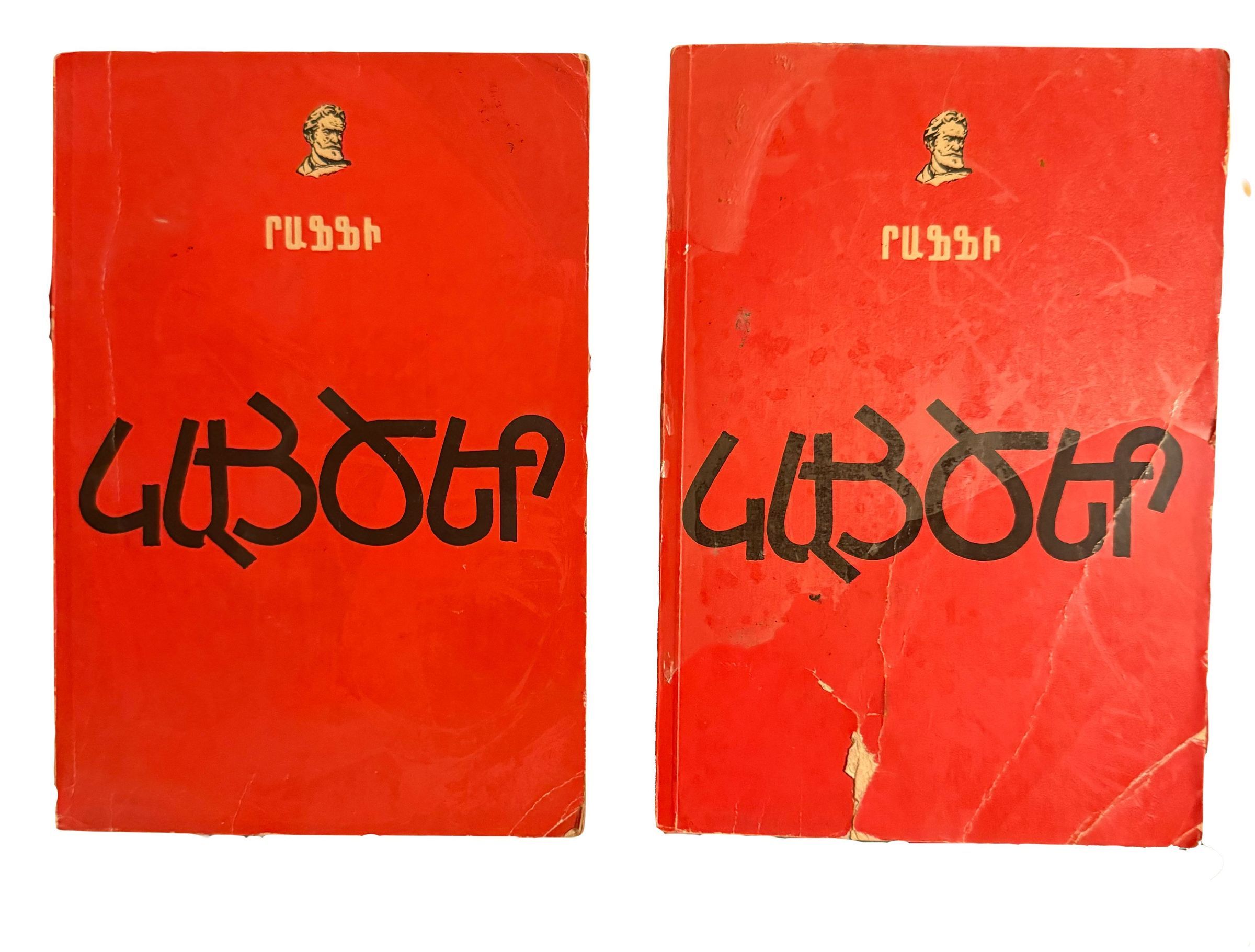
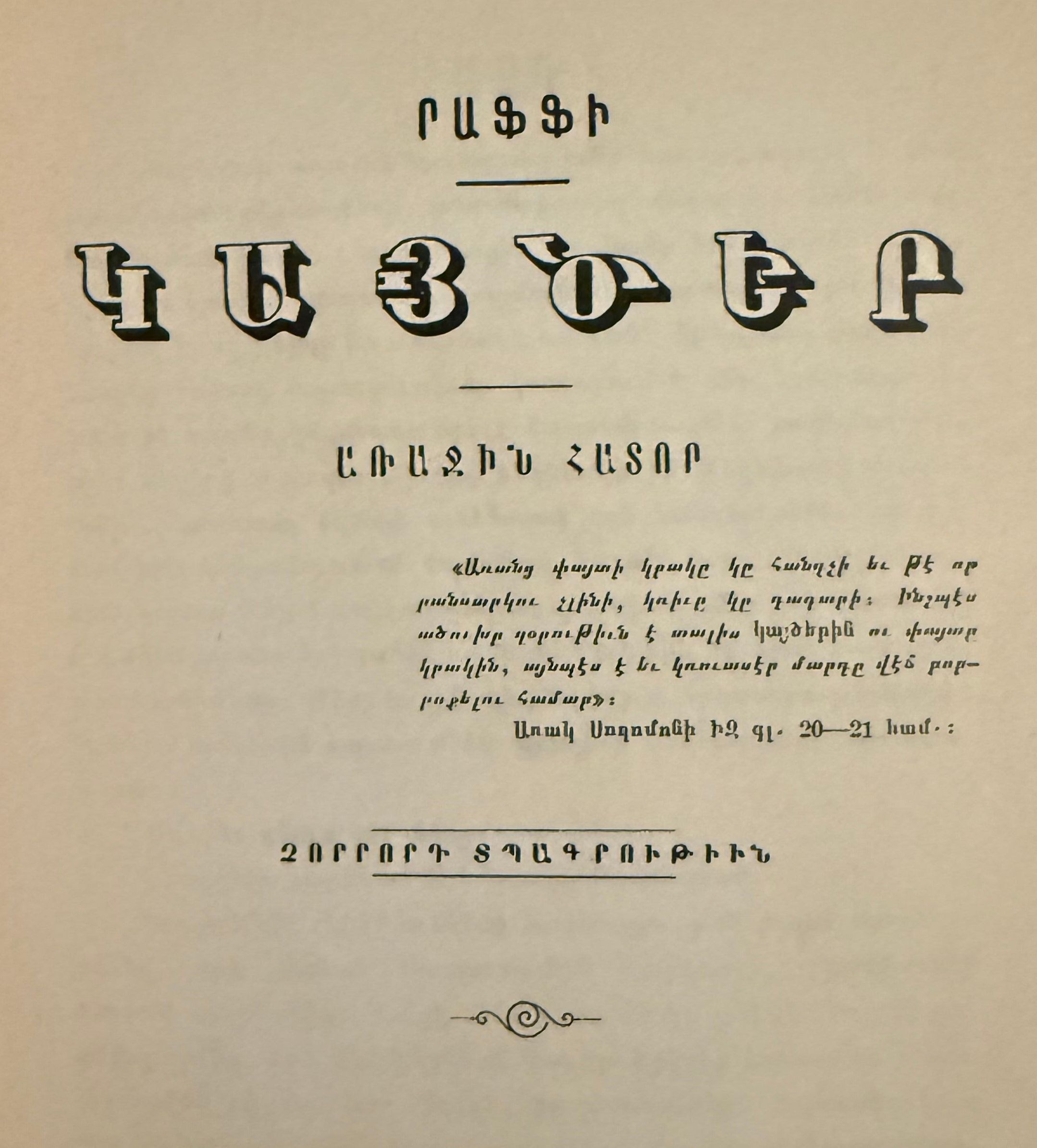
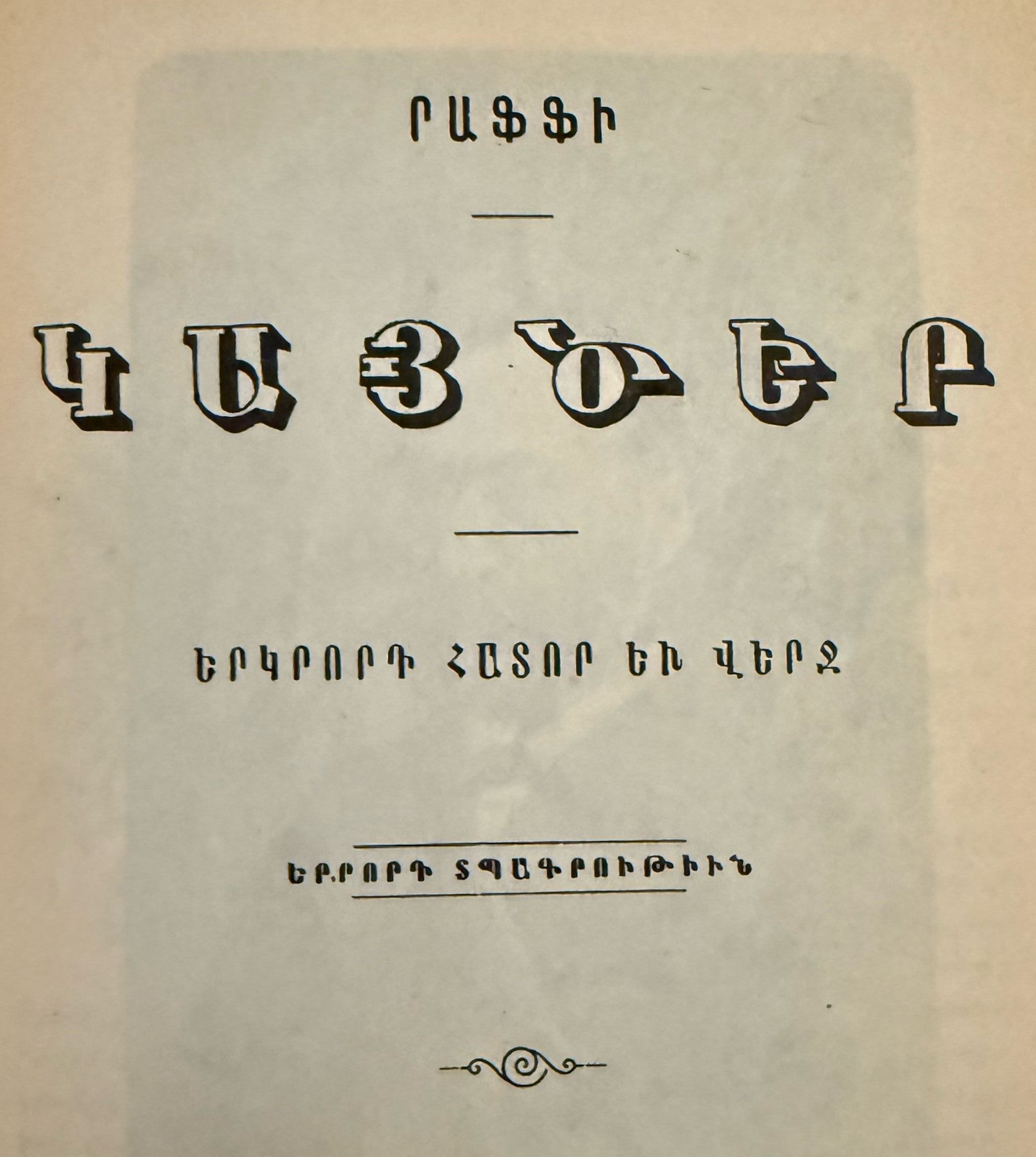
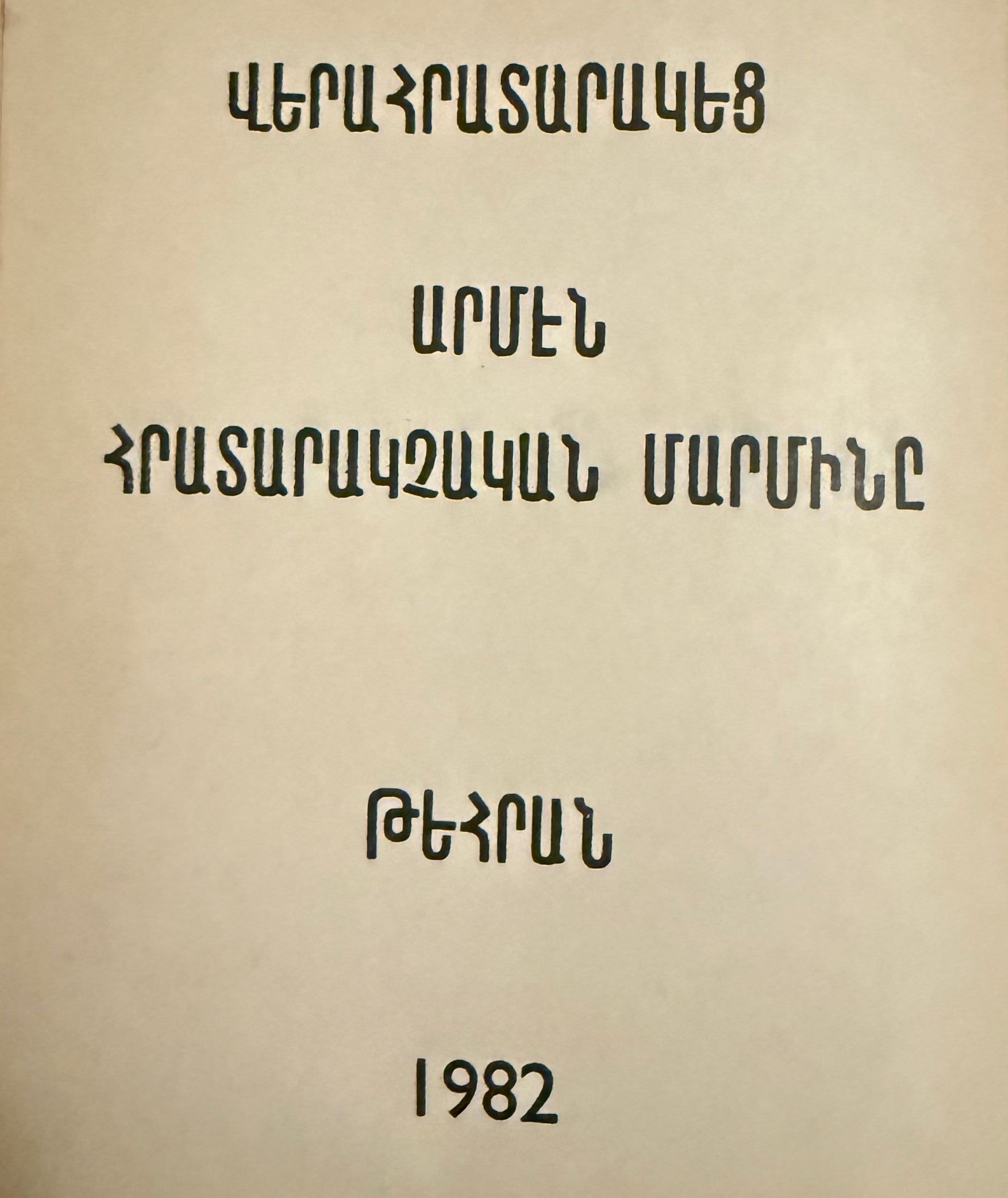
Gaytser: Vol I. II. (Raffi, 1982)
Name/Title
Gaytser: Vol I. II. (Raffi, 1982)Description
Kaytser (Armenian: Կայծեր, often translated as Sparks) is a novel by the Armenian writer Raffi (հեղինակ՝ Րաֆֆի, pen name of Hakob Melik‑Hakobian, 1835–1888) first published in two volumes in the early 1880s. It is Raffi’s longest work, structured as a multi‑branched narrative exceeding seven hundred pages, and is usually regarded as one of his most ambitious literary undertakings. The novel depicts the lives, experiences, and intellectual development of a group of Armenian characters against the backdrop of social and political conditions in the late nineteenth century, particularly in the aftermath of the Russo‑Turkish War of 1877–1878 and the Treaty of Berlin. These events heightened discussion of what became known as the “Armenian Question” and influenced Armenian political and cultural life. The narrative interweaves personal trajectories with broader reflections on national identity, education, and collective struggle. Kaytser blends elements of autobiography, philosophical discourse, and historical observation. The narrator, Farhad, recounts episodes from his youth and later life, including his encounters with friends and mentors, their travels, education, and efforts to respond to the challenges facing their community. The novel uses these episodes to explore the relationship between personal formation and national consciousness, illustrating the ways in which ideas of self‑improvement, cultural heritage, and solidarity intersect with the political realities of the time. Raffi’s treatment of these themes reflected his broader literary and intellectual project: to articulate the conditions of Armenian life under duress and to advocate, through narrative, for cultural and political engagement. While the work incorporates narrative and character development, its scope and emphasis on ideological issues have led some commentators to describe it as extending beyond conventional novelistic form. The publication of Kaytser initially generated controversy within Armenian literary circles. Raffi faced criticism from conservative commentators, and his association with reformist and nationalist ideas contributed to tensions with both Armenian and imperial authorities; at one point his manuscripts were seized and he was subjected to house arrest. Despite this, the work gained recognition for the depth of its engagement with pressing questions of identity, education, and national self‑determination. The novel has been translated in part into English, including selections rendered by Donald Abcarian, and continues to be read and studied as a significant expression of nineteenth‑century Armenian intellectual and literary currents.Category
Books