Grots u Brots (Karekin Srvandztiants, 1910)
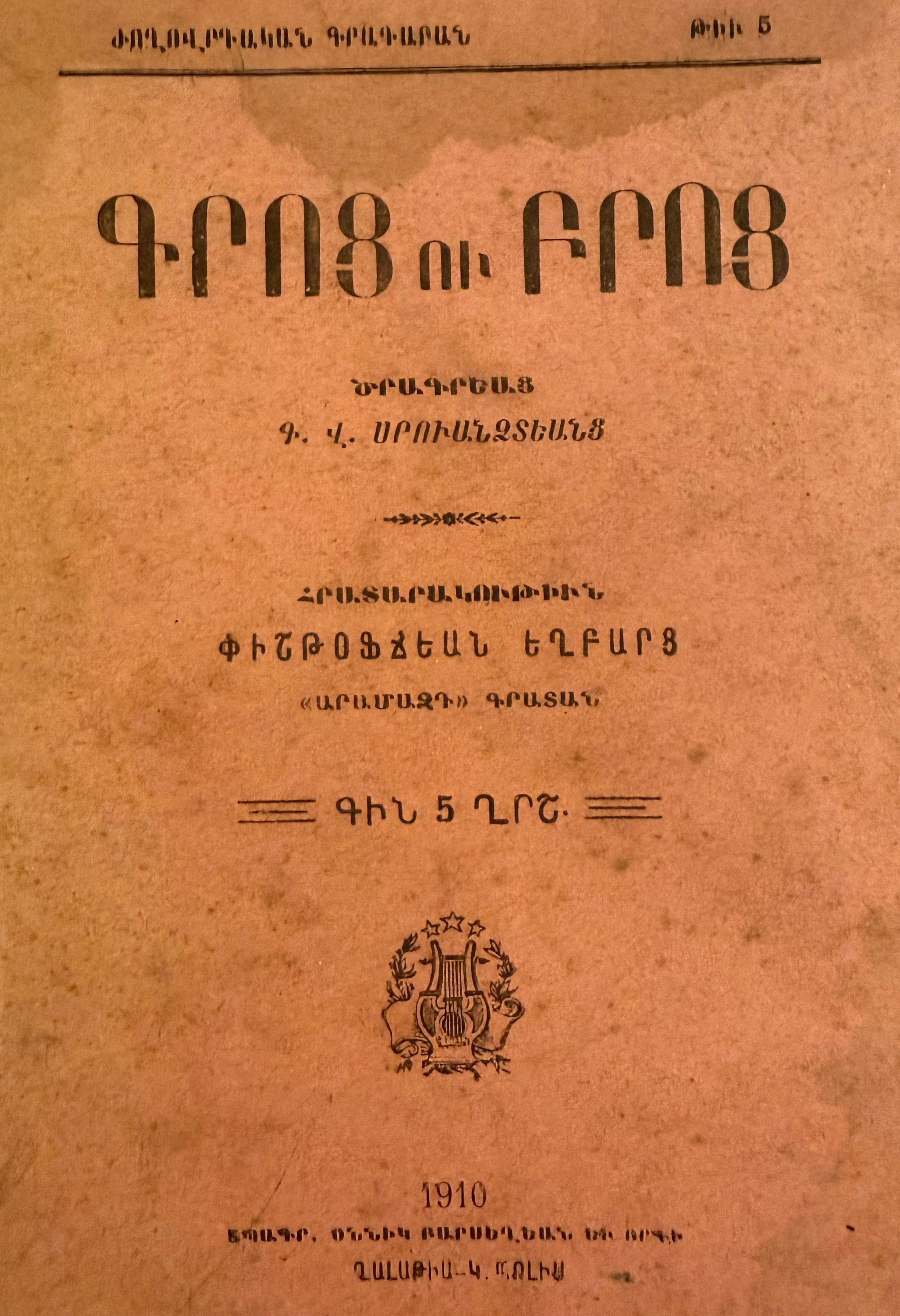
Name/Title
Grots u Brots (Karekin Srvandztiants, 1910)Secondary Title
Գրոց ու բրոցDescription
Grots u Brots, translated literally as Written and Unwritten or Books and Pokes, is a seminal ethnographic work by the Armenian clergyman, scholar, and public figure Bishop Garegin Srvandztyants. Although the first volume was originally published in 1874 in Constantinople, the 1910 edition stands as a significant posthumous publication that solidified its place in the Armenian literary canon during the cultural revival of the early 20th century. The work is most famously recognized for containing the first ever written transcription of the Armenian national epic, Sasna Tsrer (The Daredevils of Sassoun), specifically the cycle of David of Sassoun. Before Srvandztyants undertook the task of documenting these tales, the epic existed solely within an ancient oral tradition, passed down through generations of village storytellers in the highland regions of Western Armenia. The title itself reflects Srvandztyants' primary mission: to bridge the gap between the formal, "written" literature of the elite and the vibrant, "unwritten" folklore of the common peasantry. By traveling extensively through the provinces of Mush and Van, Srvandztyants lived among villagers and transcribed their dialects, prayers, riddles, and fables exactly as they were spoken. This methodology was revolutionary for its time, as it prioritized the preservation of regional dialects and the authentic voice of the rural population over the stylized classical or modern literary norms of the era. The 1910 edition serves as a comprehensive record of these efforts, preserving a linguistic and cultural landscape that would later be largely devastated by the events of the early 20th century. Beyond its literary and folkloric value, Grots u Brots is a cornerstone of Armenian national identity and ethnography. Srvandztyants' discovery of the Sasna Tsrer epic provided the Armenian people with a foundational narrative of resistance, faith, and heroism that mirrored their contemporary struggles for self-determination. The book includes not only the epic but also detailed accounts of local customs, religious superstitions, and social structures, making it an indispensable primary source for historians and linguists. Today, the work is celebrated for its role in the "Armenian Renaissance," and Srvandztyants is revered as the father of Armenian ethnography for his dedication to capturing the soul of the nation through its spoken word.Category
Books