Trturun Hanker (Mgrdich Achemyan, 1908)
Name/Title
Trturun Hanker (Mgrdich Achemyan, 1908)Secondary Title
Թրթռուն ՅանգերDescription
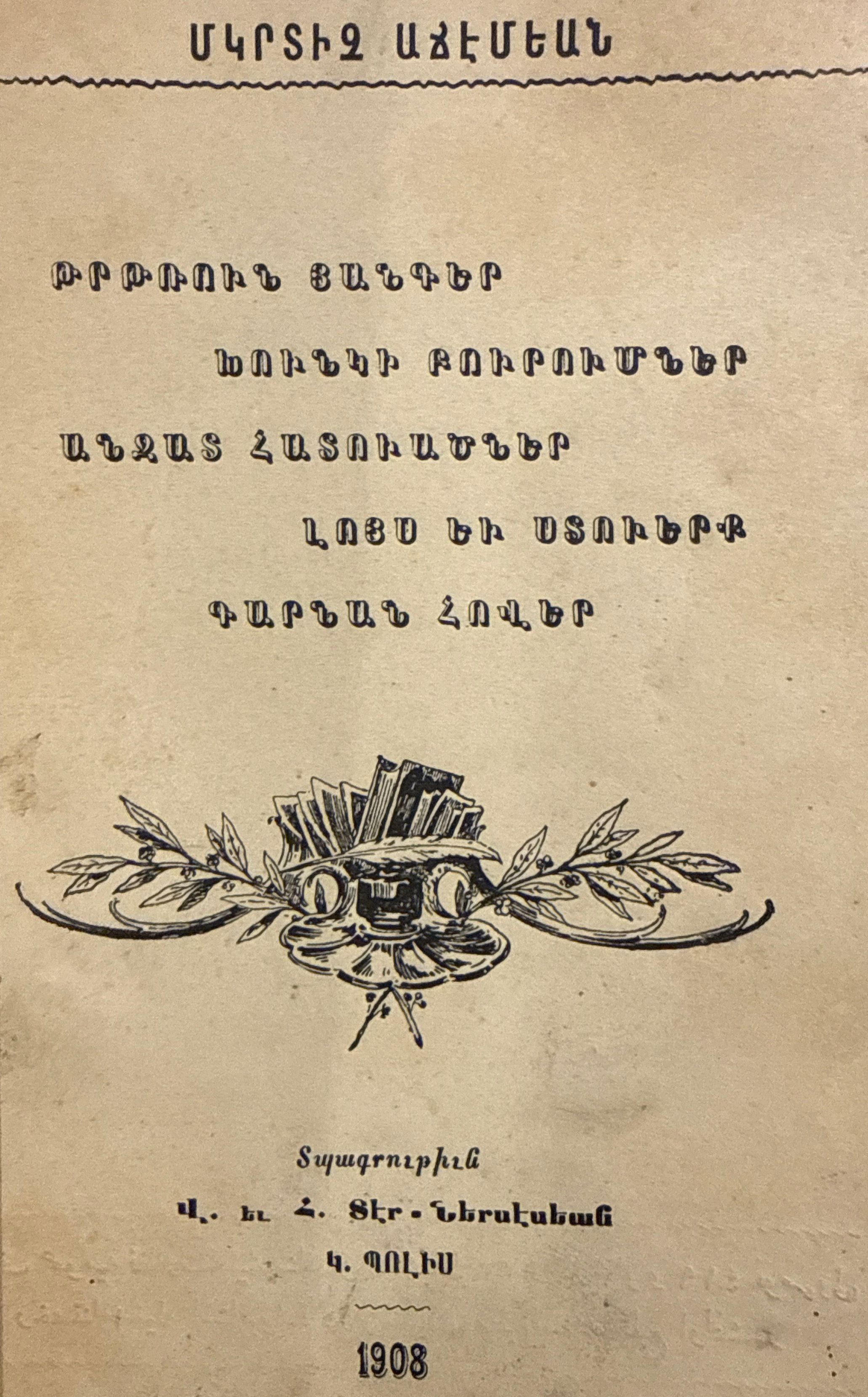
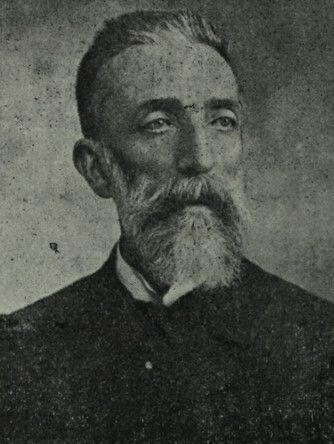
Թրթռուն Յանգեր, which translates to "Vibrant Rhymes" or "Quivering Rhymes," is a significant collection of lyric poetry by the Western Armenian poet Mkrtich Achemyan, published in 1908 in Constantinople. Released during a period of intense cultural and political transition within the Ottoman Empire, the work represents the mature creative output of an author who spent decades refining the aesthetic and linguistic boundaries of the Western Armenian dialect. The volume was printed by the Ter-Nersessian publishing house, a prominent establishment that served the thriving Armenian intellectual community of Istanbul during the early 20th century. The collection is characterized by its delicate emotionality and a preoccupation with the musicality of language, a hallmark of Achemyan’s broader body of work. Unlike many of his contemporaries who focused on the revolutionary fervor or social realism necessitated by the existential crises facing Armenians at the time, Achemyan’s verses in this volume tend toward the introspective and the pastoral. The poems often explore the interplay between the internal state of the human soul and the external beauty of the natural world, utilizing a rhythmic structure that justifies the "vibrant" or "trembling" descriptor in the title. His mastery of classical imagery and romantic sentimentality positions the work within the late romanticist tradition of Armenian literature, echoing the sensibilities of the earlier "Smyrna School" while adapting them to the more sophisticated linguistic palate of the Constantinople elite. Historically, the publication of Թրթռուն Յանգեր coincided with the Young Turk Revolution of 1908, a year marked by a temporary expansion of civil liberties and a surge in literary production among minority populations in the empire. While the book itself remains primarily focused on aesthetic beauty and personal lyricism, its existence is a testament to the resilient cultural life of Armenians in the capital shortly before the catastrophic events of the subsequent decade. Today, the work is preserved in major national archives, including the National Library of Armenia, where it is studied as a vital component of the Western Armenian literary canon and as a prime example of Achemyan’s contribution to the development of modern Armenian poetic meter and form.Category
Books