Nor-ike Orchestra, Chifte-Telli/Shek-Mazerov #1
Name/Title
Nor-ike Orchestra, Chifte-Telli/Shek-Mazerov #1Description
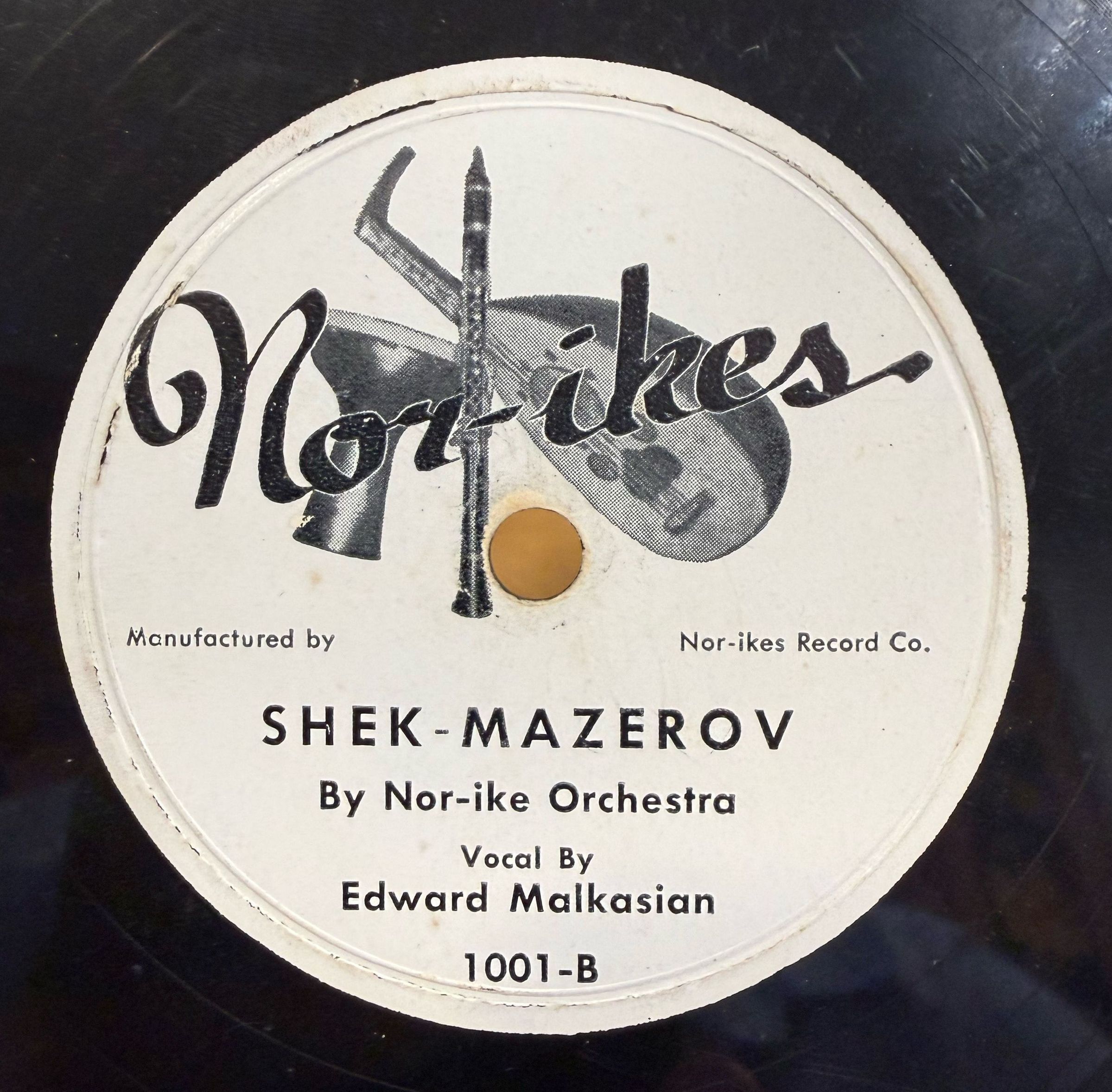
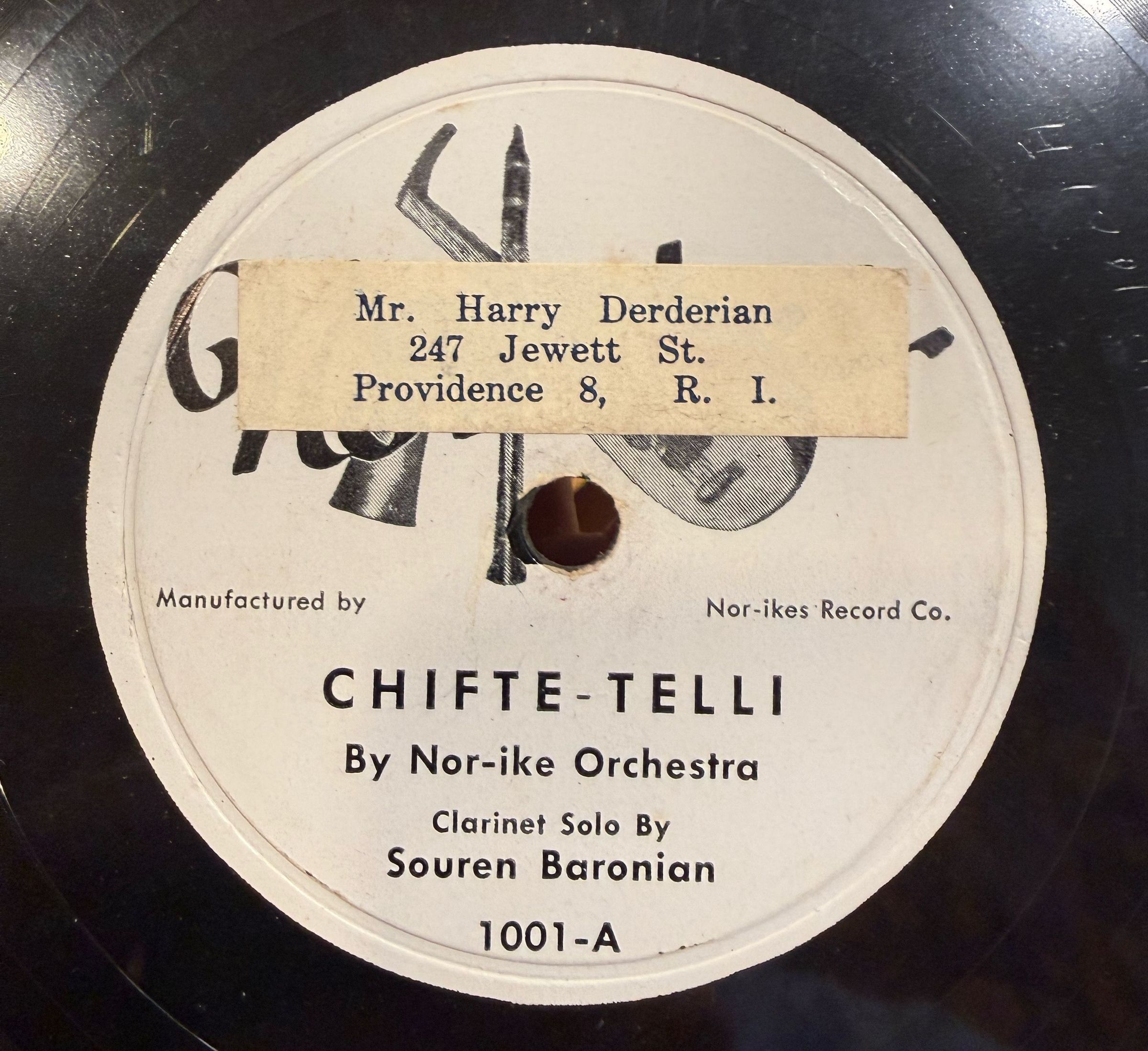
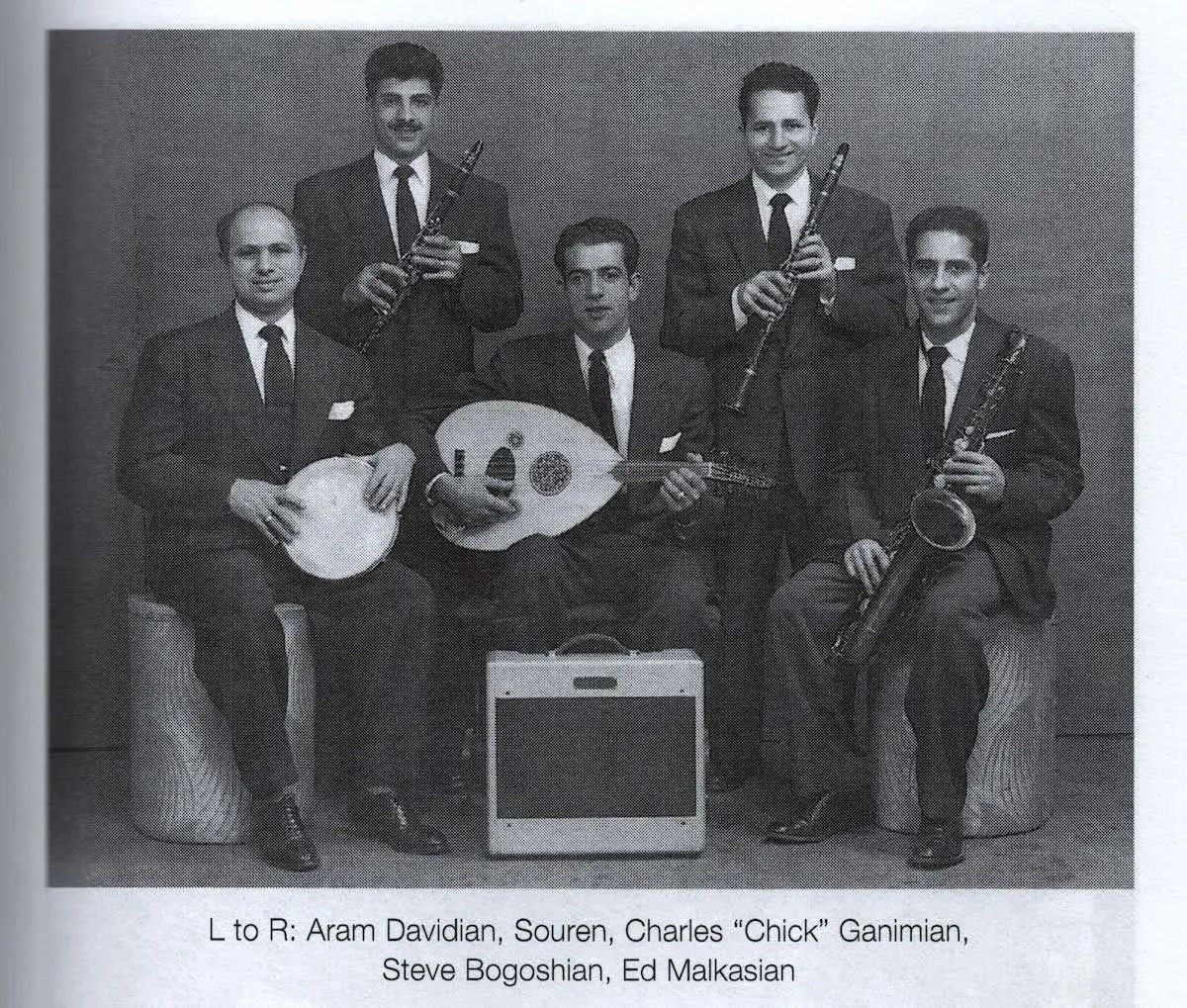
Souren Baronian (born 1930) is an Armenian-American multi-instrumentalist, composer, and bandleader best known for his pioneering role in blending Armenian and broader Middle Eastern musical traditions with American jazz. Born in Spanish Harlem to Armenian refugee parents originally from the Palu region, Baronian grew up immersed simultaneously in neighborhood Latin music, Armenian community gatherings, and the bebop and swing emerging from mid-century New York. Influenced particularly by Lester Young while also studying jazz and traditional Middle Eastern performance practices, he developed a style centered on clarinet and saxophone but later expanded to instruments including duduk, kaval, riq, and percussion. Baronian became one of the founding figures of the postwar Armenian-American musical revival through his work with Nor-Ikes Orchestra, formed in New York around 1948–1949 together with oudist Charles “Chick” Ganimian. The group’s name, meaning “New Dawn,” reflected both generational change and an emerging musical identity among American-born Armenians. Their early lineup included Baronian on reeds, drummer Aram Davidian, and saxophonist and reed player Edward Malkasian, commonly credited as Ed Malkasian. Malkasian occupies a more understated but important place in Armenian-American music history as an early collaborator in the Nor-Ikes sound. Though less documented than Baronian or Ganimian, he contributed to the ensemble’s reed textures during its formative recording years and participated in shaping a hybrid performance style that combined Armenian folk repertory, Middle Eastern ornamentation, dance rhythms in asymmetrical meters, and jazz phrasing. His presence helped broaden the ensemble’s sonic range beyond conventional immigrant dance orchestras of the era. The Nor-Ikes’ recordings from 1949–1952 became especially influential because they departed from straightforward preservation of inherited repertoire and instead reimagined it through improvisation and modern American musical language. Their recording of the Armenian folk song “Khun Dzorin Dzar” (“The Apple Tree”) became emblematic of this approach, retaining Armenian rhythmic structure while introducing jazz-inflected phrasing and instrumental interplay. Subsequent recordings established the ensemble as one of the earliest Armenian-American groups to define a distinctly diasporic modern sound. After military service interrupted the group’s initial activity, Baronian continued recording and performing, later founding the ensemble Taksim and becoming widely recognized as an early innovator in what would later be described as world-music fusion. His later work continued the same musical philosophy first developed with Nor-Ikes: that Armenian and Middle Eastern traditions could evolve without losing their identity. Through those recordings, Baronian and collaborators such as Malkasian helped establish a musical vocabulary that influenced later generations of Armenian-American performers and preserved an important transitional moment between immigrant memory and modern diasporic expression.Audio Format
78 RPM RecordRecording Type
MusicCategory
Vinyl Record