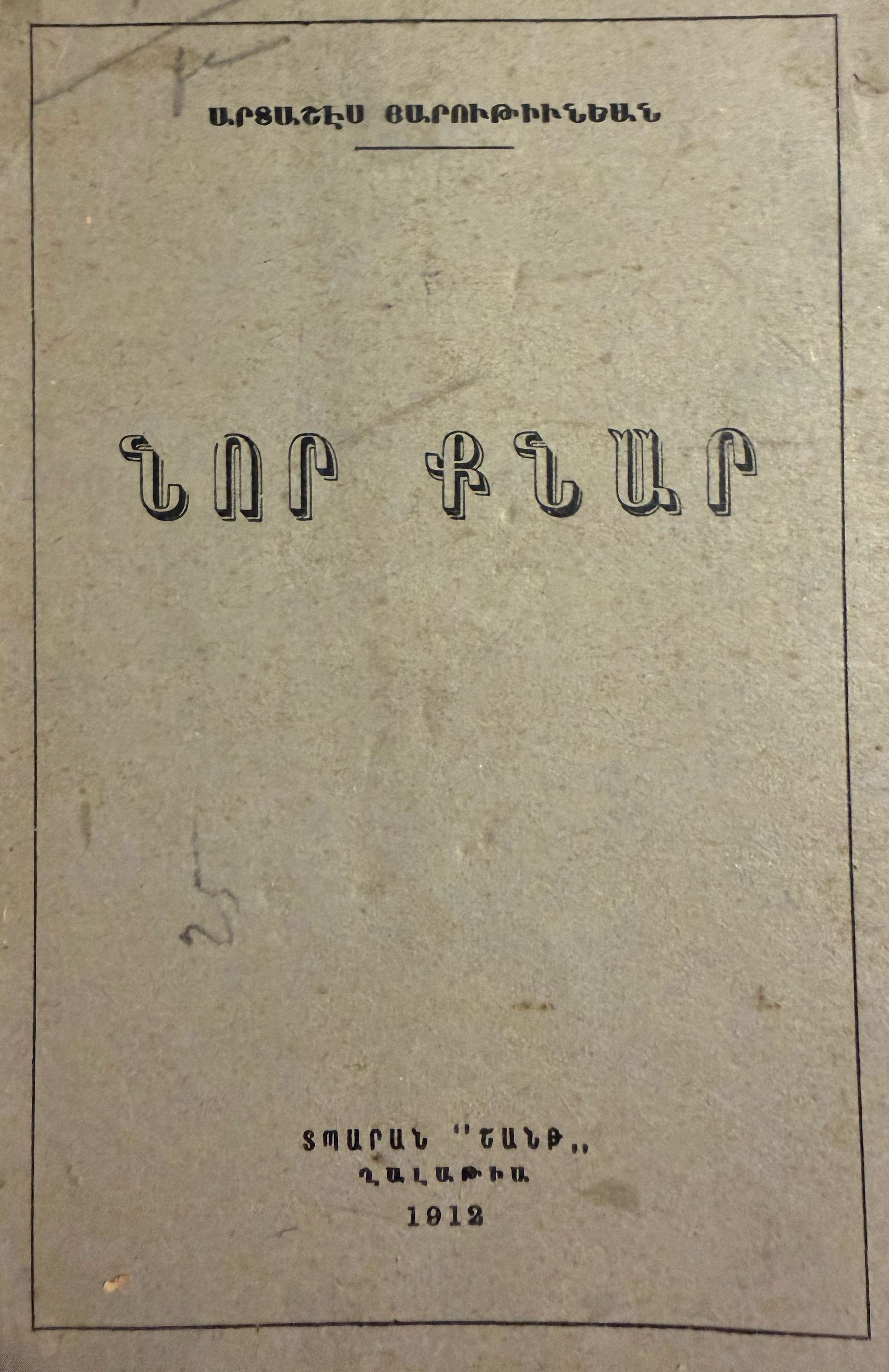
Nor Knar (Ardashes Harutiunian, 1912)

Name/Title
Nor Knar (Ardashes Harutiunian, 1912)Secondary Title
Նոր ՔնարDescription
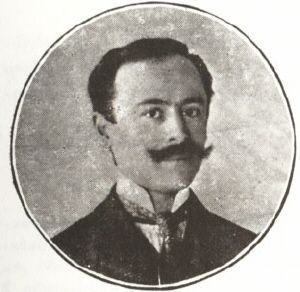
Ardashes Harutunian (1873–1915) was a distinguished Western Armenian poet, literary critic, and translator who played a vital role in the cultural and intellectual landscape of Constantinople during the late 19th and early 20th centuries. Born in Malkara, Harutunian was largely self-educated, eventually moving to the Ottoman capital where he became a central figure among the Armenian intelligentsia. His work is characterized by a deep engagement with European literary movements, particularly French Parnassianism and Symbolism, which he sought to integrate into the Armenian poetic tradition. As a critic, he was known for his rigorous standards and his efforts to modernize Armenian literature by moving away from archaic forms toward a more refined, aestheticized language. The zenith of Harutunian’s poetic output is found in his 1912 collection, Nor Knar (New Lyre). This volume arrived at a time when Western Armenian literature was oscillating between the remnants of Romanticism and the burgeoning influence of European Modernism. Nor Knar serves as a definitive departure from the overly sentimental or purely nationalistic tropes common in earlier generations. In this work, Harutunian prioritized the "art for art’s sake" philosophy, emphasizing the musicality of the Armenian language and the precision of imagery. The poems within the collection are noted for their rhythmic elegance and their exploration of the "inner landscape," focusing on themes of solitude, the ephemeral nature of beauty, and the delicate nuances of the human psyche. The structural integrity of the verses in Nor Knar reflects Harutunian’s belief that poetry should be a meticulously crafted object of beauty rather than a mere vehicle for political or social messaging. His use of language in this 1912 publication is marked by a sophisticated vocabulary and a deliberate attempt to elevate the vernacular into a high literary style. Through this collection, Harutunian aimed to provide the Armenian reader with a "new lyre"—an instrument capable of expressing the complex, often melancholic sensibilities of the modern era. The collection received significant acclaim for its formal perfection and contributed to the shift toward the aestheticism that defined the pre-1915 Western Armenian literary "Silver Age." While many of his peers were rounded up during the initial sweep in April 1915, Harutunian remained in Scutari (Üsküdar) on the 24th of that month. However, he was eventually arrested on July 28, 1915, and taken to the Müdüriyet, where he was subjected to severe beatings. In a particularly tragic turn, when his father came to the prison to inquire after or visit him, he too was imprisoned. Father and son were subsequently deported together with a group of 26 other Armenians to Nicomedia (modern-day İzmit). Upon arrival, they were held in a local Armenian church that had been requisitioned and converted into a makeshift prison. On August 16, 1915, the ordeal ended in tragedy; Ardashes Harutunian and his father were taken to a location near Derbent and stabbed to death.Category
Books