Ottoman Armenian Document #31

Name/Title
Ottoman Armenian Document #31Scope and Content
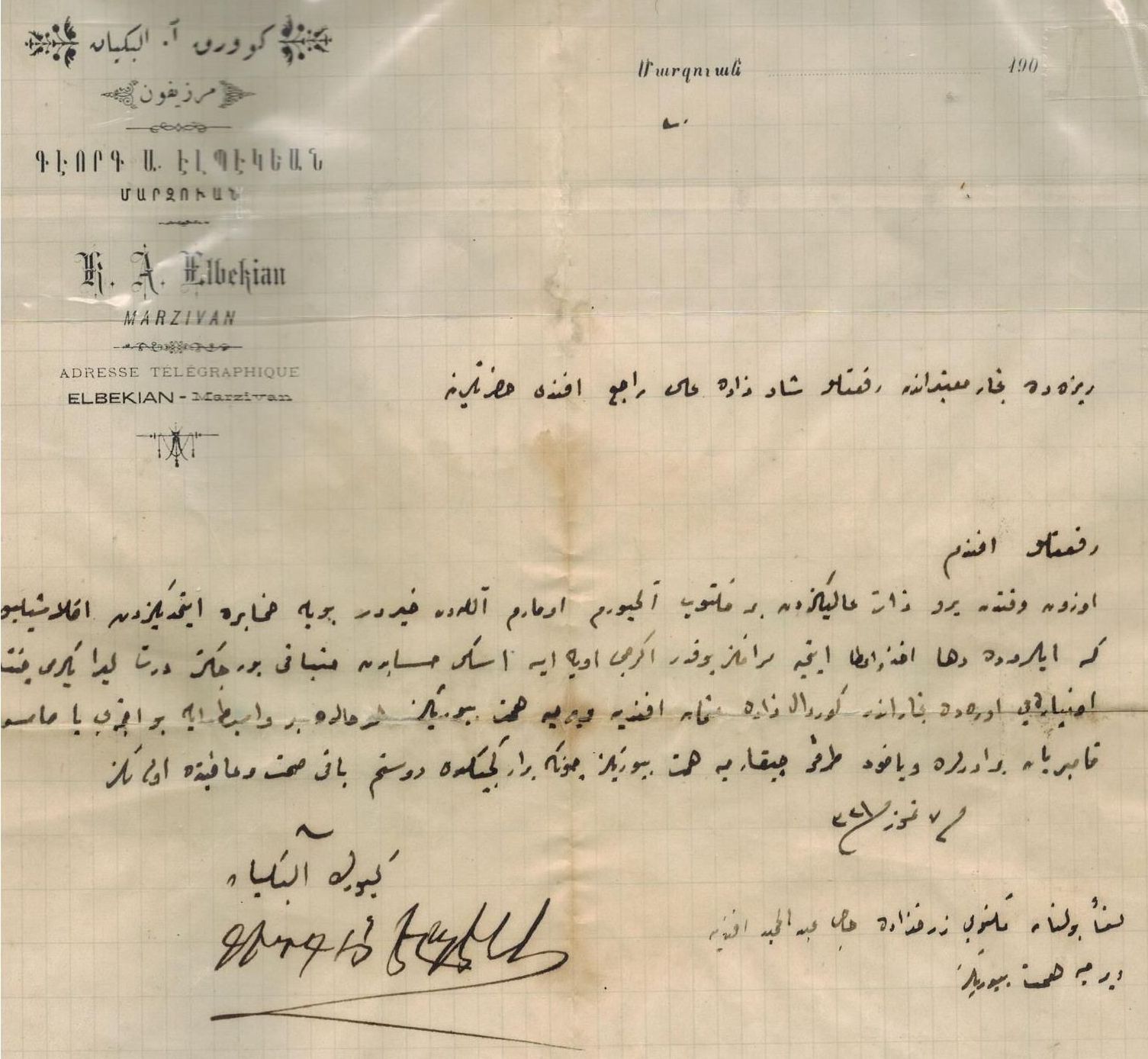
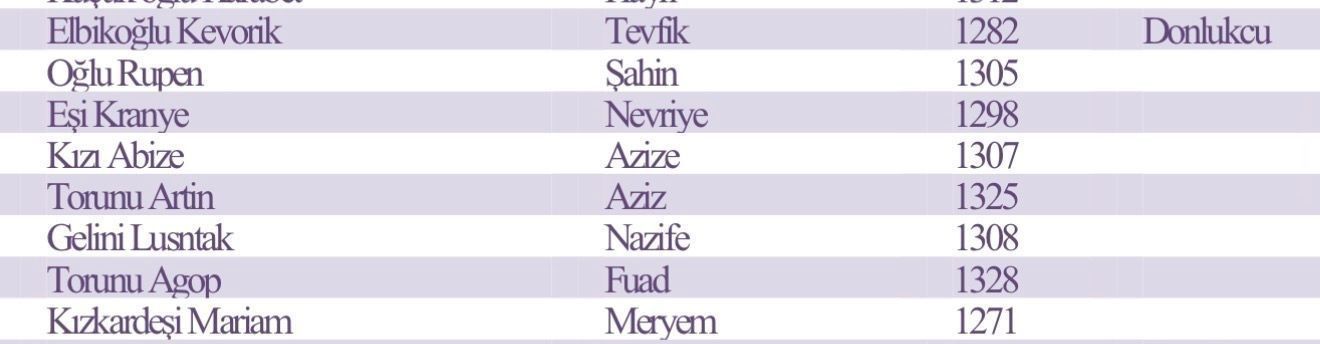
Business letter signed by Kevork Elbekian from Marzovan dated 7 Temmuz 1321 (Rumi) which coverts to 20 July 1905 (Gregorian). The writer says they haven’t heard from him in a long time, assumes he is well, reminds him of an unpaid debt and asks him to take care of it and assist with a previously discussed matter, ending with wishes for his health and well-being. Kevork A. Elbekian (b. 1865-d. 1915?) lived in the Erzincan neighborhood and was also actively involved in the production and trade of doluk, manusa, or tireh—a locally woven fabric that became a hallmark of Merzifon and a primary source of livelihood for much of the population. In many households, women and girls worked in weaving workshops producing manusa, while in specialized factories, men collaborated to manufacture larger textile goods. Elbekian was among several prominent producers of tireh, alongside the Ibranossian brothers, D. Yeremian, H. Tuyusuzian, and Bedros Chahbenderian (see Ottoman Armenian Document #36). Their products were shipped across the Ottoman Empire, and their operations continued to expand to meet growing demand. At its height, Marsovan exported tireh textiles valued annually between 70,000 and 80,000 gold liras. However, during the Armenian genocide, he was forced to convert to Islam alongside his whole family. He was given the new name of Tevfik. In the list of conversions it states that he had a son named Ruben, a daughter named “Abize” (likely Aznive). His brother Garabed also had to convert to Islam.Category
Misc. Documents