Ottoman Armenian Document #41
Name/Title
Ottoman Armenian Document #41Scope and Content
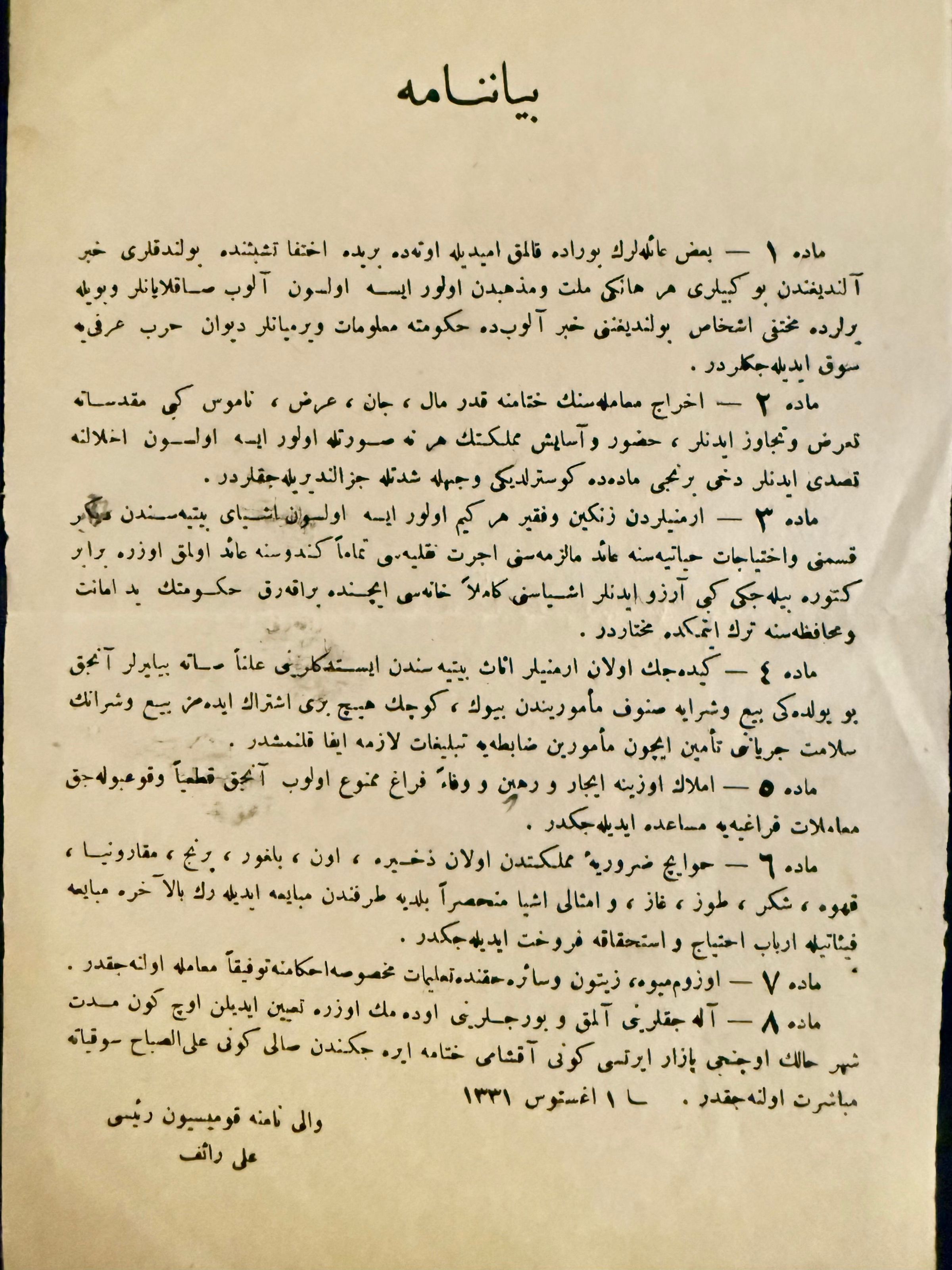
DECLARATION Article 1. Since it has been reported that some (Armenian) families, hoping to remain here, have attempted to hide in various places, anyone who shelters such persons—regardless of their nationality or sect—or anyone who learns that persons are hiding in such places and does not inform the government, shall be sent to the Extraordinary Military Tribunal (Dîvân-ı Harb-i Örfî). Article 2. Until the completion of the deportation process, those who violate or attack sacred rights such as property, life, honor, and chastity, as well as those who in any manner attempt to disturb the peace and public order of the country, shall also be severely punished as indicated in Article 1. Article 3. Among the Armenians, whether rich or poor, anyone may take with them part of their household belongings and the materials necessary for their basic needs, on the condition that the transportation cost is entirely at their own expense. Those who wish may instead leave all of their belongings inside their homes, entrusting them to the government’s custody and safekeeping. Article 4. Armenians who are to depart may openly sell whatever they choose from their household goods; however, none of the officials of the administrative class, whether high or low in rank, shall participate in such buying and selling. Necessary instructions have been issued to the police authorities to ensure the proper conduct of such transactions. Article 5. Leasing, pledging, or transferring property by way of vefaen ferağ (conditional transfer) is prohibited; however, transfers that must absolutely take place will be permitted. Article 6. As for essential provisions of the country—grain, flour, bulgur, rice, pasta, coffee, sugar, salt, kerosene, and similar items—these shall be purchased exclusively by the municipality and subsequently sold at the purchase price to those in need and to those entitled. Article 7. Grapes, fruit, olives, and similar goods shall be handled in accordance with the provisions of the special instructions concerning them. Article 8. Since the three-day period granted for collecting debts owed to them and paying their own debts will end on the evening of the third Monday of the current month, the deportations will begin on Tuesday morning. On behalf of the Governor Commission President Ali Raif 1 August 1331 / 14 August 1915 ______________________________________ Original Turkish: BEYANNAME Madde 1. Bazı ailelerin burada kalmak ümidiyle ötede beride ihtifâ (saklanma, gizlenme) teşebbüsünde bulundukları haber alındığından, bu gibileri hangi millet ve mezhepten olursa olsun alıp saklayanlar ve böyle yerlerde muhtefî (saklanan, gizlenen) eşhâs bulunduğunu haber alıp da hükümete ma‘lûmât vermeyenler Dîvân-ı Harb-i Örfî’ye sevk edileceklerdir. Madde 2. İhrâc mu‘âmelisinin hitâmına kadar mal, can, ırz, namus gibi mukaddesâta taarruz ve tecavüz edenler, huzur ve asayiş-i memleketin her ne sûretle olursa olsun ihlâline tasaddî edenler dahi birinci maddede gösterildiği vechile şiddetle cezalandırılacaklardır. Madde 3. Ermenilerden zengin ve fakir her kim olursa olsun, eşyâ-ı beytiyesinden (ev eşyası) diğer kısmını ve ihtiyâcât-ı hayatiyesine ait malzemesini, ücret-i nakliyesi tamamen kendisine ait olmak üzere beraber götürebileceği gibi, arzu edenler eşyasını kâmilen hânesi içinde bırakarak hükümetin yed-i emânet ve muhâfazasına terk etmekte muhtardır. Madde 4. Gidecek olan Ermeniler esas beytiyesinden istediklerini alenen satabilirler; ancak bu yoldaki bey‘ ü şirâya sınıf-ı me’mûrînden büyük küçük hiçbiri iştirâk edemez. Bey‘ ü şirânın selâmet-i cereyânını temîn için me’mûrîn-i zabtiyyeye tebligât-ı lâzıme îfâ kılınmıştır. Madde 5. Emlâk üzerine icâr, rehin ve vefâen ferâğ memnû olup, ancak kat‘iyen vukû bulacak mu‘âmelât-ı ferâğiyeye müsâade edilecektir. Madde 6. Havâyic-i zarûriyye-i memleketten olan zahîre, un, bulgur, pirinç, makarna, kahve, şeker, tuz, gaz ve emsâli eşya münhasıran belediye tarafından mübâyaa edilerek bilâhire mübâyaa fiyatıyla erbâb-ı ihtiyâc ve istihkâka fürûht edilecektir. Madde 7. Üzüm, meyve, zeytin vesâire hakkında talîmât-ı mahsûsa ahkâmına tevfîkan muâmele olunacaktır. Madde 8. Alacaklarını almak ve borçlarını ödemek üzere tayin edilen üç gün müddet, şehr-i hâlin üçüncü Pazartesi günü akşamı hitâmâ ereceğinden, Salı günü ale’s-sabah sevkıyâta mübâşeret olunacaktır. Vali nâmına Komisyon Reisi Ali Raif 1 Ağustos 1331 / 14 Ağustos 1915Category
Misc. Documents