Ottoman Armenian Document #59
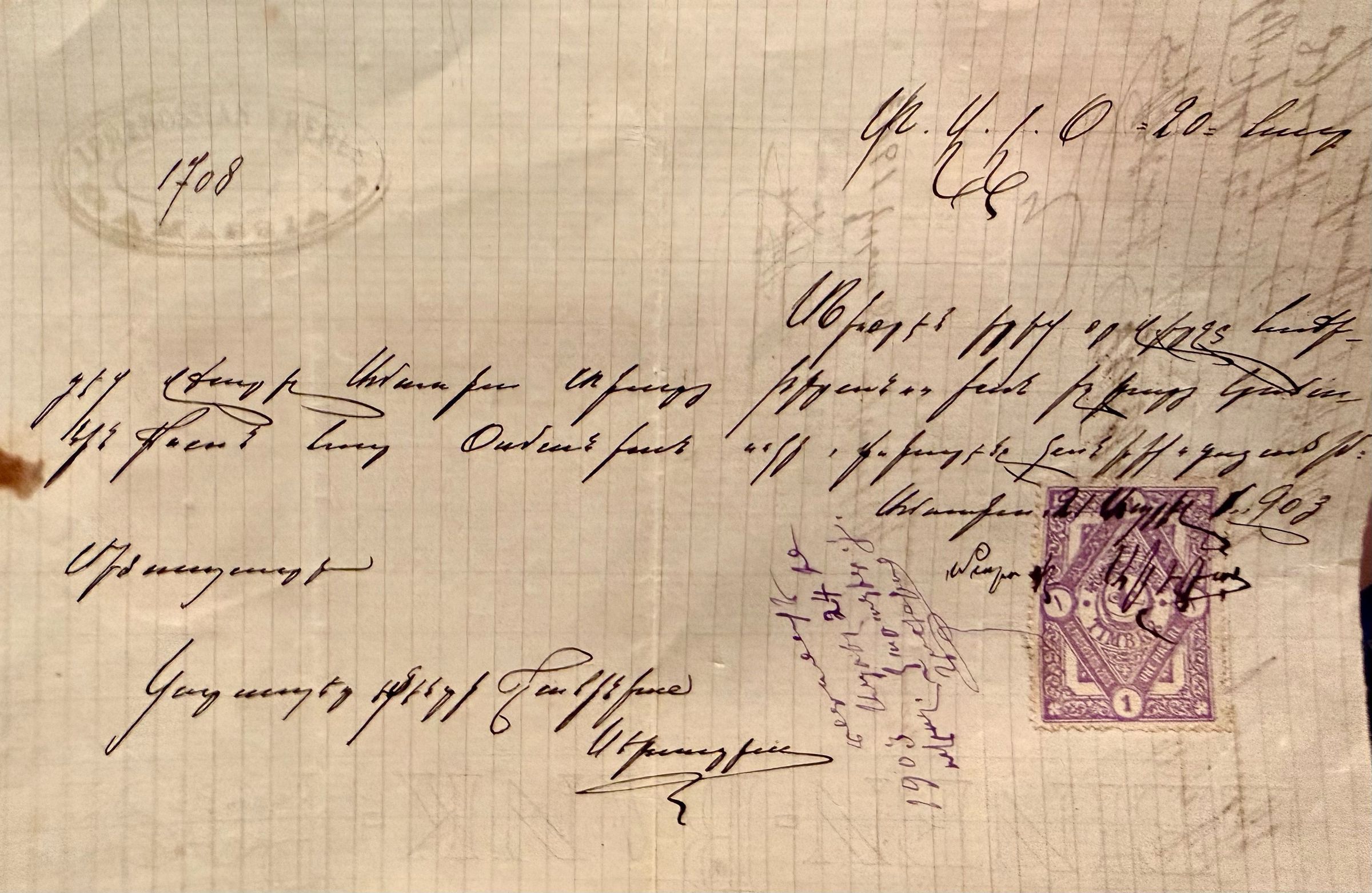
![Տ. Վ. Լ. O. =20= հատ
Այս օրէն երեք օր վերջը հաճեցէք վճարել Ամասիո[յ] Տեարց Իթրանոսեան եղբարց հրամանին քսան հատ Օսմանեան ոսկի, փոխարէնը կանխիկ գոցած եմ։
Ամասիա, 21 Ապրիլ 1903
Մարուգէ Աբէլեան
Մեծապատիւ
Կարապետ էֆէնտի Շահինեան
Սեբաստիա
***
Վճարեցէք Սեբաստիոյ Տեարց Իբրանոսեան եղբարց հրամանին, փոխարէնը ի հաշիւ։
Ամասիա 22 Ապրիլ 1903
? Մէքիքճեան Յ. Գարապիլիկեան?
Վասն ստացման
Սեբաստիա 28 ապրիլ 1903
?](https://d8e7jbdw4fu0e.cloudfront.net/15232/cb789260-56fc-11f1-97cb-65012f2c1898-vnBoGGn.lg-nt@2x.jpg)
Name/Title
Ottoman Armenian Document #59Scope and Content
This document is a set of commercial payment orders (similar to a bill of exchange or promissory transfer) connected to the Ipranossian Brothers’ business network and demonstrates the scale and organization of their regional trade operations in the early twentieth century. Translation: T.V.L.O. = 20 pieces “Three days from this date, kindly pay, upon the order of the Lords Ipranossian Brothers of Amasya, twenty Ottoman gold coins, for which I have received payment in cash.” Amasya, 21 April 1903 Marouké Abelian To the esteemed Garabed Efendi Shahinian Sebastia (Sivas) _____________________ “Pay, upon the order of the Lords Ipranossian Brothers of Sebastia, charging it to account in exchange.” Amasya, 22 April 1903 (possibly signed) Mekikçian / H. Garabilikian (signature unclear) “Received” Sebastia, 28 April 1903 (signature illegible) This 1903 financial document offers a rare glimpse into the commercial reach of the Ipranossian Brothers, a major Armenian entrepreneurial family of Amasya. The Ipranossian Brothers—Yeprem (Ipranos) Ipranossian (1848–1921) and Marouke Ipranossian (1856–1920/21)—were among the most prominent Armenian industrialists and merchants of the Ottoman Empire’s Sivas Vilayet. Originating from Amasya, they inherited and expanded a family textile enterprise rooted in the city’s weaving traditions, particularly cotton and silk production, sectors central to the local economy. By the late nineteenth and early twentieth centuries, the brothers had developed a large-scale commercial and manufacturing network extending beyond Amasya, operating workshops, factories, and retail outlets in regional urban centers such as Sebastia (Sivas). The present document reflects this intercity business infrastructure: a payment order directing funds between Amasya and Sebastia through the authority of the “Lords Ipranossian Brothers,” indicating a structured commercial system based on credit, accounts, and trusted merchant intermediaries. The transfer of twenty Ottoman gold coins suggests a substantial commercial transaction and illustrates the brothers’ role not only as textile manufacturers but also as regional financiers and distributors. Embedded within Amasya’s flourishing Armenian artisanal economy, the Ipranossians employed numerous workers and became one of the city’s most important textile producers, while maintaining extensive retail and trade connections across the region. Documents such as this reveal the sophistication of Armenian merchant networks in the late Ottoman economy and the prominent economic position occupied by families like the Ipranossians before the upheavals of the early twentieth century.Category
Misc. Documents