Parkirk Haikazian Lezvi (Mkhitar Sebastatsi, 1749)
Name/Title
Parkirk Haikazian Lezvi (Mkhitar Sebastatsi, 1749)Secondary Title
Բառգիրք Հայկազեան ԼեզուիDescription
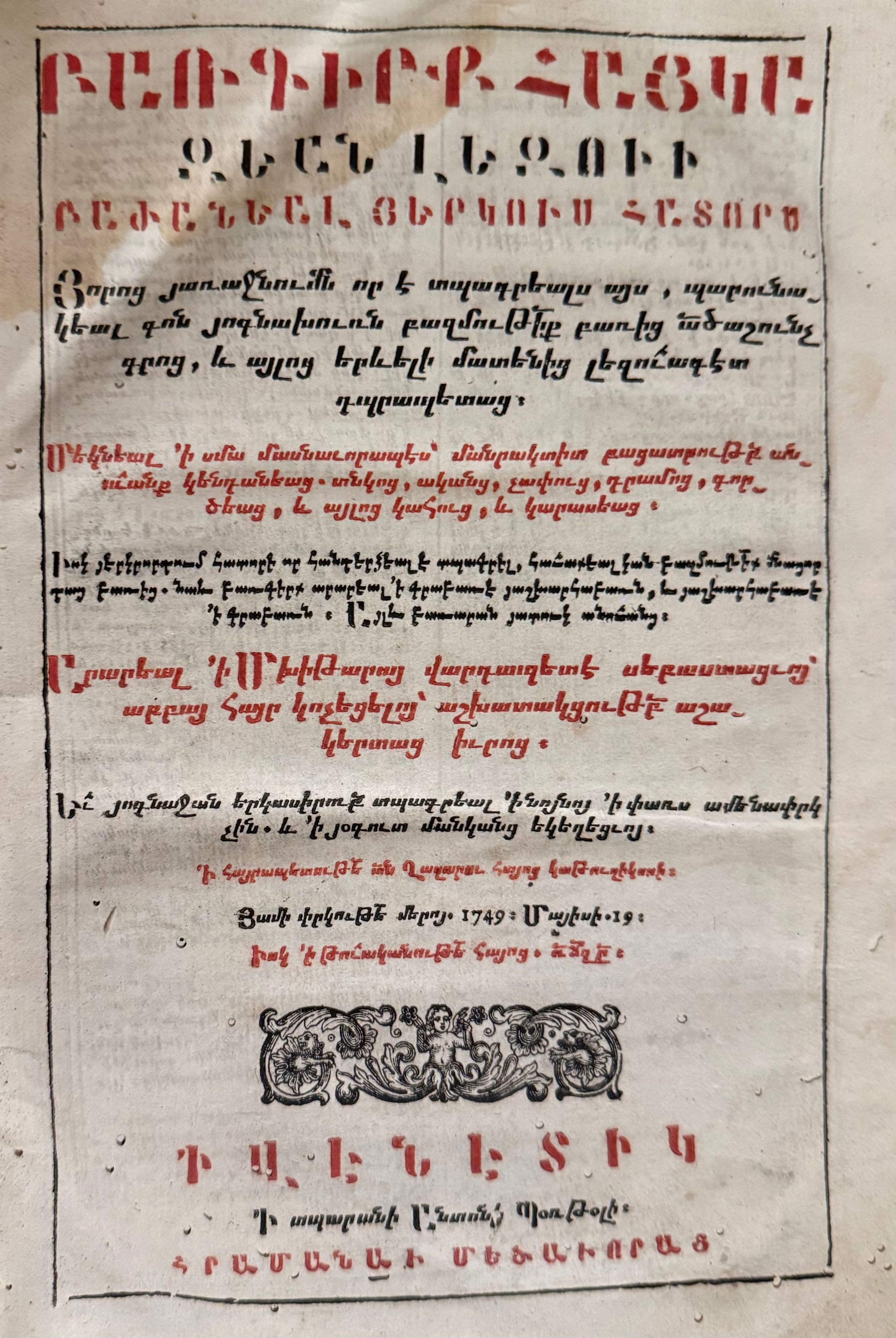
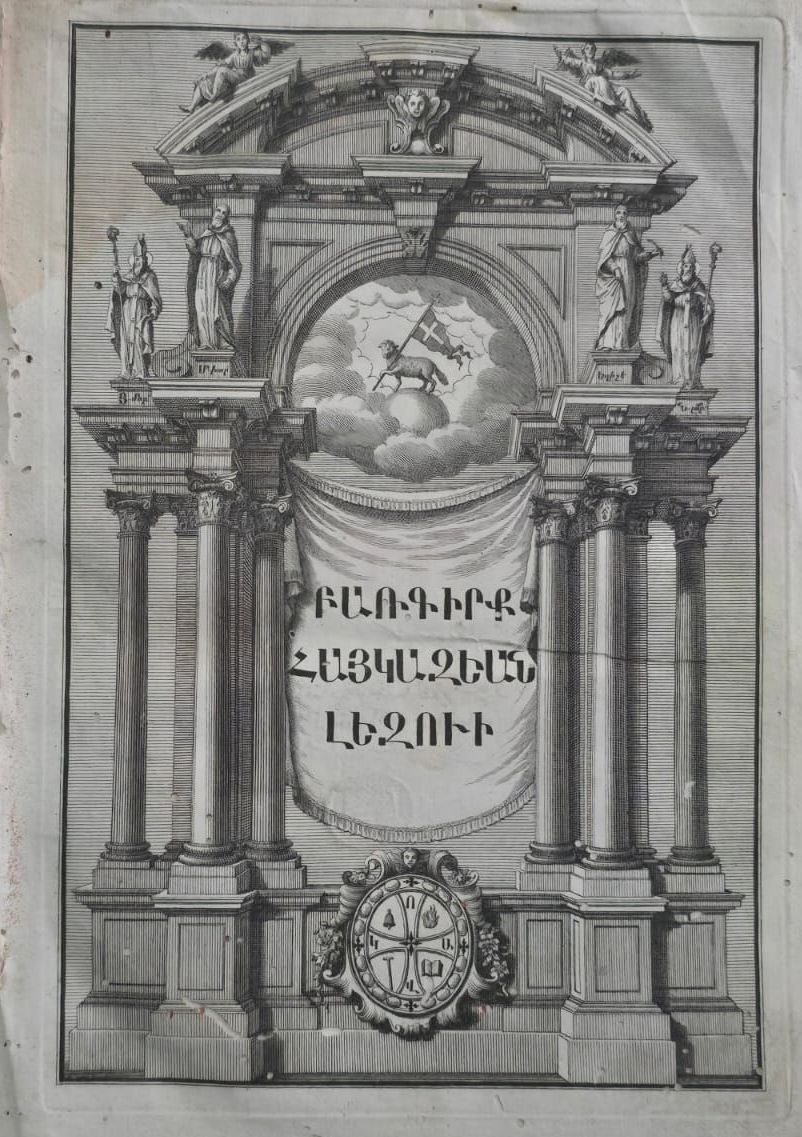
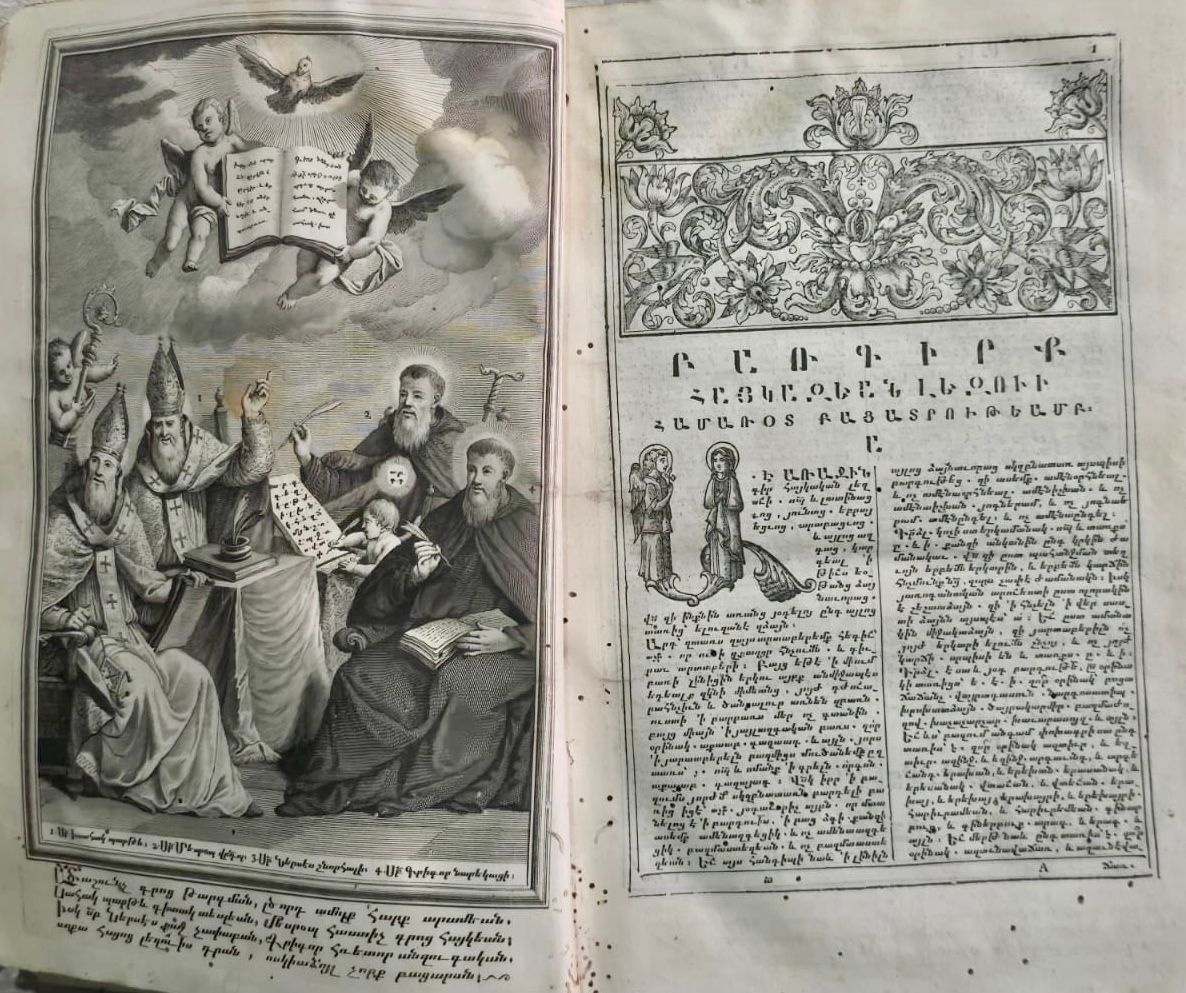
The Haikazian Dictionary was the first comprehensive lexicon of the Armenian language, conceived and directed by Mekhitar of Sebastia (1676–1749), founder of the Mekhitarist Congregation on the island of San Lazzaro in Venice. It stands as one of the earliest systematic attempts to record and interpret the entirety of Armenian vocabulary, integrating philological precision, theological insight, and comparative linguistic study. Mekhitar likely conceived the idea of compiling a dictionary during his early years of teaching, recognizing the absence of a scholarly Armenian lexicon suitable for academic instruction. In the preface to the Haikazian Dictionary, he identifies the primary motive as “the necessity for our Academy, since many devoted students were laboring in these studies.” This vision reflected both his intellectual ambition and the scholarly identity of the San Lazzaro monastery, which he described as an “academy.” Work on the dictionary began in 1727, as Mekhitar himself recorded: “Beginning in the year of the Lord 1727, I reached the letter Ե (Ye) and the word Yerakhayr (Nurse)… until the year 1742, when I resumed the work with our students, completing it in 1745.” The first external reference appears in a 1728 letter to Father Yeghia in Constantinople: “Now I have begun the dictionary, and it will scarcely be finished even in a hundred sheets.” His progress was interrupted by other major projects, including his Grammar of Classical Armenian (1730) and his comparative study of the Bible in seven languages—Latin, Greek, Syriac, Chaldean, Arabic, Samaritan, and Armenian—which profoundly informed the dictionary’s linguistic and theological precision. By 1732, about a quarter of the work had been completed. Over the following decade, Mekhitar was occupied with biblical commentaries but returned to the dictionary in 1742, marking the decisive phase of the project. That year he wrote, “On March 7, 1742, I began again the dictionary, invoking the intercession of Saint Thomas Aquinas.” By 1745, after nearly two decades of sustained labor, the Haikazian Dictionary was complete. Mekhitar saw the first volume through to publication on his deathbed in 1749, while the second volume, compiled by five of his disciples, appeared in 1769. The Haikazian Dictionary was not only a lexicographical monument but also a collaborative artistic enterprise. The first volume was fully prepared for printing by 1749, lacking only its frontispiece engravings and preface. Two copperplate engravings—executed by an Italian artist—adorned it: one bearing the title “ԲԱՌԳԻՐՔ ՀԱՅԿԱԶԵԱՆ ԼԵԶՈՒԻ” (“Dictionary of the Haikazian Language”) and the Mekhitarist seal, and another depicting Saint Sahak, Saint Mesrop, Saint Nerses Shnorhali, and Saint Gregory of Narek. These engravings cost 264 lire, a substantial amount at the time. To alleviate the expense of copper engraving for subsequent works, Mekhitar encouraged his disciples Fathers Ignatios Khachatryan and Zakaria Aleksanyan to master the craft. By 1746–1747, they had become skilled engravers, producing floral decorations, theological illustrations, and maps used in Mekhitarist publications. From this period survive four copperplate maps, three in the first volume and one in the second: 1. “Universal Map of the World” (Համատարած աշխարհացոյց), placed between pages 258–259; 2. A map showing the orbits of the planets, between pages 256–257; 3. The “Starry Sky” (Աստղալից երկինք), between pages 500–501; and 4. The “Map of the Promised Land” (Երկիր Աւետեաց) in the second volume, bearing the inscription “Engraved in the Year of the Lord 1746.” However, the maps are missing within this book. A later, companion work, the “Map of Armenia, Ancient and Modern” (Աշխարհացոյց Հայաստանեայց ըստ հին եւ նոր աշխարհագրաց), was engraved in 1751, likely conceived by Mekhitar himself and realized posthumously by Father Ignatios with engraver Giuseppe Zucchi in Venice. Though completed soon after the first volume, it was published only with the second volume in 1769. Several surviving manuscripts at the Mekhitarist Monastery in Venice illuminate Mekhitar’s working methods: autograph drafts covering the letters A–C, a 240-page lexicon of classical Armenian authors such as Movses Khorenatsi, Gregory of Narek, Nerses of Lambron, Cyril of Jerusalem, and Agathangelos, and a biblical lexicon rich in scriptural citations. The final printed work synthesizes these sources, expanding them into a unified and interpretative dictionary. The Haikazian Dictionary was more than a linguistic reference—it was an intellectual and spiritual synthesis aiming to consolidate the Armenian language through scholarship, faith, and comparative philology. It marked the foundation of modern Armenian lexicography and reflected the Mekhitarist ideal of uniting learning, devotion, and national revival. Even during Mekhitar’s lifetime, news of its progress stirred admiration across the Armenian world—from Venice to Constantinople. Its publication crowned the 18th-century Armenian cultural renaissance initiated by the Mekhitarist Fathers, leaving a legacy of linguistic, artistic, and scholarly excellence.Category
Books