Photograph #49
Name/Title
Photograph #49Description
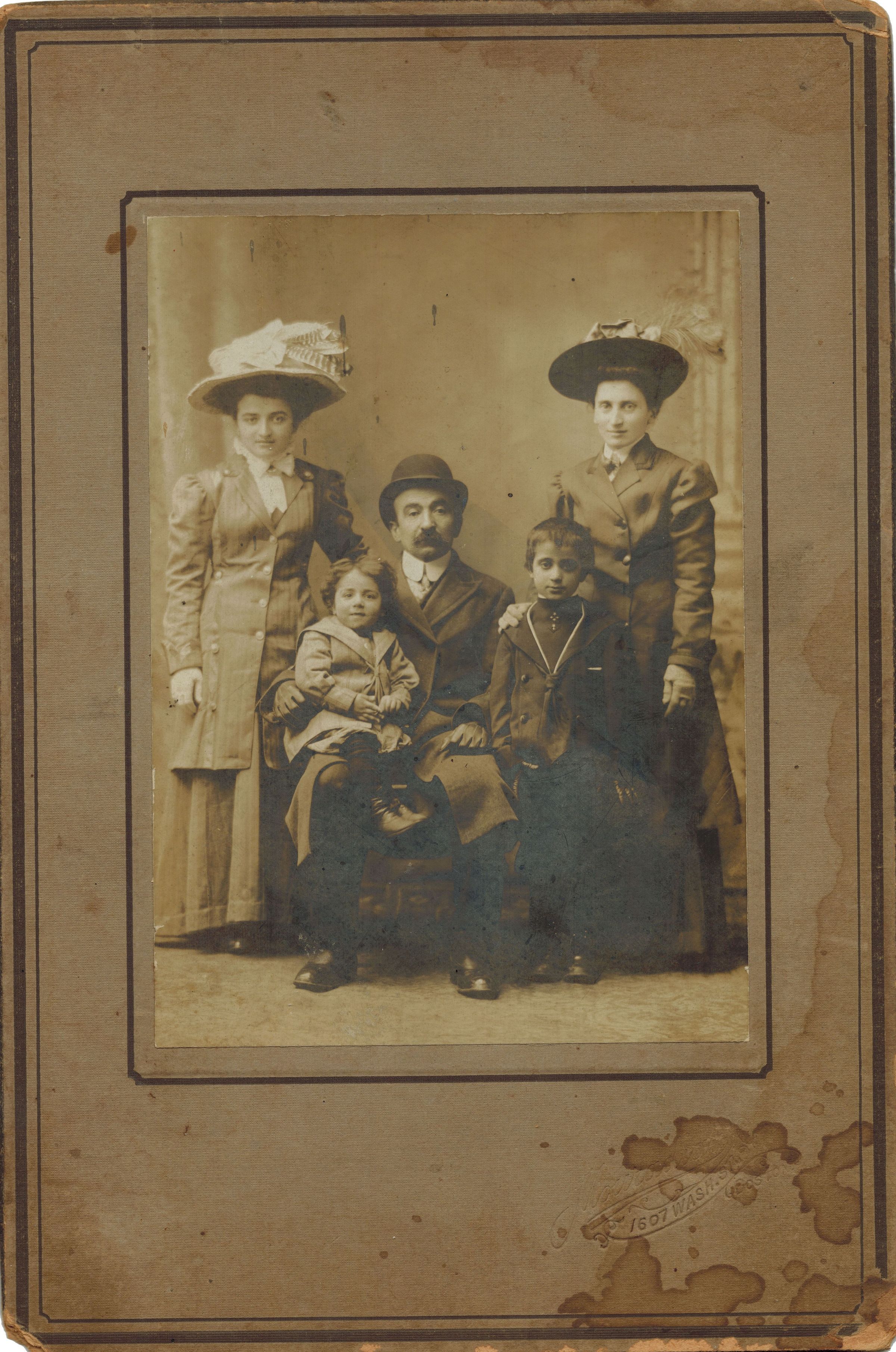
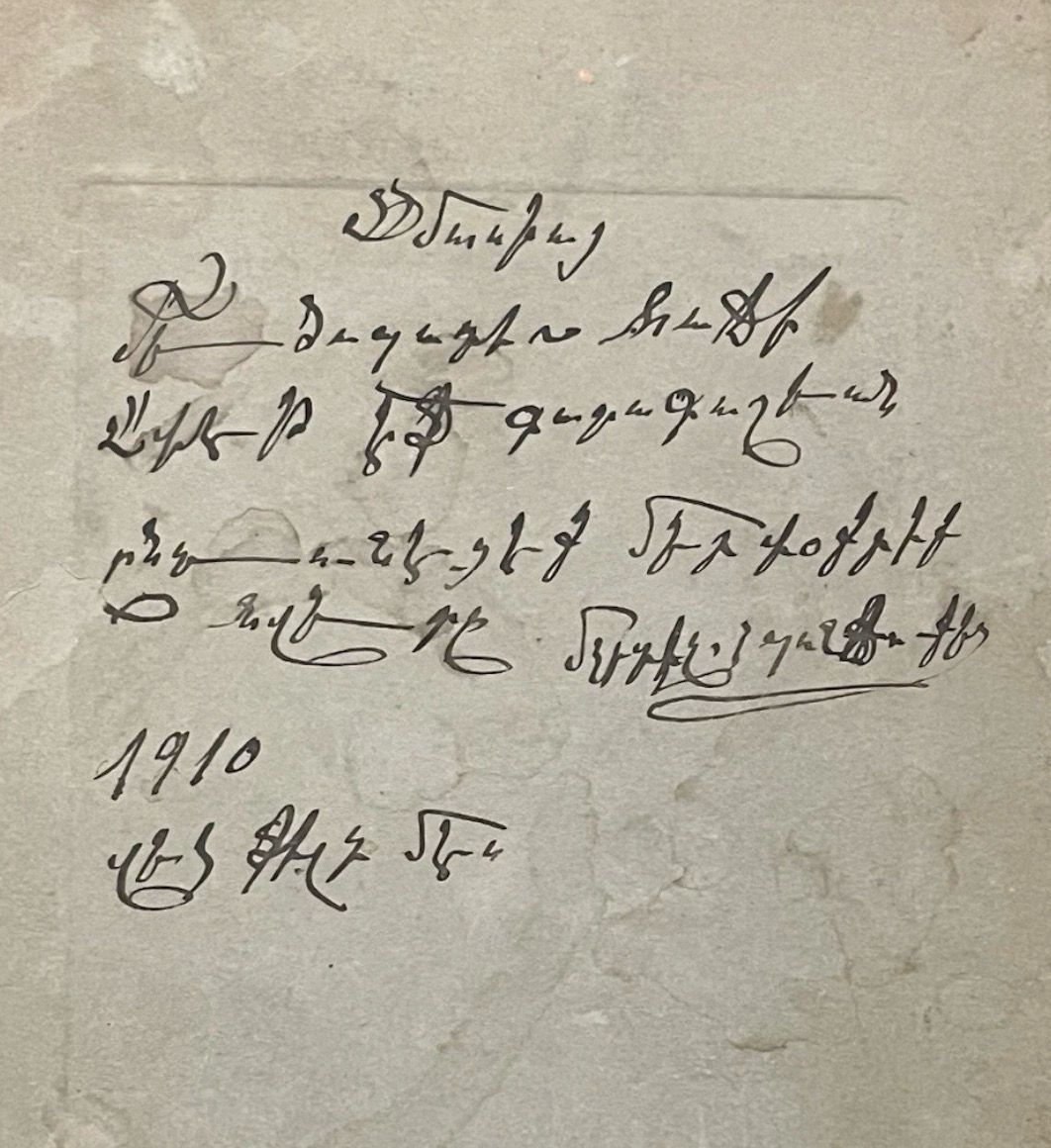
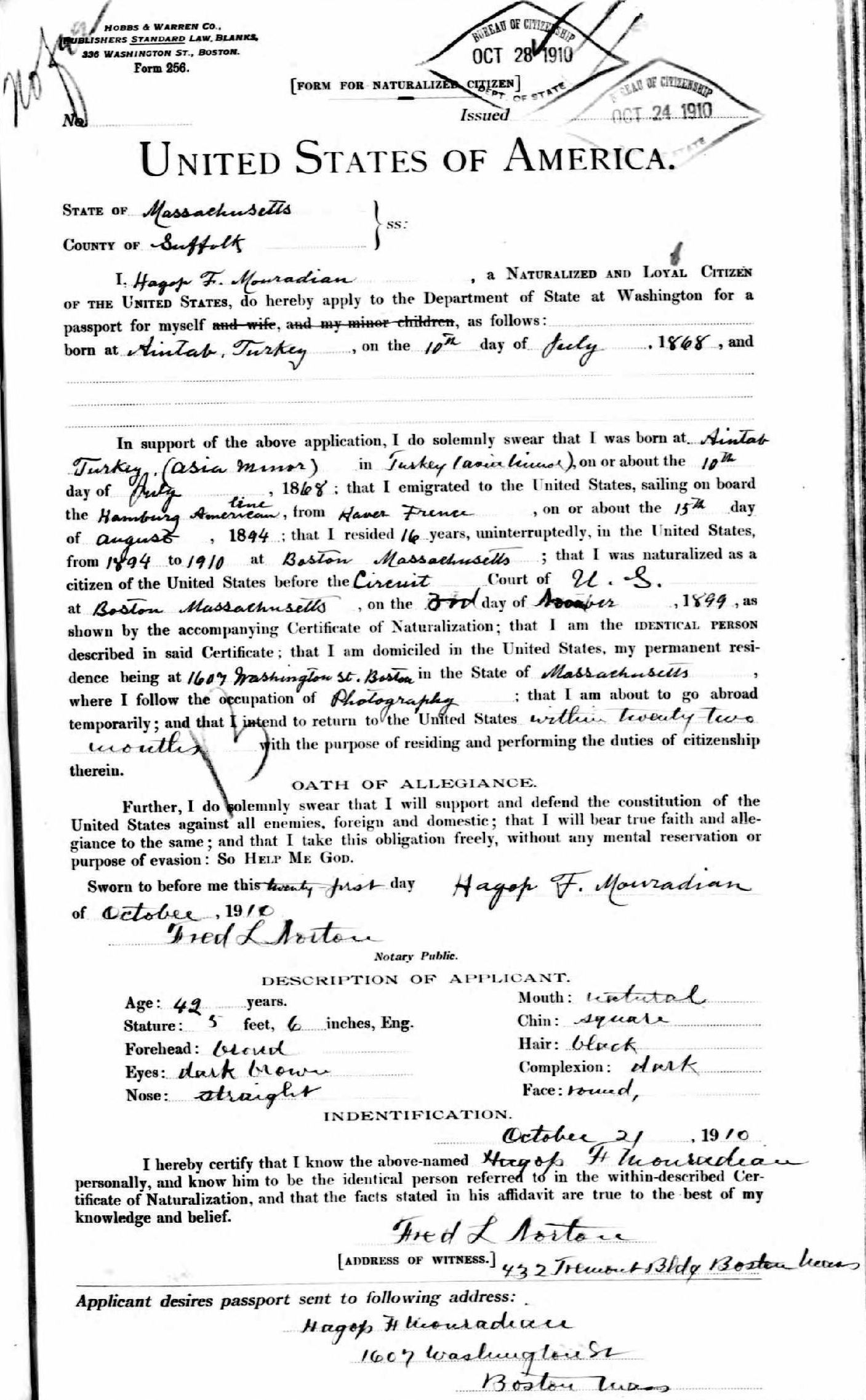
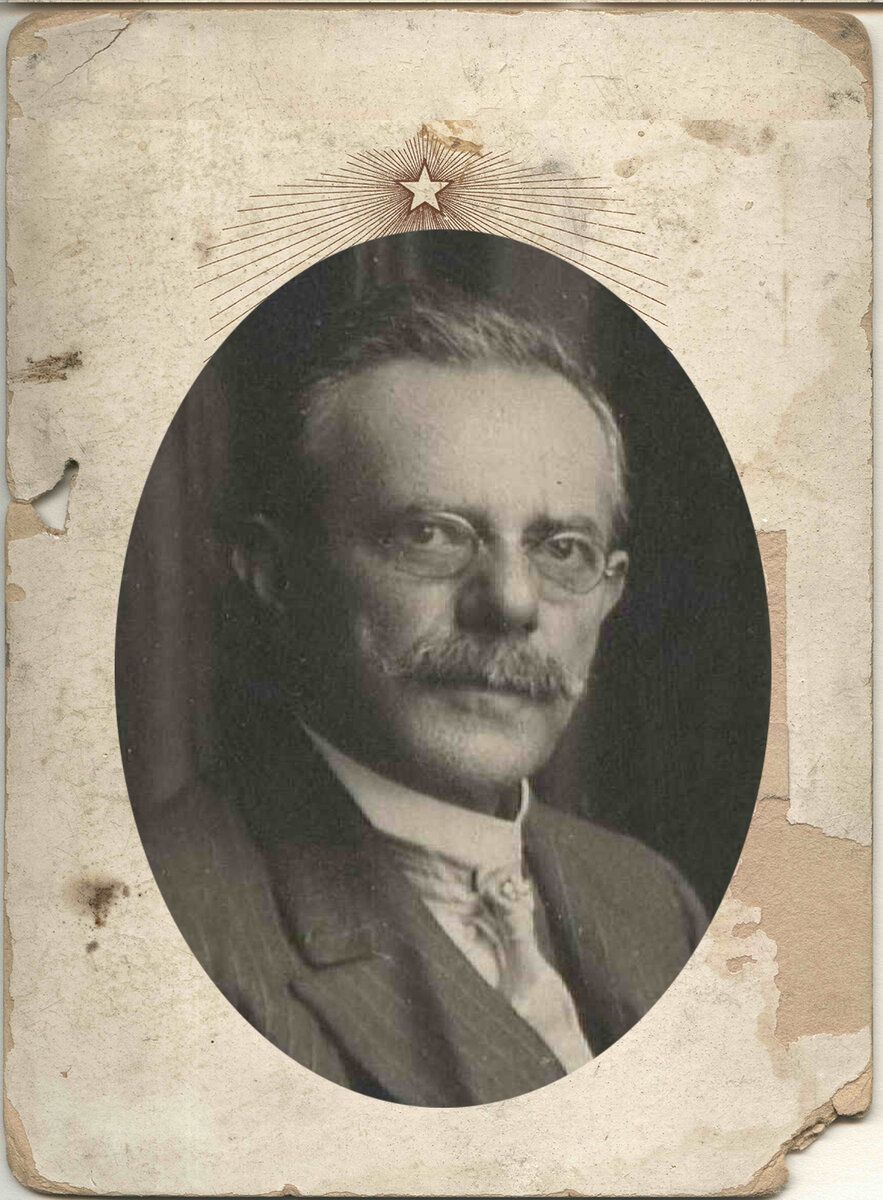
This photograph, produced in 1910 at the Mouradian Studio in Boston, bears an Armenian inscription on the reverse identifying both its recipient and sender. The text reads: «Ամասիայ Մեծապատիւ Հաճի Ափէթ Էֆ. Գարագաշեան ընդունեցէք մեր փոքրիկ նուէրը Մկրտիչ Պոնճուքեան 1910» Translated into English, the inscription reads approximately: “To the honorable Haji Apet Effendi Karakashian of Amasya, please accept our small gift. Mkrtich Bonjoukian, 1910.” The photograph was taken at the studio of Hagop Frank Mouradian, an Armenian photographer active in Boston during the early twentieth century. Born in Aintab in 1867, Mouradian was approximately 42 years old when he captured this image. Before emigrating to the United States in 1894, he had worked as a photographer in Aintab and continued his profession after settling in Boston, where he served the city’s growing Armenian immigrant community. He became a naturalized U.S. citizen in 1899 and listed his residence at the same address as his studio, located at 1607 Washington Street. Interestingly, in October 1910, Mouradian filed a declaration stating his intention to leave the country temporarily. It may therefore be inferred that this photograph was taken sometime before October 1910. In Aintab, before 1915, he was an active member of the community. During the years of the Genocide, he fled to the city of Beredjig on the shores of the Euphrates, not far from his hometown, and worked in the carpentry department of the government shipyard. An important document has survived in the form of a letter dated February 22, 1919, written in Armeno-Turkish, from Mouradian’s wife to her brothers in the United States. She recounted the family’s suffering during the previous four years, noting that their American citizenship brought additional hardships. Deported toward Deir Zor, they managed to remain in Birecik through the intervention of a local official and spent months living in a tent before moving into the city. Forced to work in the shipyard without pay and to surrender Hagop Mouradian’s photographic equipment to bribe officials, the family eventually made their way to Aleppo after surviving attacks and robbery along the journey. This suggests that Mouradian practiced photography during the war years, in Beredjig. We think it likely that the several beautiful photographs of the Beredjig shipyard, its supervisors, and its Armenians workers, which have been oft reproduced and circulated, are the work of Hagop Mouradian. Immediately after the Armistice, Mouradian became an active member of the Aleppo Armenian National Union, serving as treasurer of its philanthropic committee and helping distribute aid to refugees. He later undertook missions to revive local chapters in Aintab and Kilis, and went on to chair the Aintab chapter during the city’s siege in 1920–1921. Many photographs documenting the siege bear his imprint. In later years, he emigrated to the United States and worked as a carpet merchant and lived in Winchester, MA with his wife Mary. He is reported to have died in 1941, although his tombstone records his death as 1939. The sender named in the inscription, Mkrtich Bonjoukian (also rendered Megredich Boujoukian, Meguerdiche Borjoukian, Bonjoukian, or Bonjukian in immigration records), entered the United States in 1909. Passenger manifests record that he arrived in New York on 26 June 1909 aboard the Caroline after departing from Le Havre. He was listed as a married Armenian male, forty-one years old, born circa 1868, and employed as a shoemaker. His nearest relative in the Ottoman Empire was identified as his brother, Manoug Boujoukian of Amasya, while his wife, Takouhie Bonjoukian, already residing in the United States, was listed as his contact in America. The manifest further described him as 5 feet 9 inches tall, with black hair, black eyes, a brown complexion, and forty dollars in his possession at the time of arrival. His stated destination was Boston, Massachusetts. This 1909 entry appears to represent a second immigration attempt following an earlier voyage in October 1908 aboard the steamship Venezia, which departed Marseille and arrived in New York on 19 October 1908. In these records, Mkrtich appears under the name Megredich Boujoukian, again identified as a married shoemaker from Amasya, aged forty-one. Traveling with him were his wife, Takouhie Bonjoukian, and their three children: Ester Boujoukian, aged ten; Agop Boujoukian, aged six; and Garabed Boujoukian, aged eleven months, all likewise born in Amasya. As in the later records, Manoug Boujoukian of Amasya was listed as the nearest relative remaining in the Ottoman Empire. The family intended to join “A. Karakashian,” identified in the manifests as an uncle residing at 43 Franklin Street in Stoneham, Massachusetts. Immigration authorities, however, marked Mkrtich for deportation on 10 November 1908 aboard the Madonna on the grounds of LPC (“likely public charge”), terminology used for persons deemed likely to require public assistance. Takouhie and the children, by contrast, were permitted to remain in the United States. Agop Boujoukian’s manifest entry further identifies him as the “son of 1/1,” referring to the principal passenger on the manifest page. Mkrtich’s successful arrival in June 1909 therefore appears to reflect his return to reunite with a family already established in Massachusetts following the partially unsuccessful 1908 migration attempt. The “A. Karakashian” named in the immigration records can almost certainly be identified with the “Haji Apet Effendi Karakashian” addressed in the photograph’s inscription. Abet (Apet) Karakashian had himself immigrated to the United States in 1906, arriving from Marseille aboard the America and identifying a son, Koserof Karakachian, already residing in the country. The immigration evidence therefore establishes a direct connection between the dedicatee of the photograph and the Bonjoukian family’s migration network in New England. Subsequent census records appear to document the same family in Massachusetts under Americanized names, with Ester recorded as “Eliza,” Agop as “Jacob,” and Garabed as “Charles.” These records strongly suggest that the individuals depicted in the photograph are, from left to right: Ester (“Eliza”) Bonjoukian, Mkrtich Bonjoukian (seated at center), Garabed (“Charles”) Bonjoukian (on his lap), Agop (“Jacob”) Bonjoukian, and Takouhie Bonjoukian.Photograph Details
Type of Photograph
Cabinet CardSubject Place
* Untyped Subject Place
BostonCategory
Photographs