Postcard #11
Name/Title
Postcard #11Description
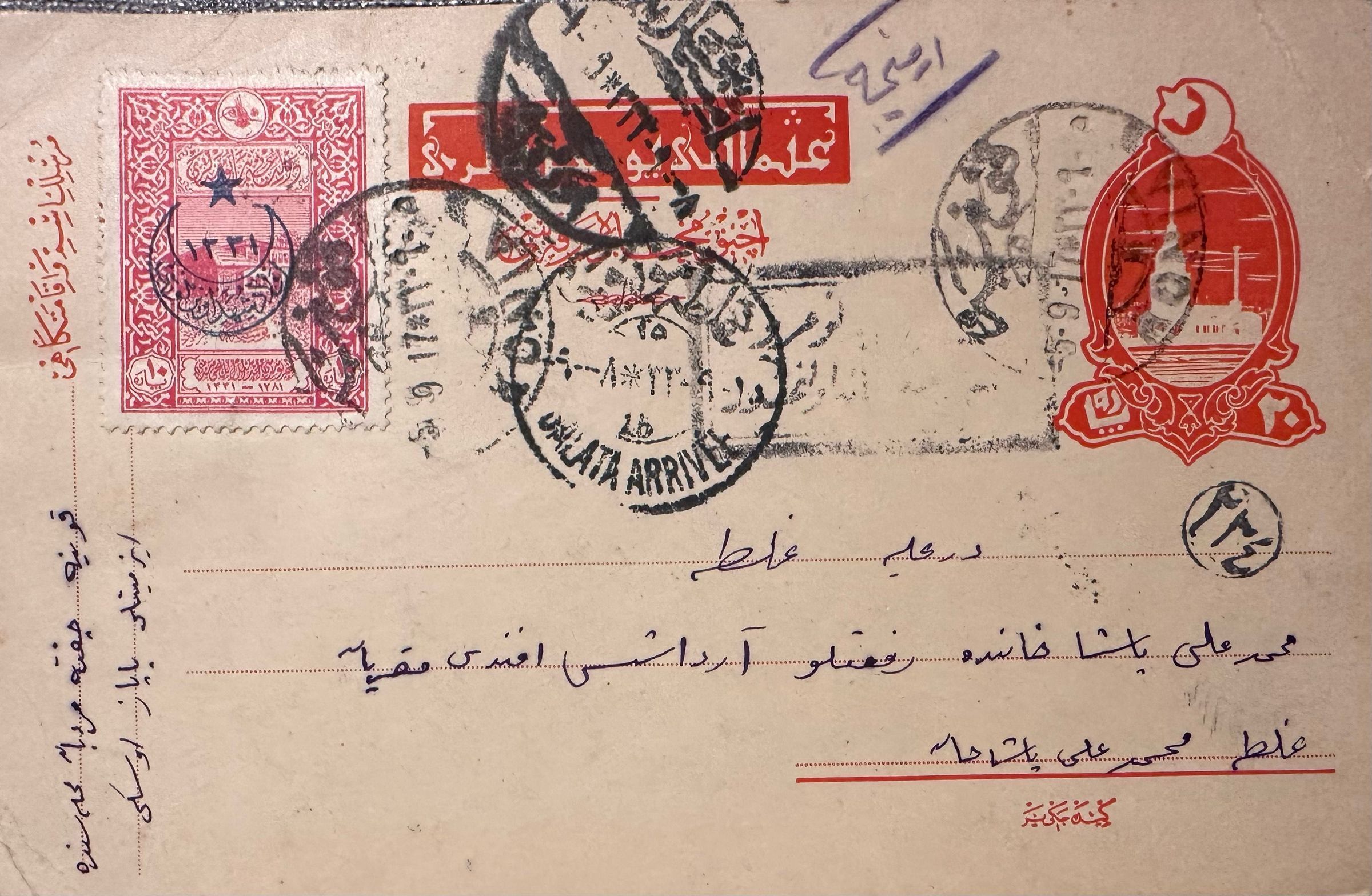
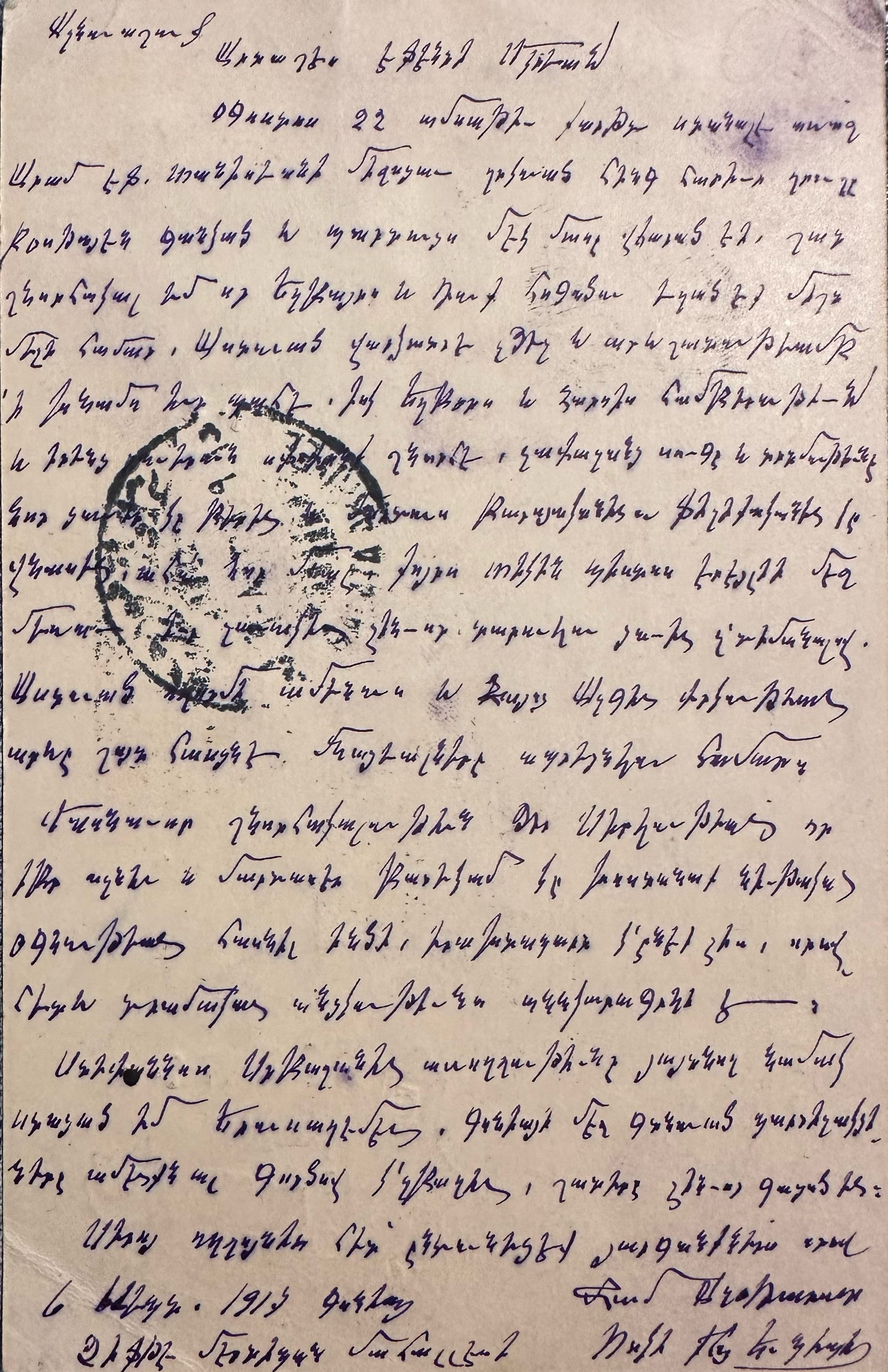
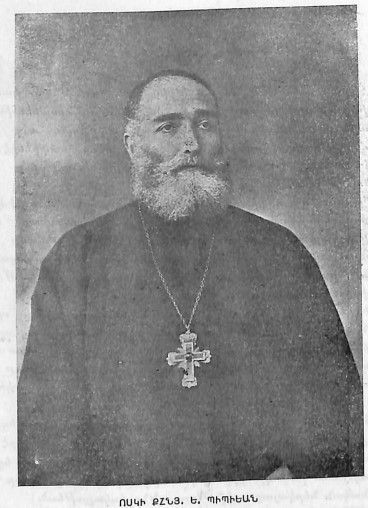
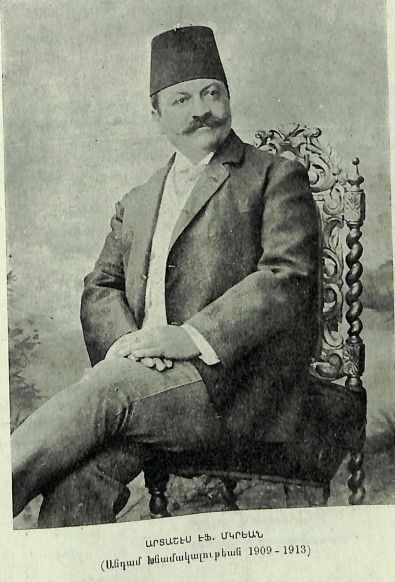
Artashes Efendi Mkryan, Before receiving the card dated August 22, I had already collected the 500 qirsh sent through Aram Ef. Tanisyan from Kosta and paid off a portion of my debt. I’m very grateful that my brother and you have always taken care of us. May God reward you and keep you in good health under the care of our Heavenly Father. As for my brother and sister-in-law, may God grant them patience and consolation for their sorrows. Excessive mourning and sadness only bring new pain and harm both our morale and our physical health. Just recently, my sister, Mrs. Bistos, passed away in Ereğli. She could not bear the sorrow of her son being drafted into the army. May God have mercy on us all and swiftly bring the sun of salvation to the Armenian Nation, so the rest may live. I’m especially thankful for your promise, as a noble and humane friend, to help me financially—it truly humbles me, because my financial struggles are indescribable. I’ve received a letter from Jerusalem informing me of Bishop Stepanos’s passing. All our comrades in Konya are occupied with work; many have gone off to serve as soldiers. With loving greetings, please accept my respects. Dated the 6th day of the month, 1917 Konya, Chifte Merdin (neighborhood) Voski Kahana E. Bibeyan _________________________________________________________________________ This postcard was written by Father Voski Bibeyan and addressed to Ardashes Megeian. Both are well-known figures. Megerian’s brother was Father Hovhannes Megerian, the Patriarchal Vicar of Constantinople. Bibeyan, Voski (born October 8, 1858, Armash, Ottoman Empire – died February 20, 1927, Constantinople), born Father Voski Priest Bibeyan, was an Armenian Apostolic priest, monastic administrator, and humanitarian figure noted for his relief efforts during the Armenian Genocide. Bibeyan received his primary education in his native town of Armash before moving to Constantinople (now Istanbul) in 1870. There, he attended the Karapet Panosian Academy of Fener, an institution inaugurated by prominent Armenian clerical leaders, including Bishops Khrimian, Varzhapetian, and Nar Bey. In 1873, Bibeyan entered the Ghevondian Seminary of Armash. Following his graduation, he engaged in commerce in his hometown for roughly two decades. On January 23, 1894, Bibeyan was ordained into the priesthood by Archbishop Hovakimian, receiving the title of Cross-bearer (Khachakir). Shortly after his ordination, he was appointed administrator of the Monastery of Armash, a position he held consecutively for eighteen years, managing the institution's spiritual and logistical affairs. In 1915, during the 21st year of Bibeyan's priesthood, the Ottoman government initiated the systematic deportation of the Armenian population. As towns surrounding the Nicomedia (Izmit) region were emptied, the local Armenian population was forced to board trains under financially exploitative conditions. Despite suffering from an illness, Bibeyan and twelve members of his family were forced into a cattle car on the third day of the general deportation. At the Mejeje transit station, Bibeyan located his son, Haykaser, who had been exiled three months prior to Iznik alongside 32 other Armenian youths on political charges. Through an agreement with the local police chief, the political charges against the 33 individuals were dismissed, allowing them to blend into the main population of deportees. Upon reaching Karaman, Ottoman authorities forcibly removed the deportees from the trains and transferred them to an open field. The encampment suffered high mortality rates, averaging 10 to 20 deaths daily due to exposure and deprivation. Bibeyan organized efforts to transport the deceased by cart to a local church for Christian burial, during which he was subjected to physical violence by the local police. On August 11, 1915, the deportees were driven to Ereyli to accommodate the clearing of Karaman's native Armenian population. The arrival of additional deportees from Konya, led by Archbishop Stephanos and Vardapet Garegin, grew the encampment to an estimated 60,000 people. Local police exploited the refugees by demanding bribes for basic necessities, such as permission to pitch tents. On August 21, 1915, Celal Bey (Djemal), the Governor of Konya known for his opposition to the central government's extermination policies, arrived in Ereyli. Celal Bey issued directives to the kaymakam (district governor) to provide medical care for the sick, food rations for the impoverished, and travel facilitation. Following the governor's departure the next day, local authorities resumed physical subjection of the deportees. Anticipating further violence, Bibeyan secured passage on a train to Pozanti through the assistance of a railway station master named Pantelimis. From Pozanti, he traveled onward to Tarsus, where he encountered 37 exiled Armenian priests who had been stripped of their clerical garments and tortured. In Tarsus, Bibeyan met with the local governor and assumed a leadership role within the civic "Deportee Committee." He managed the daily distribution of bread to refugees, a demographic that expanded from 1,000 to 6,000 individuals during his tenure. On September 21, 1915, Bibeyan secured authorization to return from exile following the political intervention of Onnik Ihsan, an Armenian member of the Ottoman Parliament (mebus) representing Constantinople. During the return journey through Pozanti, Bibeyan's two-year-old grandson died and was buried on a hillside near the graves of six soldiers. Learning that Armenian properties in Armash had been looted and burned by local populations, Bibeyan chose to settle his family temporarily in Konya. Following the Armistice of Mudros (1918), he returned to Nicomedia, residing there until June 1921. He spent his final years in Constantinople, where he died on February 20, 1927.Category
Postcards