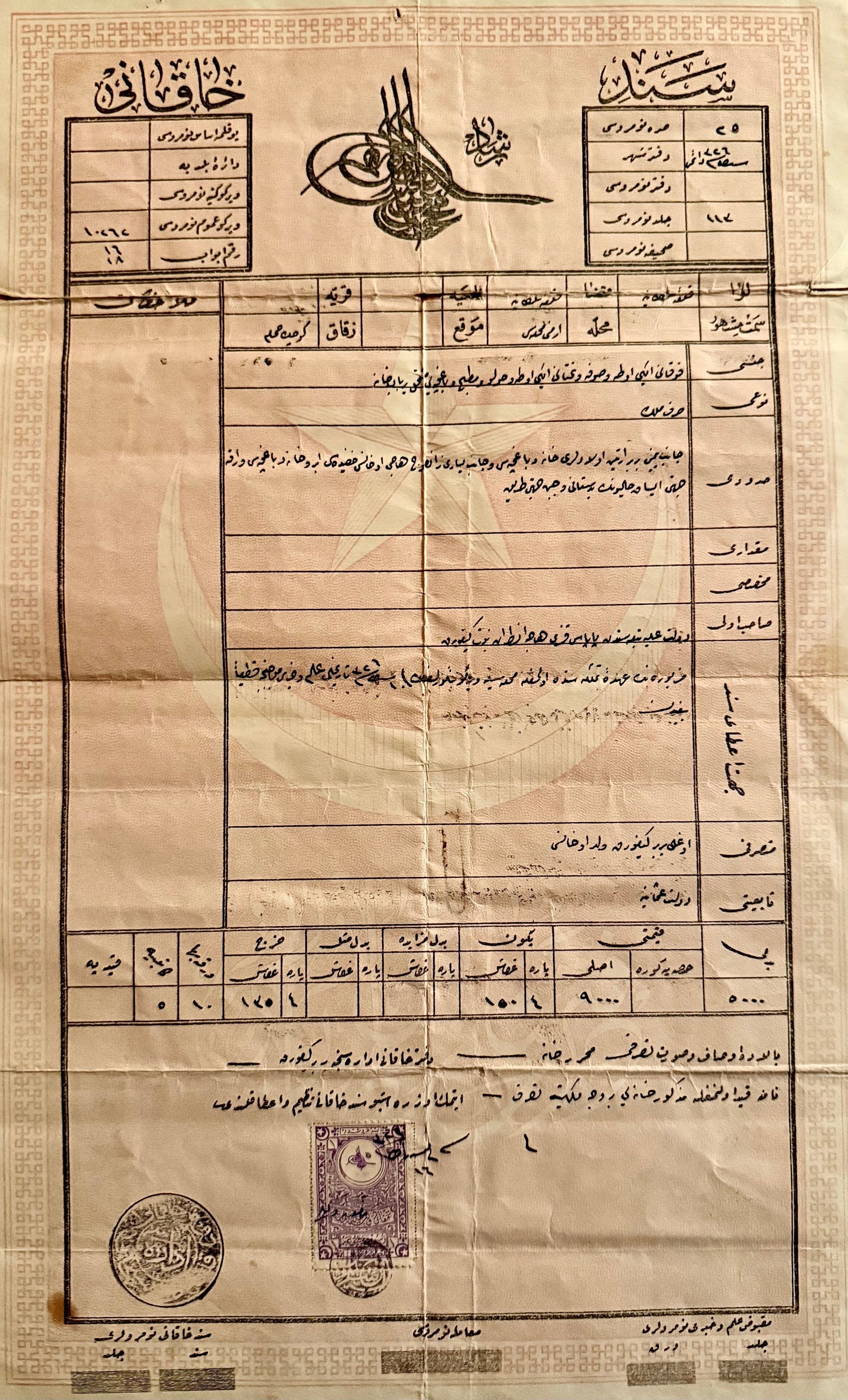
Property Deed #46
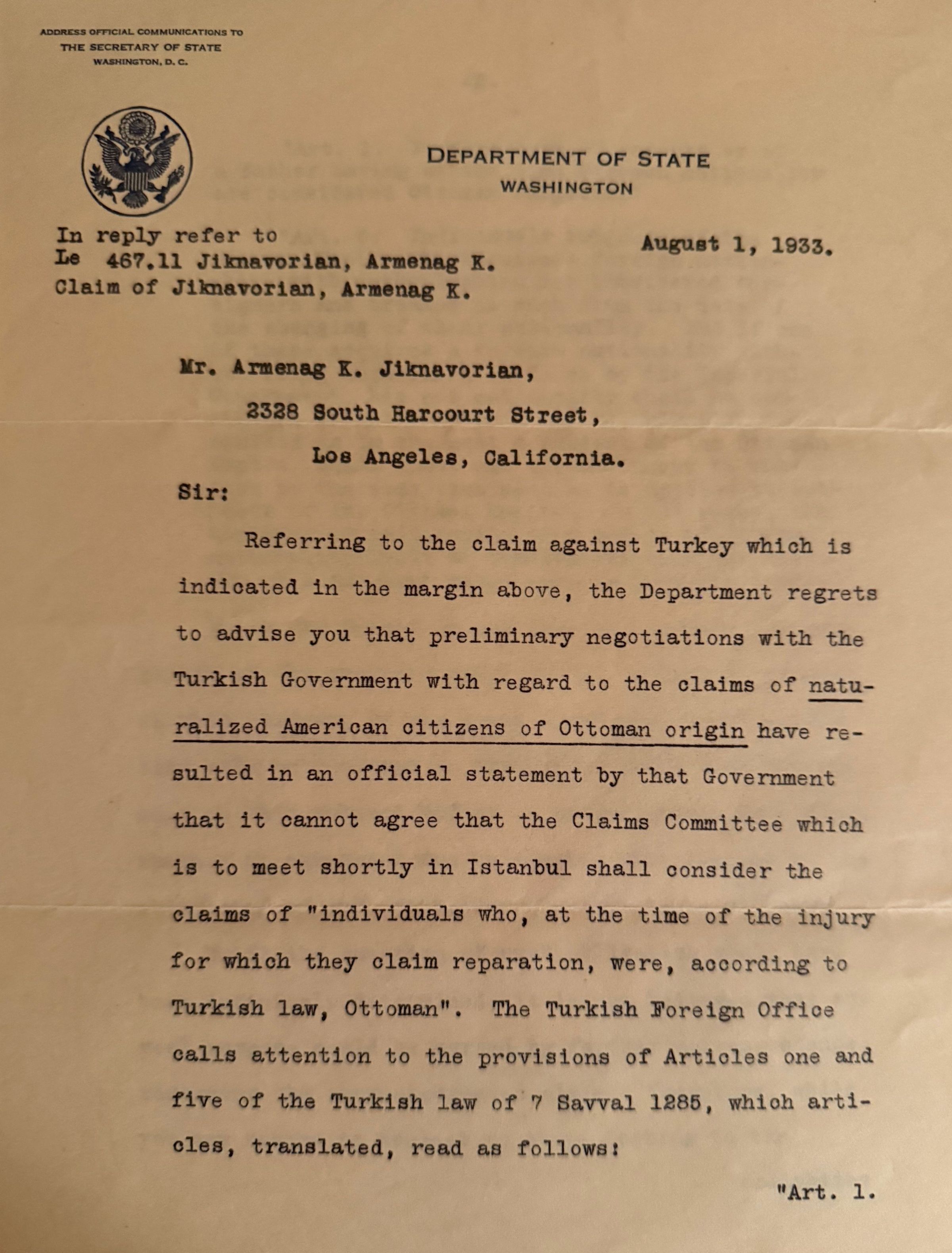
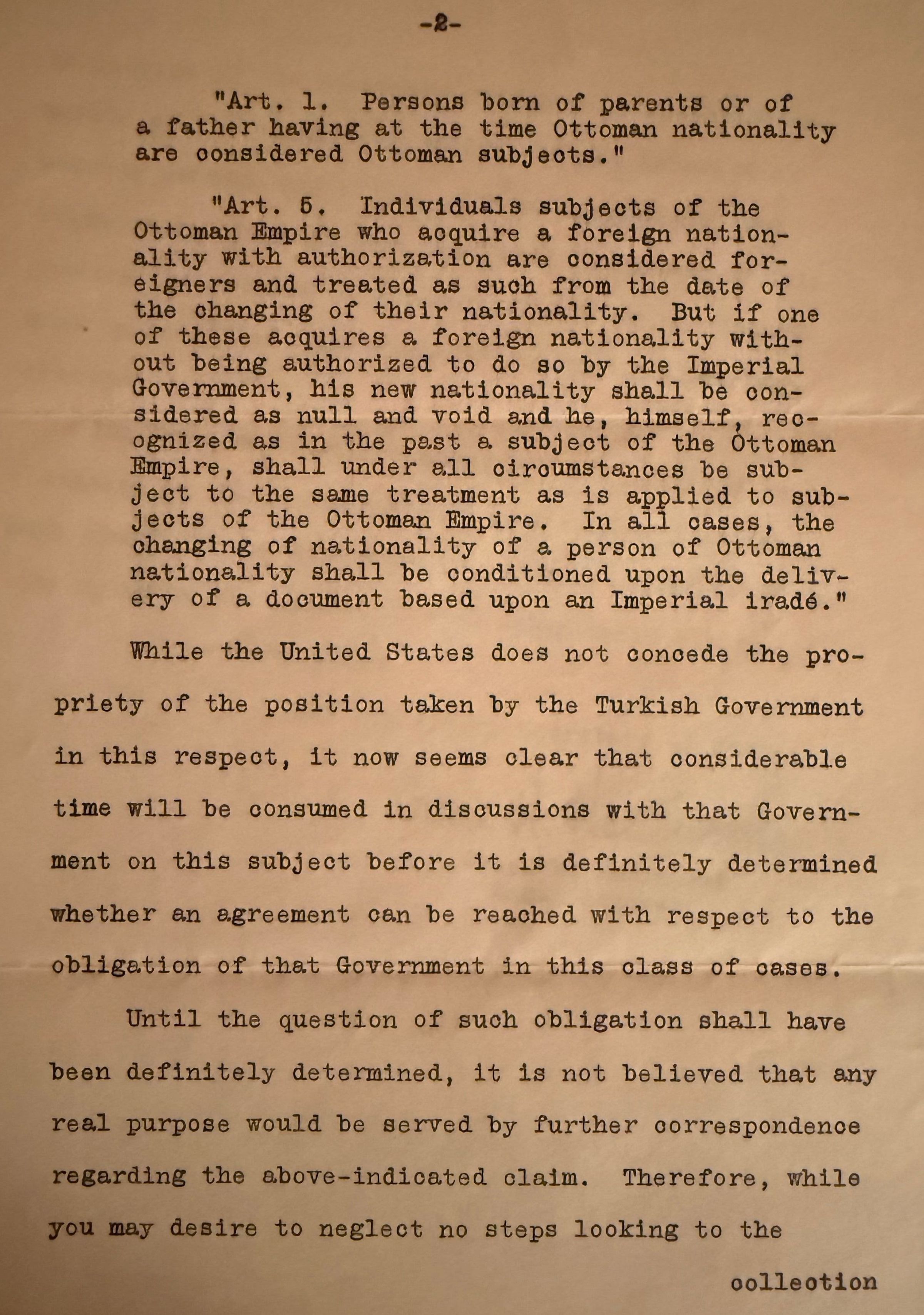
![collection of the necessary evidence to establish the merits of the claim in question, in the interest of economy of time and effort, the correspondence and evidence received in this case will be placed on file pending the results of further efforts by the Department in behalf of this class of naturalized American citizens. The Department will communicate with respective claimants or their attorneys as soon as there is any such change in the situation as to make it advisable to take up again the matter of completing their claims. Very truly yours, For the Acting Secretary of State: [Signature: Green H. Hackworth] Green H. Hackworth, Legal Adviser.](https://d8e7jbdw4fu0e.cloudfront.net/15232/c0bf5c21-28c9-11f1-9098-7fac40149867-vq6jAtv.lg-nt@2x.jpg)
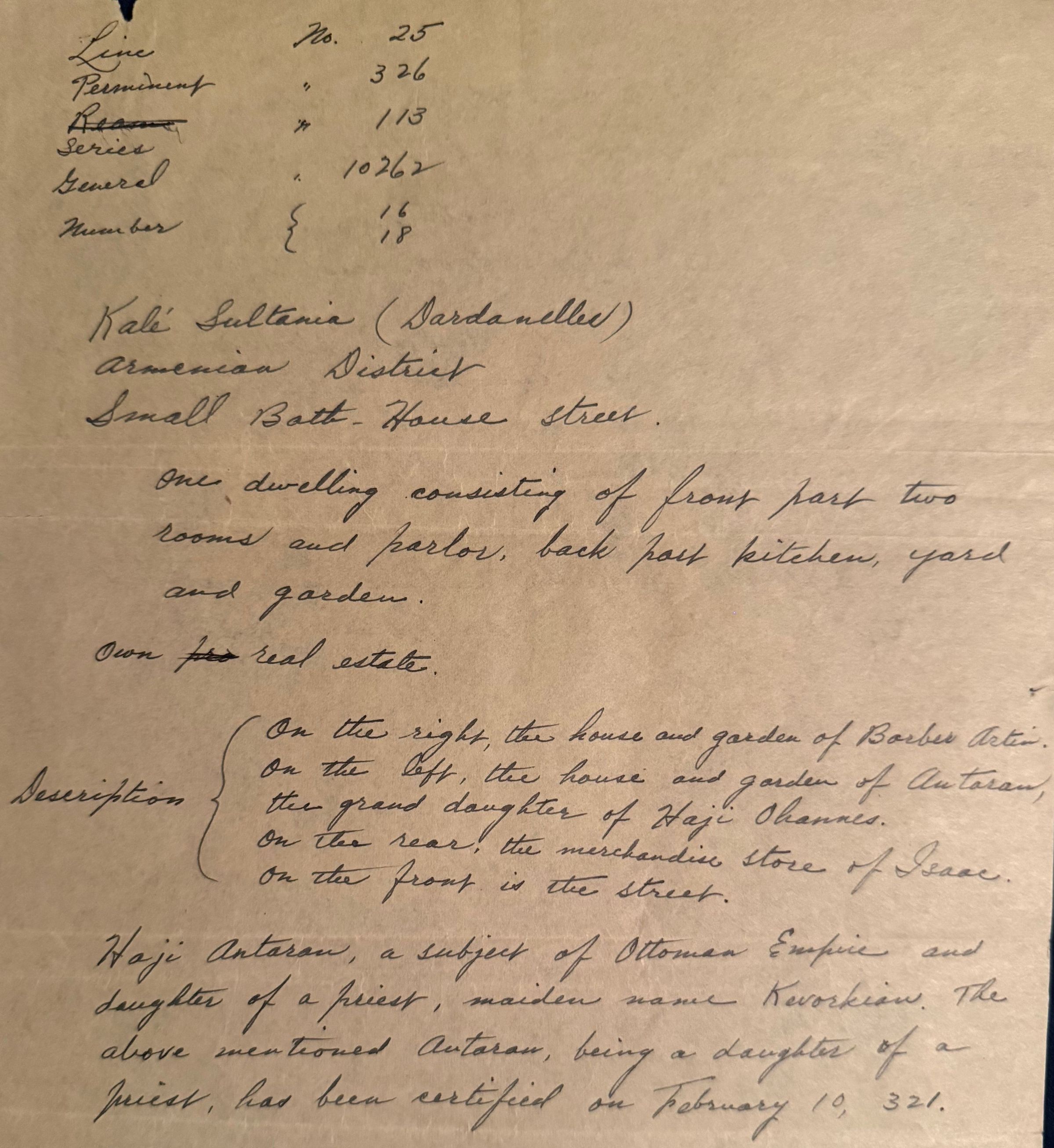
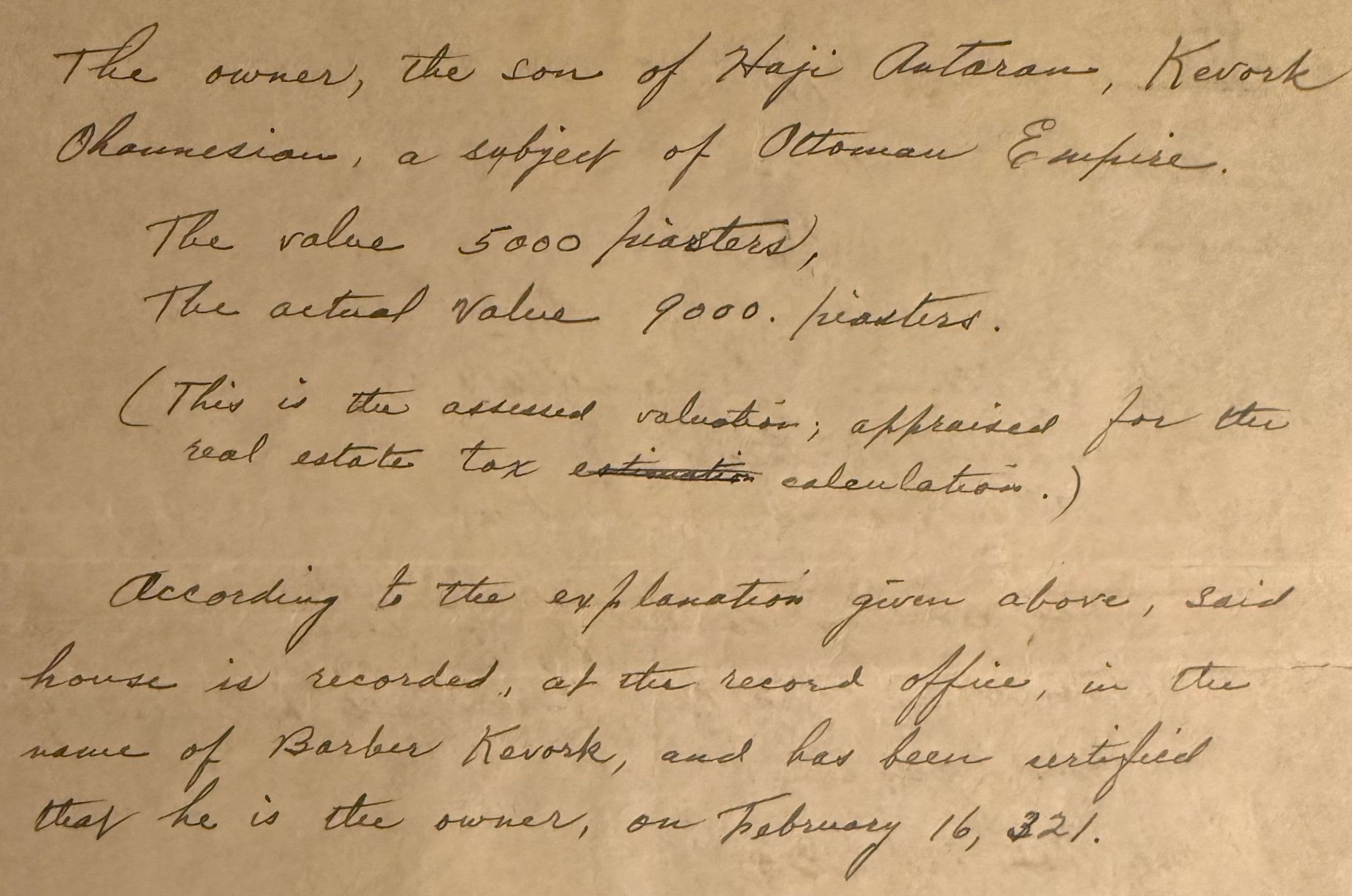
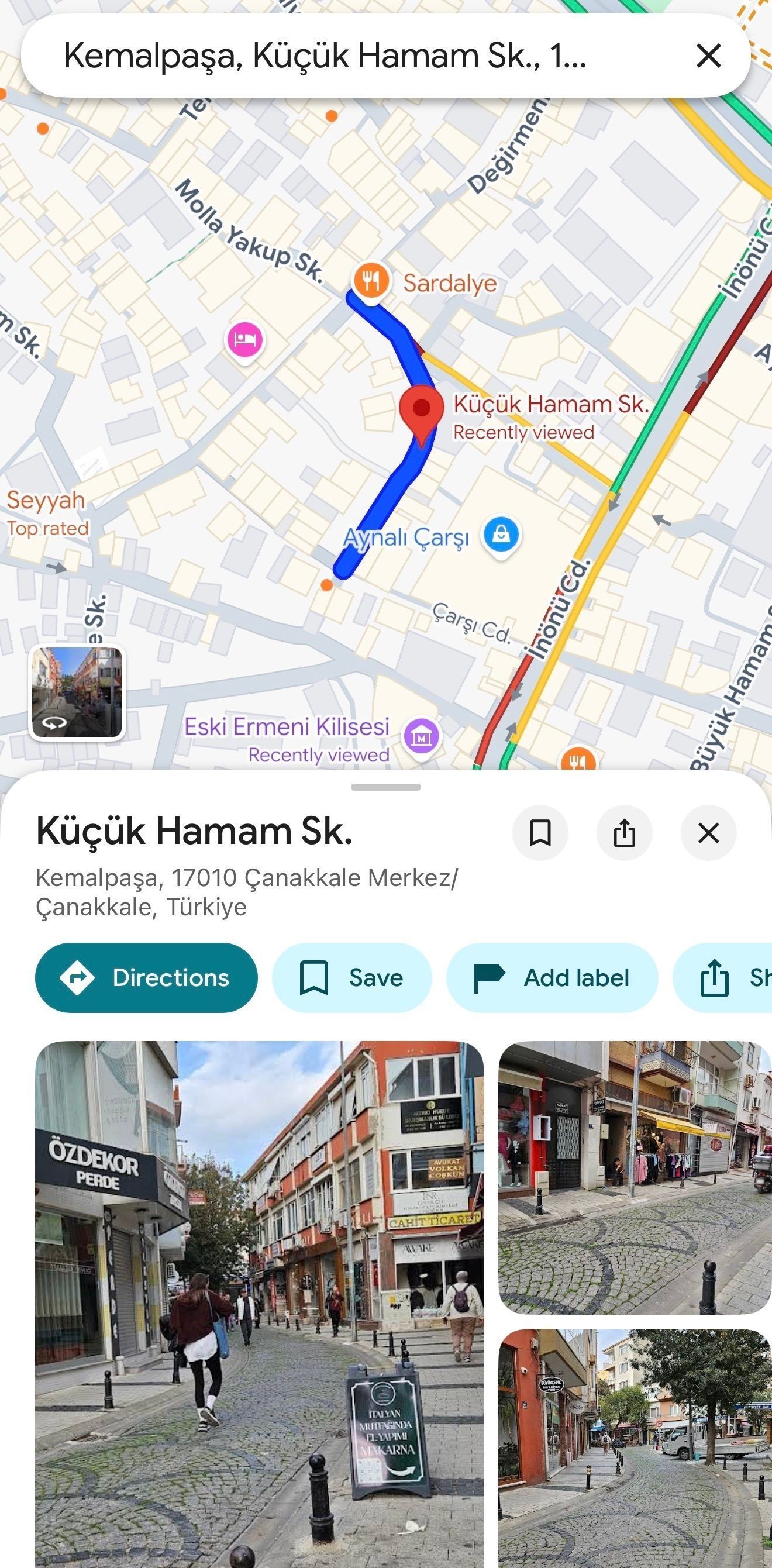
Name/Title
Property Deed #46Scope and Content
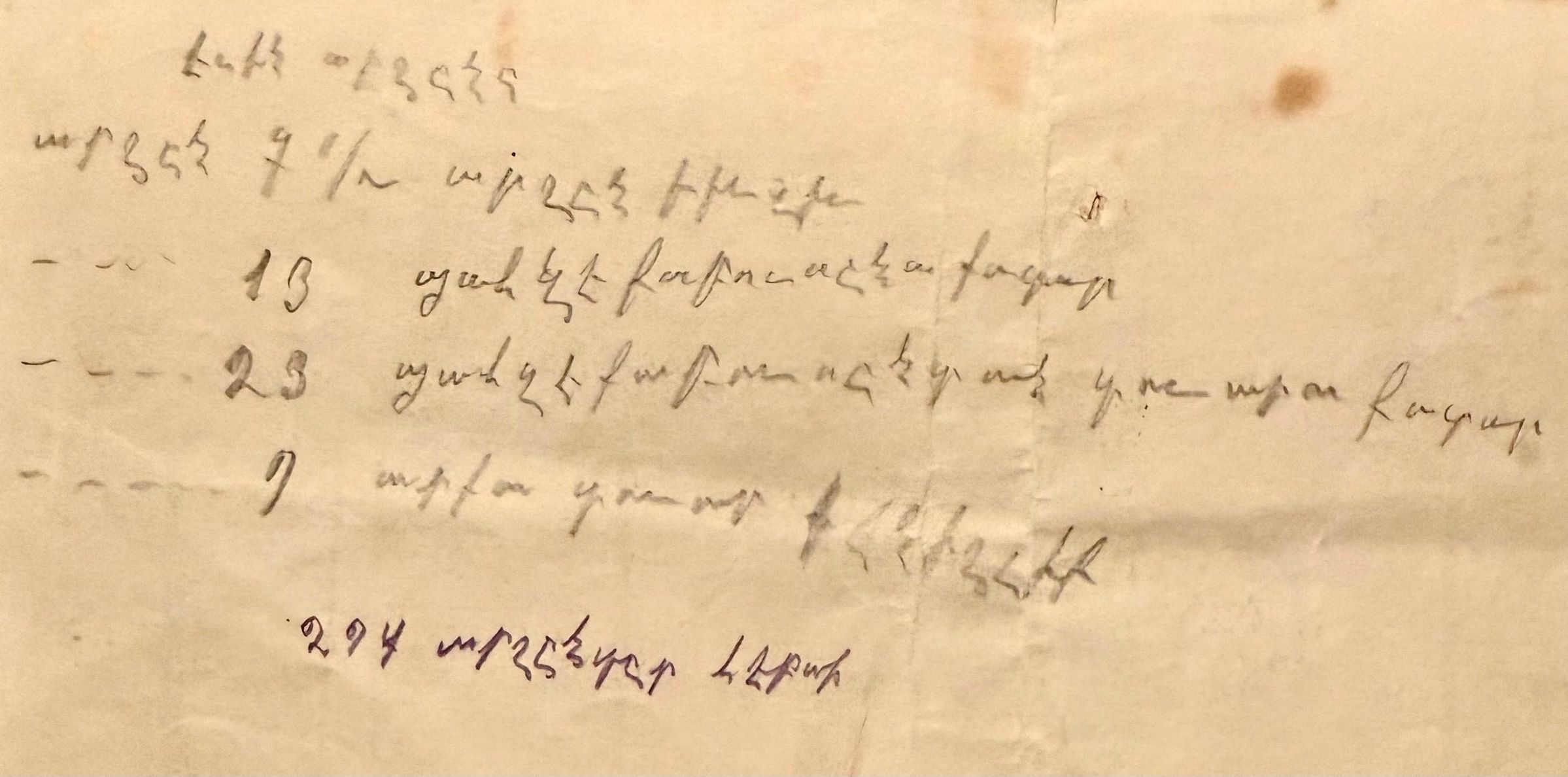
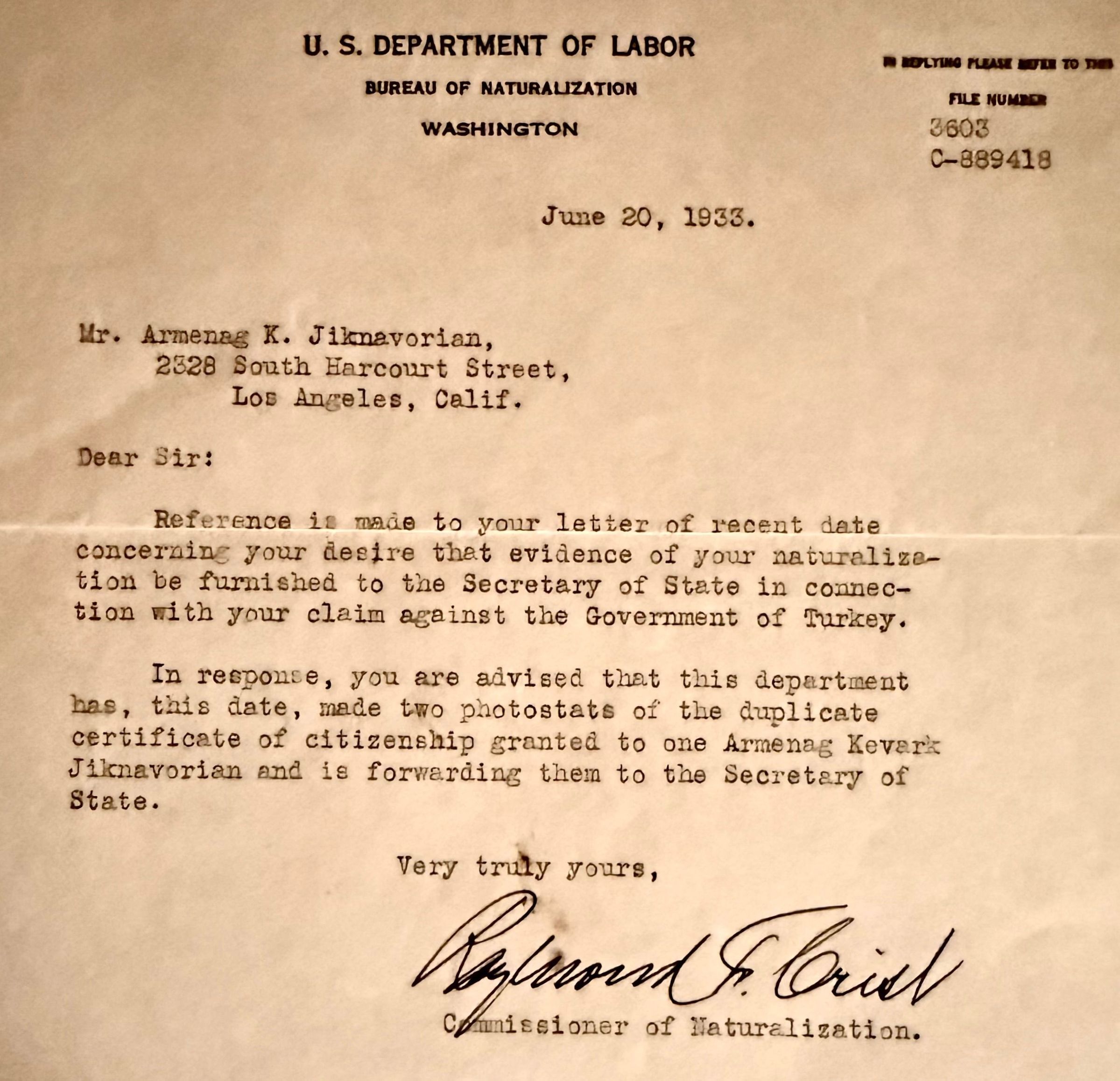
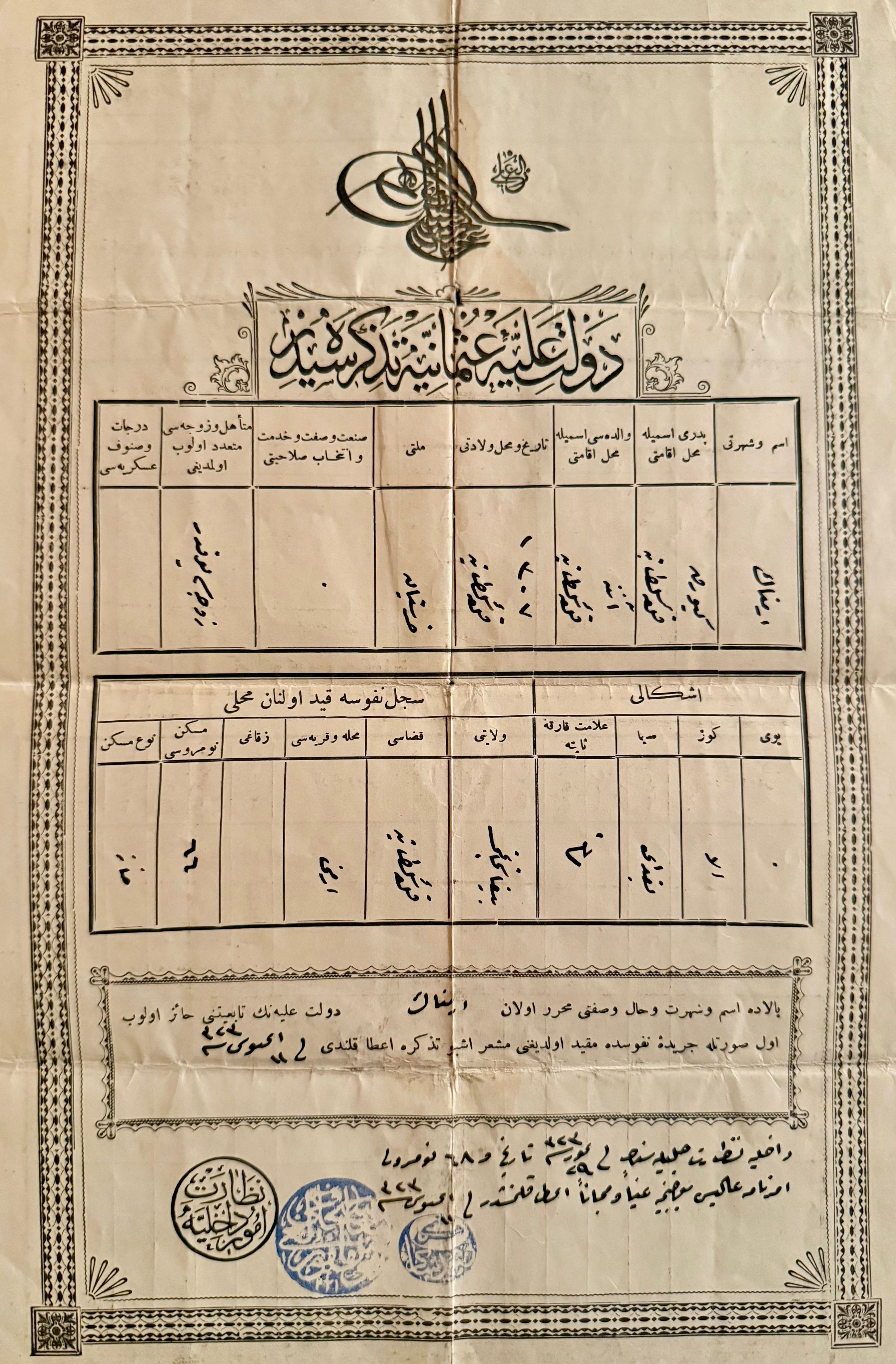
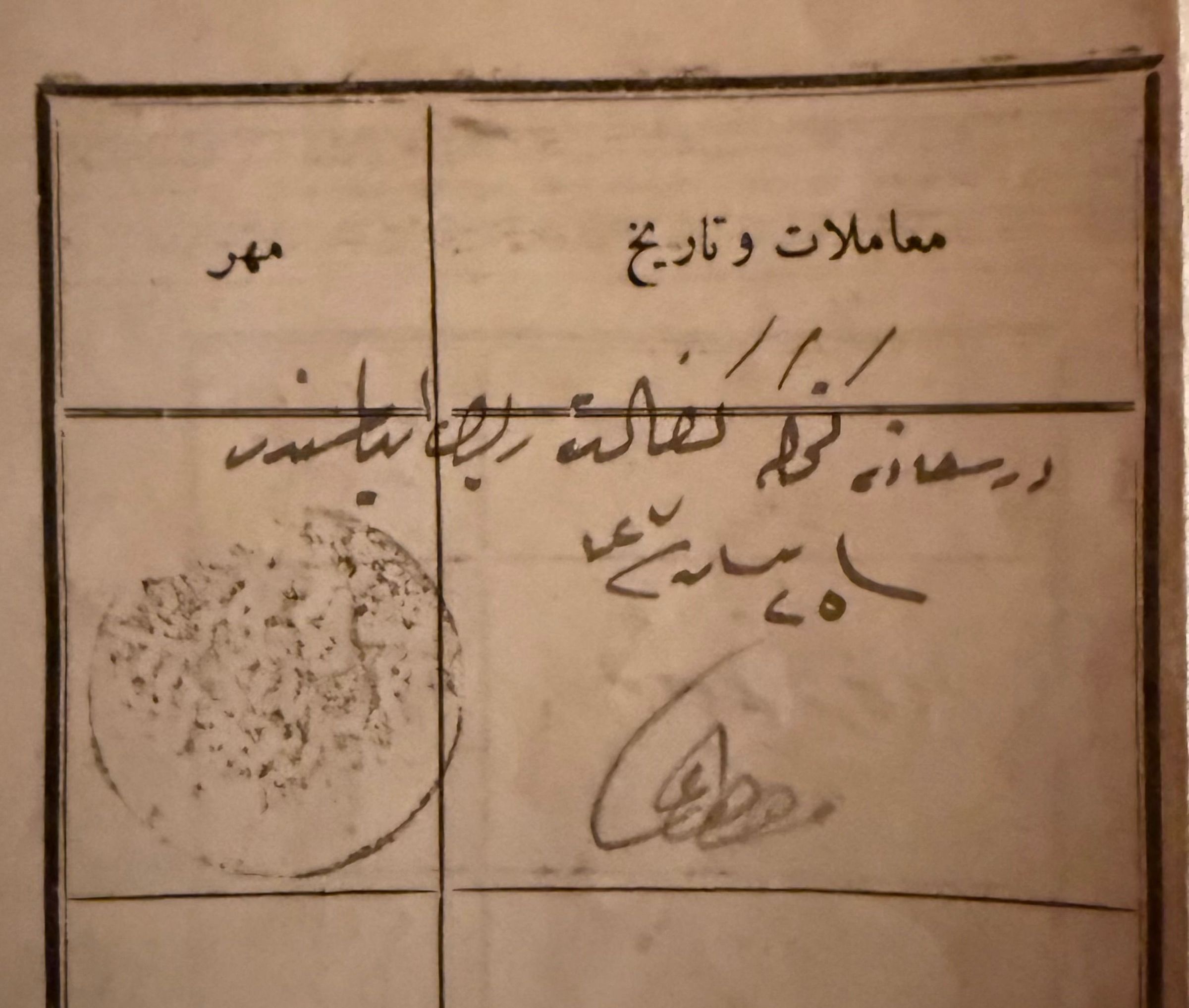
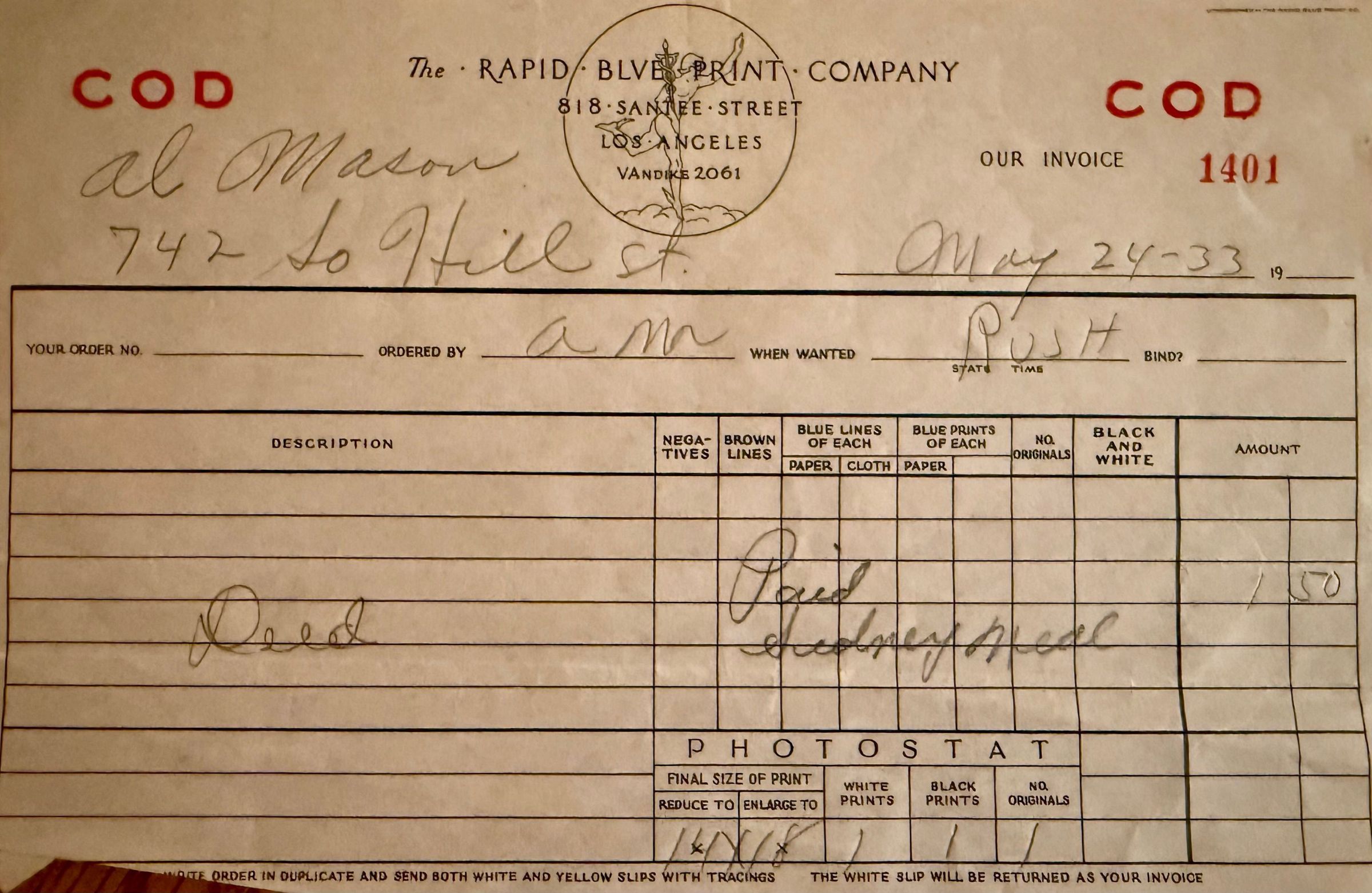
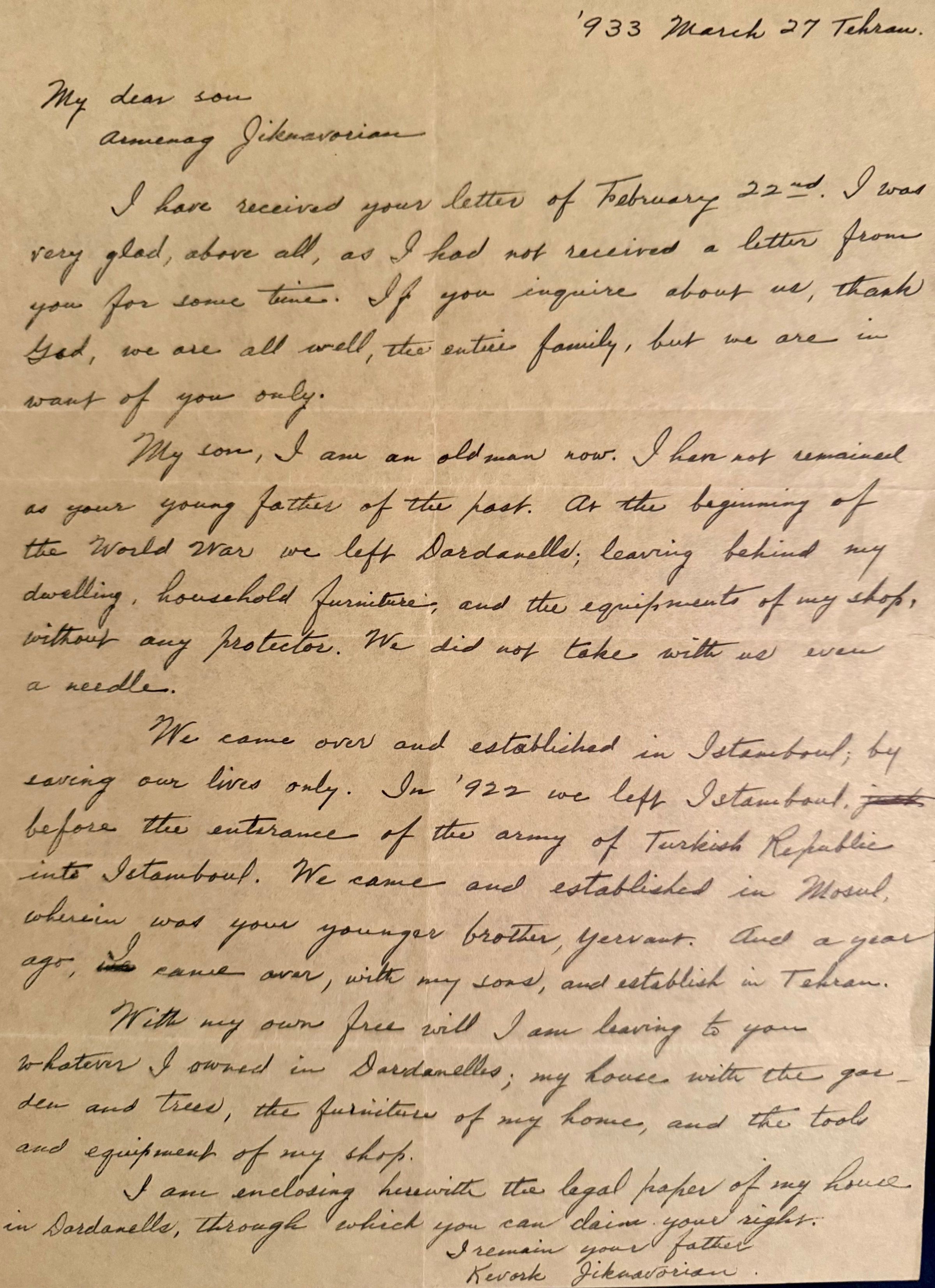
These documents trace the legal claim of the Jiknavorian family for property in Kalé Sultania (modern Çanakkale), in the Armenian District of the Ottoman Empire. According to the Ottoman tapu, Haji Antaran, a subject of the Ottoman Empire and daughter of a priest (maiden name Kevorkian), owned a dwelling on Small Bath-House Street consisting of a front part with two rooms and a parlor, and a back part with a kitchen, yard, and garden. The property was described as having on the right the house and garden of Barber Artin, on the left the house and garden of Antaran, the granddaughter of Haji Ohannes, at the rear the merchandise store of Isaac, and the street in front. The deed lists the property’s value at 5,000 piasters, with an actual assessed value of 9,000 piasters for tax purposes. It was certified on February 10, 1321 in the Rumi calendar (approximately 1905/1906). Later certification in the record office confirmed that Barber Kevork was the registered owner on February 16, 1321. A later family letter, dated March 27, 1933 in Tehran, shows Kevork Jiknavorian writing to his son Armenag. He explains that the family fled Kalé Sultania at the start of World War I, leaving behind their home, household goods, and shop equipment. They subsequently lived in Istanbul, then Mosul, and finally Tehran. In the letter, Kevork formally transfers to Armenag whatever he still owned in Kalé Sultania, including the house, garden, trees, home furnishings, and shop tools, and encloses the legal paper for the house so his son could pursue the claim. Additional records provide important context about Armenag Kevork Jiknavorian’s life and movements. His naturalization declaration states that he was born in the Dardanelles region of the Ottoman Empire on September 6, 1891, and arrived in the United States on September 30, 1912, traveling from Piraeus, Greece to New York aboard the Themistocles. At age 25, he filed his declaration of intention on February 8, 1917 in Boston, Massachusetts, beginning the process of becoming a U.S. citizen. By the time of World War I, Armenag was living in Fresno, California, at 836 “L” Street (later recorded at 2127 Santa Clara Avenue), reflecting his establishment in the United States. Military records further show that Armenag served in the U.S. Army during World War I. He enlisted on April 28, 1918, and was assigned to Company F, 316th Engineers with the rank of Private (service number 2784280). He departed for overseas service on July 6, 1918, sailing from New York aboard the Armagh. His records list Fresno, California as his residence and identify Kevork Barberian, noted as a friend, as his next of kin who himself was also from the Dardanelles. Armenag was honorably discharged on May 2, 1919. His Social Security record later confirms his life span as September 16, 1892 to October 30, 1980. Two additional 1933 U.S. government documents show the family’s effort to support the claim. A June 20, 1933 letter from the Bureau of Naturalization states that two photostats of Armenag Kevork Jiknavorian’s duplicate citizenship certificate were sent to the Secretary of State, confirming his U.S. naturalization. A May 24, 1933 receipt from The Rapid Blue Print Company records the making of photostats of the property deed, addressed to Al Mason in Los Angeles, likely the family’s legal or administrative representative. Finally, an August 1, 1933 letter from the U.S. State Department explains the legal difficulty: Turkey was refusing to consider claims by naturalized American citizens of Ottoman origin if, under Turkish law at the time of the loss, they were still regarded as Ottoman subjects. The letter cites Ottoman nationality law provisions stating that people born to Ottoman fathers were Ottoman subjects and that changing nationality required official authorization. The State Department notes that it could not yet resolve the issue and would hold the evidence on file until the broader question with Turkey was settled.Category
Property Deeds