Property Deed #48
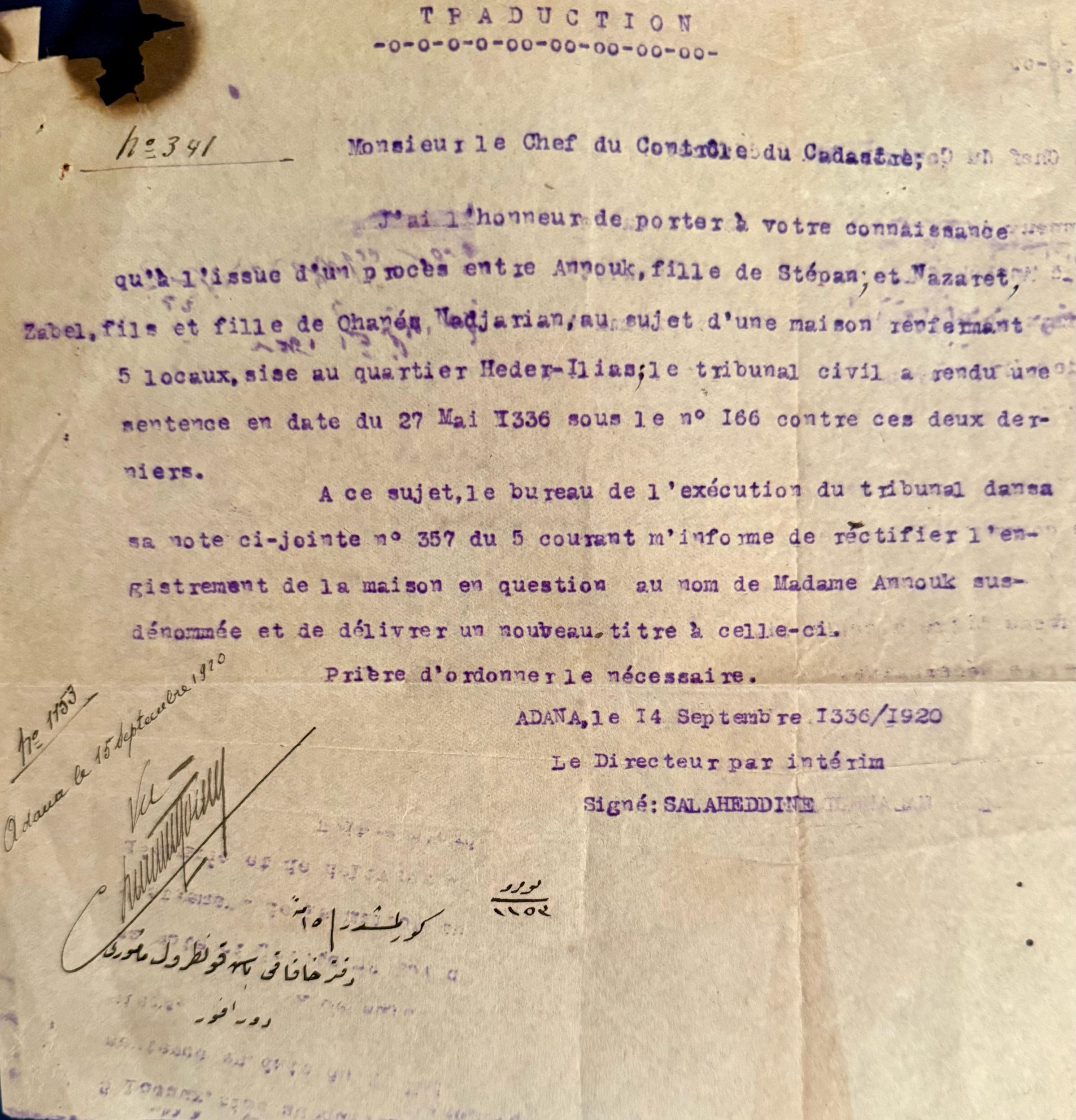
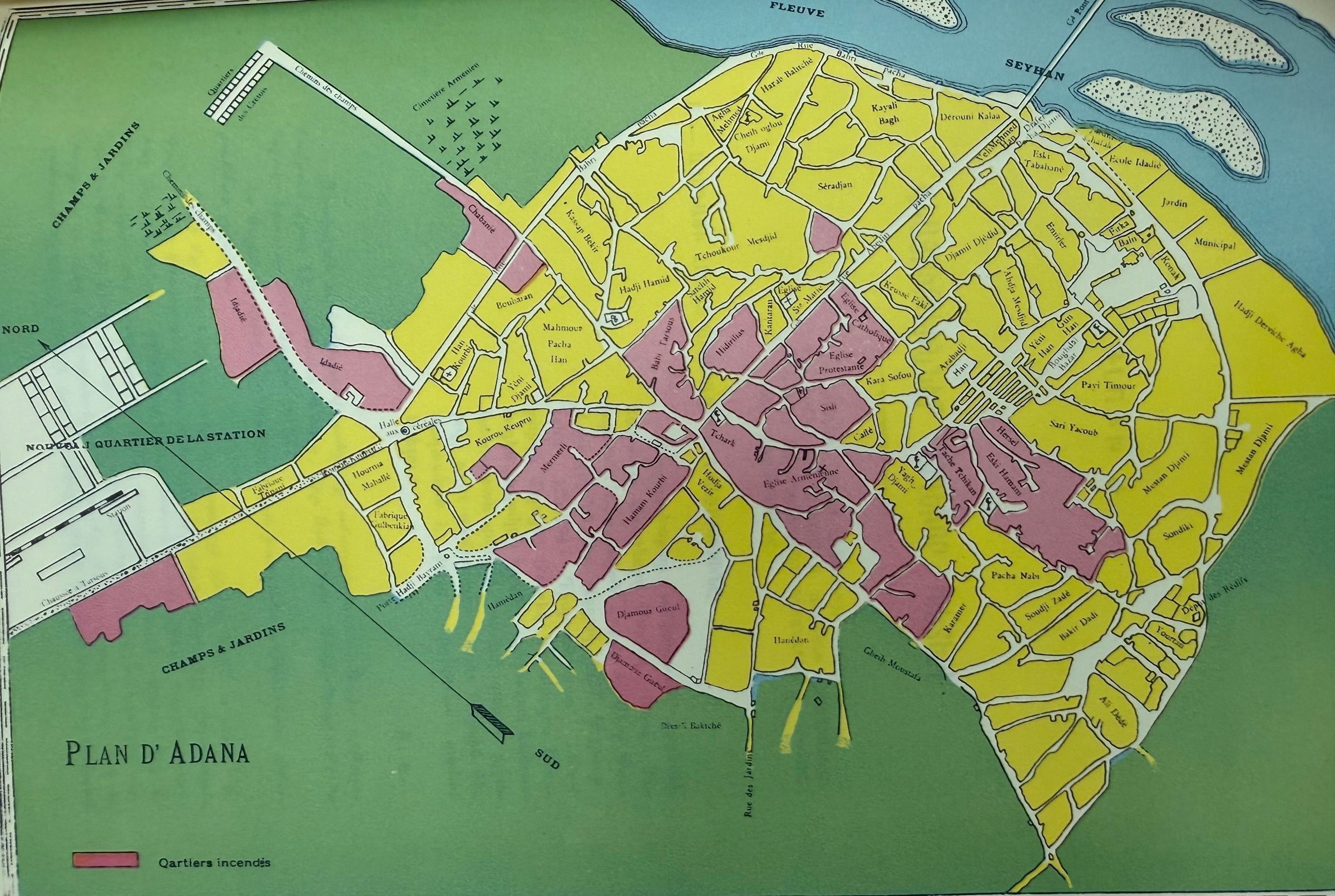
Monsieur le Chef du Contrôle du Cadastre, J'ai l'honneur de porter à votre connaissance qu'à l'issue d'un procès entre Annouk, fille de Stépan, et Nazaret, Zabel, fils et fille de Ohanes Nadjarian, au sujet d'une maison renfermant 5 locaux, sise au quartier Heder-Ilias; le tribunal civil a rendu une sentence en date du 27 Mai 1336 sous le n° 166 contre ces deux derniers. A ce sujet, le bureau de l'exécution du tribunal dans sa note ci-jointe n° 387 du 5 courant m'informe de rectifier l'enregistrement de la maison en question au nom de Madame Annouk sus-nommée et de délivrer un nouveau titre à celle-ci. Prière d'ordonner le nécessaire. ADANA, le 14 Septembre 1336/1920 Le Directeur par intérim Signé : SALAHEDDINE
Name/Title
Property Deed #48Scope and Content
To the Chief of the Cadastral Control, I have the honor to inform you that following a lawsuit between Annouk, daughter of Stepan, and Nazaret [and] Zabel, son and Ohanes Nadjarian, regarding a house containing 5 rooms located in the Heder-Ilias neighborhood; the civil court rendered a judgment dated May 27, 1336 [1920] under No. 166 against the latter two. In this regard, the court's enforcement office, in its attached note No. 387 of the 5th of this month, informs me to correct the registration of the house in question to the name of the aforementioned Madame Annouk and to issue a new title deed to her. Please order the necessary actions. ADANA, September 14, 1336/1920 The Acting Director Signed: SALAHEDDINE It is evident that this document originally comprised additional attached pages. The request reflects a fleeting moment of legal continuity under the French occupation of Cilicia (1919–1921). French forces had entered Adana in October 1919 as part of the Allied division of former Ottoman territories following World War I. Backed by Armenian volunteers and local communities, the French aimed to stabilize the region and reestablish civil governance. During this period, many Armenian families—dispossessed during the 1915 genocide—sought to reclaim ancestral properties under French military and administrative protection. Documents like this one stand as evidence of those efforts to restore legal ownership amid deep political uncertainty. However, this fragile window soon closed. With the Treaty of Ankara in October 1921, France agreed to withdraw from Cilicia, ceding control to the Turkish National Movement. In the aftermath, Armenian communities faced renewed violence and were forced into mass exodus. As such, this inheritance request marks one of the last formal efforts at restitution before the collapse of French authority and the final dispersal of Armenians from the region.Category
Property Deeds