Property Deed #61
Name/Title
Property Deed #61Scope and Content
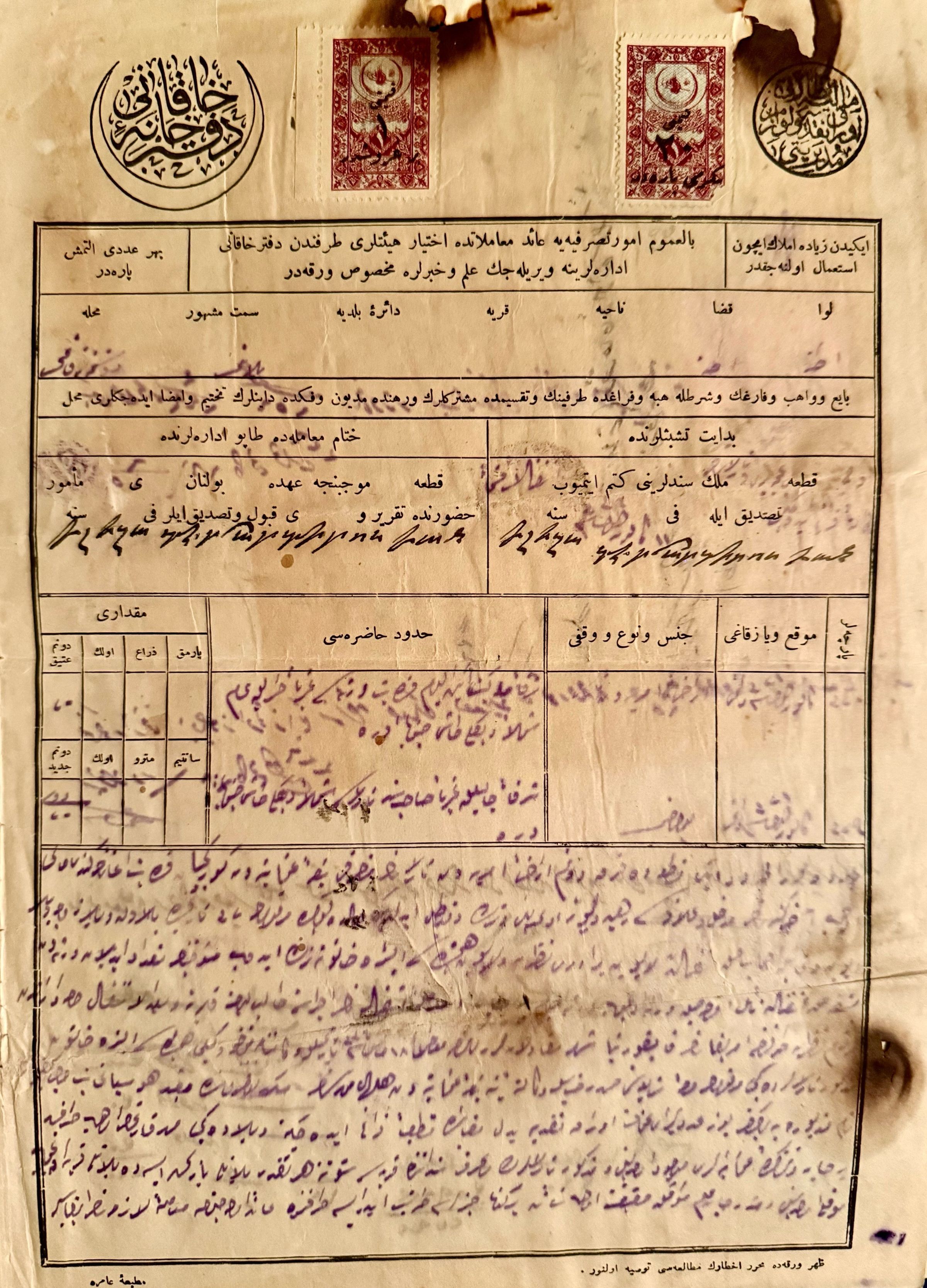
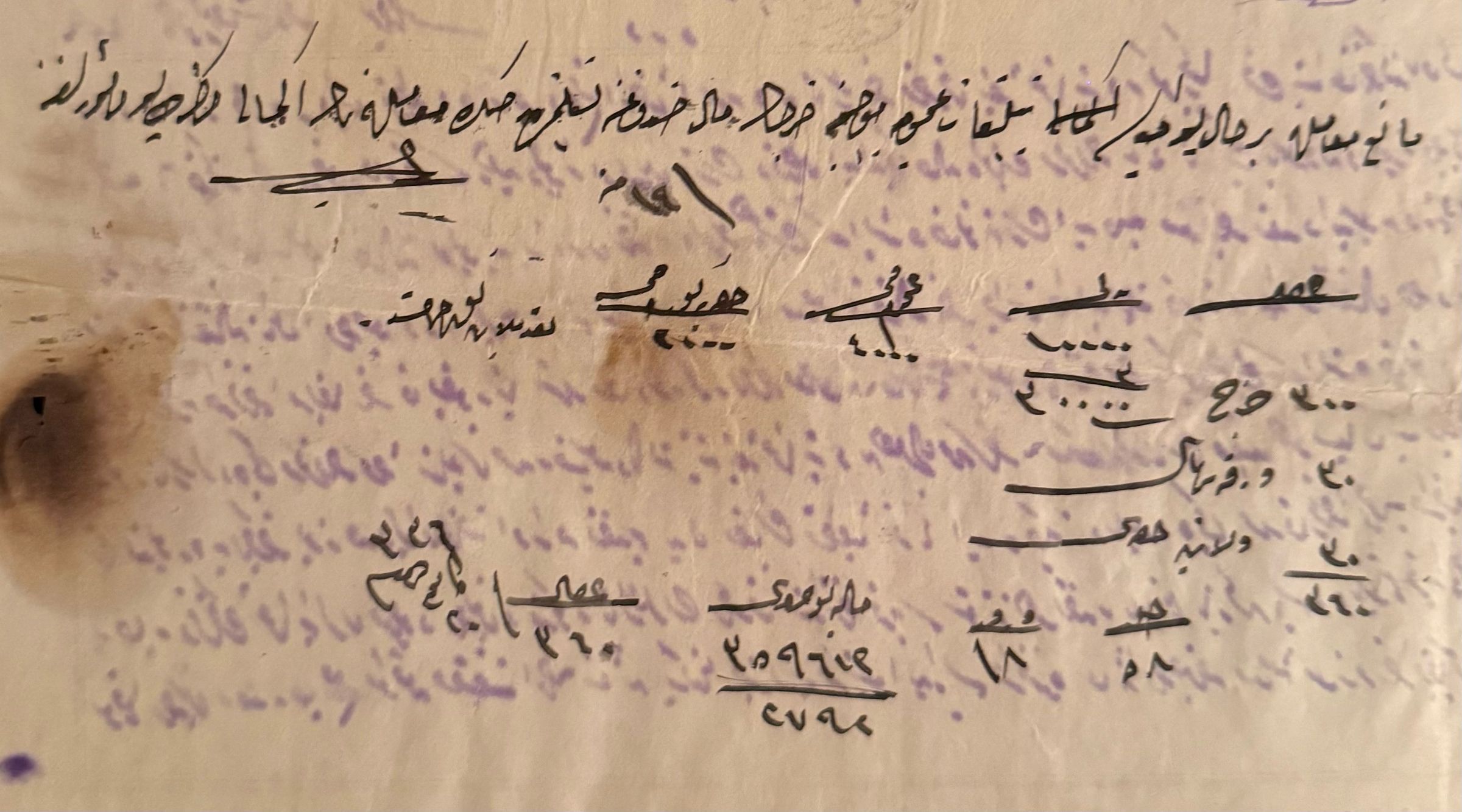
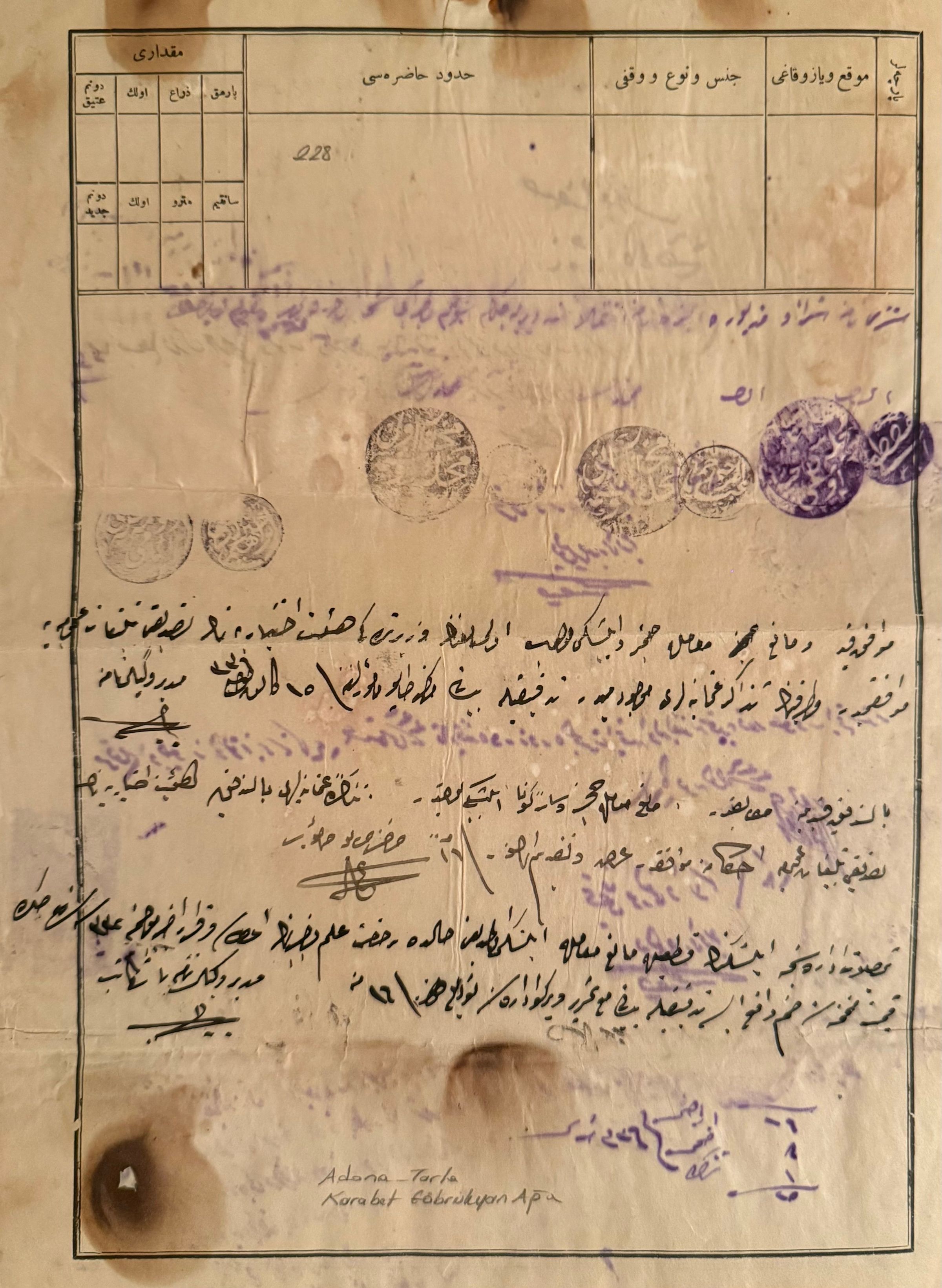
The Adana Land Registry Deed (Göbrükyan–Der Mardirossian Estate) is a primary late-Ottoman legal artifact documenting real estate tenure in the Adana Vilayet in 1920. The document is an Imperial Land Deed, historically known as a Tapu Senedi, issued by the Ministry of the Imperial Land Registry (Defter-i Hakani Nezareti) to serve as definitive proof of private property ownership or state-leased usufruct rights. This specific legal dossier is preserved across three distinct archival views, consisting of the primary deed face, the reverse validation page, and a supplementary fiscal ledger isolate. Together, these elements provide a comprehensive overview of the administrative, legal, and financial frameworks governing property transactions in the region during the late nineteenth and early twentieth centuries. The recto side of the deed features a standardized pre-printed imperial template utilized by the Ottoman state to regularize property registration and centralization across its provinces. In the top-left corner, the document bears the elaborate calligraphic emblem of the Defter-i Hakani, while two imperial revenue stamps with official ink cancellations are affixed near the top center to confirm the payment of mandatory transaction duties. The administrative hierarchy is established in the top-right columns, which explicitly locate the property within the Kaza and Sanjak of Adana. Below this, the transactional enclosure is split into two administrative recording blocks representing the initiation and final completion of the registration proceedings. Inscribed across both blocks in a flowing administrative Rika script is the name of Eliza Der Mardirossian, establishing her direct legal interest or presence during the final execution of the deed. The central matrix categorizes the property as a tarla, meaning an arable agricultural field, and records its physical boundaries along cardinal coordinates and neighboring estates, while the dense legal text at the bottom outlines the property's provenance and its historical connection to Garabet Göbrükyan. The validation and processing history of the estate continues on the verso side of the document, which tracks the local bureaucratic pipeline required to finalize the transfer. This page is stamped with multiple circular ink seals belonging to members of the local Property Commission and regional registry executives, certifying that the details on the deed perfectly correspond with the permanent regional registry books. At the bottom margin of this reverse side, a later archival notation written in pencil using the Latin script reads "Adana - Tarla / Karabet Göbrükyan Ağa", indicating long-term stewardship or subsequent indexing within a repository. Complementing this verification is a macro view that isolates the rapid accounting notations written by the registry clerk. This section utilizes traditional Ottoman numerical fractions and specialized financial shorthand to provide a strict breakdown of registration fees, title-deed taxes, and clerk allowances associated with the estate transaction.Category
Property Deeds