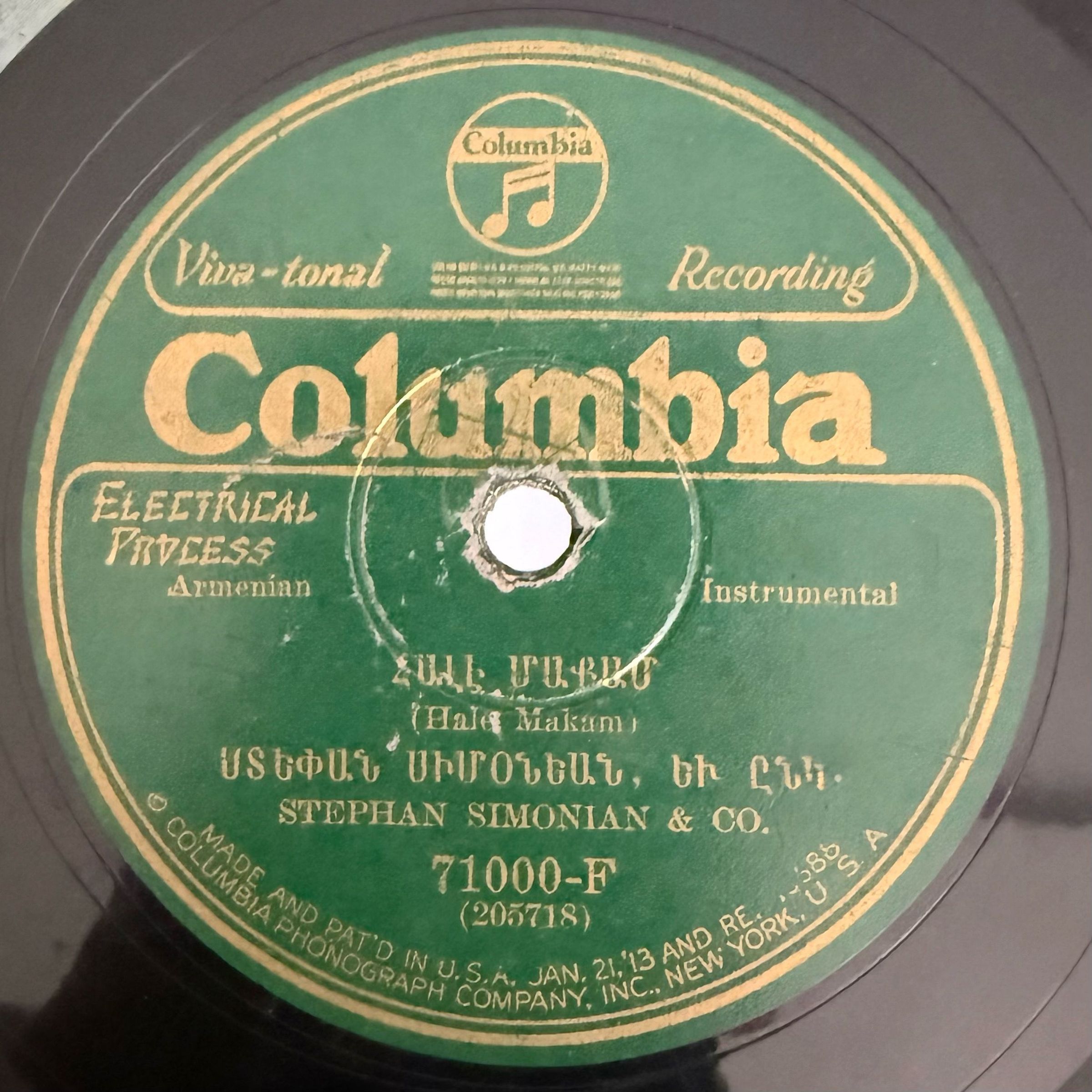
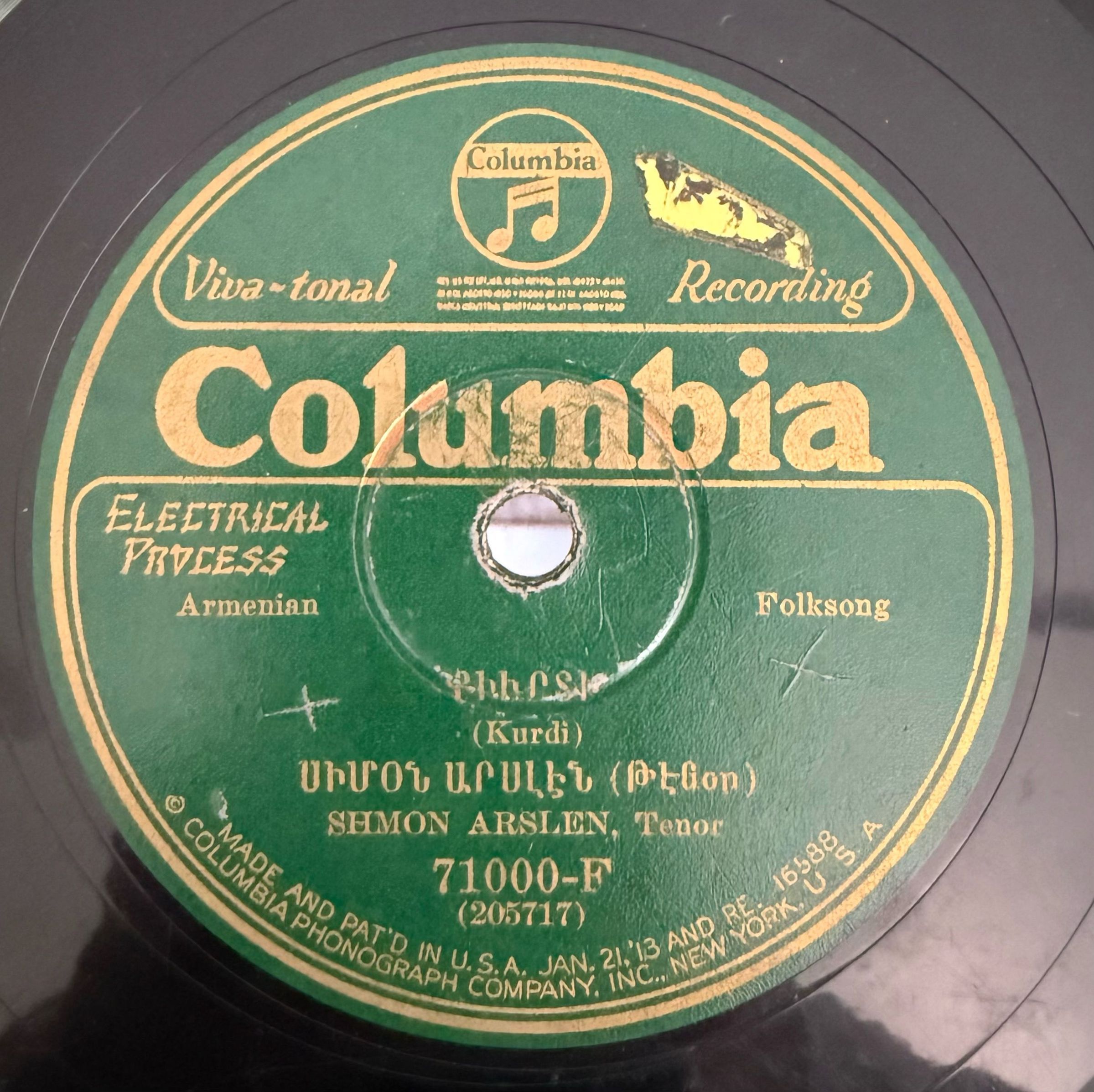
Shmon Arslen/Stepan Simonian, Kurdi/Hale Makam
Name/Title
Shmon Arslen/Stepan Simonian, Kurdi/Hale MakamDescription
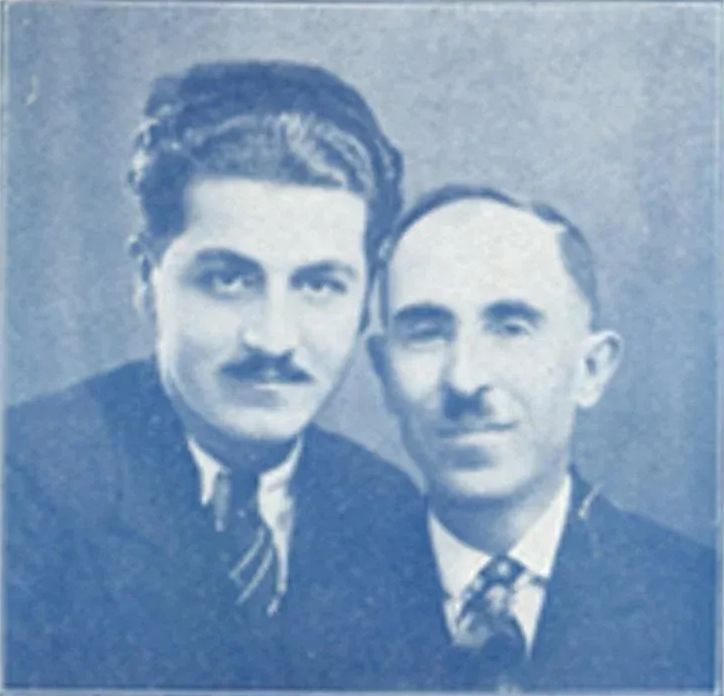
Stepan Simonian was an Armenian-American violinist, singer, and early recording artist whose work preserved the musical traditions of Kharpert during the formative years of the Armenian diaspora in the United States. Born in 1887 in Mezire (Mamuret-ul-Aziz, present-day Elazığ), in the province of Kharpert in the Ottoman Empire, Simonian belonged to a generation of Western Armenian musicians who carried regional folk traditions across the Atlantic and adapted them to a new immigrant setting while retaining their local character. In 1907, at approximately twenty years of age, Simonian immigrated to the United States through Ellis Island together with members of his family and his young wife, Sophia Berberian, who was of Assyrian background and also connected to the Kharpert region. Records indicate that the family initially used the surname Alexanian before Stepan later adopted Simonian in honor of his father, Simon. The family first settled in Haverhill, Massachusetts, and later established themselves in Worcester, which had become one of the major centers of Armenian immigrant life in New England. Like many immigrant musicians of his era, Simonian supported himself through a trade, working as a cobbler while maintaining an active musical life within community gatherings and celebrations. Simonian became known as a violinist and vocalist deeply rooted in the folk repertoire of Kharpert. His performances reflected the rhythmic complexity and modal traditions characteristic of that region, especially dance music built around asymmetrical meters that distinguished Kharpert’s musical culture from other Armenian regional styles. He passed this tradition directly to his eldest son, Haigaz Simonian, born in Worcester in 1909, whom he trained as a multi-instrumentalist. The father-and-son partnership became one of the earliest documented examples of intergenerational Armenian musical preservation in America. In November 1927, Stepan and Haigaz recorded in New York for Columbia Records, producing a small but historically important body of recordings. Their sessions featured Stepan on violin and lead melody while Haigaz accompanied on piano—an unusual instrumentation that blended traditional Armenian performance practice with American musical realities. The recordings included regional dance and folk pieces such as “Haigagan Makam,” which combined well-known melodies from Kharpert into a continuous medley and demonstrated changing rhythmic structures typical of Western Armenian village performance traditions. Contemporary researchers have noted that these recordings preserve elements of live Armenian folk performance that were rarely captured on commercial records of the era. Simonian also recorded for the Armenian-owned Pharos label during the 1920s and collaborated with fellow Kharpert musician Vartan Margosian. Although his recording career lasted only a few years, Simonian’s work became part of the earliest recorded archive of Armenian folk music in North America. His career ended abruptly when he died in Worcester in 1929 at only forty-two years of age. His son Haigaz—later known publicly as Henry Simmons—continued performing Armenian music throughout the Boston area for decades afterward and helped extend the musical inheritance received from his father into the late twentieth century. Today Stepan Simonian’s surviving recordings are valued not only as musical artifacts but also as rare sonic documents of pre-genocide Kharpert’s cultural world preserved in diaspora. Simon (also rendered Shmon) Arslen was of Assyrian decent and appears to have been a vocalist active in the Armenian and broader Middle Eastern immigrant recording scene in the United States during the 1920s. His name survives primarily through early commercial recordings rather than community histories or census documentation. One of the clearest references places him in New York recording sessions alongside Stepan Simonian and his son Haigaz Simonian.Audio Format
78 RPM RecordRecording Type
MusicCategory
Vinyl Record