Wooden Box for Figs (Aram Hampartzum)
Name/Title
Wooden Box for Figs (Aram Hampartzum)Description
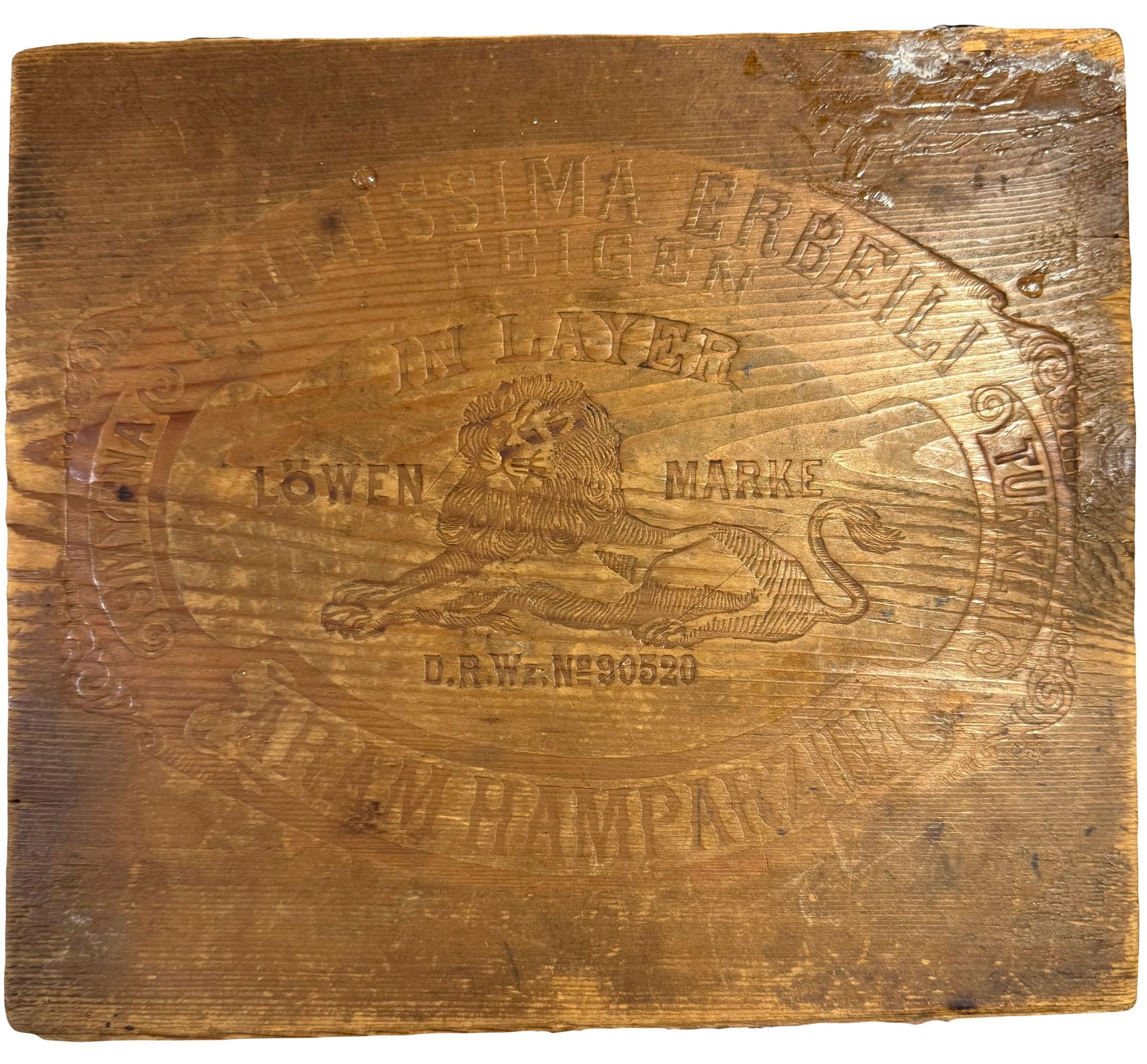
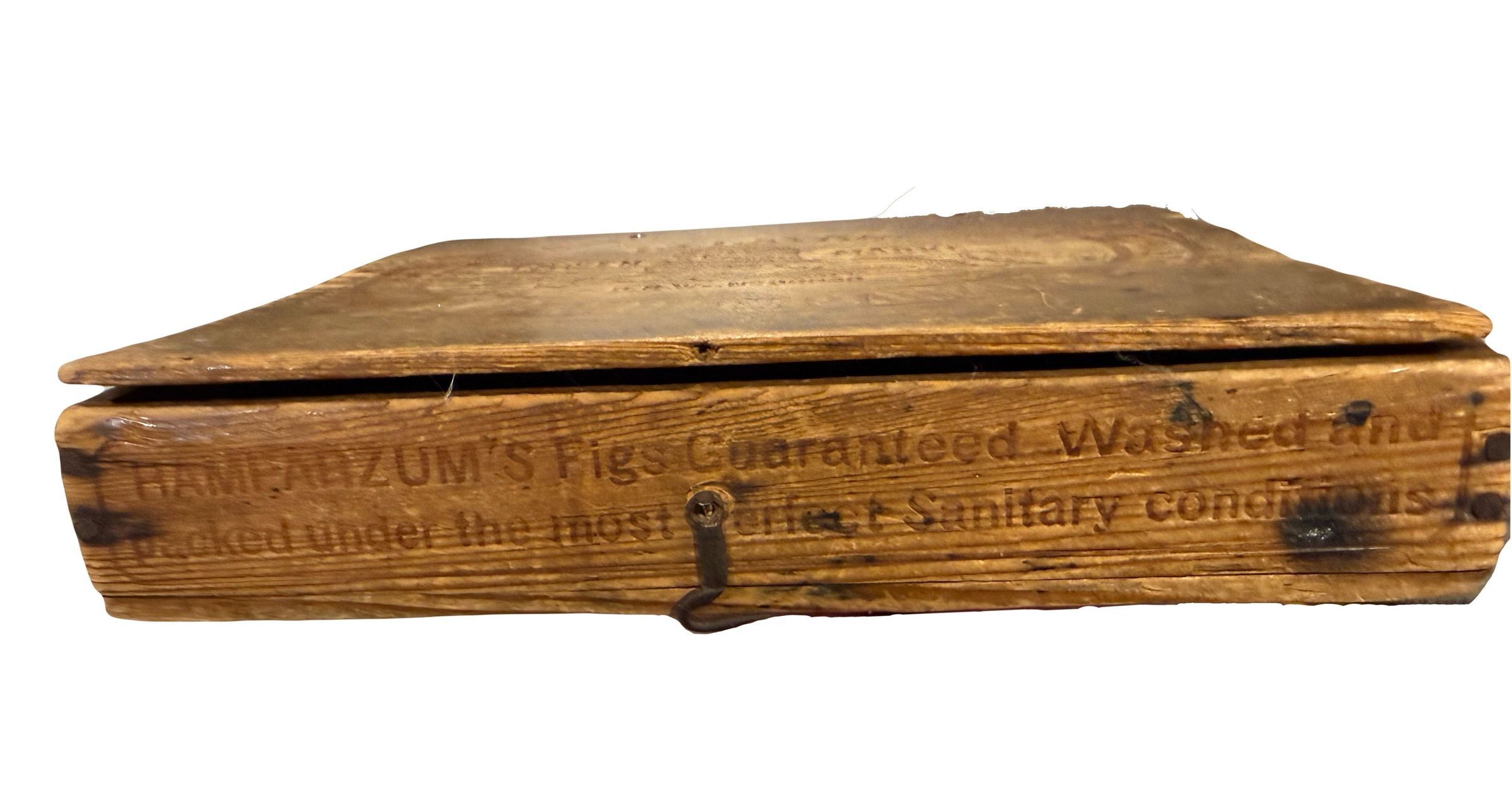
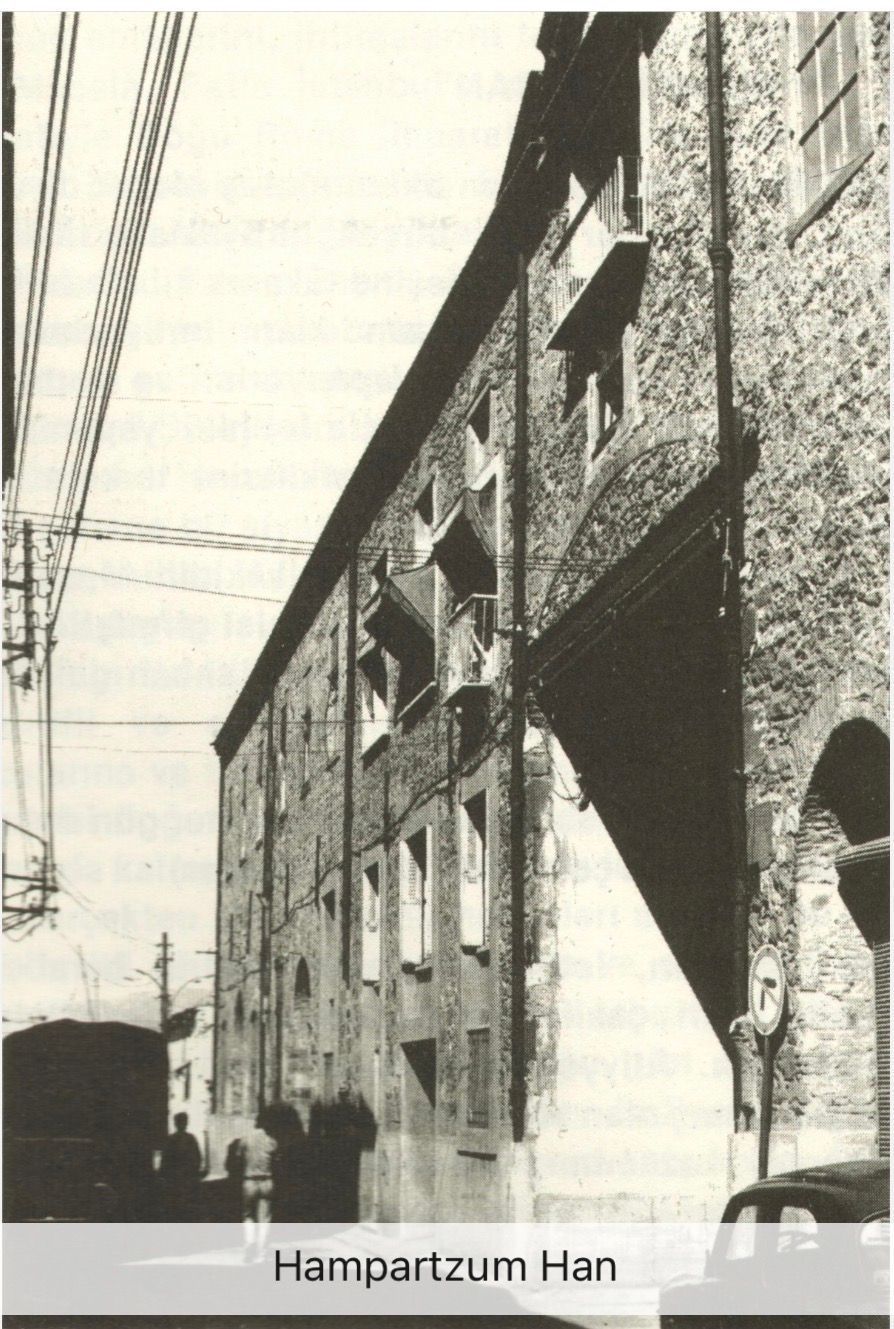
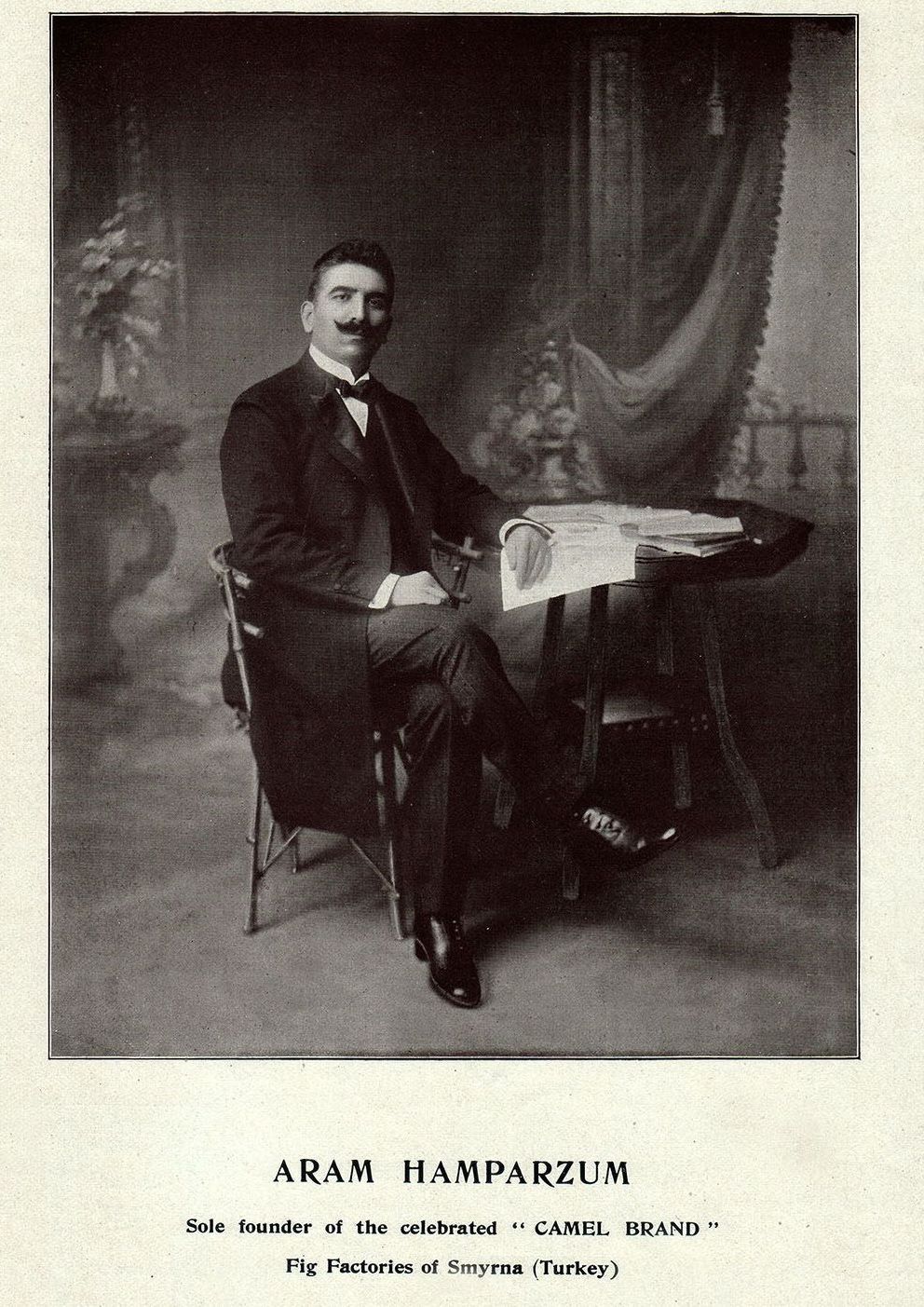
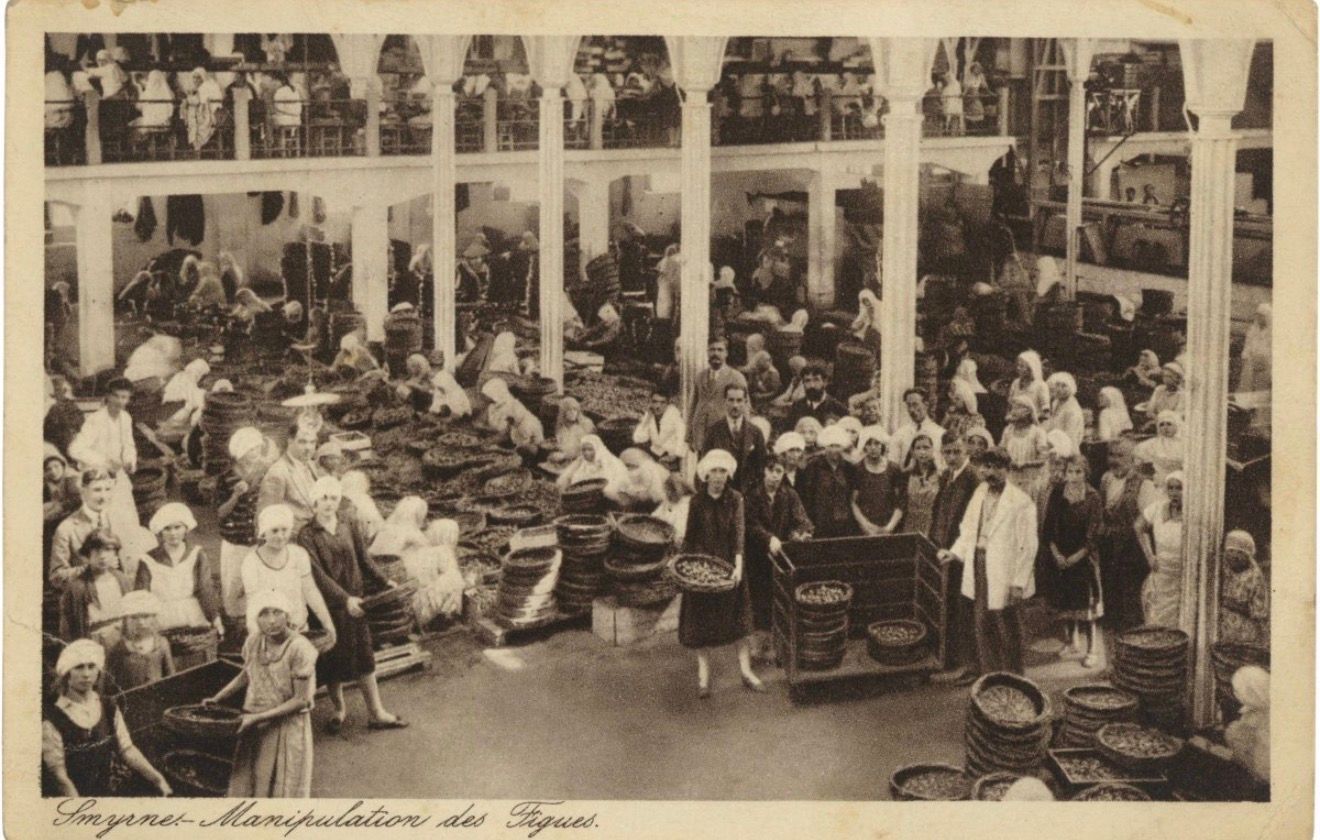
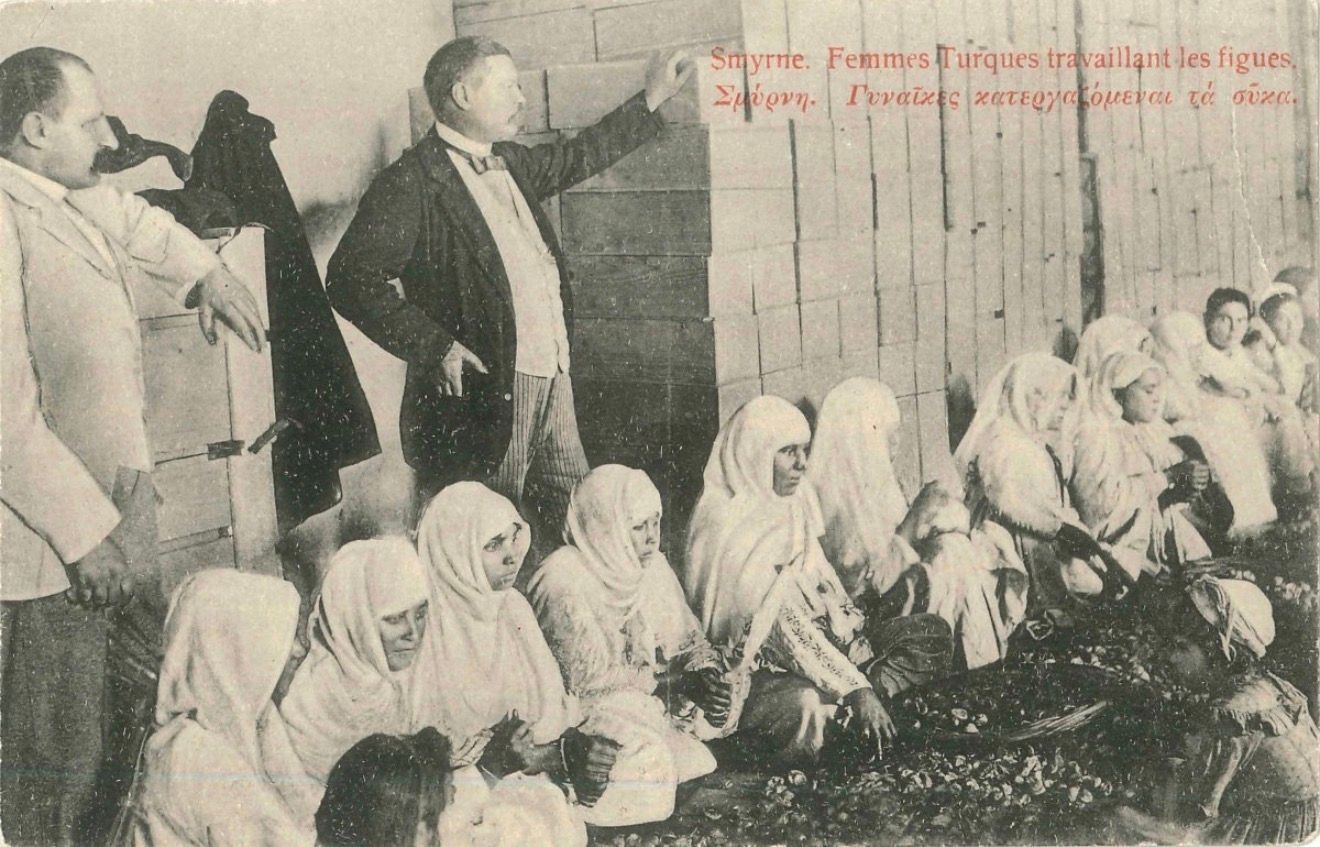
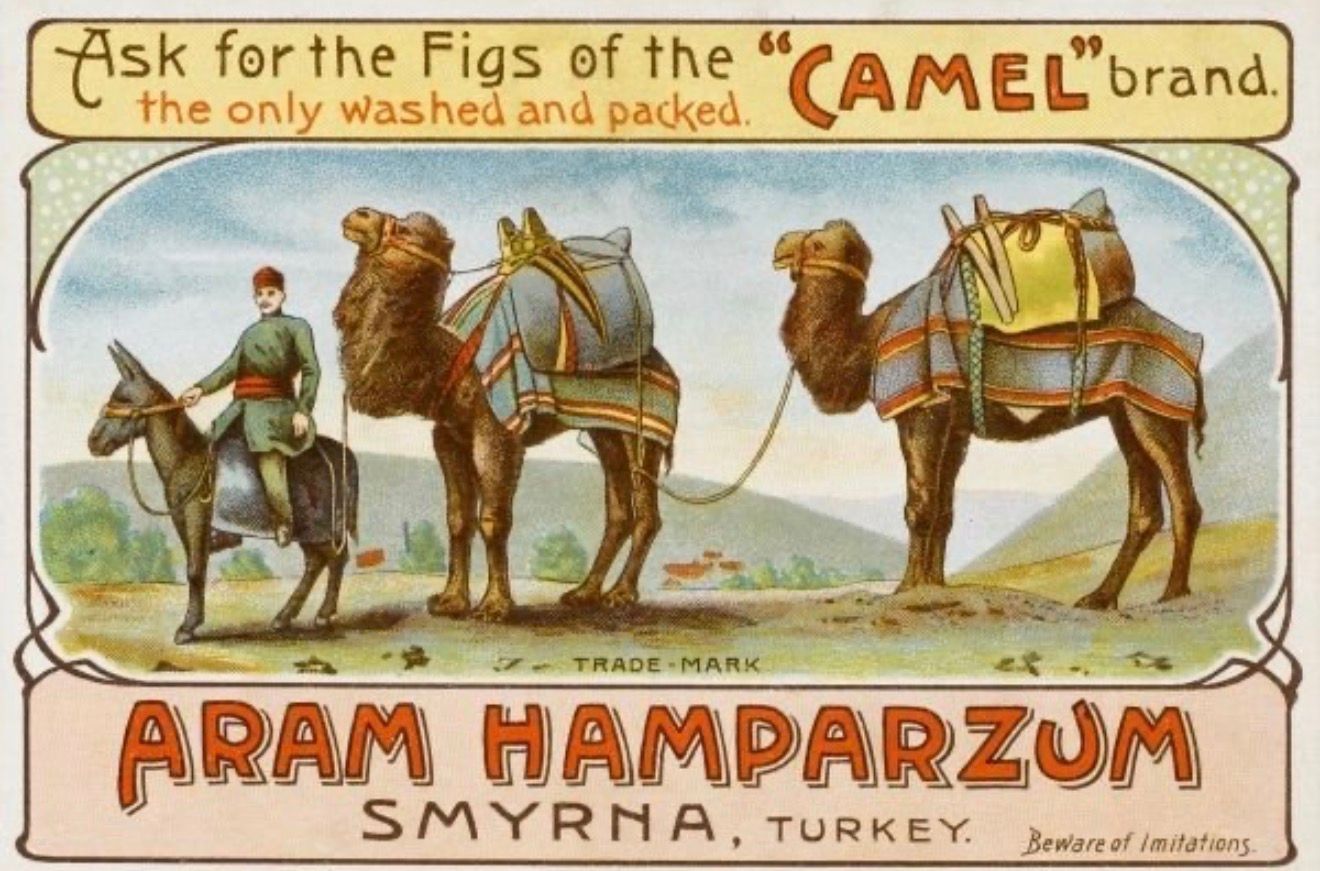
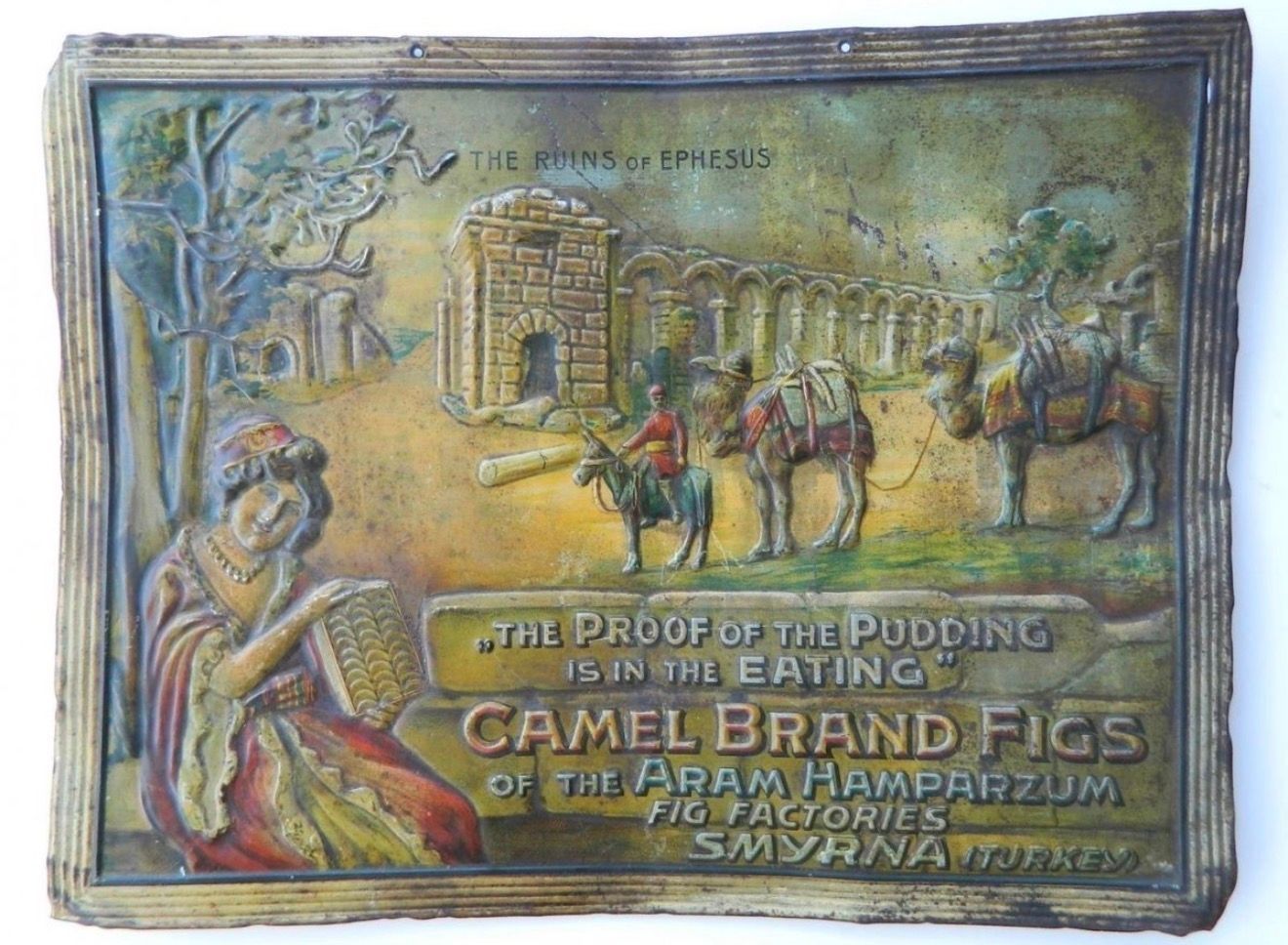
Hampartzum Han was a prominent nineteenth-century commercial structure and warehouse located in Izmir, Turkey, originally situated near the Yemiş Bazaar, the center of the region's historic fig trade. The building was known by several names throughout its existence, reflecting the cosmopolitan nature of Izmir’s merchant class. It was initially owned by the Guiffrays, a prominent Levantine family, and was frequently referred to as the Guiffray Han or the Ottoman Bank Depots. However, it became most commonly associated with Aram Hampartzum, a major Armenian merchant who utilized the large two-story building as a primary warehouse for his firm, Camel Brand. Known as the "Fig King" of the world markets, Hampartzum was instrumental in the global branding of the Smyrna fig, a specific variety (Sarı Lop) renowned for its succulent sweetness, thin skin, and nutty flavor. He managed his global firm, utilizing the iconic Camel Brand for local logistics and the prestigious Löwen-Marke (Lion Brand) to market Smyrna figs as a luxury commodity in Germany and throughout the Western world. Hampartzum’s career began in the late nineteenth century, initially working as a timber merchant from an office in the Selvili Han before specializing in the fig trade. He authored a brochure titled Something Interesting About Smyrna Figs, published in 1908, in which he detailed the intricate journey of the fruit from farms to urban packaging facilities. The Han served as a vital node in a logistical network that eventually bridged the Mediterranean and the American West. The legendary Smyrna figs were grown primarily in the fertile Büyük Menderes Valley, particularly in the district of Erbeyli. This area provided the ideal microclimate for the fruit, which required a unique pollination process known as caprification—where a specific tiny wasp fertilizes the female fig. To safeguard this agricultural legacy, the Erbeyli Fig Research Institute was later established in the heart of this region in 1938. This specific Turkish variety had a profound impact on American agriculture; in the late 1800s, cuttings from the Izmir region were imported to California. After years of struggling to produce fruit, California growers realized they needed to import the same fig wasps from Turkey to achieve successful pollination. This successful introduction led to the birth of the "Calimyrna" fig—a portmanteau of California and Smyrna—which remains a staple of the San Joaquin Valley’s agricultural economy. The scale of operations at Hampartzum Han was significant; by 1900, the firm’s factories employed roughly 1,500 workers. The labor force followed a strict social and economic hierarchy, where women and children performed quality sorting while men handled heavy packing. This seasonal industry supported thousands of local families, who transitioned to textile or tobacco work during the off-season. During the First World War, the commercial landscape shifted as Hampartzum transitioned from an intermediary for British-owned firms to a primary competitor through a strategic alliance with Rahmi Bey, the Governor of Izmir. Following the Great Fire of 1922, Hampartzum migrated to London, leaving his business interests to be managed by his partner, Şerif Remzi Reyent. Despite the departure of its namesake, the building secured its place in Turkish national history by serving as the venue for the Izmir Economic Congress in February and March of 1923. This landmark conference brought together diverse economic sectors to chart the development of the newly formed Republic of Turkey. The original structure was eventually demolished in the 1980s during a period of urban road expansion. For several decades, the site remained a parking lot, though it was later marked by a commemorative monument consisting of four columns and historical photographs. In 2023, the legacy of the site was further formalized with the completion of a new structure dedicated to the Izmir Economic Congress, designed to honor the historical and economic significance of the original Han.Category
Misc.