Research Type
ResearcherPerson
Marissa BrodieDate
Nov 22, 2025Notes
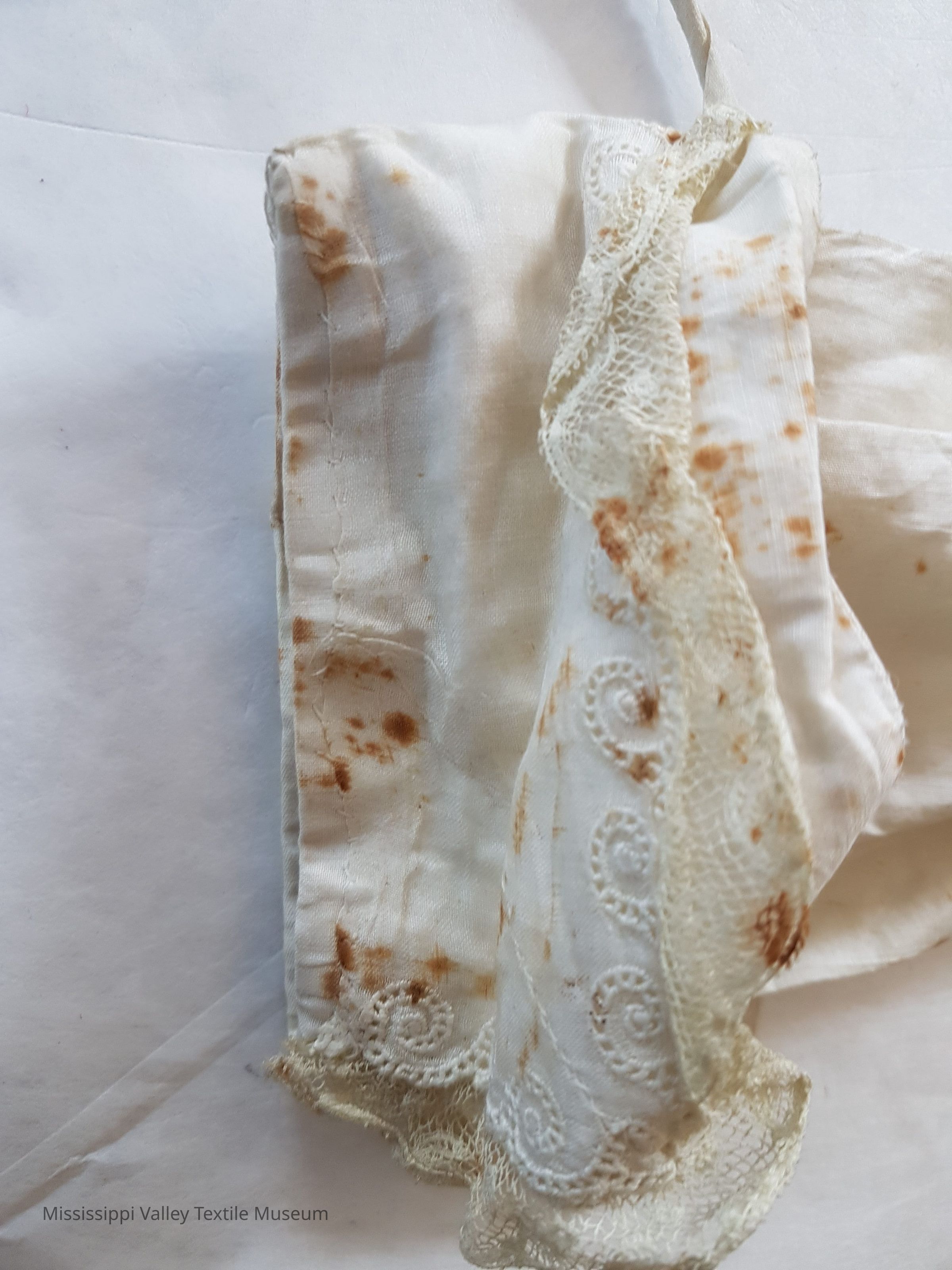
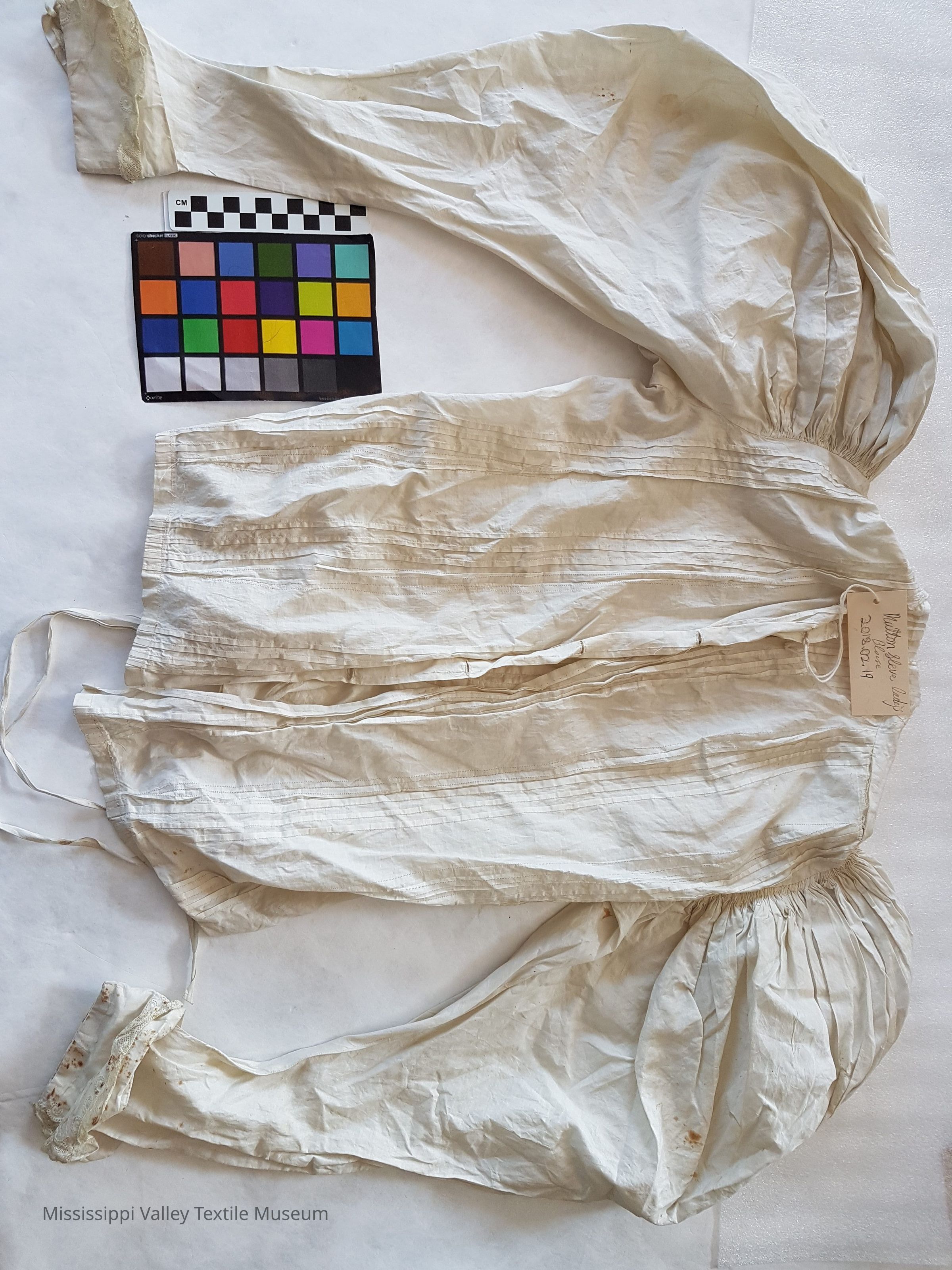
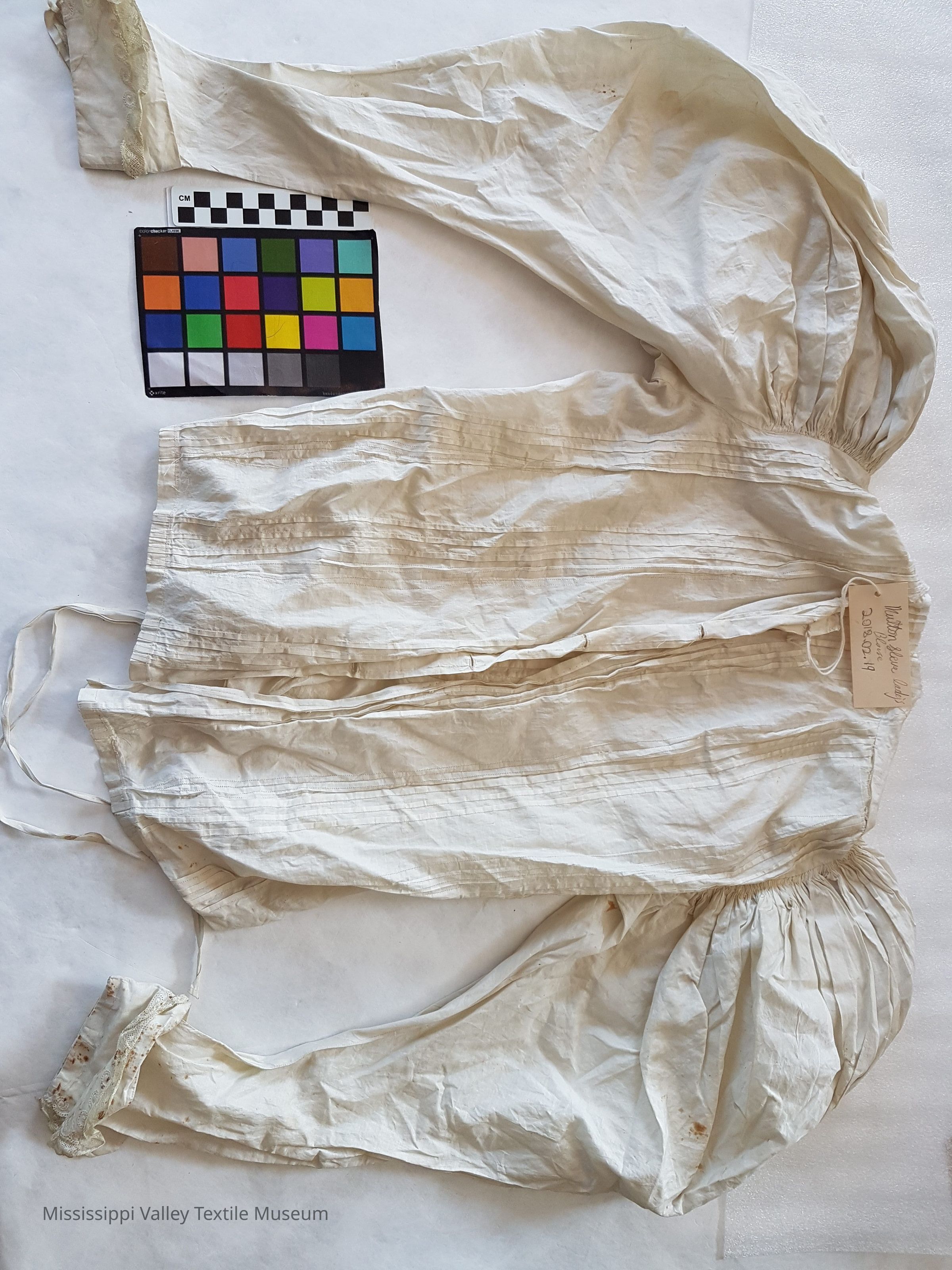
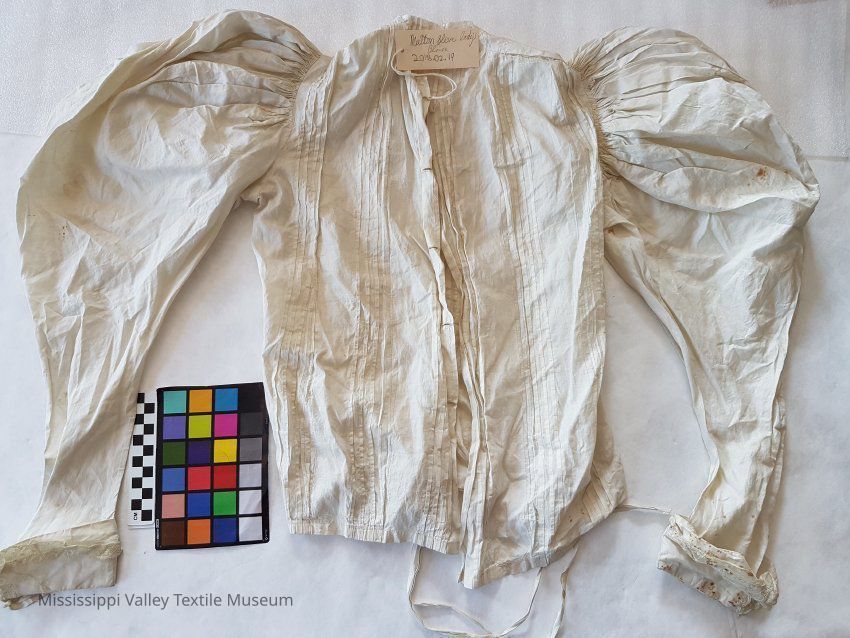
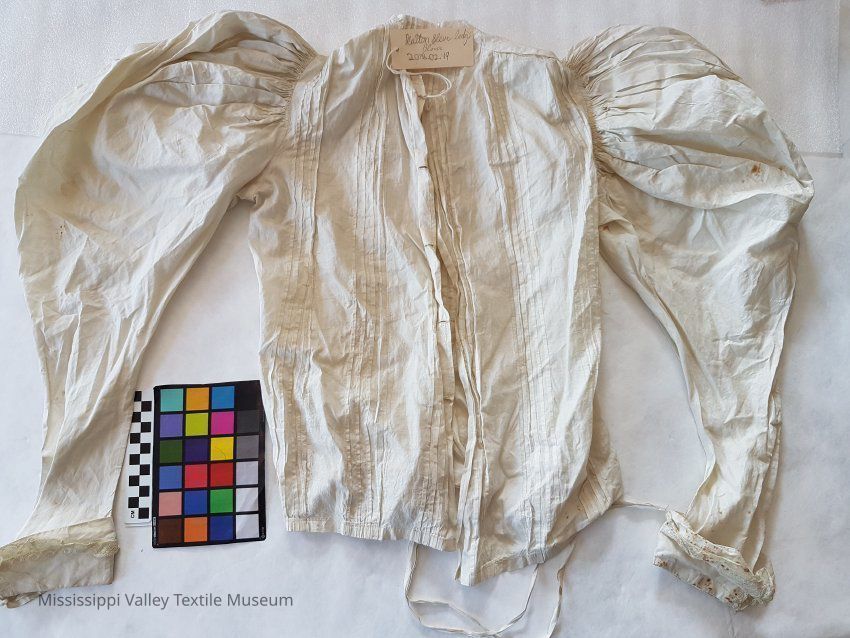
In the book "20,000 Years of Fashion: The History of Costume and Personal Adornment" by François Boucher, he notes that in the development of women’s silhouette, the mutton sleeve became quite popular in the 1840s as he states “[l]eg-of-mutton sleeves let their fullness slip from the shoulder to the elbow, then give way to a narrow sleeve fitting tightly to the arm” (358). This piece in the collection features mutton sleeves, however, the forearm section of the sleeve does not appear to be very form-fitting. Therefore, it could be inferred that this piece likely dates to after the 1840s.
Throughout the second half of the 19th century, the style of sleeves in women’s wear often changed. The 1860s featured a variety of sleeve styles, such as bell-shaped “pagoda” sleeves, which were quite fashionable at the time, but generally, the sleeves were dropped, and necklines were high (“1860-1869”, para. 2-3). While this piece does feature many of the elements from 1860s women’s wear - high neckline and sleeves that close at the wrist -, the main indication to infer that it does not originate from this decade is the sleeve seamline. Sleeves in the 1860s were typically dropped (See Ref. 1 and 4), whereas the seamline of this piece is located at the shoulder. This fitting is more resemblant to the styles prevalent in the 1890s.
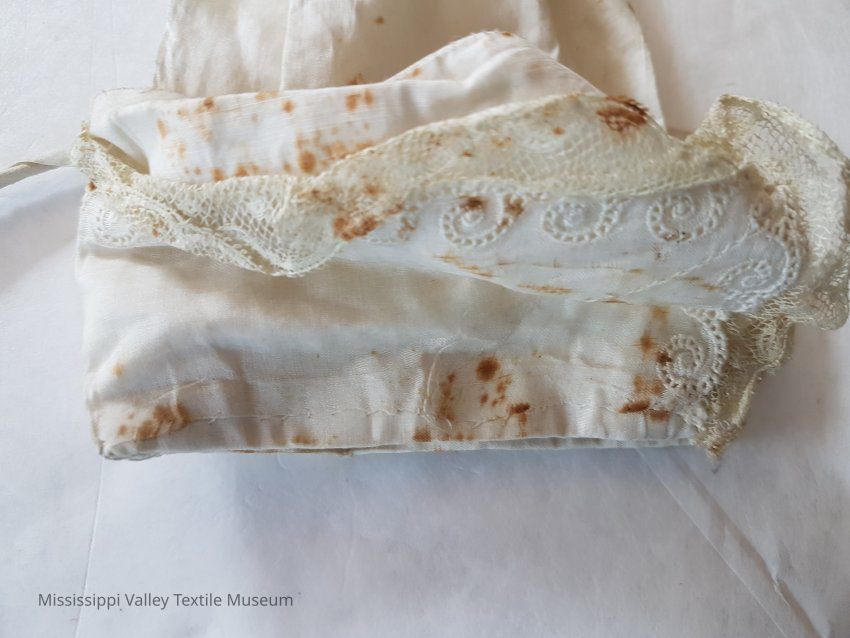
In the 1890s, the style of clothing continued from the late 1880s. Large leg-of-mutton or gigot sleeves were significantly notable in women’s wear during this period, and the introduction of electricity in clothing manufacturing led to a surge in the ready-to-wear market (“1890-1899”, para. 1-2). Viewing examples of jackets and blouses from the 1800s at the Metropolitan Museum of Art, many of their garments with mutton sleeves, especially the blouses in their collection, all originate from the same decade, 1890s. When comparing these garments to this piece, for example with their Shirtwaist (see Ref. 3), it is evident the blouses in both collections exhibit the same seamline, with the fabric gathered at the top of the shoulder. They both also feature cuffs, pleats at the front of the blouse, and have a waist tie at the back.
Based on this information, it can be inferred that this blouse has a high probability of dating back to the late 1880s to 1890s. However, further investigation could be conducted to definitively determine its decade.
Sources:
[1] "Blouse." 1865. Cotton. The Metropolitan Museum of Art, New York. https://www.metmuseum.org/art/collection/search/169455 Accessed: November 22, 2025
[2] Boucher, François. "20,000 Years of Fashion: The History of Costume and Personal Adornment." New York: H. N. Abrams, 1967. https://archive.org/details/20000yearsoffash00bouc/page/n5/mode/2up Accessed: November 21, 2025
[3] "Shirtwaist." 1896-98. Cotton. The Metropolitan Museum of Art, New York. https://www.metmuseum.org/art/collection/search/109506 Accessed: November 21, 2025
[4] Silvy, Camille. "James Pinson Labulo Davies; Aina (Sarah Forbes Bonetta (later Davies))." September 15, 1862. Albumen print, 4 1/4" x 5 1/8”. National Portrait Gallery, London, England. https://www.npg.org.uk/collections/search/portrait/mw86363/James-Pinson-Labulo-Davies-Sarah-Forbes-Bonetta-Sarah-Davies?LinkID=mp63230&search=sas&sText=sarah+bonetta&role=sit&rNo=3 Accessed: November 22, 2025
[5] “1860-1869.” Fashion History Timeline, 27 Dec. 2019, https://fashionhistory.fitnyc.edu/1860-1869/ Accessed: November 21, 2025
[6] “1890-1899.” Fashion History Timeline, 1 Aug. 2019, https://fashionhistory.fitnyc.edu/1890-1899 Accessed: November 21, 2025