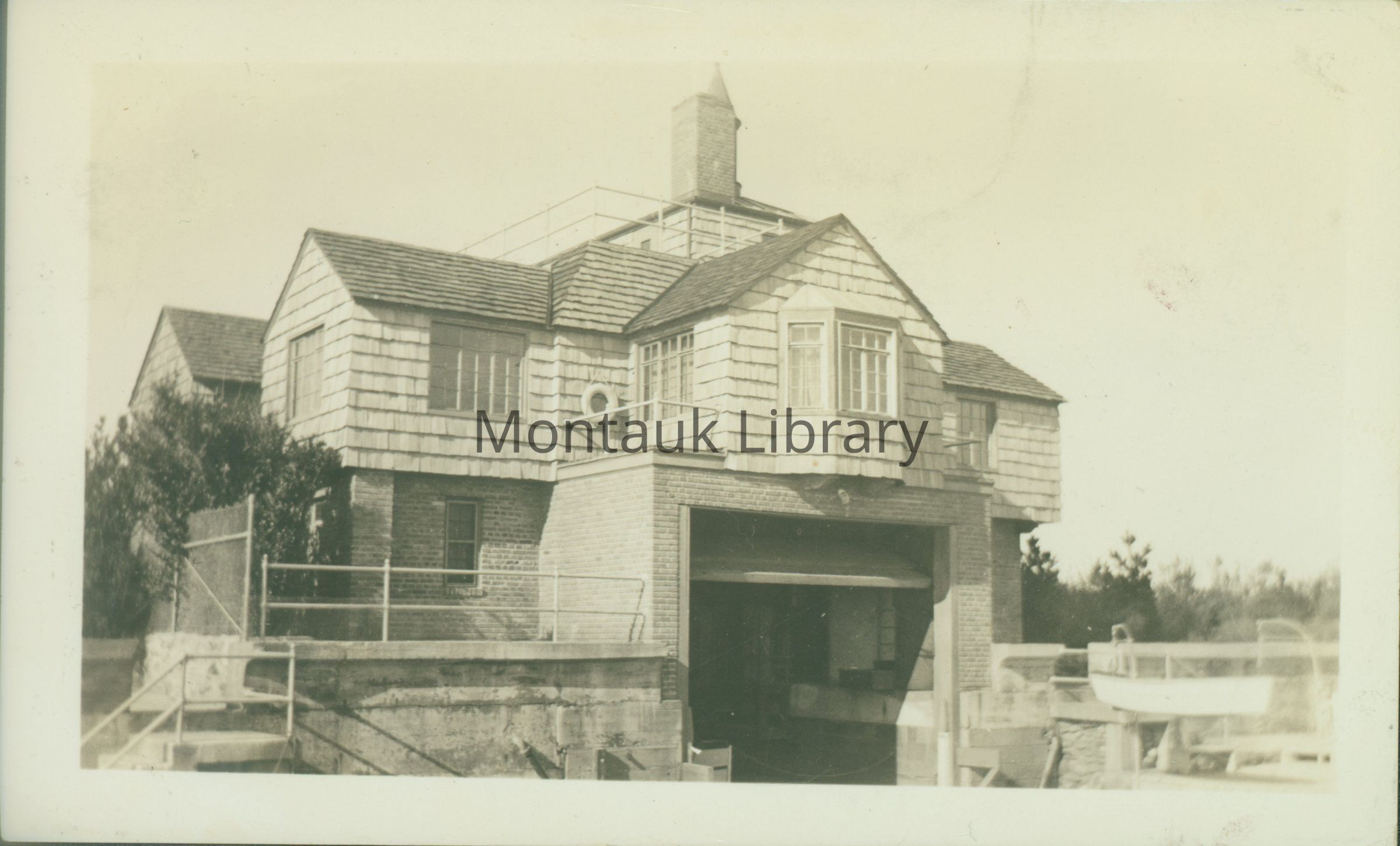
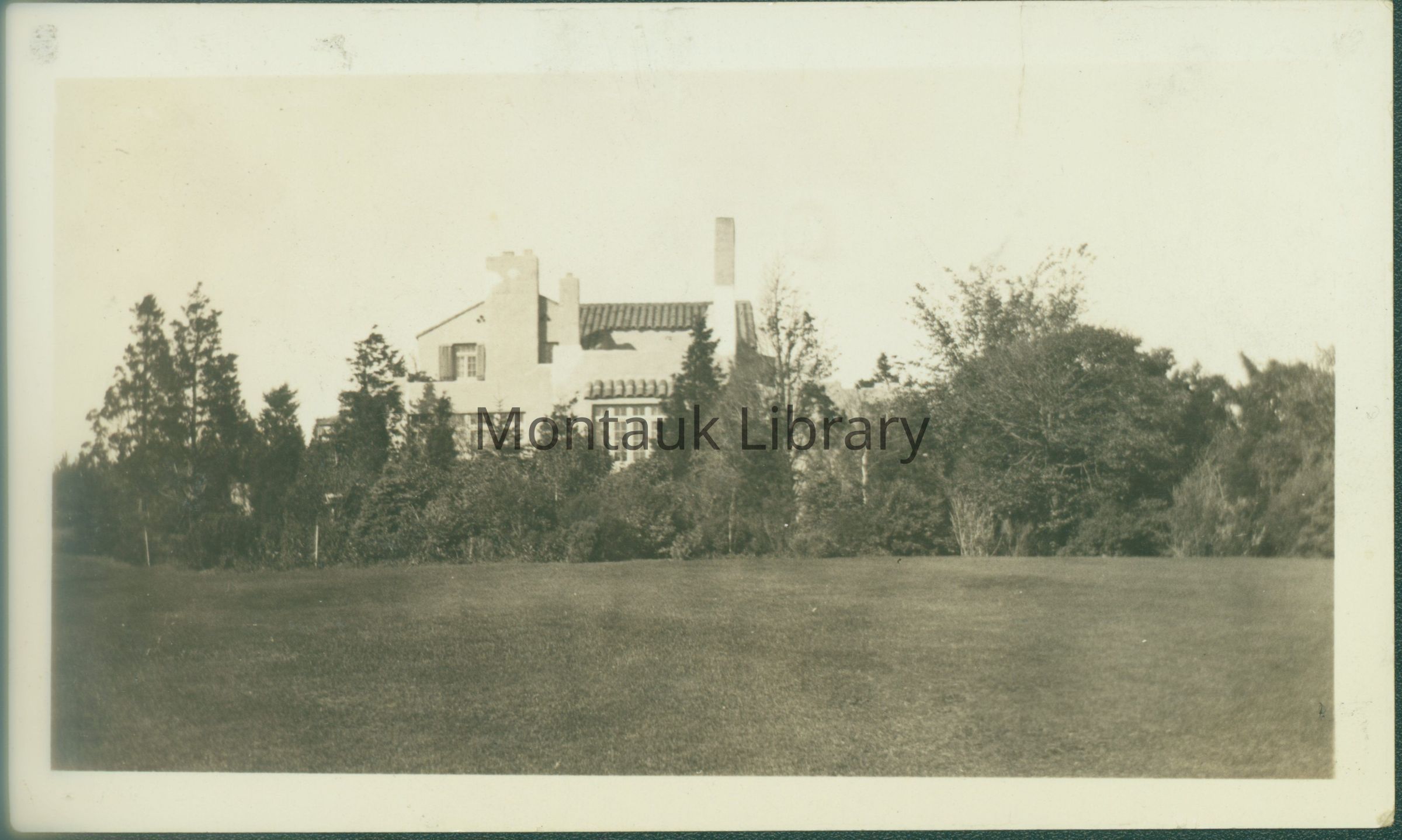
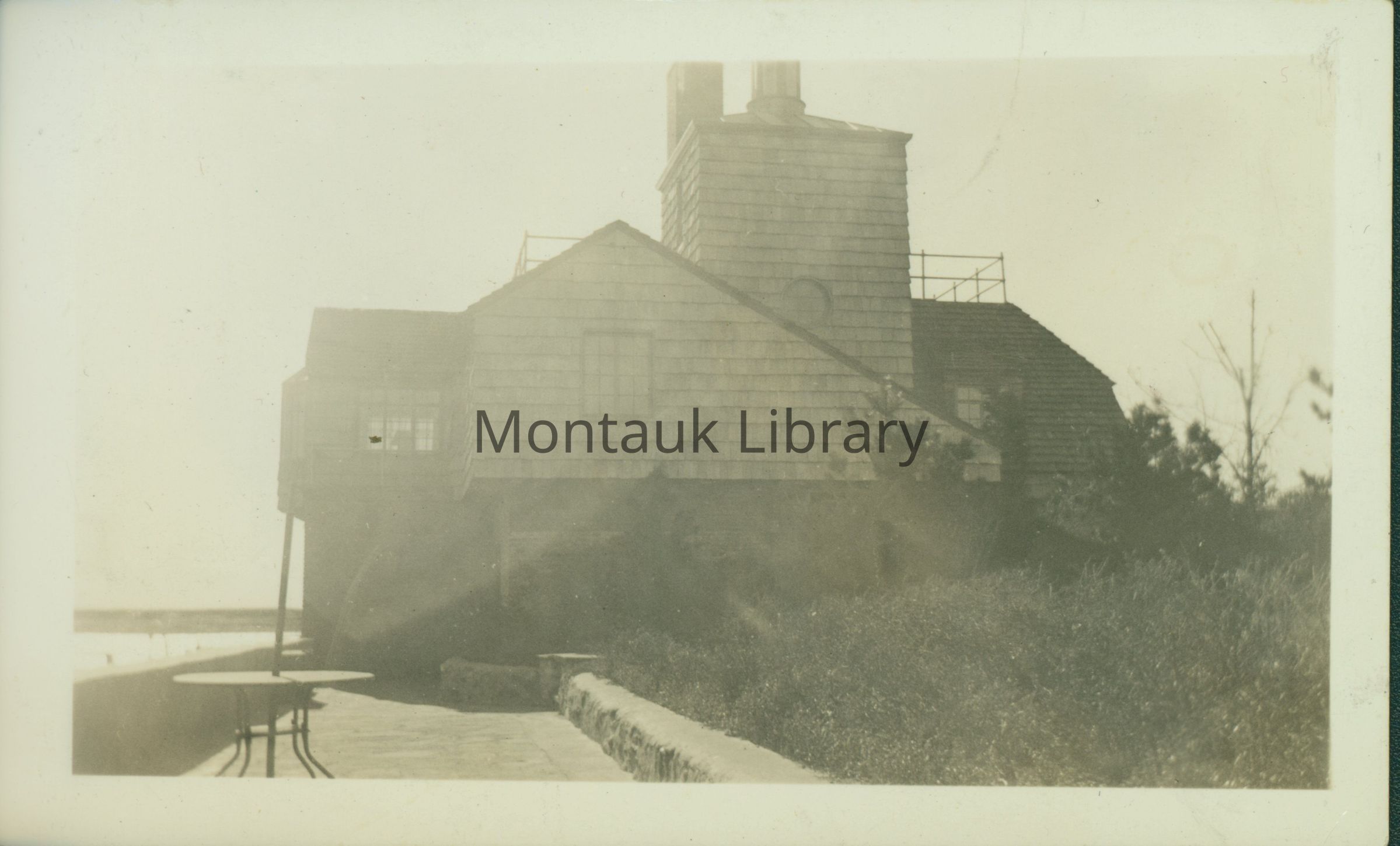
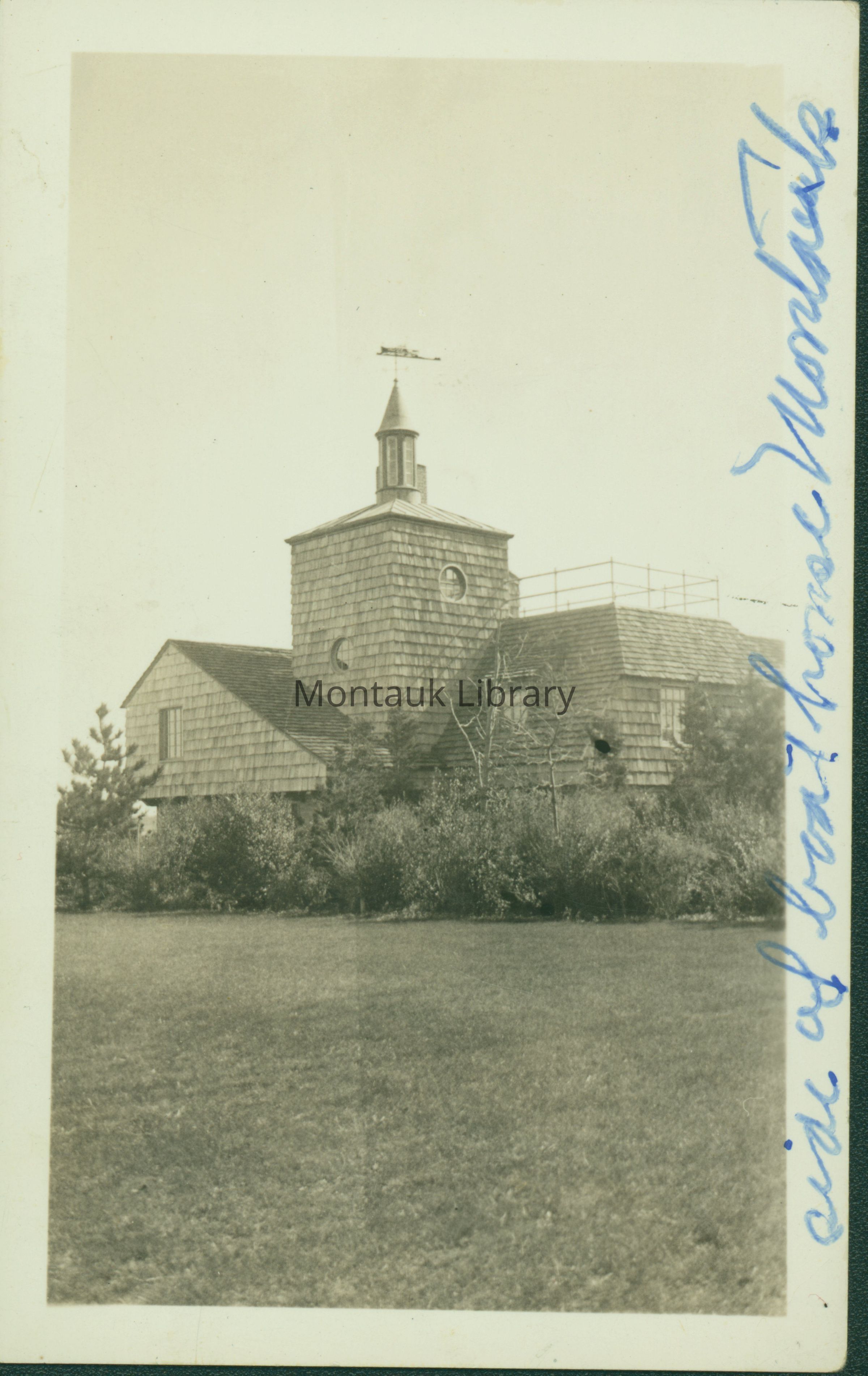
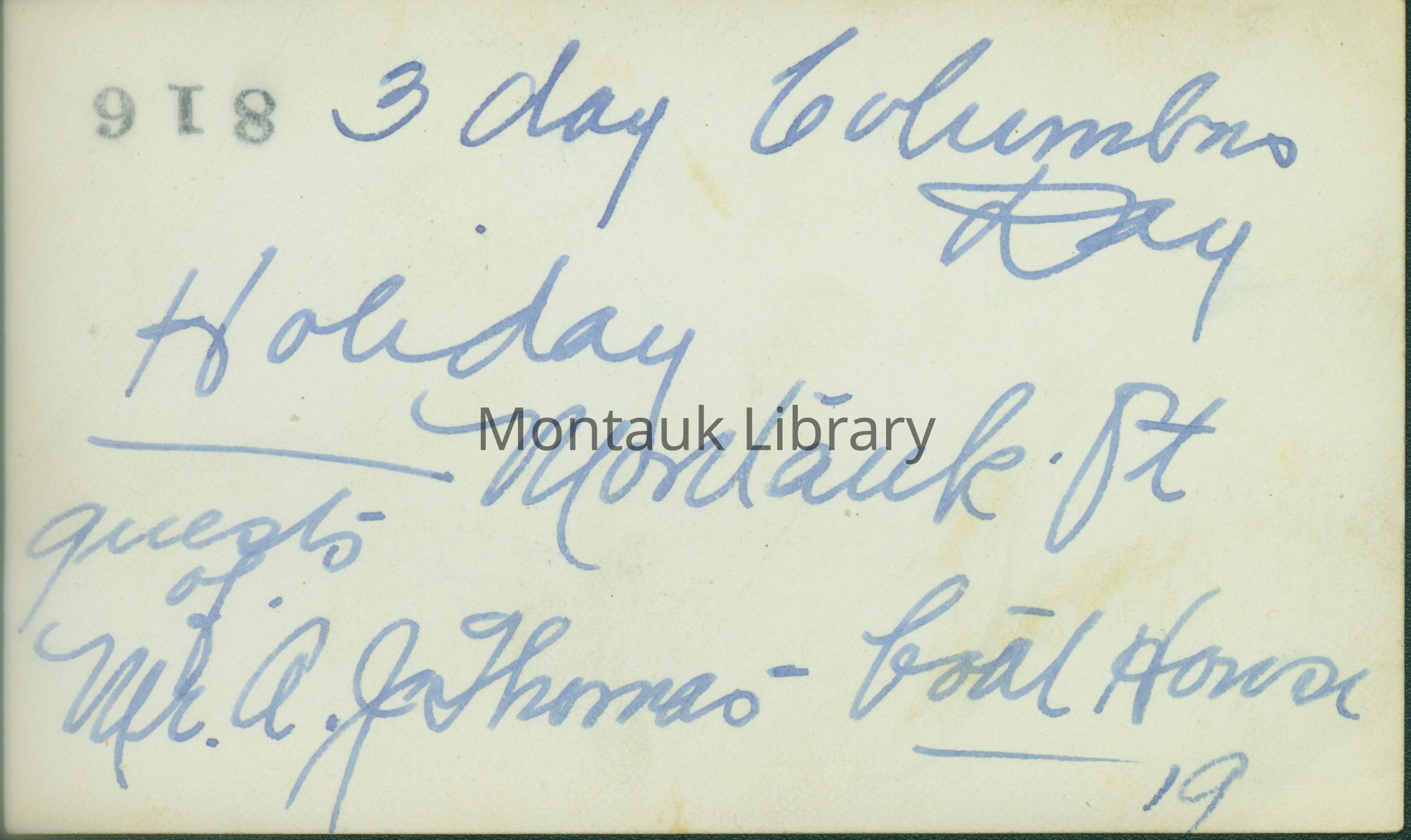
Andrew J. Thomas boathouse, c. 1930s | Montauk Library Archives
Overview
Scope and Content
A collection of four photographs, all reproduced here, documenting architect Andrew Jackson Thomas's Montauk estate and boat house in the 1930s.
Archive Details
Date(s) of Creation
circa 1930
Acquisition
Acquisition Method
Gift
Acquired From
Jean Lieblein
Copyright
Type of License
In copyright: http://rightsstatements.org/vocab/InC/1.0/
Copyright Holder
Montauk Library
Copyright Details
Researchers assume all responsibility for copyright questions. Fair use is permitted. For all other uses please contact [email protected].
General Notes
Note Type
Historical Note
Note
Andrew J. Thomas (1875–1965) was a self-taught American architect known for designing low-cost apartment complexes that featured integrated gardens and green spaces. Thomas advocated for the inclusion of green spaces in New York City tenement buildings and designed U-shaped complexes surrounding interior gardens. He worked for the Rockefeller Foundation in New York. Thomas was a regular visitor to Montauk as early as the 1890s. In 1927, he purchased land from the Montauk Beach Development Corporation and designed a massive estate overlooking Fort Pond Bay. The estate comprised a Spanish-style main house, greenhouses stocked with tropical plants, lavish gardens, barns, ponds, a horse riding track, and a watchtower.
By 1936, artist Elbert McGran Jackson (American, 1896–1962) purchased the estate from Thomas and began to make considerable alterations and repairs. E. M. Jackson was a commercial artist and illustrator, well known for his illustrations featured on the covers of the Saturday Evening Post. Jackson designed and silk-screened fabrics, draperies, screens, and wall coverings for high-end clients in New York City. He set up a silkscreen fabric printing factory in the greenhouses of the former Andrew J. Thomas estate. By the 1950s, the estate had fallen into disrepair.