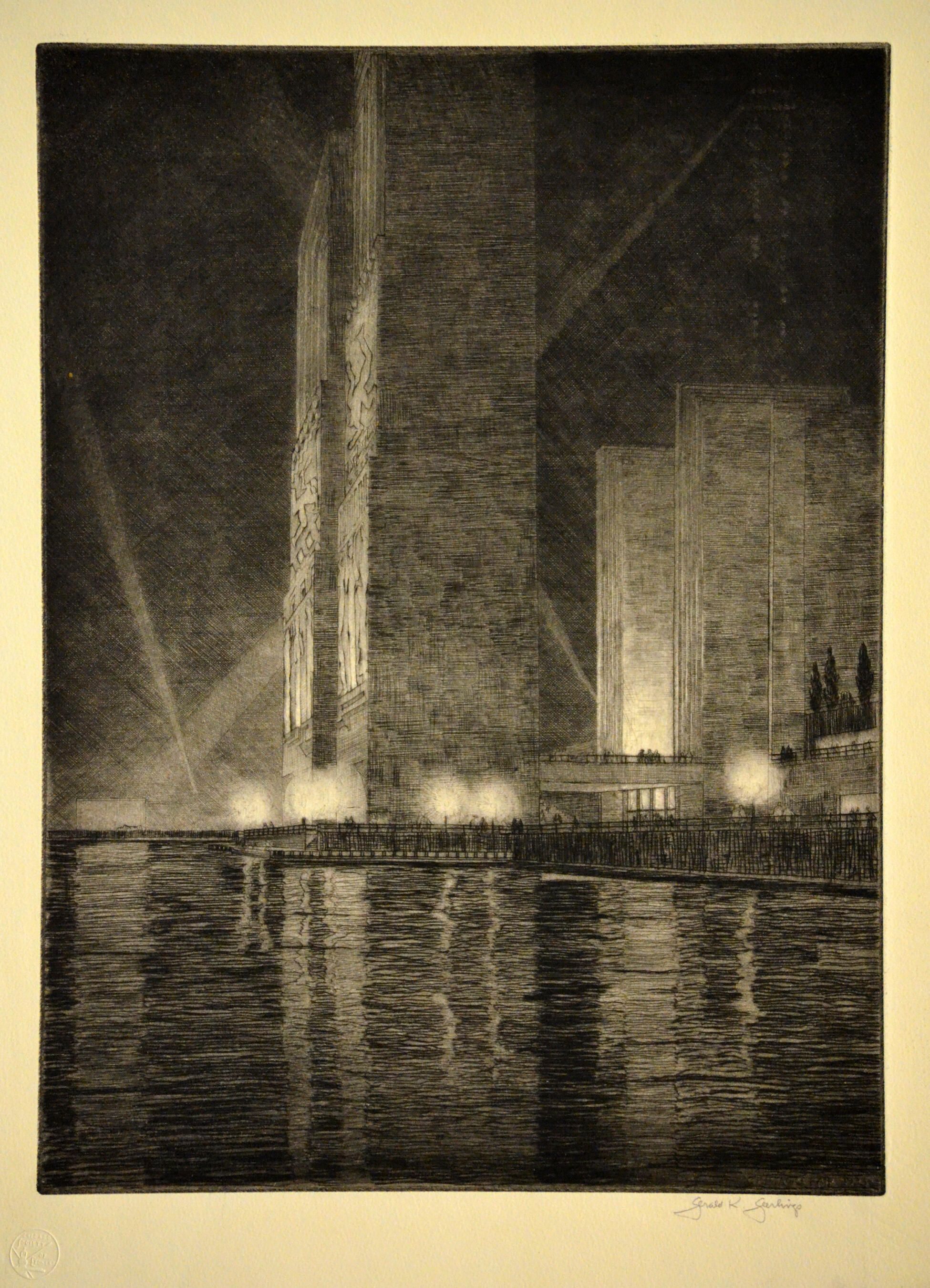
2024, "Beyond the Iron Curtain: Visions from the Cold War"
As an architect and printmaker at a time of rapid urbanization, Gerald K. Geerlings became known for his cityscape etchings from 1920-1940. Depicting the 1933 Chicago World’s Fair, where commercial sponsorship and technological innovation were the main themes, this work captures the entrance to the electrical exhibit. The buildings’ carved figures represent Light and Sound. Lack of color makes the contrast between dark and light central to the piece, emphasizing the importance of electricity at the height of the Great Depression, when people turned to technology for a better future. Looking up from below, the perspective captures the sense of grandeur and awe observers at the fair felt. This is an early example of the US defining itself as a capitalist nation on a global stage. Like this artwork, the fair advertised an idealized picture of American life.
Text by Elly Keyes, Washburn student