Label
2024, “In This Place: American Dreams”
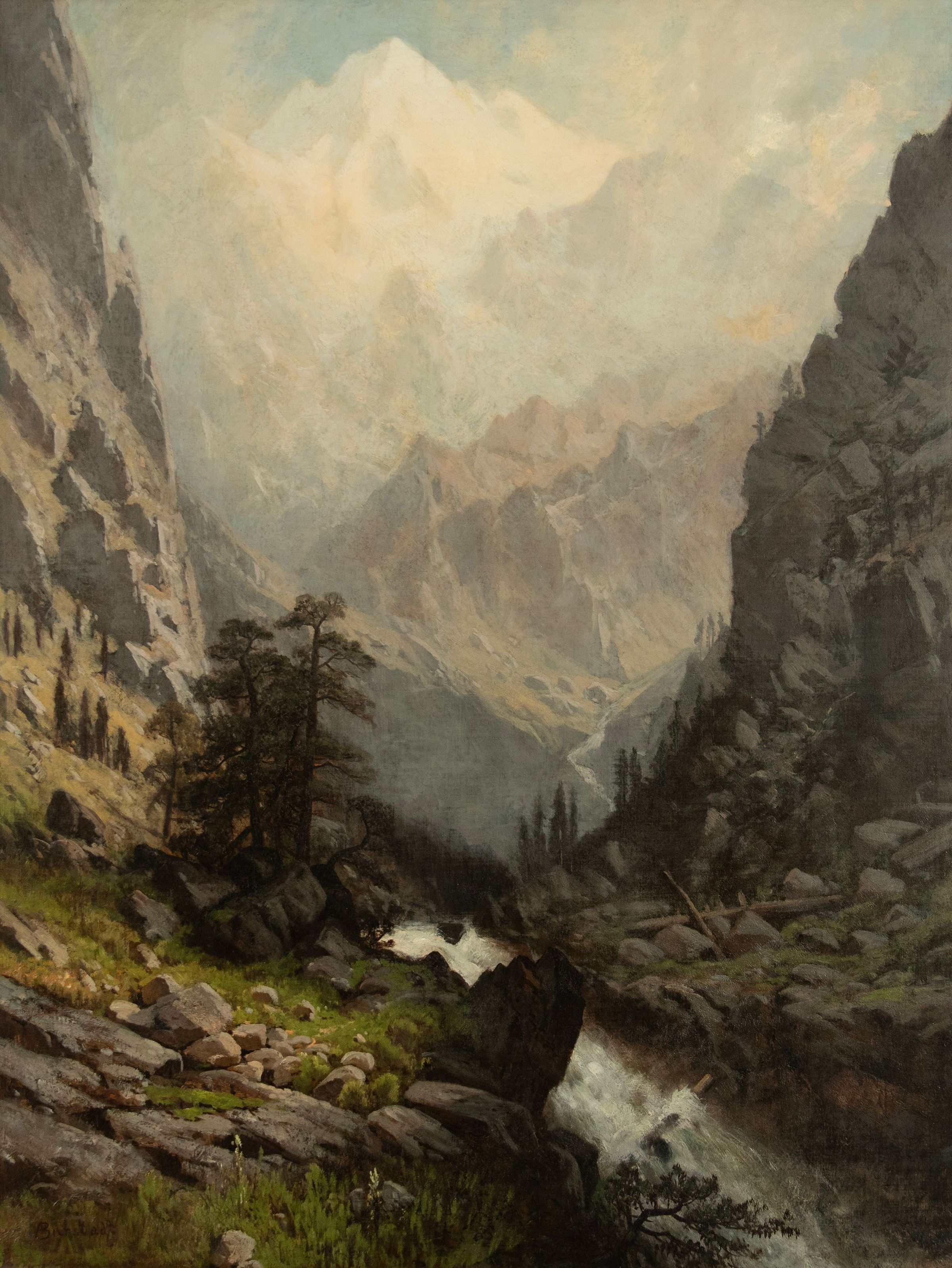
A preeminent landscape painter of the 19th century, Albert Bierstadt is best known for his dramatic, sublime depictions of the American West. In 1859 he joined Colonel Frederick W. Lander’s survey of the Nebraska Territory, creating extensive landscape studies and photographs throughout the journey. Upon returning to New York, he used these materials as sources for his monumental paintings. Lander’s Peak presents an awe-inspiring mountain vista that seems endless. Works like this helped to define the West in the popular imagination as a rich, boundless land full of possibility. They also reinforced the doctrine of Manifest Destiny, the idea that U.S. expansion into the West was divinely sanctioned, notwithstanding the consequences to Native populations or the natural environment.Label
2025 "Endangered Art: Reclaiming a Legacy"
A preeminent landscape painter of the 19th century, Albert Bierstadt is known for his detailed, dramatic depictions of the American West. In 1859 he joined Colonel Frederick W. Lander's survey of the Nebraska Territory, creating extensive studies and photographs of the land. Upon returning to New York, he used these materials as sources for the compositions of his paintings. Lander's Peak is likely one of the works he created after his trek through the Nebraska Territory.
In 1968, a conservator relined the canvas with linen and wax adhesive, a treatment then believed to help support the painting. Over time the wax seeped into the painting's surface, contributing to the presence of soot and grime. At an unknown date, the original frame was given a pale gray French finish and a linen spacer that was not period appropriate. Recent conservation reversed the restoration from 968. Specialists removed the lining, cleaned the surface, in-painted areas of paint loss with pure pigments, and restored the frame with gold finish and a new spacer.