Label
Recollections in January 2015 on early (1992-96)“Women Series” (MWS) works:
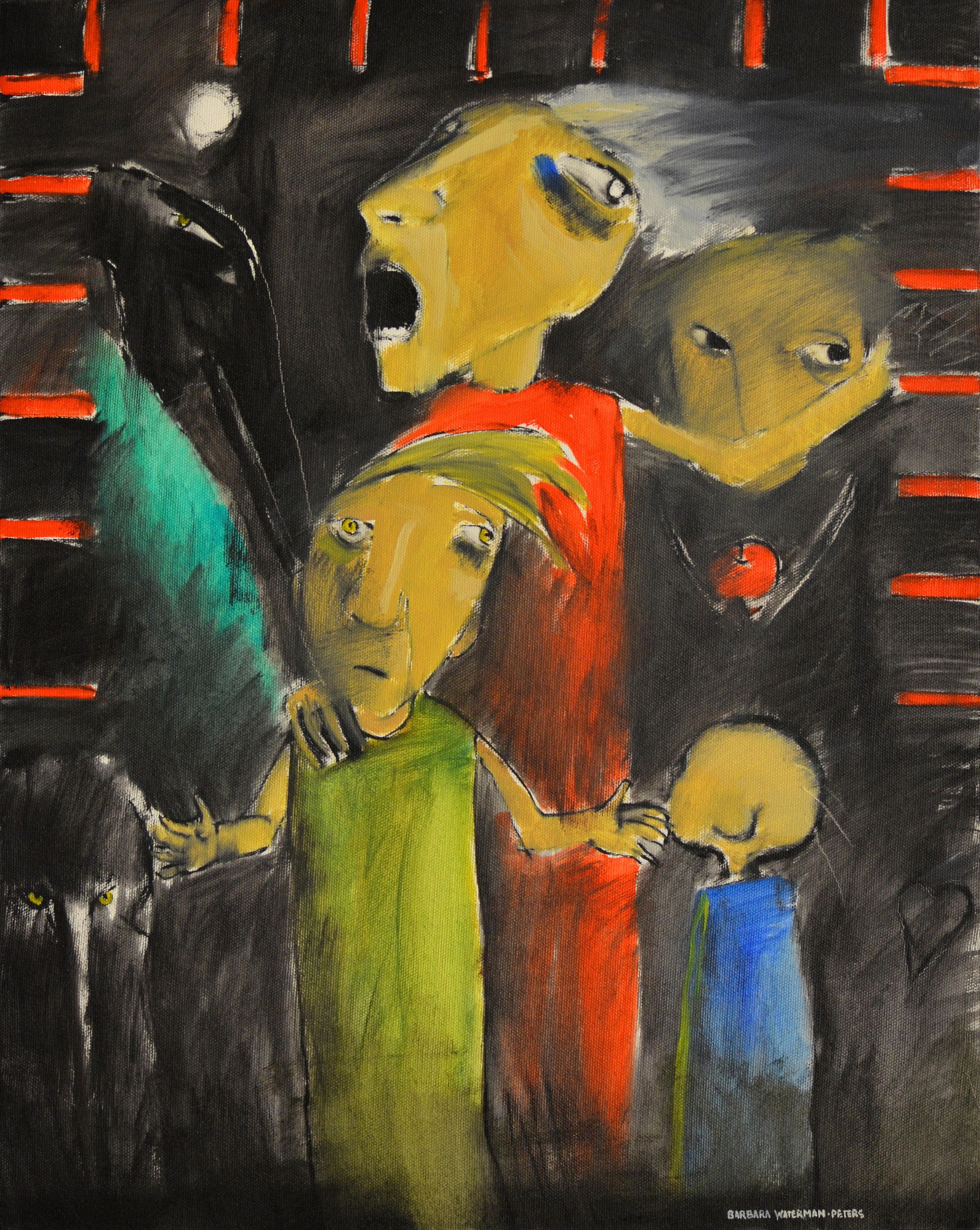
“These figures have ranged from birth to death and have expressed multiple emotions…surreal, dreamlike personifications deprived of female attributes…Some of the early pictures (1992-96) were actual people hidden safely in disguises which vaguely embodied them… I use dark, claustrophobic space; the square format addresses the issue of being boxed in. The figures are crowded, self-absorbed, and all ages. Garments are vague, usually a single color; sometimes they are striped in black, representing being barred. Hair is often short, wild or non-existent.”
“…women in situations of victimization, helplessness, and vulnerability…”
“…a look at the roles, characteristics, undercurrents, taboo subjects, games…”
“…deals with the complex relationships between women in families, looking at the conflicts which impact those relationships. These images portray a never-ending cycle of perpetuated myths and expectations given to young women by their foremothers. Each female is given these instructions, cautions, proverbs, hints, snide remarks, old wives’ tales, folklore, and stories, often coupled… with attempts at control using fear and shame. Instead of glorying in the youth and potential of women, older women often crush them with the bitter frustration of their own disappointment in life. My work is a search for the reasons why this occurs…”
“I am utilizing…expressionism in my imagery; that is, I am rendering the human and animal figures in an idiosyncratic way…I am following …the tradition of the Northern Renaissance and the German Expressionists, as well as participating in the postmodernist return to figuration. The figures, vulnerable in their various stages of undress, are somewhat stiff and uncomfortable in their surroundings of barren landscapes and ambiguously lighted interiors. The settings emphasize the raw emotion of these familial situations which are often akin to a bad dream or memory. But despite these seemingly negative qualities, they do provide an odd measure of comfort. Perhaps the paradox lies in the viewer’s confrontation with the images, ‘naming’ the fear as it were; or possibly it is the identification of a shared commonality of experiences.”