Name/Title
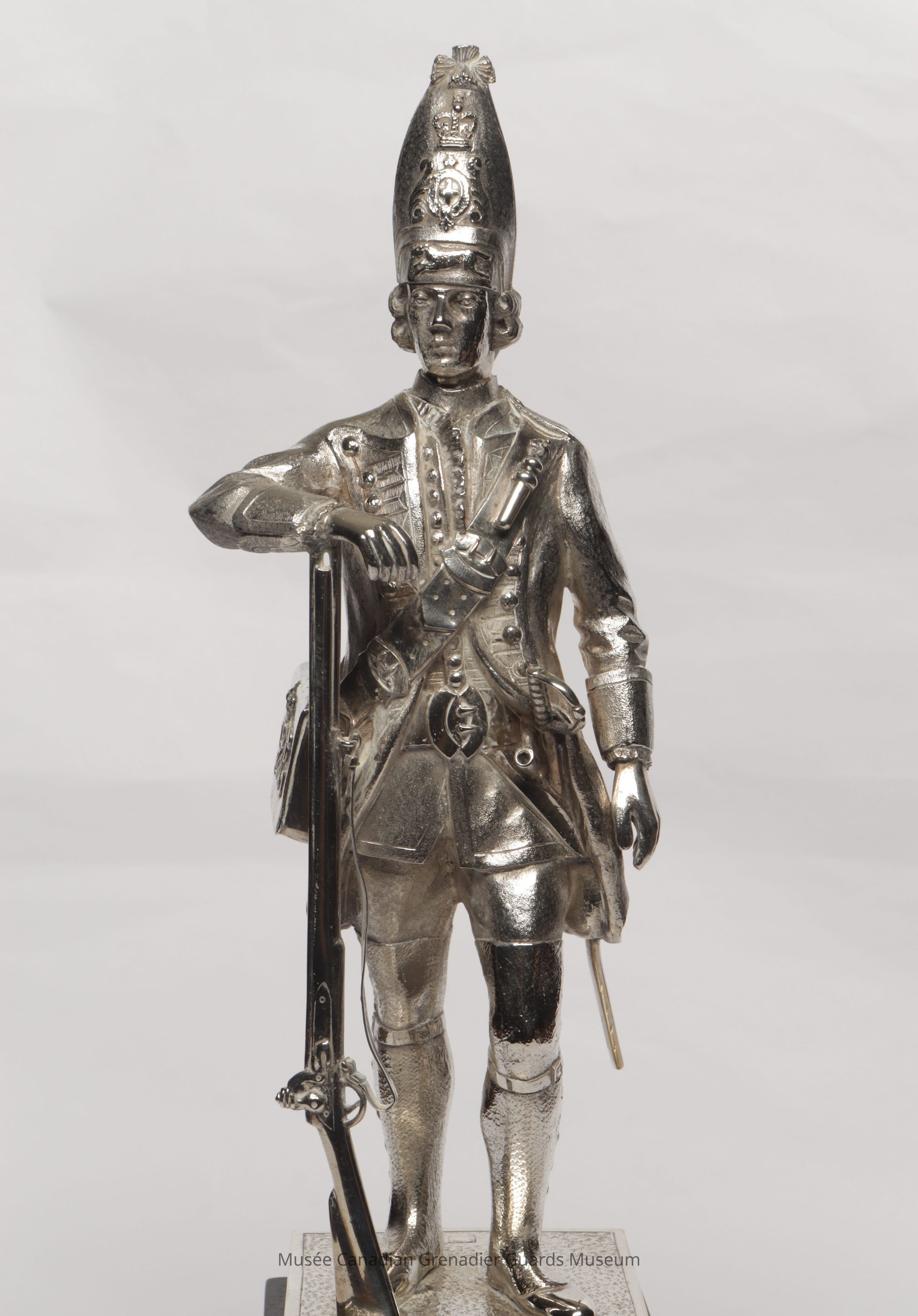
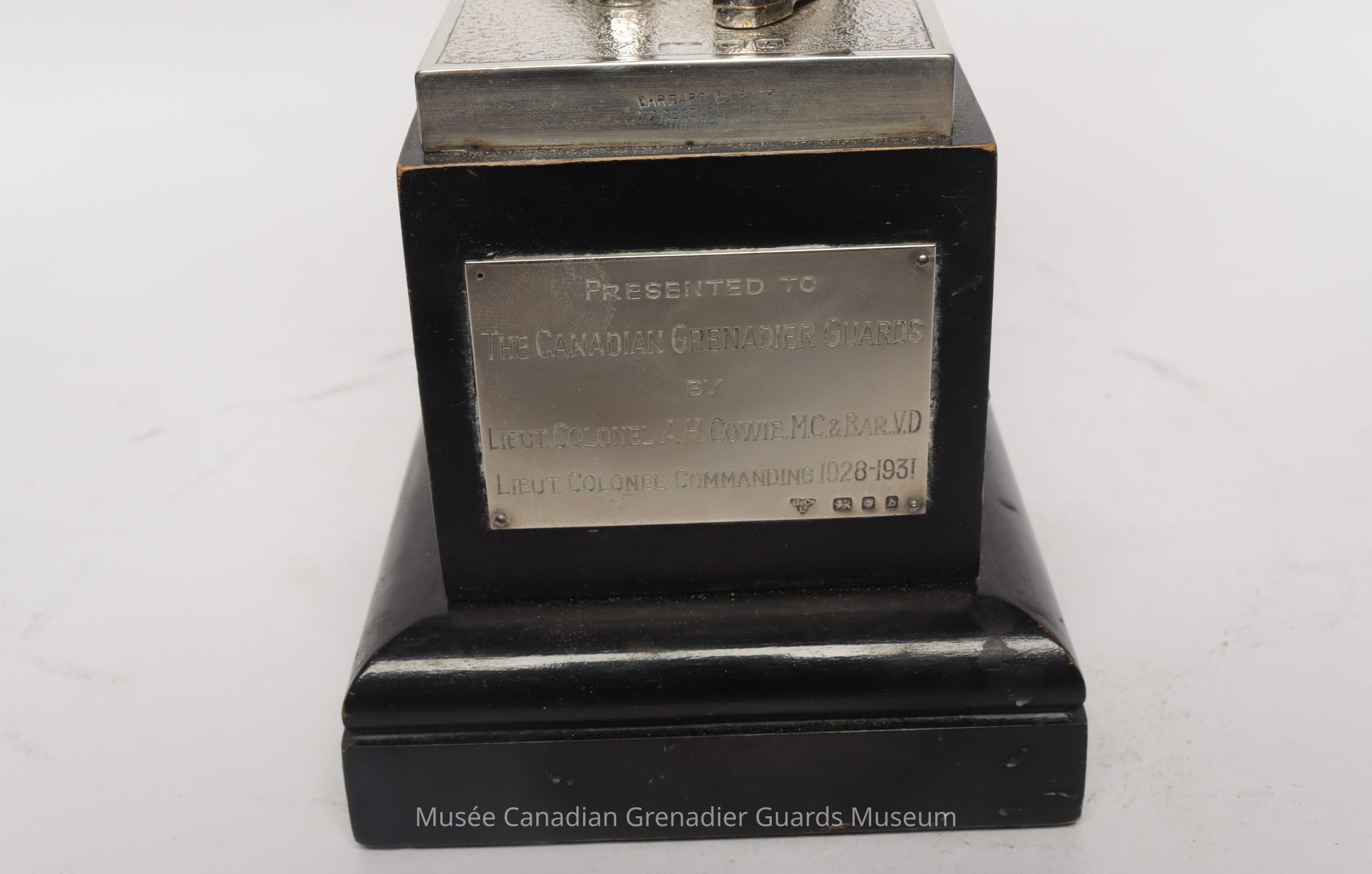
1933 - Original 1751 era Grenadier Guards Sterling Silver Cast statuette Presented to the Canadian Grenadier Guards by Lieut. Colonel Alfred Henry Cowie, MC, VD LCol. Commanding the Regiment 1928-31Description
This original sterling silver cast statuette manufactured by Carrington & Co, London, 1933 was donated by LCol Alfred Henry Cowie, MC, VD.
ABOUT THE CGG OFFICER
Cowie was a pre WW1 1st Regiment (Grenadier Guards of Canada) member who enlisted as a Pvt. of our Second Continent of two companies towards the formation the 23rd. Bn., CEF, which was later transformed into the 23rd Reserve Battalion reinforcement unit. He was eventually posted to the 60th. Bn. (VRC) to serve in the Canadian Corps in France and earned a commission in the field. He rejoined CGG when he was taken on strength with our 87th Bn. (CGG) CEF. As a Lt. he earned the Military Cross(MC) and was only one of 6 Grenadier officers in WW1 to earn a bar to his MC. He rose to Capt. with the 87th.
Incidentally, it was during his tenure as LCol. that HM King George V approved our formal alliance with the Grenadier Guards on December 1, 1930, a relationship which we have enjoyed ever since, in peace and in war.
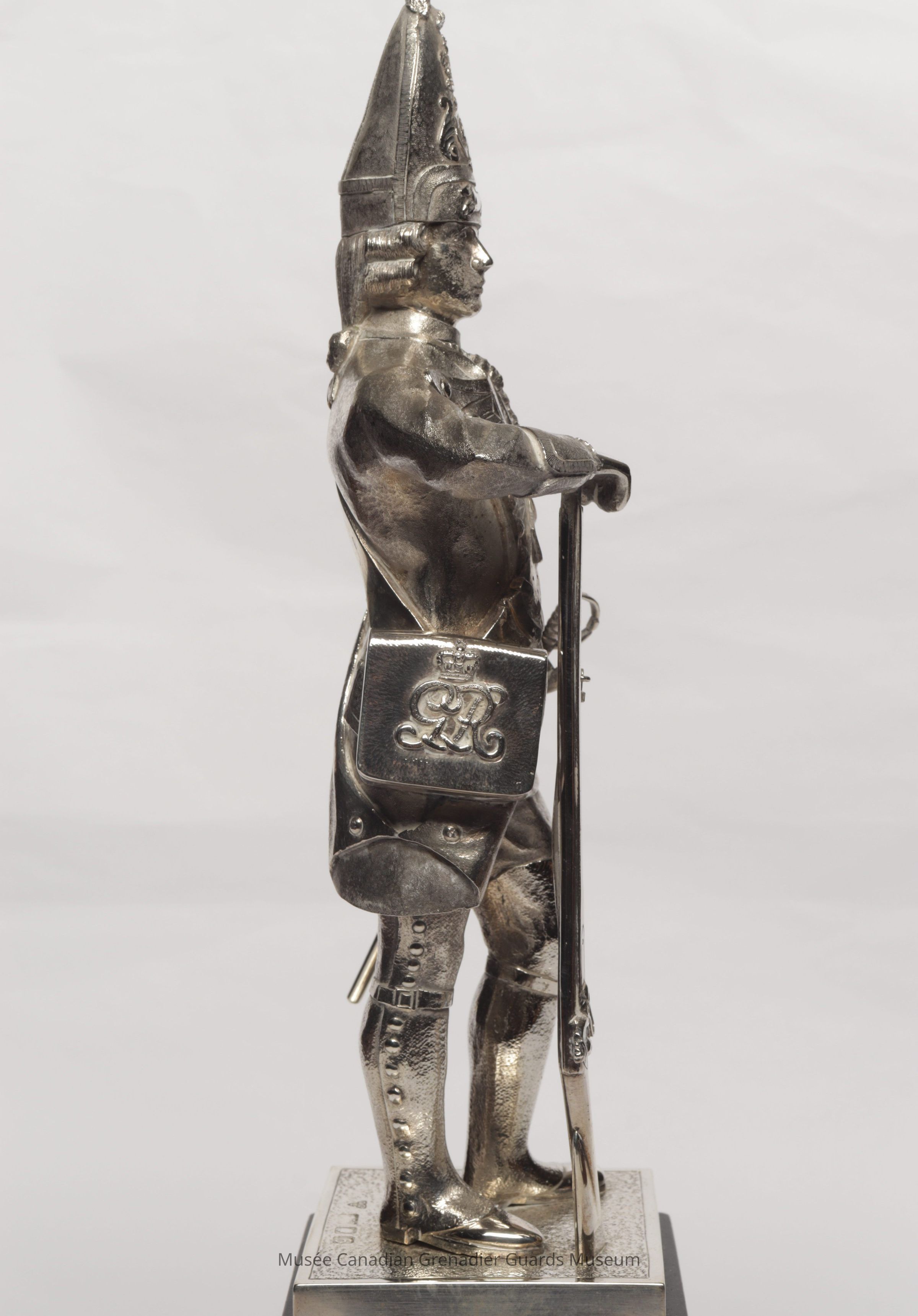
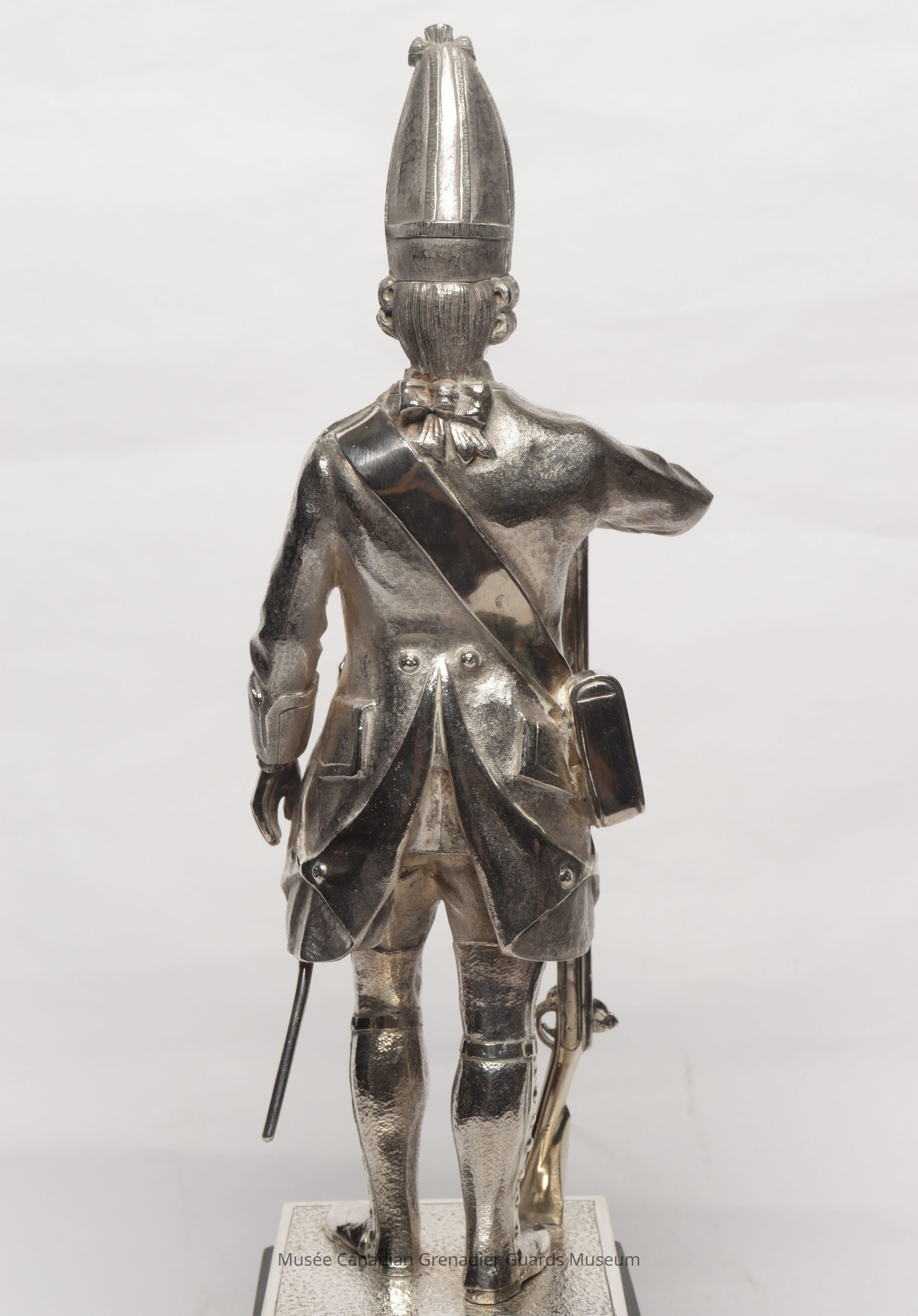
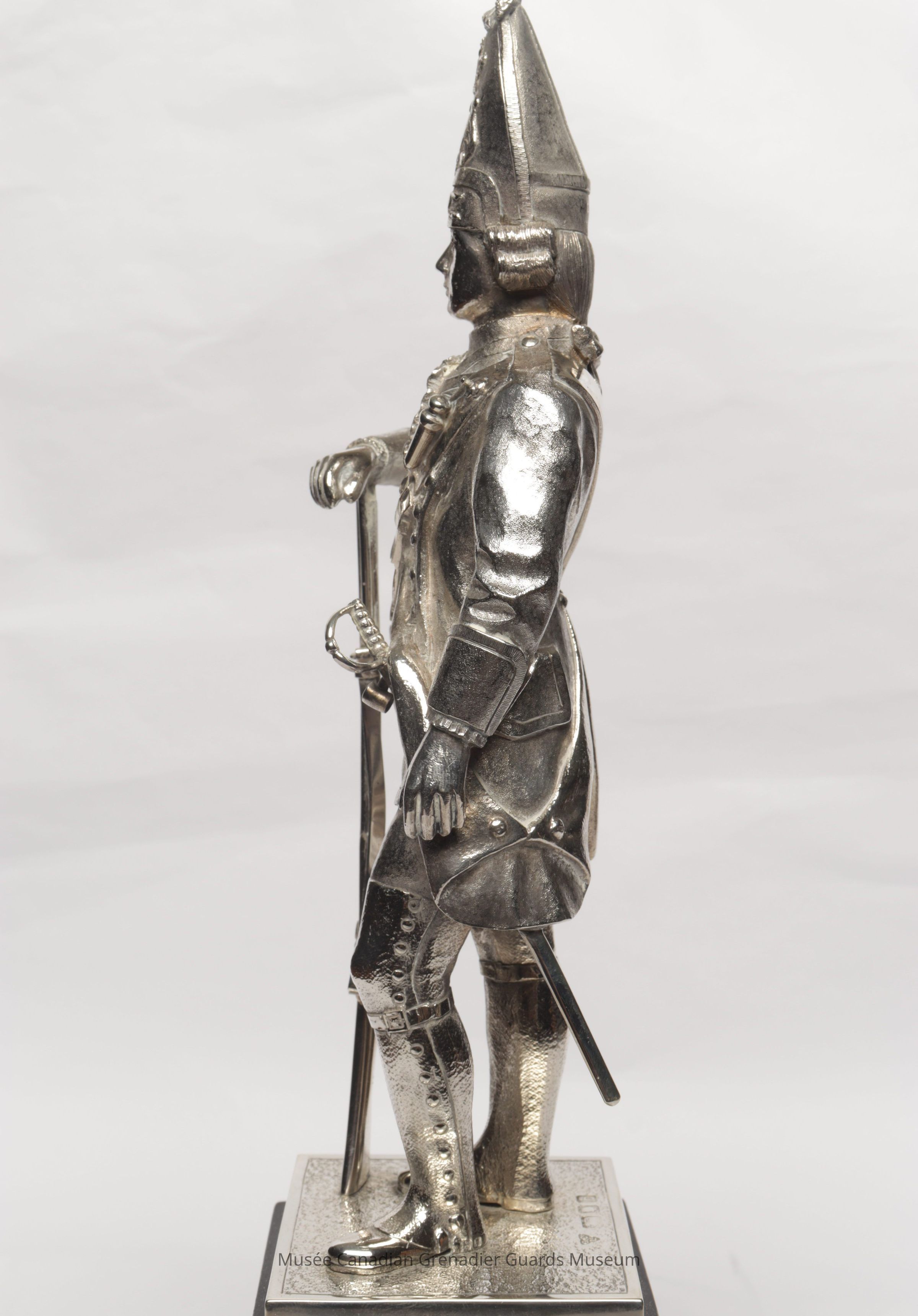
The statuette represents a Grenadier officer of 1751, armed as they were with a fusil – meaning a special type of light flintlock musket carried by Grenadier officers. Note: He also wears a sash in which the lit fuses for the Grenades would be kept on his chest, and spar fuses in a sack on his right hip. In those days the First Foot Guards had not yet earned their later Regimental title of Grenadier Guards, which they earned at the crisis point of Waterloo in 1815 by defeating the Grenadiers of Napoleon's Old Guard, who had never been previously defeated in open battle.
Before then, every regiment of Infantry had a specialized Grenadier Company made up of the tallest and most physically fit men, able to throw grenades over the heads as far as possible towards enemy formations. The Grenadiers specialized as special assault troops within each bn. to take out the enemy's fortifications and other field works or strong points. The fusil was much shorter and lighter than a regular musket so that it enabled the Grenadiers more room to throw grenades effectively, as well as scale walls, etc. The Grenadiers occupied the right flank of every line regiment in battle, and were also therefor referred to as one of the two "flank" companies of each Bn. The other being the Light infantry company, or "light Bobs" who acted as skirmishers. The flank companies were considered to be elite troops of every Bn. The French army had whole bns. of Grenadiers, including the Old Guard. The Grenadier Guards took on that role for the British Army after Waterloo.
Of course, our favourite song is:
"Some talk of Alexander,
And some of Hercules
Of Hector and Lysander,
And such great names as these
But of all the world’s great heroes
There’s none that can compare
With a tow, row row row , row row row
To the British Grenadiers
None of these ancient heroes
Ne’er saw a cannon ball
Nor knew the force of powder
To slay their foes withal
But our brave boys do know it
And banish all their fears
Sing tow, row row row , row row row
For the British Grenadiers
When e’er we are commanded
To storm the palisades
Our leaders march with fuses,
And we with hand grenades;
We throw them from the glacis
About the enemies’ ears
Sing tow, row row row , row row row
For the British Grenadiers
See upcoming pop shows
Get tickets for your favorite artists
And when the siege is over
We to the town repair
The townsmen cry ‘Hurrah, boys
Here comes a Grenadier’
Here come the Grenadiers, my boys
Who know no doubts or fears
Sing tow, row row row , row row row
For the British Grenadiers
So let us fill a bumper
And drink a health to those
Who carry caps and pouches
And wear the looped clothes
May they and their commanders
Live happy all their years
Sing tow, row row row , row row row
For the British Grenadiers"
Distinct Fusilier Regiments, i.e., soldiers armed with fusils, came into existence at about this same period, which is also why Fusiliers have a grenade cap badge, although of a different pattern.
ABOUT THE STATUE
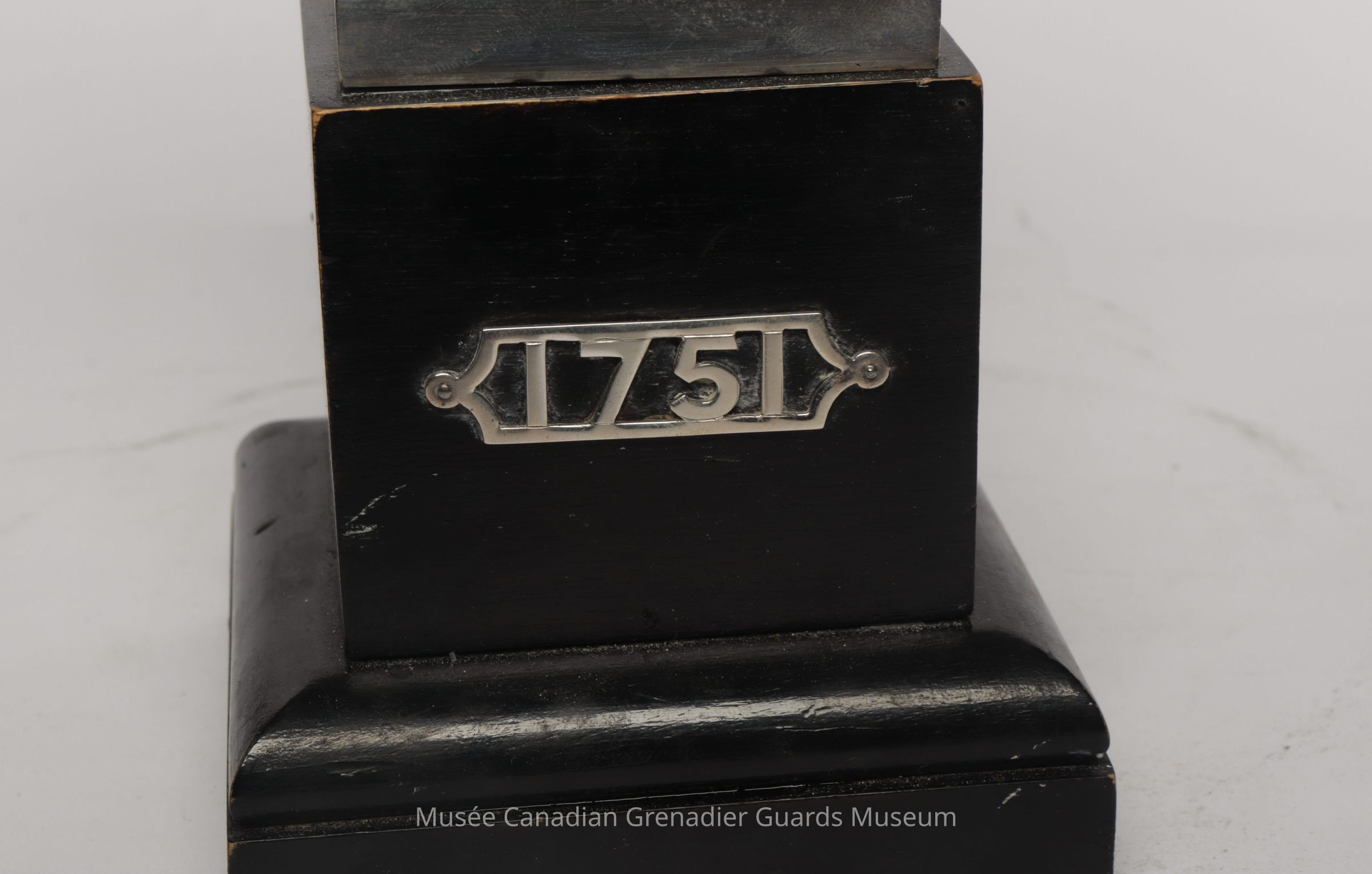
This statue is part of a large pair of George V era cast silver Military Models depicting soldiers of the Grenadier Guards from the 17th and 18th Centuries. Each figure is modelled with an incredible attention to detail, showing the uniform, equipment and weapons from each period. The figures stand on silver mounted ebonised plinths with applied cut-out dates - 1660 & 1751.
The first model depicted a Pikeman and the second (this one dated 1751) a Grenadier. Two from a series charting the development of the Grenadier Guards Regiment over the centuries manufactured by Carrington & Co, London, 1933.Created By
Abdourahamane, IssaCreate Date
December 27, 2023Updated By
Lieutenant Michael Hayes-Rivet, retired.Update Date
February 19, 2026