Name/Title
1897 - An original 1st Prince of Wales Fusiliers P-1897 Infantry Officer's Queen Victoria Cypher Sword attributed to Major William George McVicar Stuart, 1st PWRF Senior MajorDescription
For Museum records only - Part of the Lieutenant Michael A. Hayes-Rivet (MHR) Trust Collection
*** FOR ARCHIVE PURPOSES ONLY - ARTIFACT NOT PART OF MUSEUM COLLECTION ***
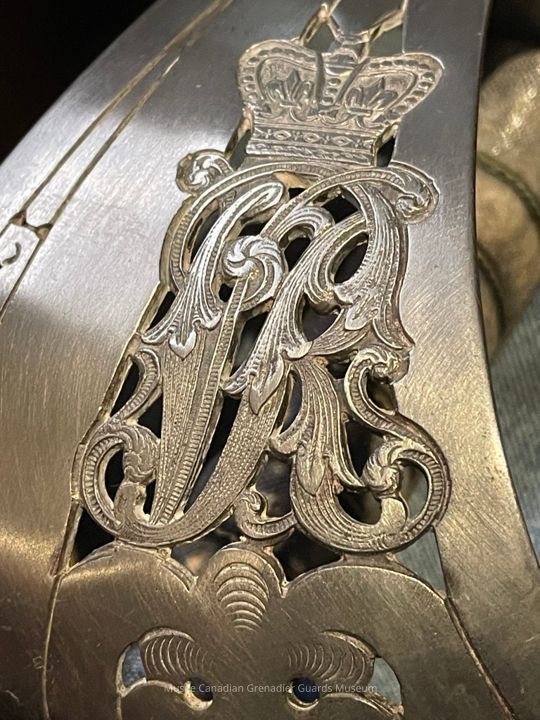
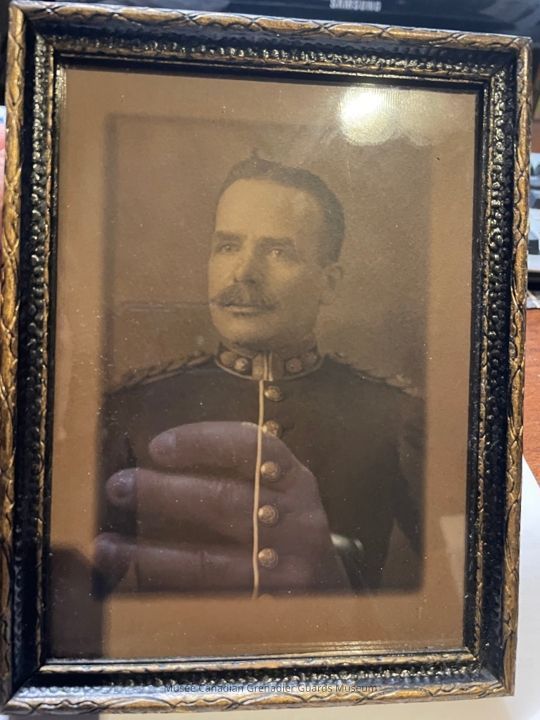
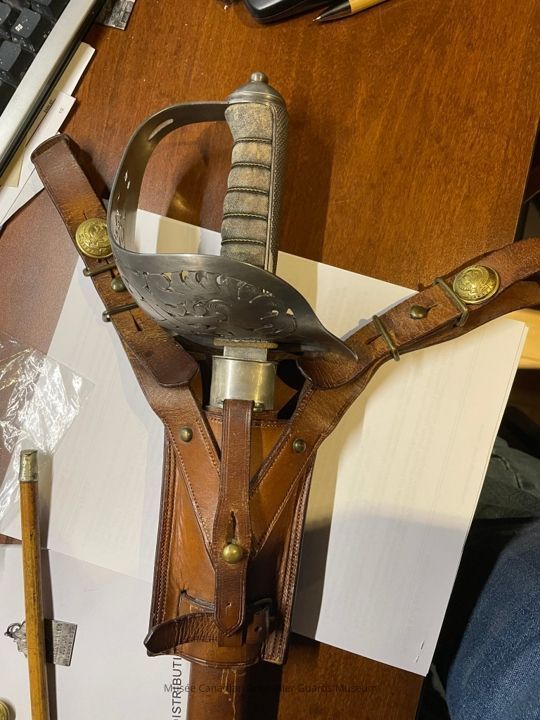
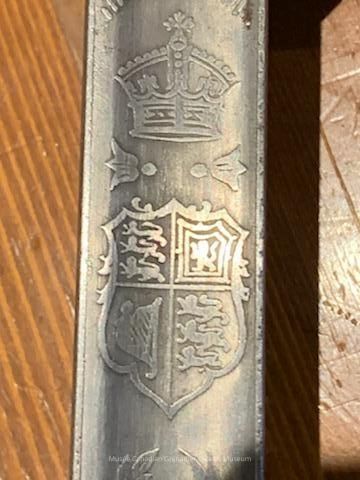
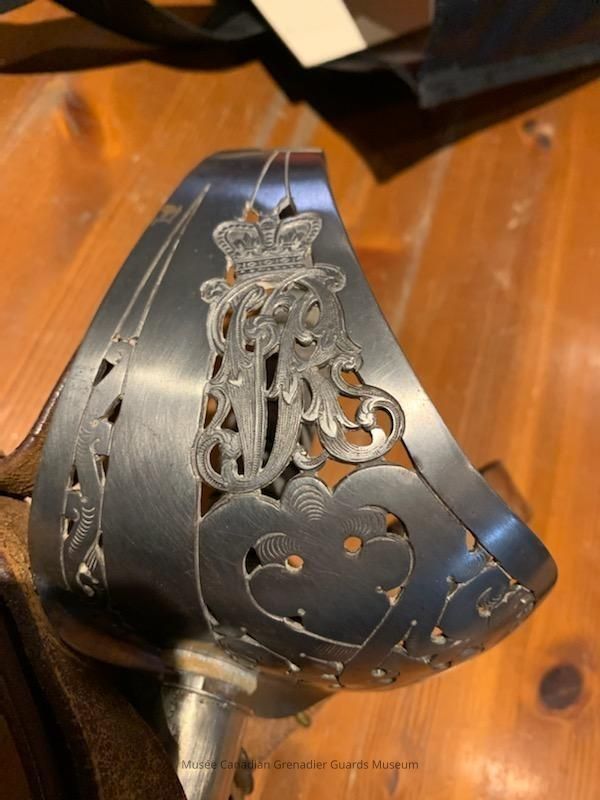
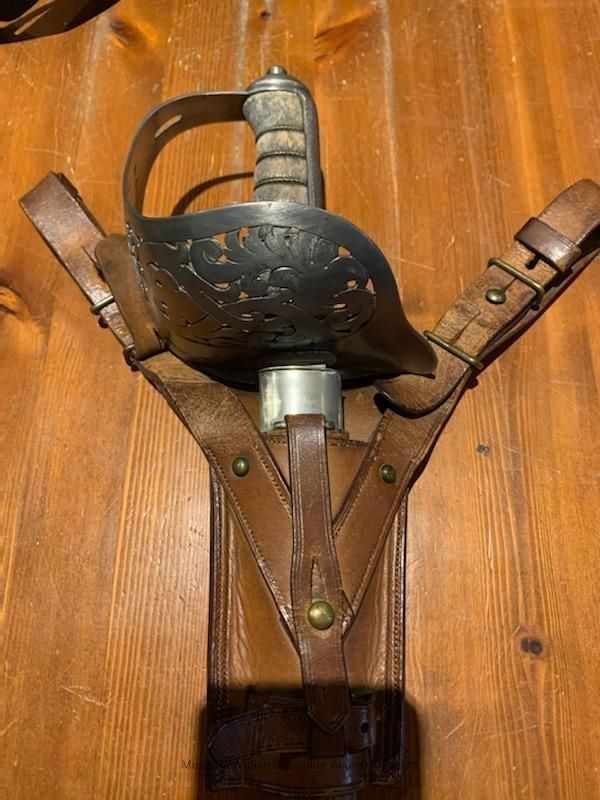
1897 - An original 1st Prince of Wales Fusiliers P-1897 Infantry Officer's Queen Victoria Cypher Sword owned by Major Stuart, 1st PWRF Senior Major. The sword comes with original Sam Browne field scabbard with two original 1st Prince of Wales Regiment Fusiliers buttons.
ABOUT THE P1897 MODEL CANADIAN (British) INFANTRY SWORD
Last revised in 1897, the straight carbon steel blade of this sword is two-edged for the final section of its length and finely etched with the regimental crest. Formed from nickel-plated steel, the guard of the three-quarter basket hilt is pierced and etched with a scroll pattern that incorporates the royal cypher of the current sovereign. [In this case Queen Victoria from the period of 1897-1901]. The grip is in black fish-skin bound with silver-plated copper wire. The P-1897 Infantry Officer’s Sword comes with 2 scabbards - it can be carried in a Sam Browne leather scabbard with plated steel mouthpiece for service wear or in a nickel-plated steel scabbard for full dress occasions. The blade length is typically 32.5", with a blade width at Hilt of 1"].
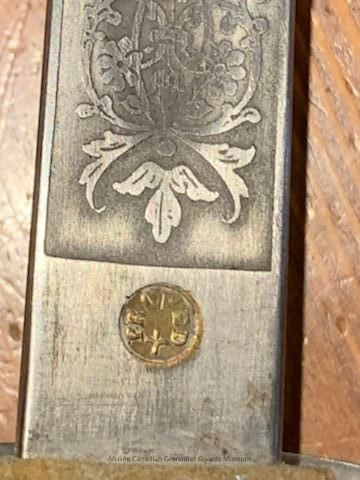
PROOF DISK:
The proof disk (slug) is the little round or hexagonal brass button inset into the base of the blade on the other side of the ricasso from the maker or retailer name. It was introduced by Henry Wilkinson in 1845 as a marketing device to show that the blade had passed various tests of strength or flexibility.
DAMASCUS STAR:
The star found on the ricasso of many Victorian swords is not meant to be a Star of David. Robert Wilkinson-Latham (formerly of Wilkinson Sword) says that the star is really two interlocking triangles which are meant to symbolize strength. Another suggestion is that it is a “Star of Damascus”, which seems to be the popular answer regarding the symbol sometimes found on later US swords. This “Star of Damascus” is supposedly meant to indicate high quality steel as in “Damascus Steel”.
ABOUT THE CGG OFFICER
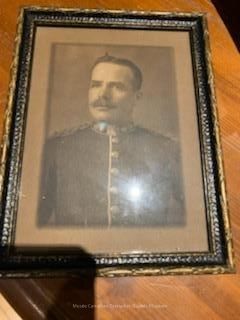
Born in Montreal on 5 November 1872, Major William George McVicar Stuart was educated at the Sherbrooke Street School and at an early age joined the storage firme of J.M. Douglas 7 Co.. He later joined his fathers storage Co. (James Stuart Co.). In 1895 at age 23, he entered partnership with his brother Frank E. Stuart in the conduct of Customs Brokerage under the name of James Stuart & Sons Ltd located on St. Paul street near McGill University close to the old Montreal Customs House. In 1890, At the age of 21, he became a 2nd Lieutenant with the 1st Prince of Wales Regiment. He went to St.Johns Quebec on 16 June 1894 to complete his certificate of military instruction and passed with a first class grade A and received his Officers Commission Scroll. He bacame a 1st Lieutenant of the Prince of Wales Regiment in 1895 and married Ms. Arabella Risdale Potter (21 Argyle Street, Montreal) on 23 June 1897. The moved into their home located at 773 St. Denis Street, Montreal. In 1898 he became a Captain with the newly formed 1st Prince of Wales Regiment Fusiliers. He was a co-founder of the Highland Cadet Corps after Major Fred Lydon went to him to help start and organize the Montreal cadet corps. Two full companies were organized with Captain Stuart in Command as their first CO. It was called the Highland Cadets of Montreal. Their distinctive badge was that of the St.Andrews Cross, surmounted by a Scottish Lion rampant, within a wreath of thistles and maple leaves. the binding ribbons bearing "Highland Cadets of Montreal". In 1904, Capt. Stuart moved to Outremont where he was the first to build a house on the Heights at 366 Cote St. Catherine Road. He was a City Counsillor and advisor to Outremont form 1909-1915. In 1910, he became Senior Major of the 1st Prince of Wales Regiment fusiliers (age 38) and in 1920 he started to organize a Customs & Brokerage Association, becoming the first President of the Dominion Chartered Custom house Brokers Association. At the time of his death on 9 October 1936, (age 51) he had been in retirement for 7 years.Created By
Lieutenant Michael Hayes-Rivet, retired.Create Date
January 27, 2026Updated By
Lieutenant Michael Hayes-Rivet, retired.Update Date
July 15, 2026