Name/Title
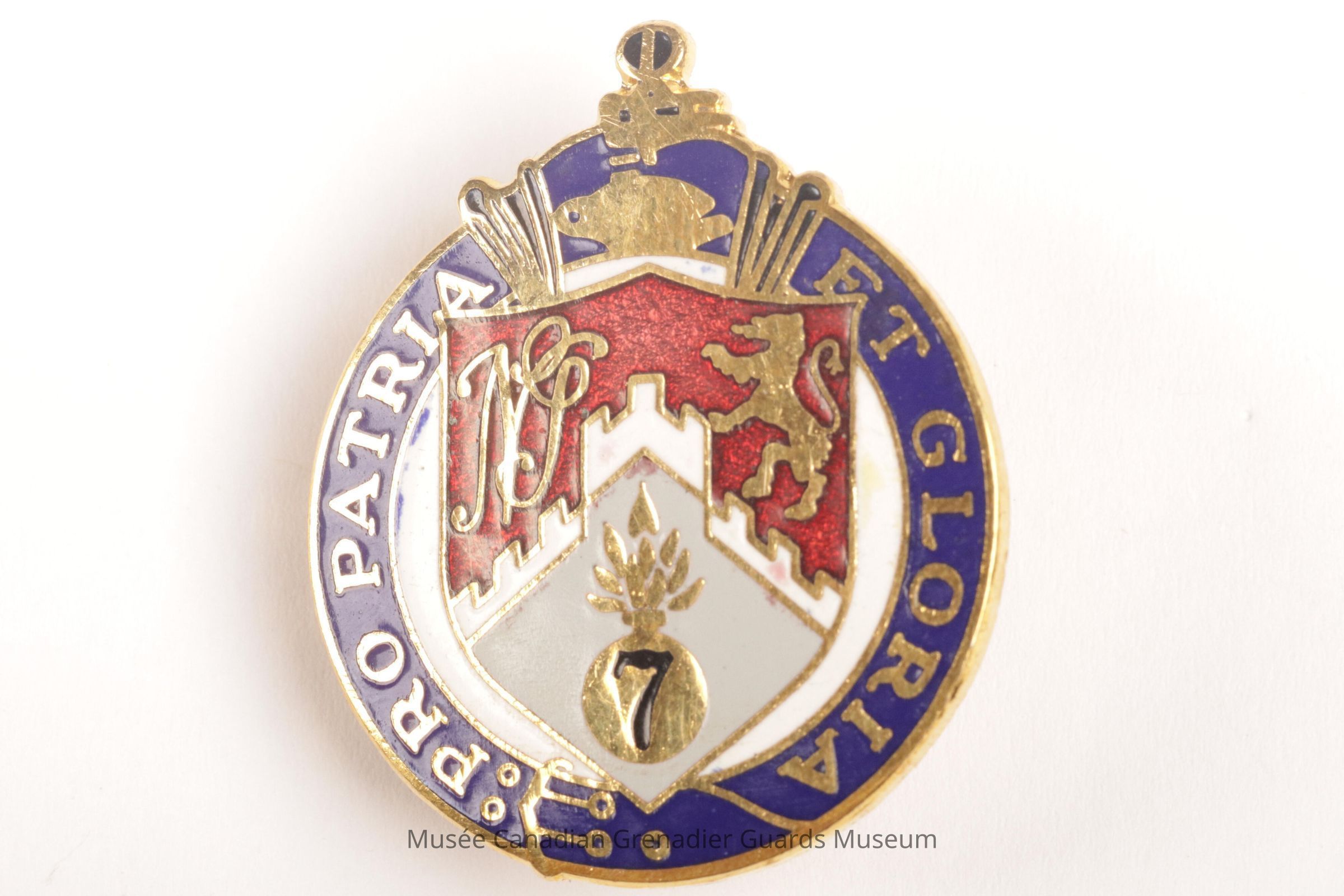
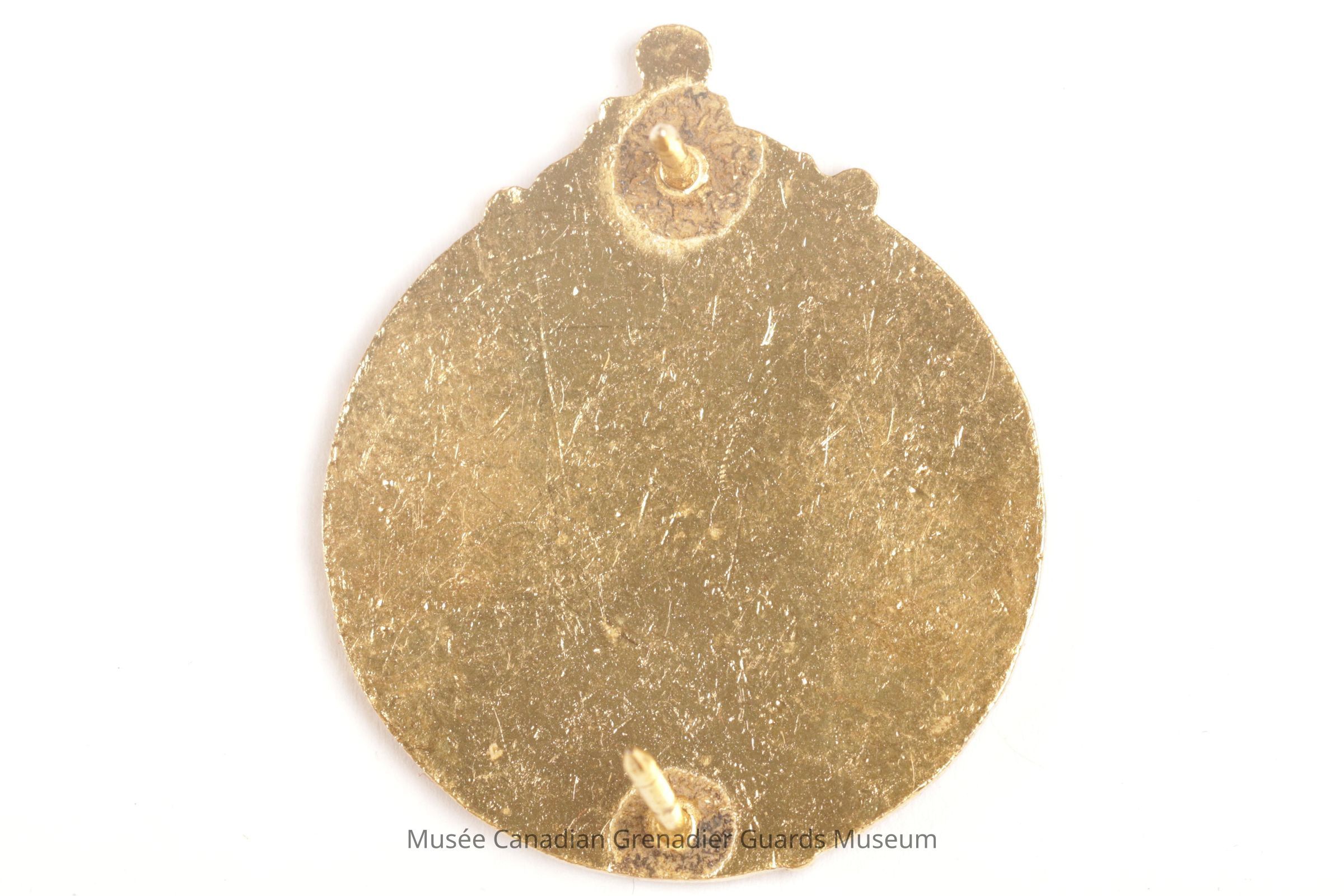
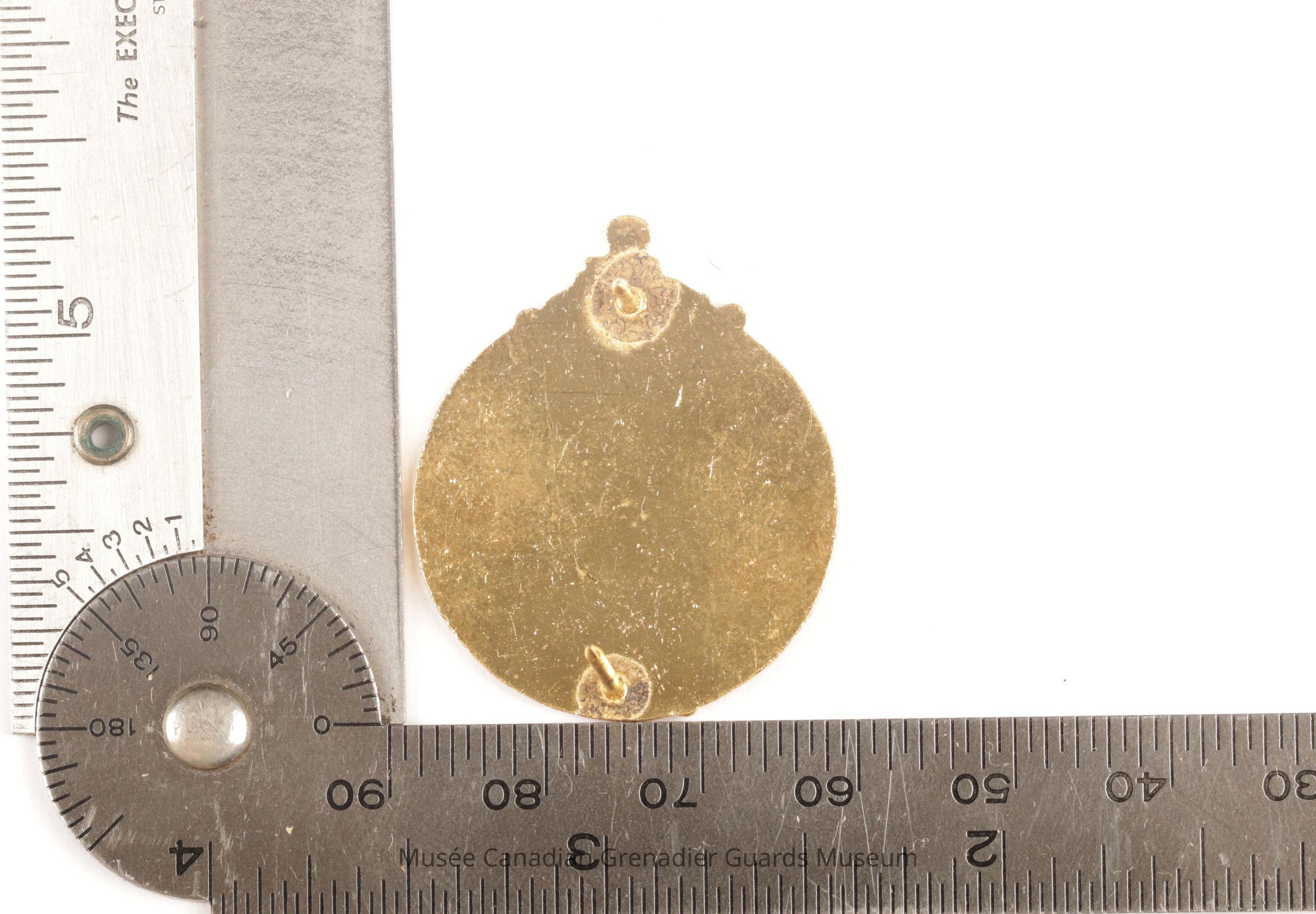
1957 - CGG / US JOINT PARADE IN USA - A 107th Infantry Regiment Sweetheart / lapel pin circa 1950's presented to CGG for participating in joint operations with the 107th in the US to celebrate their 150th AnniversaryDescription
A USA107th Infantry Regiment lapel or sweetheart pin presented to the Canadian Grenadier Guards in 1957 for participating in joint operations with the 107th in the US to celebrate their 150th Anniversary.
ABOUT THE 107th INFANTRY REGIMENT
The 107th US Infantry Regiment was a regiment of the New York Army National Guard. The regiment was formed in 1917 and disestablished in 1993. The 107th traces its history to the Seventh Regiment of New York (or 7th New York Militia/7th Regiment New York State Militia). Known as the "Silk Stocking Regiment" for the high number of New York City's social elite among its ranks and its armory's location on Park Avenue in the Silk-Stocking District of the Upper East Side. It was established in 1806 in response to the blockade of New York Bay in April by warships of the British Navy, whose commanders claimed the right to detain and search American vessels and impress any British subjects serving on them.
*** UPDATE RESEARCH 2025 ***
POSTED ON FACEBOOK ON 15 MAY 2025 (Update provided by LCol Gordon McWhaw, AdC, CD)
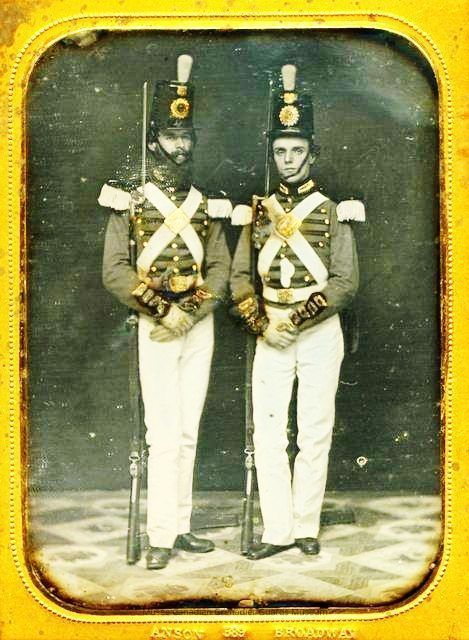
PHOTO IMAGE (BELOW): Two members of the 7th New York Militia Regiment daguerreotype photograph taken c1840-50.
"The regiment became the 107th Infantry Regiment, New York Army National Guard in 1917. In WW1 the regiment as part of the British trained and mentored US 27th infantry Division, under British command, it played an important role in helping to break through the Hindenburg Line Sept. 29, 1918, opening the way for the British Army. The 7th Regiment of the New York Militia, aka the "Silk Stocking" regiment. Also known as the "Blue-Bloods" due to the disproportionate number of its members who were part of New York City's Anglo-American social elite, the 7th Militia was a pre-war New York Militia unit that was mustered into federal service for the Civil War in which it played a leading role.
The regiment was established in 1806 in response to the blockade of New York Bay in April by warships of the British Navy, whose commanders claimed the right to detain and search American vessels and impress any British subjects serving on them."
"On their 150th Anniversary in 1957, my great uncle, an officer in the Canadian Grenadier Guards recalled how the 107th paraded down 5th Avenue at Central Park, alongside the Canadian Grenadier Guards in their full dress uniforms of bearskins and scarlet tunics. It was the first time the "British" (Canadians) had paraded in New York since the American War of Independence, the press loved it claiming "The Red Coats Were Coming".
In 1993 as part of nationwide force structure reductions the 107th designation was reassigned to the former 205th Support Group, New York Army National Guard, creating the 107th Support Group and the unit marks 219 years of service in 2025.
Origin:
The regiment, located in New York City, (companies, A, B, C, and D), was organized during the furor created by the firing of British at American vessels off Sandy Hook in April 1806, as the 1st, 2nd, 3rd and 4th companies. On 25 June 1861 they were officially reorganized by the state as part of the uniformed militia of the state and attached to the First Brigade of the Battalion of Artillery commanded by Maj. Andrew Sitcher. On 5 April 1807, the battalion became the 2nd Battalion, 3rd Regiment of Artillery, New York State Militia. As tensions with the United Kingdom increased in 1807, these four companies, with other volunteers, were temporarily organized as a regiment, commanded by Col. Peter Curtenius, and remained thus detached until 20 April 1809. In 1812 the battalion became the 2nd Battalion, 11th Regiment of Artillery, New York State Militia. In 1812-14 the regiment was deployed in the harbor forts of New York.
WW1:
It was decided by Field marshal Douglas Haig that the Fourth Army's Australian Corps would lead the Battle of St. Quentin Canal. However, due to the Corps depleted nature, which was a result of fighting almost continuously, it would be reinforced by the 27th and 30th divisions, which resulted in II Corps being temporarily reassigned under Australian command.[9] This great Somme "push", which lasted from 24 September to 1 October, saw the 27th engaged in severe fighting along the Saint Quentin Canal Tunnel—one of the out-lying strong points of the Hindenburg Line.
LATHAM, N.Y. - On Sept. 29, 1918, the New York National Guard Soldiers of the Army's 27th Infantry division fought their way into the defensive works known as the Hindenburg Line. The attack did not go smoothly, and casualties were high. At a cost of 3,076 men wounded and killed over two days - out of the division's strength of 18,055 - the New Yorkers fought through a maze of German machine gun nests and fortified positions and captured the leading edge of the main German defenses. One unit, the 107th Infantry Regiment, famous as the 7th Regiment of the New York National Guard, lost 396 men killed and had 753 men wounded out of a total of 1,662 Soldiers who began the battle. The costly attack, though, broke open the main German defense in northern France and opened the way for the British army to go on the offense. By the end of September 1918, most American Soldiers in France were part of the First American Army Commanded by Gen. John J. Pershing. But the New York National Guard's 27th Division and the 30th Division, made up of National Guard Soldiers from several southern states, had been "loaned" to the British Army and fought under British command as the II Corps. They'd fought their first battle at the end of August 1918 and then pulled out of the line to begin training for this major assault. The Americans were new to combat in the Great War, but they had one thing the British—and the Canadians and Australians who fought with the British Army did not have – numbers. American divisions were twice the size of British Army Divisions, and British Field Marshal Douglas Haig knew he needed numbers for this assault. For this battle the Americans were placed under the command of Australian Gen. John Monash, considered to be one of the best commanders of the war. Like the Americans he commanded, Monash was a part-time soldier. He was an engineer in civilian life but was an officer in the Australian militia. When he went to war he learned fast. He was successful without spending the lives of his Soldiers. The plan Monash came up with called for the 27th and 30th Divisions to lead the attack. Their large divisions would make up for the fact that two of his Australian divisions were effectively out of the fight. The Americans would take the St. Quentin Canal and then two Australian divisions would follow up and leapfrog through the Americans to finish the assault. The St. Quentin Canal had been built in the early 19th century by Napoleon Bonaparte when he ruled France. It was like a super-large trench. A key feature facing the Americans was a 3.52-mile-long tunnel through a mountain. Inside the tunnel the Germans were using old barges as barracks. It was like a huge bunker. They could wait out the artillery and then pour out to counterattack. At the beginning of August, the Americans were pulled out of the line and began training for the fight. They learned to work with British tanks. The tanks were critical because they were supposed to provide fire power for the advancing Americans. Monash sent 200 Australian officers to work with the Americans and make sure they understood how he would fight the battle. It could have made for hurt feelings, but the Americans and Australians got along. They both thought the British officers were a bit snobbish and they liked each other. The plan called for the Americans to launch a preliminary attack and move up to a set line on Sept. 27. This "start line" for the main attack was what drove the plan for artillery barrage—a wall of fire—that would cover the Americans on their attack. But things did not go as planned. The British division to the north of the 27th Division did not advance as far as it should have during the preliminary attack. The Americans of the 106th Infantry Regiment, which led the attack, started further behind than they were supposed to and did not reach the planned start line for the Sept. 29 attack. Casualties were heavy. In one battalion every officer was killed. They held the ground where they stopped. This meant American Soldiers were holding the line in locations where allied artillery should be falling to allow the 107th Infantry Regiment to attack. In World War I communications were so slow that artillery fire had to be planned well in advance. There was no easy way to adjust fire. So, on the morning of Sept. 29, the Americans would have to move more than a half mile in the open before they caught up with the artillery barrage. At 5.55 a.m. on Sept. 29, the attack began. The 107th Infantry Regiment attacked on the left of the 27th Division front while the 108th Infantry Regiment attacked on the right. Artillery fire fell on the Germans but not the Germans right in front of the Guardsmen. They kept attacking but they took heavy loses. The tanks that were supposed to provide fire support got knocked out by artillery fire and in some cases old British mines. The Soldiers were pinned down by German machine gun fire and counterattacks. The 107th Regiment continued to attack but took very heavy loses. "They were more than seasoned veterans," Maj. Gen. John O'Ryan, the commander of the 27th Division, wrote after the war, "for in addition to battle experience and technical training they possessed in fullest measure pride of organization, high sense of honor and a strong sense of accountability to the homeland and the family." "The roster of the dead contains the best names of the city of New York—best in the sense of family tradition and all that stands for good citizenship in the history of the city. This comment applies as well to the rest of the remainder of the regiment and in the same way to the remaining units of the division, which represented other cities and localities of New York State," he wrote. The well-tuned plan fell apart and the Soldiers fought in small units and companies. The fighting was often hand-to-hand, which surprised the Germans. By the afternoon of the 29th some of the 27th Division units had reached the St. Quentin tunnel. But others were still pinned down. General Monash blamed the Americans for not sticking to his plan. The Americans, Monash told an Australian war reporter "sold us a pup … They're simply unspeakable". The confusion on the ground made it impossible for the Australians following the 27th Division to "leapfrog" through the Americans and Monash directed the Australian units south of the St. Quentin Tunnel where the 30th Division had better success. In other cases, Australians joined members of the 27th Division in the attack. Historians, though, say Monash was unfair to the men of the 27th Division. Because they were not able to start the attack where they should have, their lines were thin and they had to advance further than they should have. The fighting continued on Sept. 30 and the Germans began to give away. By Oct. 1, 1918, the Americans and Australians had cleared out the fortifications. After the war, and outside of the heat of the battle, Monash was generous to the men of the 27th Division. "I have no hesitation in saying that they fought most bravely, and advanced to the assault most fearlessly, "he wrote. "The leaders, from the divisional generals downwards, did the utmost within their powers to ensure success. Nor must the very bad conditions under which the 27th Division had to start be forgotten. Our American Allies are, all things considered, entitled to high credit for a fine effort," Monash wrote. More than 400,000 New Yorkers served in the military during World War I, more than any other state.Created By
Zarina CarlevarisCreate Date
July 14, 2022Updated By
Lieutenant Michael Hayes-Rivet, retired.Update Date
May 15, 2025