Name/Title
1942 - WW2 Era CGG Mark II (MKII) Canadian Brodie Helmet manufactured by the Canadian Lamp Company (C.L./C) - unnamed and un-attributedDescription
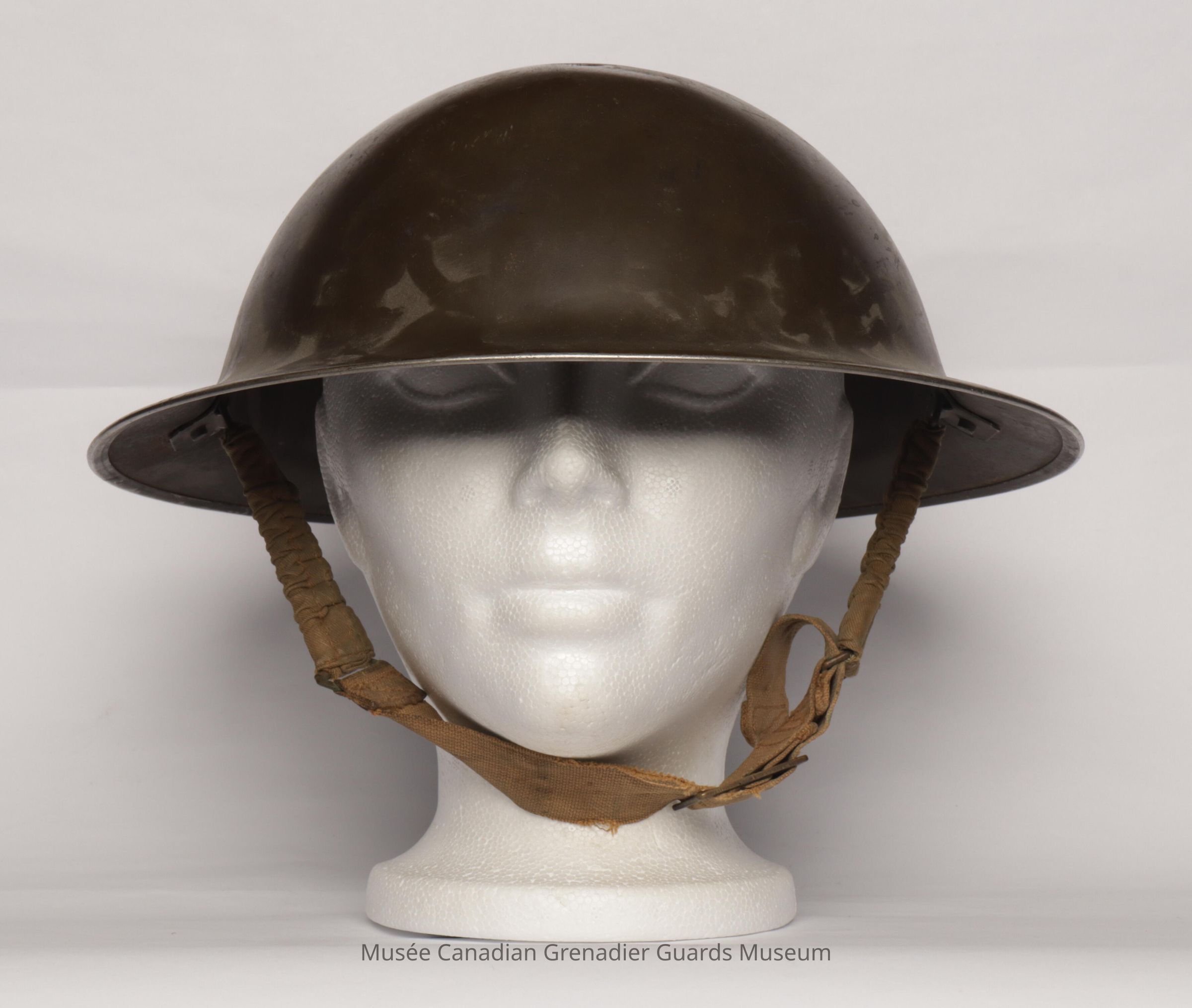
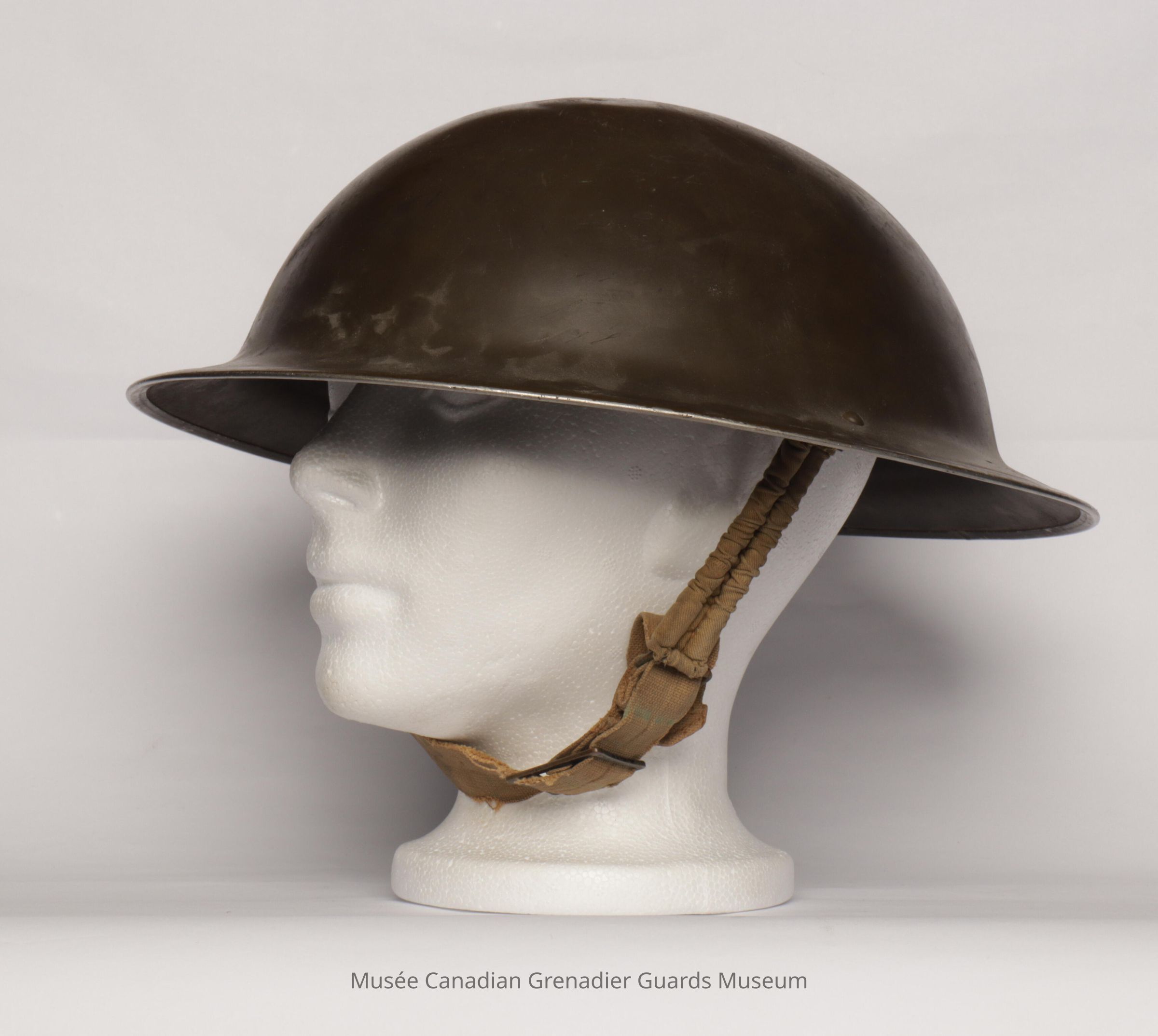
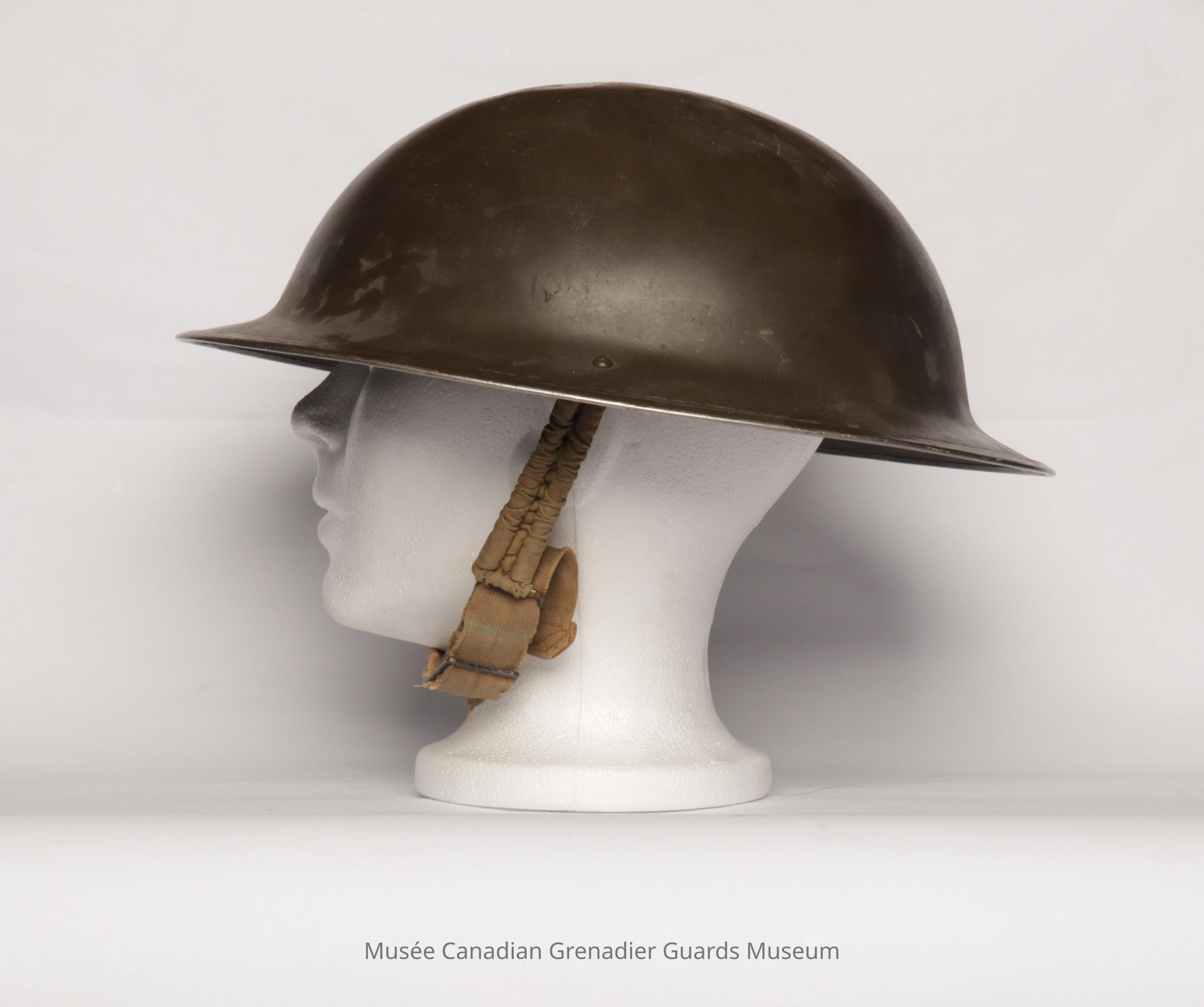
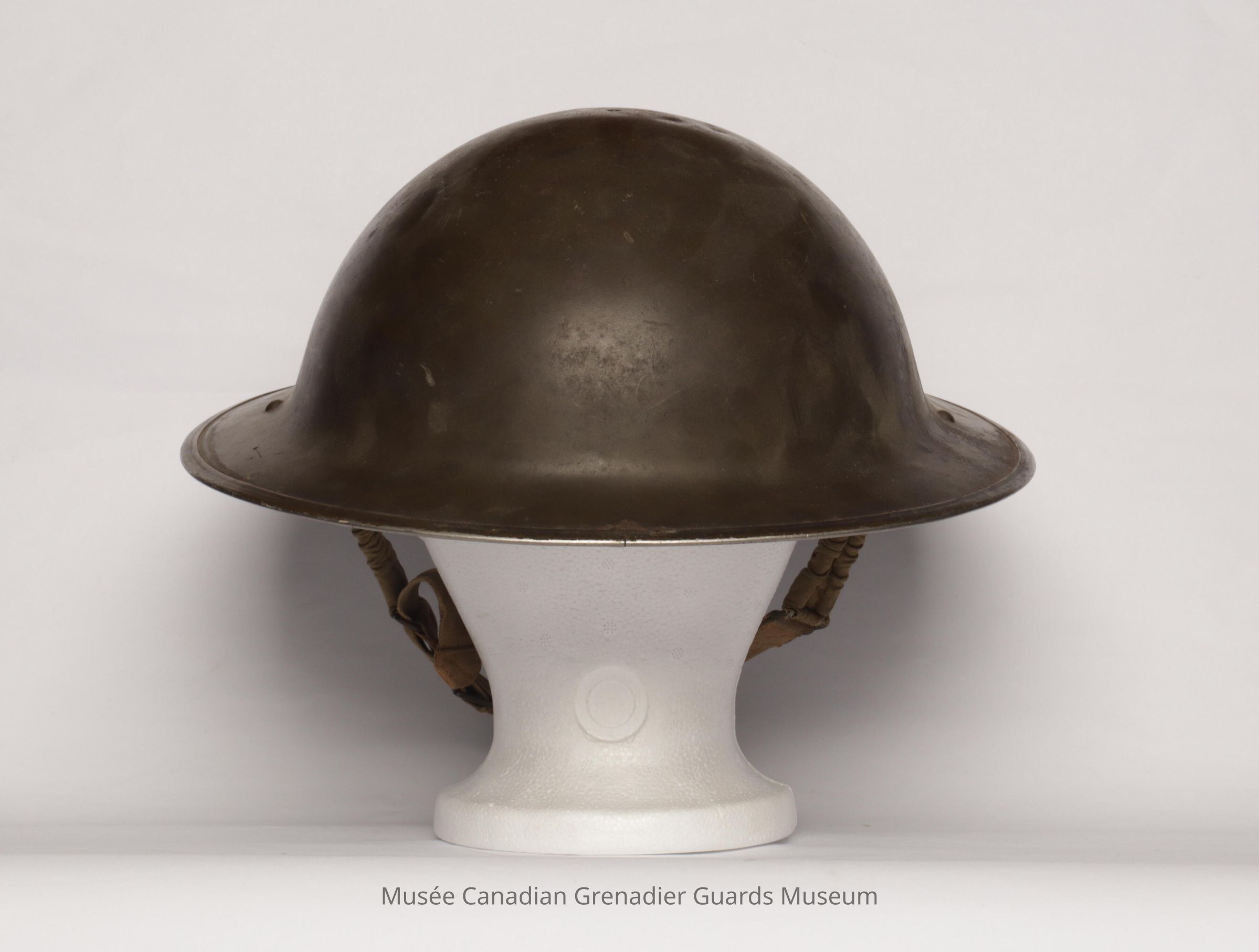
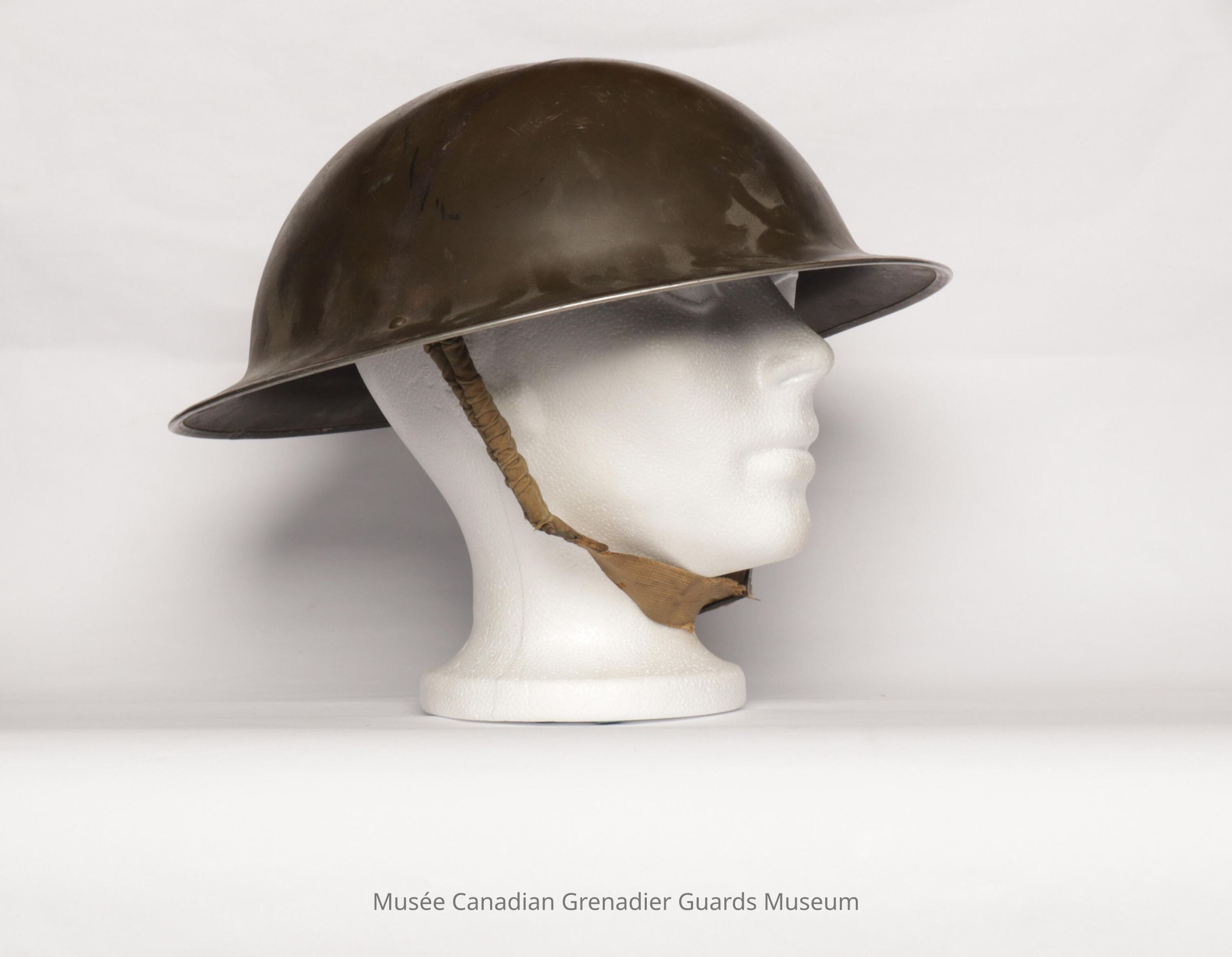
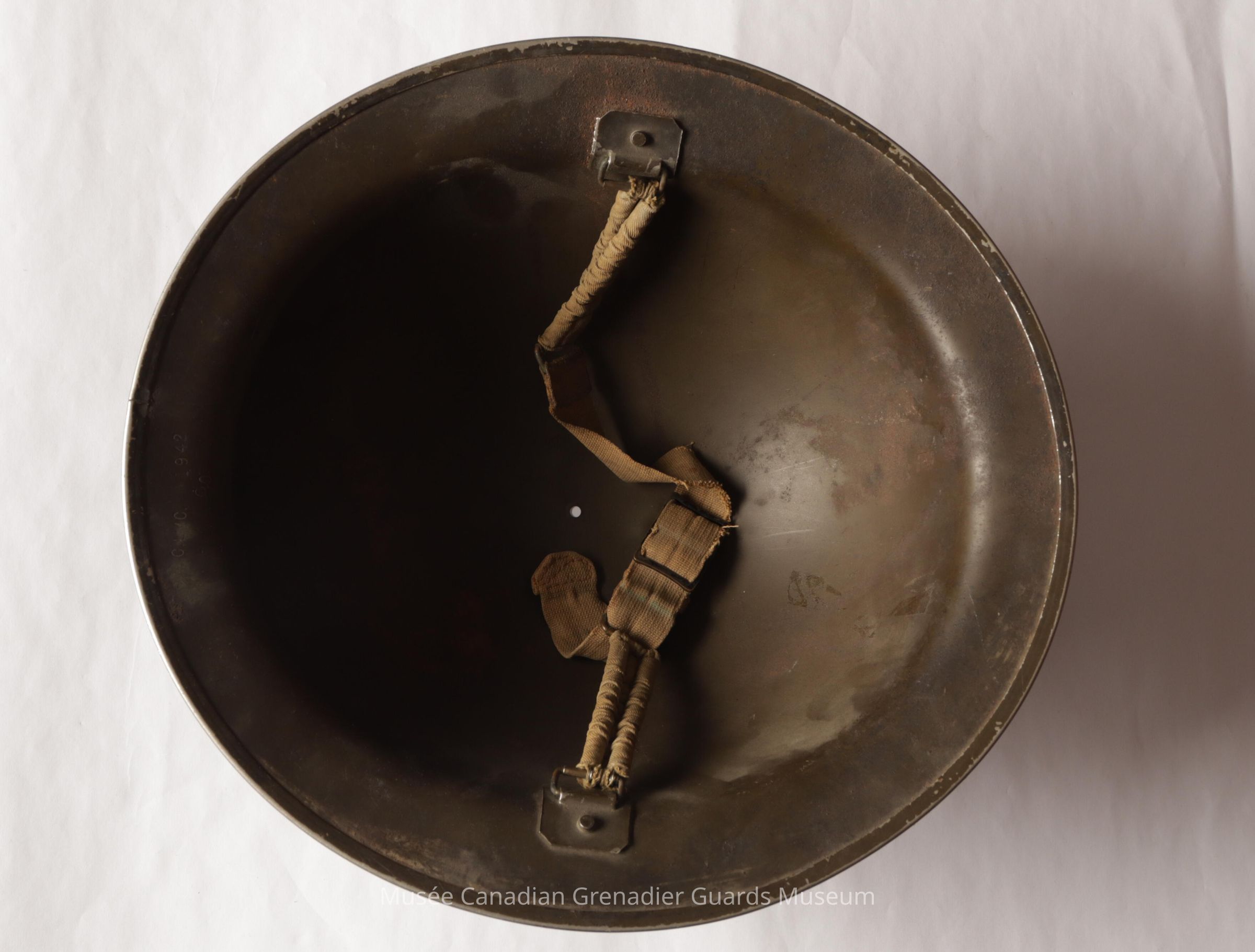
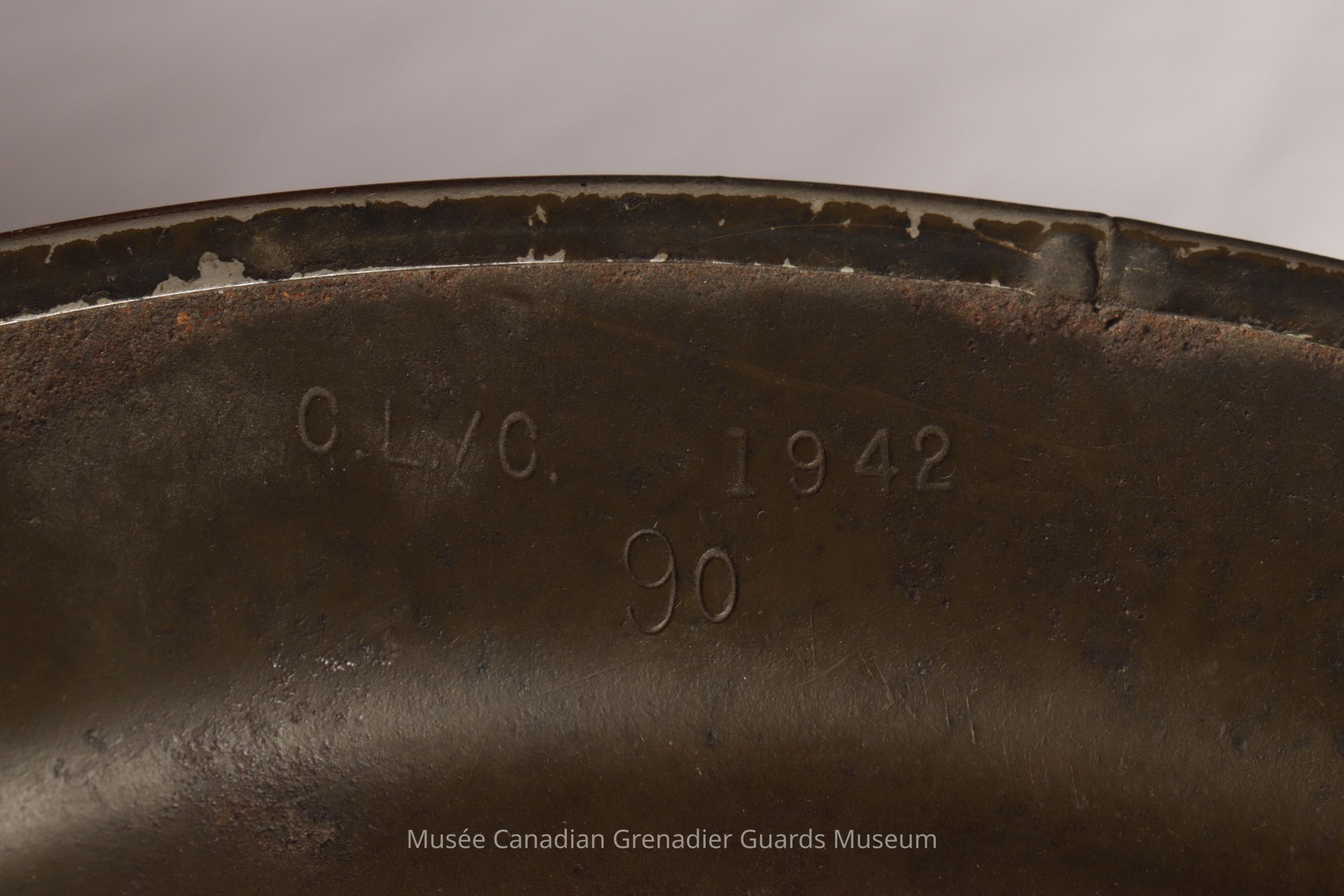
An original CGG 1942 Canadian-made WWII Mk II WW2 era combat helmet, manufactured by Canadian Lamp Company (C.L./C.- 90) stamped accordingly on the interior of the steel shell. '90' indicates the batch number. Unnamed and un-attributed
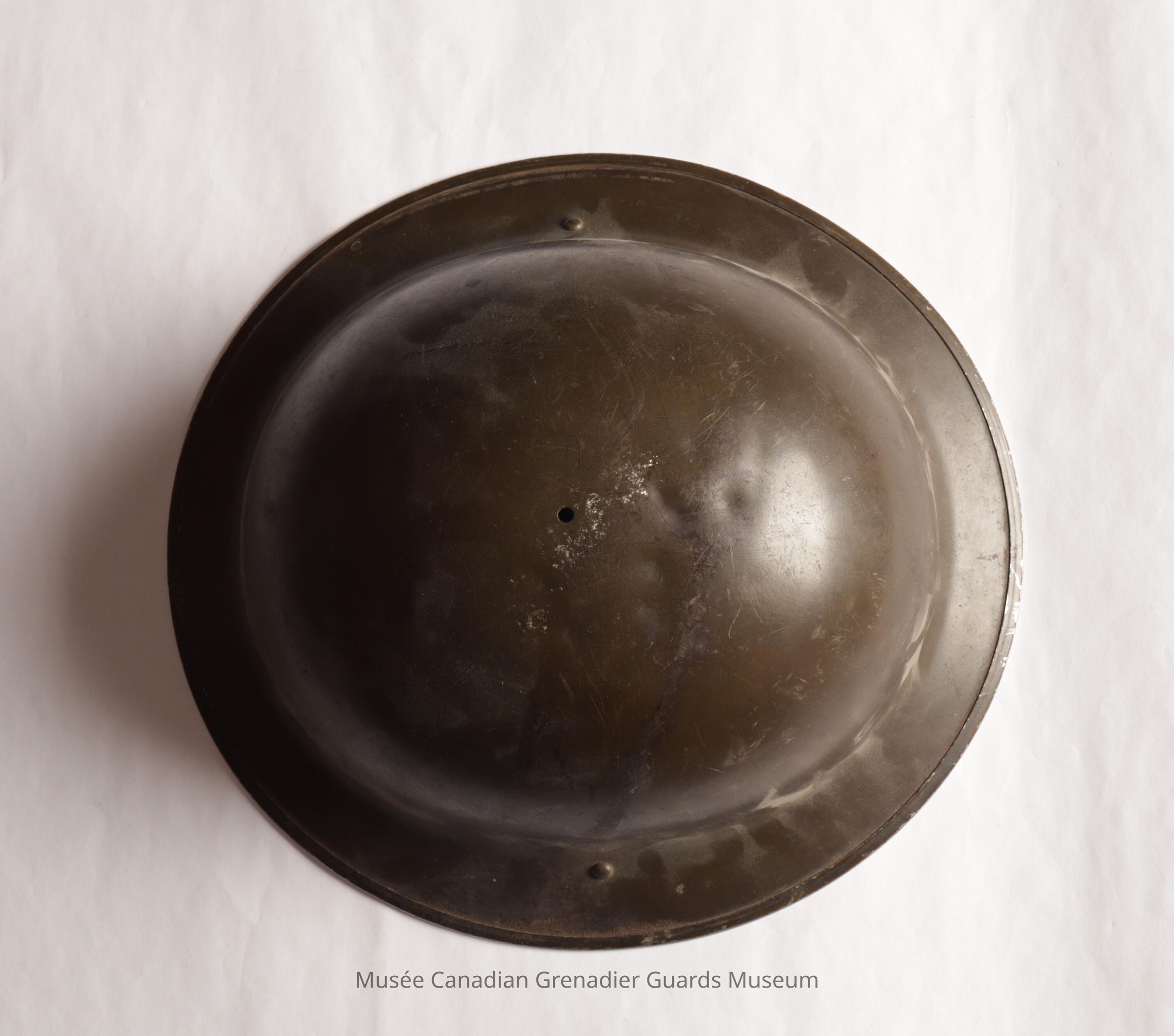
The helmet retains an old textured green finish, which appears to be a wartime or immediate postwar repaint, a very common practice for helmets that remained in service or were reissued. The inside dome still appears to have the factory applied brown color. The helmet is missing its complete original Canadian Mk II liner but has the original web chinstrap assembly and bears the proper Canadian “C-Broad Arrow” (C”) property and inspection stamp, confirming WWII Canadian manufacture.
ABOUT THE CANADIAN LAMP COMPANY
Canadian Motor Lamp Company of Windsor, who made helmets from 1940 to 1943. The Canadian MkII Brodie Helmet was manufactured by several companies during World War II. The Canadian Lamp Company (C.L.) was one of the key manufacturers, producing the helmets in 1942. The helmets were also produced by General Steelwares and Aluminum Goods of Canada, with a total of 1.1 million helmets produced between 1940 and 1943.
ABOUT THE MKII BRODIE:
The Brodie helmet, called Helmet, steel, Mark I helmet in Britain and the M1917 Helmet in the U.S., was a steel combat helmet designed and patented in 1915 by Englishman John Leopold Brodie. Colloquially, it was called the shrapnel helmet, Tommy helmet, Tin Hat, and in the United States the doughboy helmet. Worn by Australians during WW2 and sometimes known as ‘Panic Hat’. It was also known as the dishpan hat, tin pan hat, washbasin, battle bowler (when worn by officers), and Kelly helmet. The US version, the M1917, was copied from the British Mk 1 steel helmet of 1916. The German Army called it the Salatschüssel (salad bowl).
During late 1914, the British War Office saw the success of the French Army Helmets and had seen a similar need for steel helmets. The War Office Invention Department was ordered to evaluate the French design. They decided that it was not strong enough and too complex to be swiftly manufactured. British industry was not geared up to an all-out effort of war production in the early days of World War I, which also led to the shell shortage of 1915.
A design patented in 1915 by John L. Brodie of London offered advantages over the French design. It was constructed in one piece that could be pressed from a single thick sheet of steel, giving it added strength.
Brodie’s design resembled the medieval infantry kettle hat or chapel-de-fer, unlike the German Stahlhelm, which resembled the medieval sallet. The Brodie had a shallow circular crown with a wide brim around the edge, a leather liner and a leather chinstrap. The helmet’s “soup bowl” shape was designed to protect the wearer’s head and shoulders from Shrapnel shell projectiles bursting from above the trenches. The design allowed the use of relatively thick steel that could be formed in a single pressing while maintaining the helmet’s thickness. This made it more resistant to projectiles but it offered less protection to the lower head and neck than other helmets.
The original design (Type A) was made of mild steel with a brim 1.5-2 inches (38-51 mm) wide. The Type A was in production for just a few weeks before the specification was changed and the Type B was introduced in October 1915. The specification was altered at the suggestion of Sir Robert Hadfield to a harder steel with 12% manganese content, which became known as “Hadfield’s steel”, which was virtually impervious to shrapnel balls hitting from above. Ballistically this increased protection for the wearer by 10 percent. It could withstand a .45 caliber pistol bullet traveling at 600 feet (180 m) per second fired at a distance of 10 feet (3.0 m). It also had a narrower brim and a more domed crown.
The original paint scheme, suggested by Brodie, was a mottled light green, blue, and orange camouflage but they were also painted in green or blue-grey. That same month the first delivery of the helmets was made to British Army troops. Initially, there were far from enough helmets to equip every man, so they were designated as “trench stores”, to be kept in the front line and used by each unit that occupied the sector. It was not until the summer of 1916, when the first one million helmets had been produced, that they could be generally issued.
The Brodie helmet reduced casualties but was criticized by General Herbert Plumer on the grounds that it was too shallow and too light-reflective, its rim was too sharp, and its lining was too slippery. These criticisms were addressed in the Mark I model helmet of 1916, which had a separate folded rim, a two-part liner and matte khaki paint finished with sand, sawdust, or crushed cork to give a dull, non-reflective appearance. In 1917, the liner was modified to include a rubber cushion to make it more comfortable, although this was not adopted for the M1917. Towards the end of the war, helmets were often painted with unit insignia. These are often called “parade helmets” by collectors.Created By
Zarina CarlevarisCreate Date
August 13, 2022Updated By
Lieutenant Michael Hayes-Rivet, retired.Update Date
December 30, 2025