Name/Title
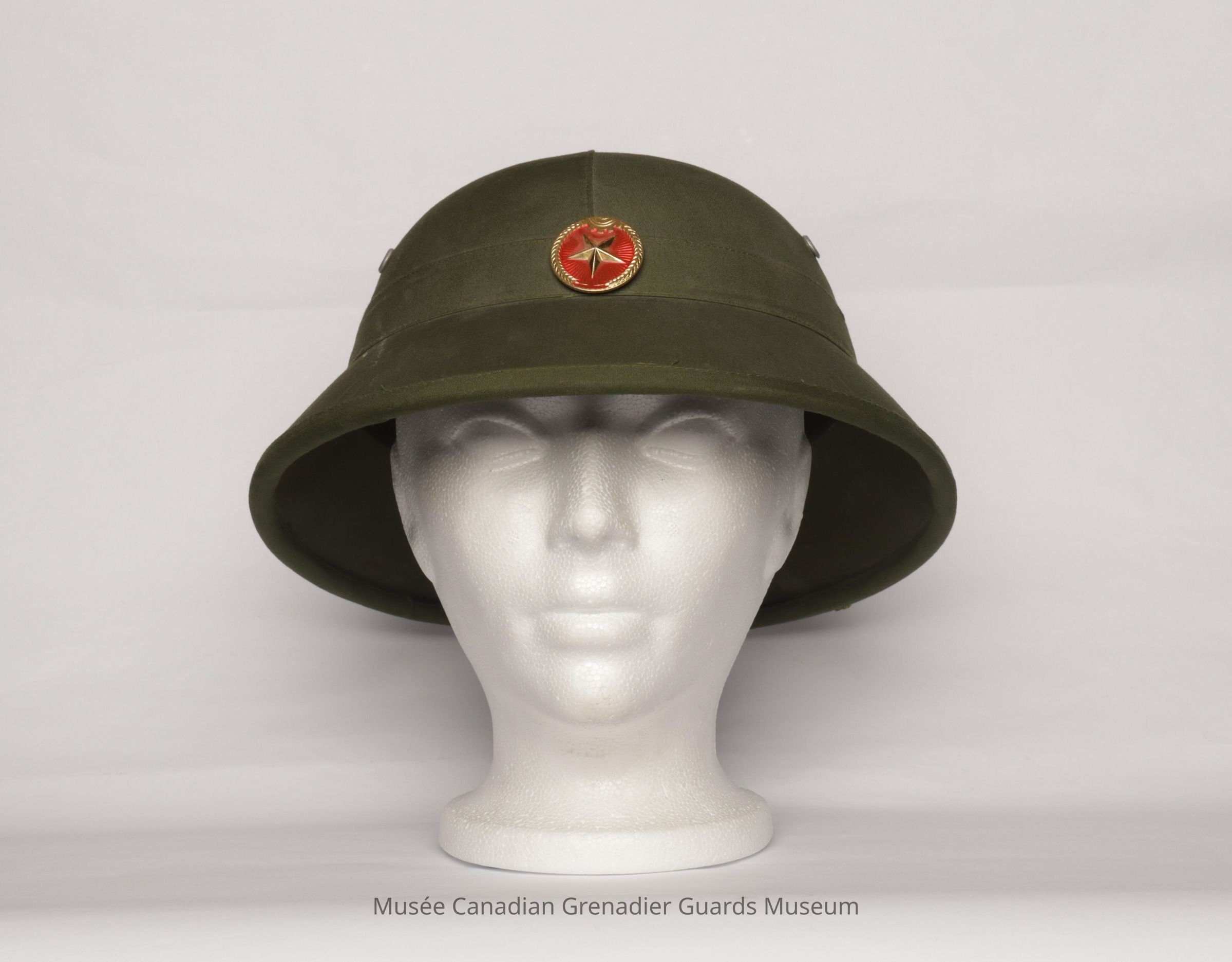
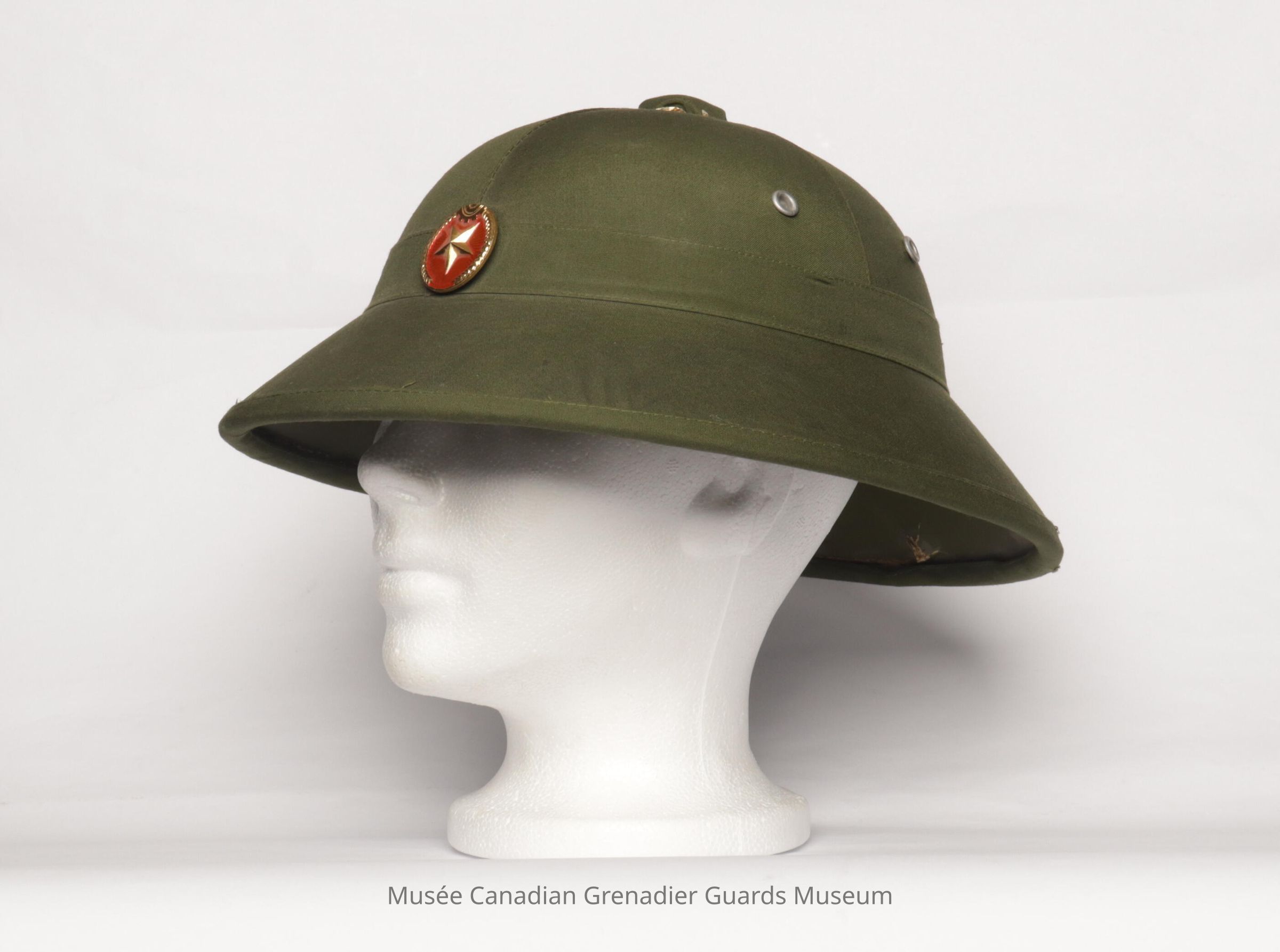
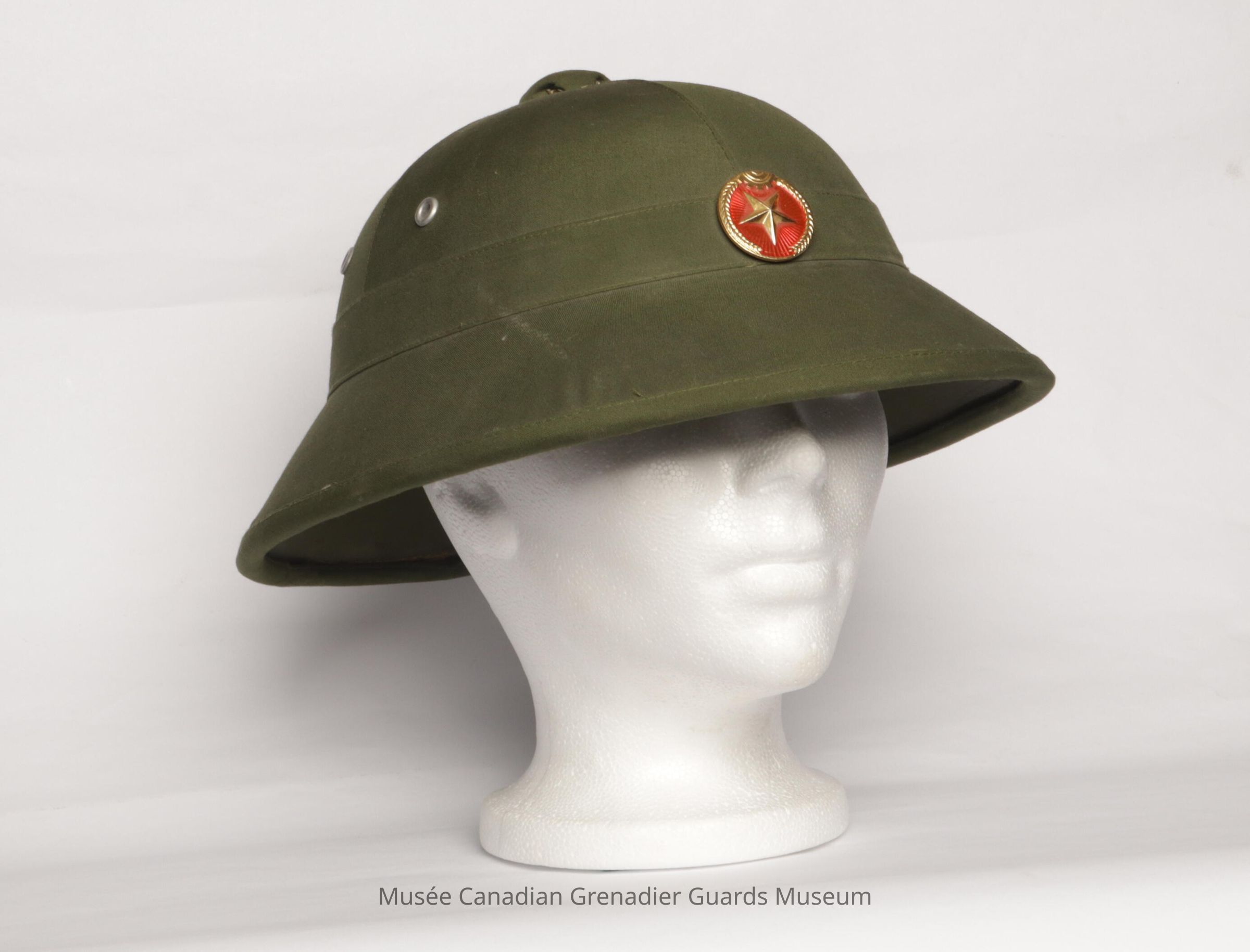
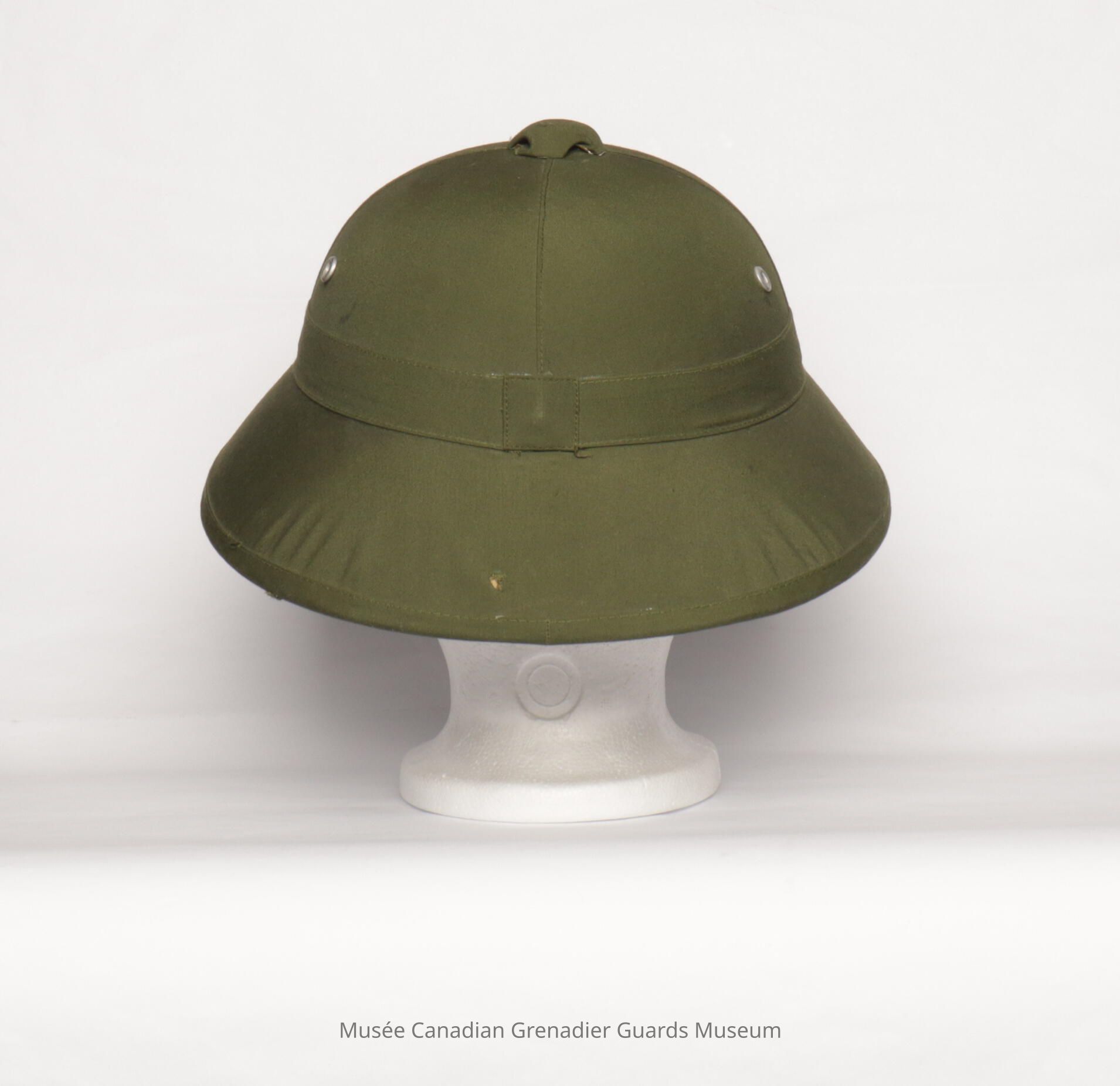
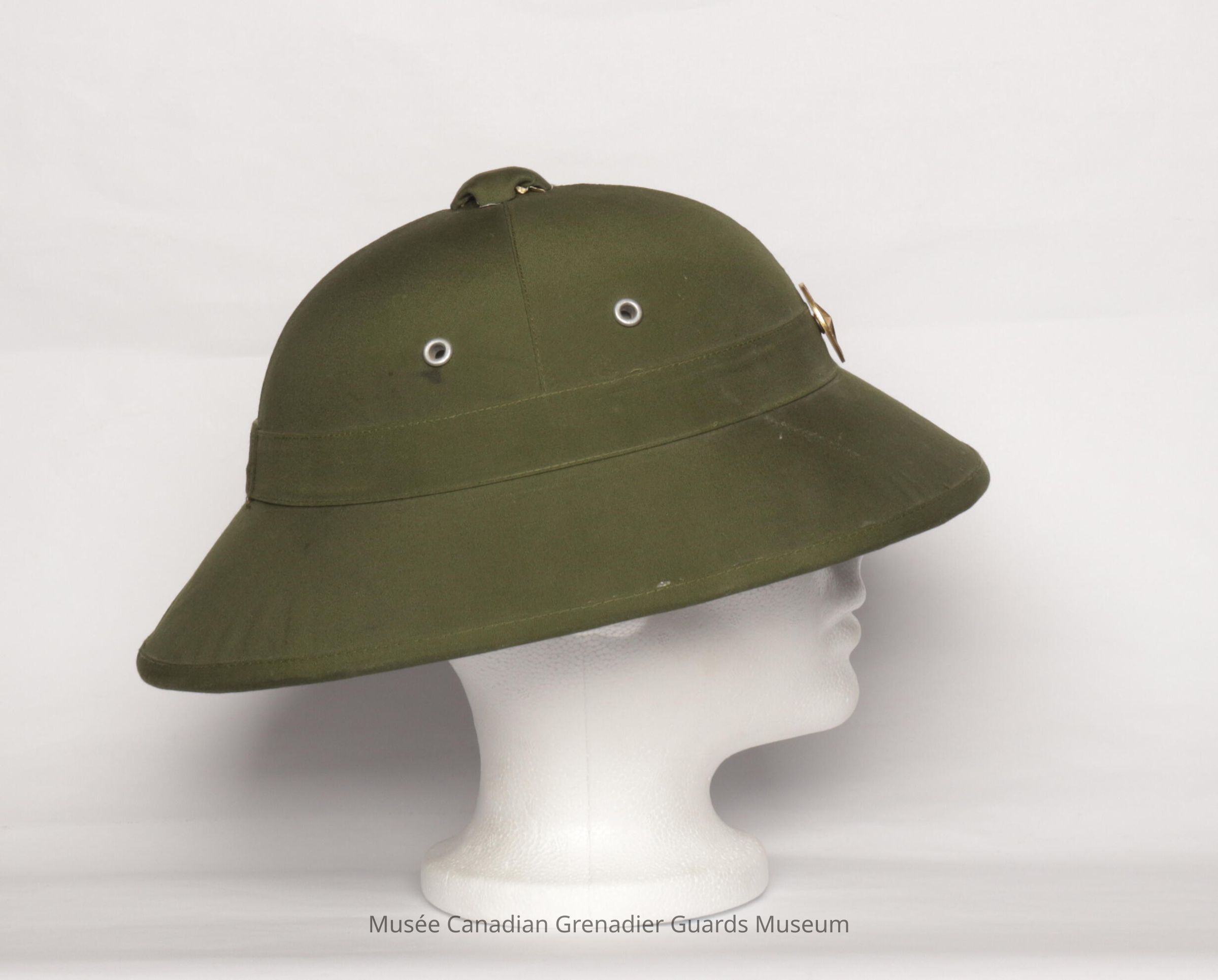
1980's - A North Vietnam (NVA) styled post-Vietnam war Pith Helmet manufactured in Vietnam - unnamed / unattributedDescription
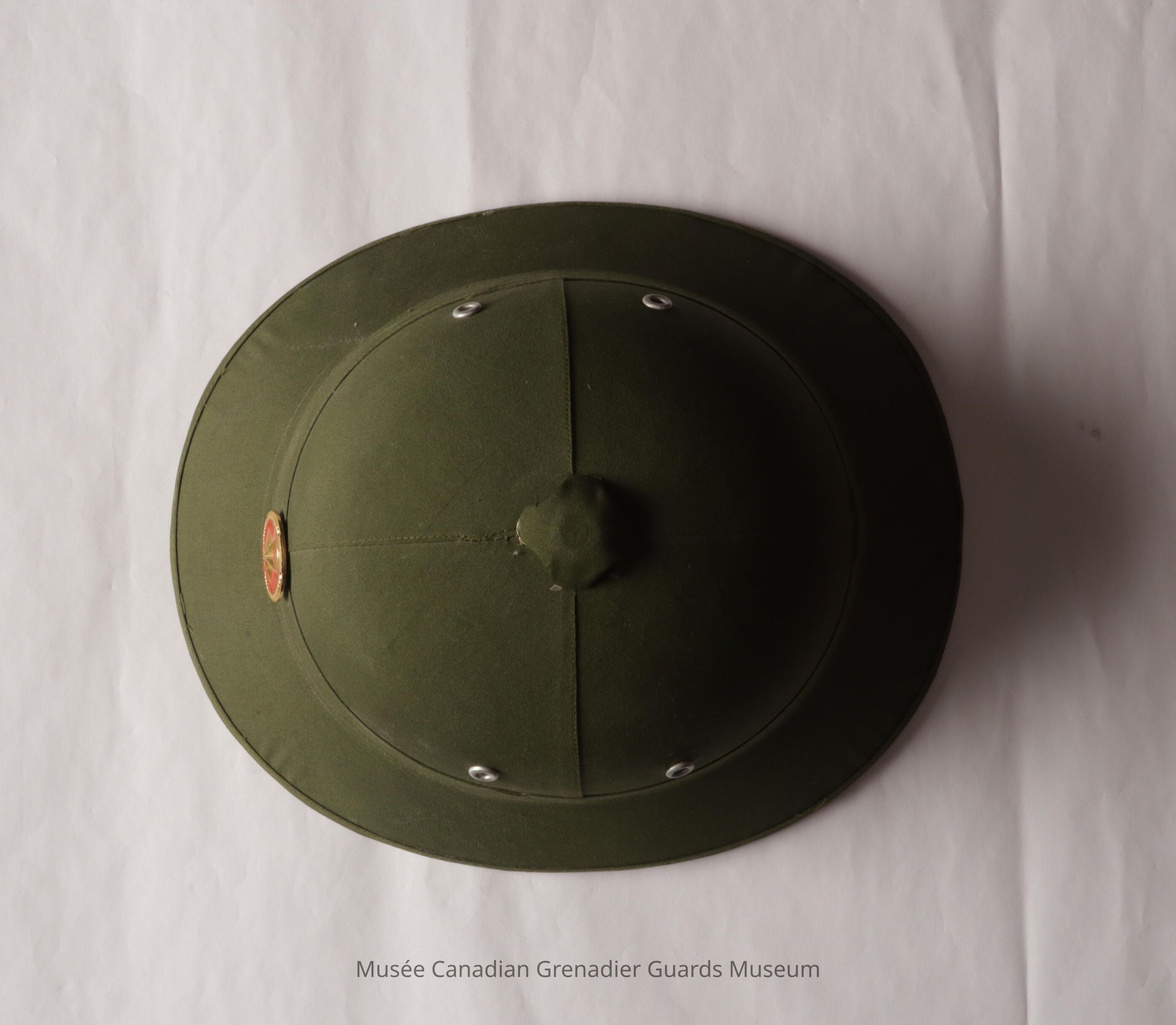
*** More research needed - who donated this item - also badge is upside down ***
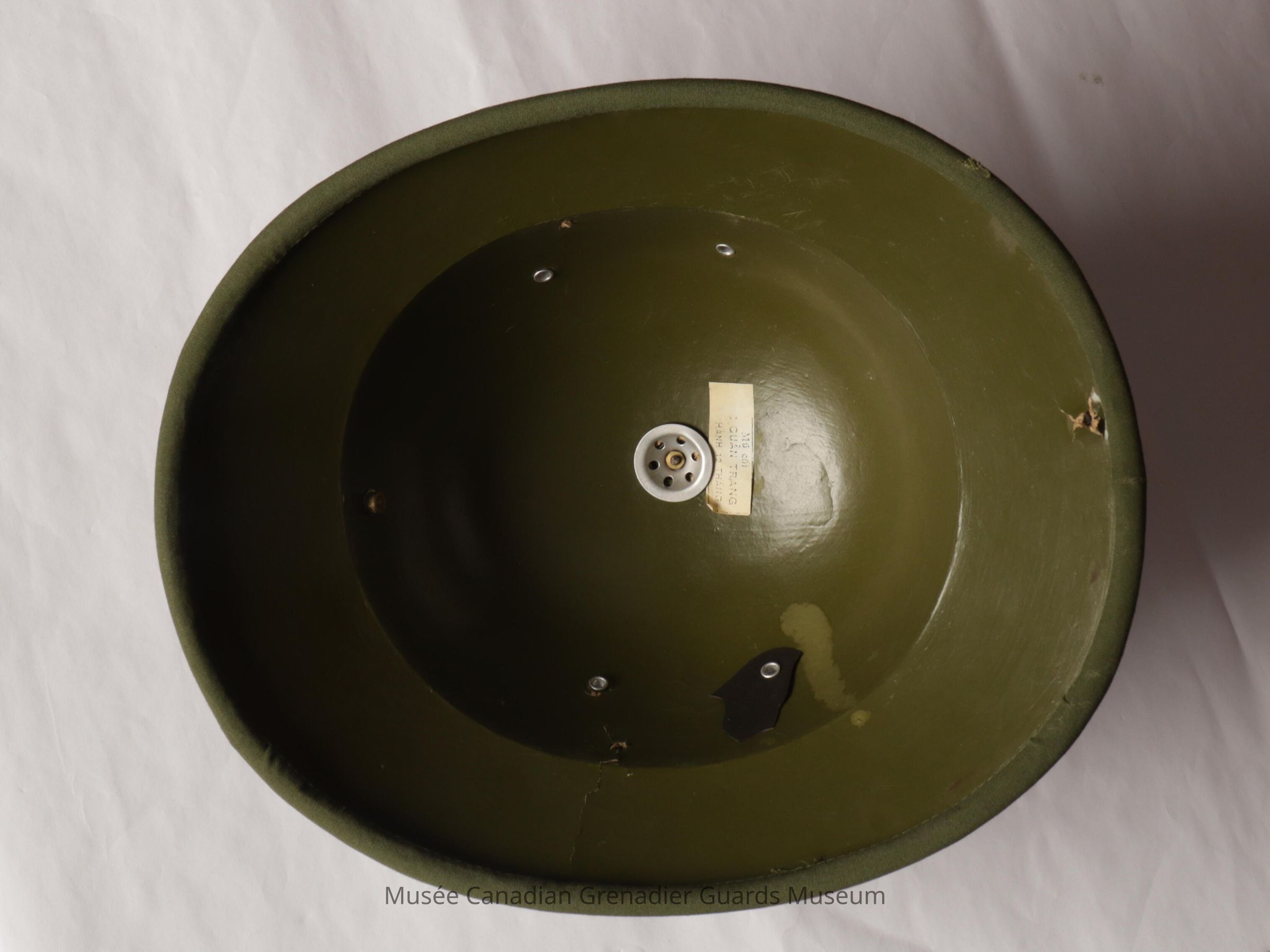
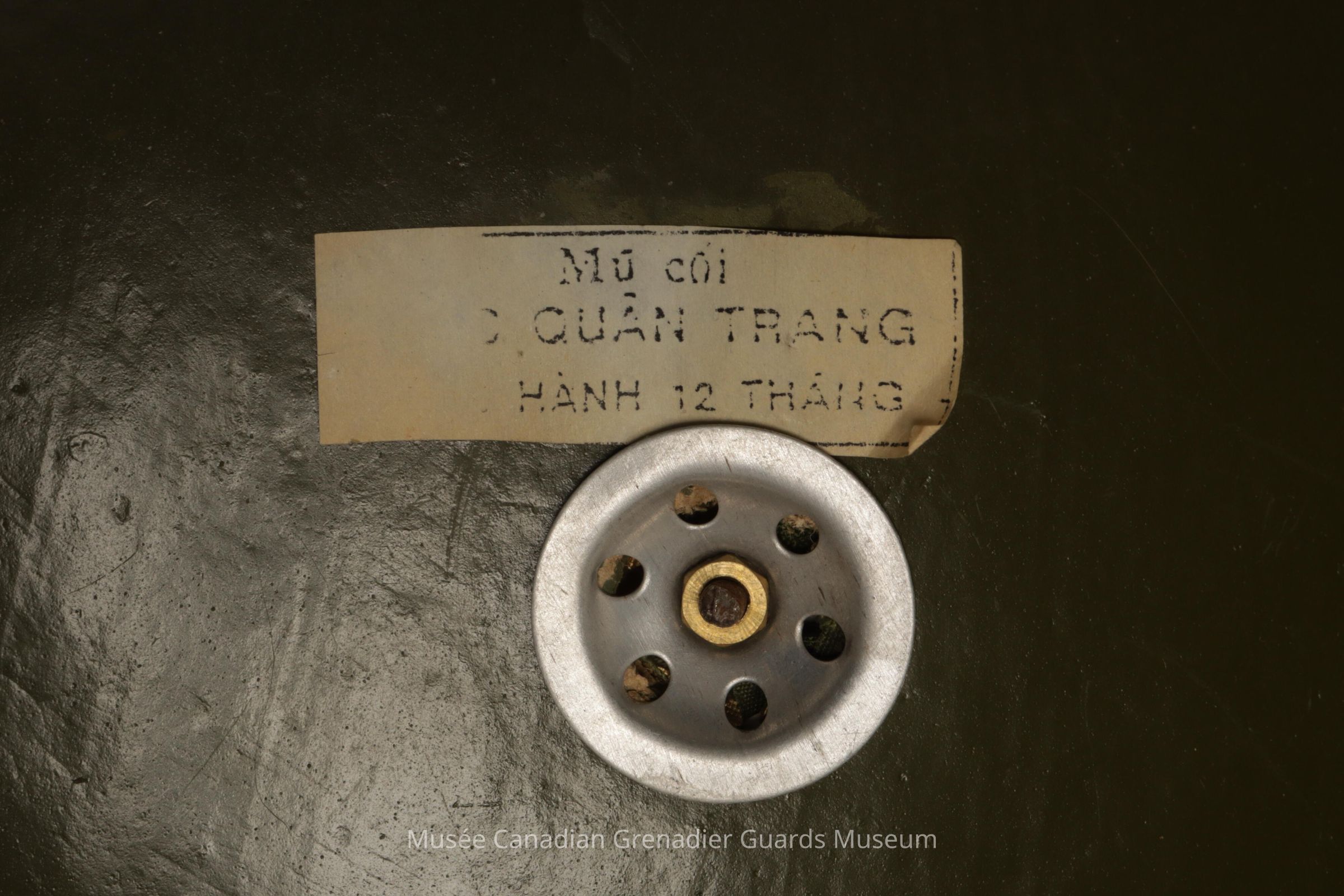
1980's - A North Vietnam (NVA) styled post-Vietnam war Pith Helmet manufactured in Vietnam - unnamed / unattributed. This helmet has a modern era (post 1975) makers label and is missing the liner and chinstrap.
"After World War II, the communist Viet Minh and later the People's Army of Vietnam of the North based their helmet design on the French pith helmet of the former colonial power and adopted it as their own. Today it is still widely worn by civilians in Vietnam (mostly in the North, but its use has seen a sharp decline since 2007 when the motorbike helmet became mandatory for motorbike riders). This style of headdress now appears only rarely as part of military and police uniforms. In design, the Vietnamese model was similar to the pre–World War II civilian type, but covered in jungle green cloth, sometimes with a metal insignia at the front." - Wikipedia
ORIGINAL VIETCONG NVA PITH HELMETS:
A correct NVA pith helmet has features of a wartime 1960’s issue helmet; “Low Dome” profile, leather type chinstrap, and Green Painted Pink pressed-paper Suspension with an original 'red star badge' at the front. Original 1960's helmets would have a gorgeous Hanoi, Vietnam makers label on the interior, and many had a blue sweatband. There would have heavy wear to the canvas covering on the exterior and underside, only achieved through heavy period wear. There would also be an original chinstrap which was typically placed or seated upon the brim. These original NVA pith helmets were prized souvenirs for GI’s serving in-country during the Vietnam War, for those who were lucky enough to obtain one.
THE NVA and VIETNAM WAR
The Viet Cong were South Vietnamese supporters of the communist National Liberation Front in South Vietnam during the Vietnam War (known in Vietnam as the American War). They were allied with North Vietnam and the troops of Ho Chi Minh, who sought to conquer the south and create a unified, communist state of Vietnam. The phrase “Viet Cong” denotes only southerners who supported the communist cause — but in many cases, they were integrated with fighters from the regular North Vietnamese army, the People’s Army of Vietnam (PAVN). The name Viet Cong comes from the phrase “cong san Viet Nam,” meaning “Vietnamese communist.” The term is rather derogatory, however, so perhaps a better translation would be “Vietnamese commie.”
The Viet Cong arose after the defeat of the French colonial forces at Dien Bien Phu, which prompted the United States to become gradually more and more involved in Vietnam. Fearing that Vietnam would turn communist — just as China had done in 1949 — and that the contagion would spread to neighboring countries, the United States sent increasing numbers of “military advisors” into the conflict, followed in the late 1960s and 1970s by hundreds of thousands of U.S. troops.
The U.S. sought to prop up a nominally democratic and capitalist South Vietnamese government, despite serious abuses and violations of human rights by the client state there. Understandably, the North Vietnamese and much of the South Vietnamese population resented this interference.
Many southerners joined the Viet Cong and fought against both the government of South Vietnam and the armed forces of the United States between 1959 and 1975. They wanted self-determination for the people of Vietnam and a path forward economically after the devastating imperial occupations by France and by Japan during the Second World War. However, joining the communist bloc actually resulted in continued foreign interference, this time from China and the Soviet Union.
Although the Viet Cong started out as a loose grouping of guerrilla fighters, they increased markedly in professionalism and in numbers over the course of the conflict. The Viet Cong were supported and trained by the government of communist North Vietnam.
Some served as guerrilla fighters and spies in South Vietnam and in neighboring Cambodia, while others fought alongside North Vietnamese troops in the PAVN. Another important task carried out by Viet Cong was to ferry supplies to their comrades from the north to the south along the Ho Chi Minh Trail, which ran through adjacent parts of Laos and Cambodia.
Many of the tactics that the Viet Cong employed were absolutely brutal. They took rice from villagers at gunpoint, carried out incredible numbers of targeted assassinations against people who supported the South Vietnamese government, and perpetrated the Hue Massacre during the Tet Offensive, in which anywhere from 3,000 to 6,000 civilians and prisoners of war were summarily executed.
In April of 1975, the southern capital at Saigon fell to the communists’ troops. American troops withdrew from the doomed south, which fought on for a short time before it finally surrendered to the PAVN and the Viet Cong. In 1976, the Viet Cong was disbanded after Vietnam was formally reunited under communist rule.
The Viet Cong tried to create a popular uprising in South Vietnam during the Vietnam War with their 1968 Tet Offensive but were able to seize control of just a few small districts in the Mekong Delta region.Created By
Zarina CarlevarisCreate Date
August 13, 2022Updated By
Lieutenant Michael Hayes-Rivet, retired.Update Date
December 30, 2025