Fokker D. VII Aircraft / Avion
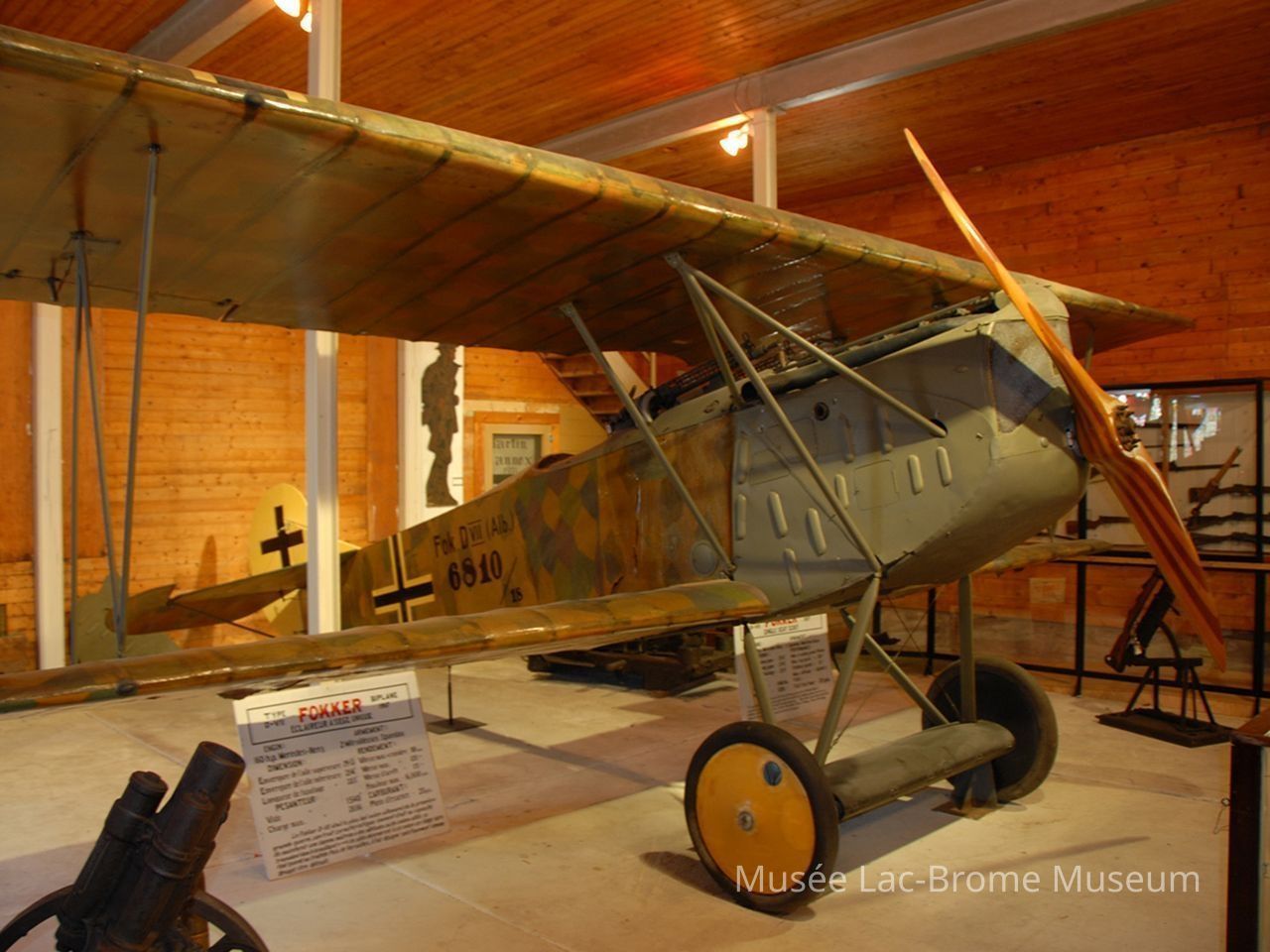
Fokker D.VII
Overview
Description
A single-seat, single-engine, open-cockpit biplane with a steel-tubing interior structure. The exterior of the aircraft has a four-colour lozenge-type camouflage fabric covering, and its nose is painted drab grey. There is a Spandau machine gun mounted on either side of the cockpit. - - - Un biplan monoplace, monomoteur, à cockpit ouvert, doté d'une structure interne en tubes d'acier. L'extérieur de l'appareil est recouvert d'un tissu de camouflage en losanges à quatre couleurs, et son nez est peint en gris terne. Une mitrailleuse Spandau est montée de chaque côté du cockpit.Context
This German World War I-era aircraft was among the several dozen brought to Canada after the war. Many of these planes were scrapped for parts or taken apart by Universities for study; the "Knowlton Fokker" was the only one saved from this fate. This Fokker came to the museum in 1921 through the political influence of Senator George Green Foster (1860-1931). On August 26, 1921, the newly acquired Fokker was unveiled at the grand opening of the Martin Annex. The aircraft was dedicated to those in Brome County who served in the Aviation Branch of the British Army. - - - Cet avion allemand datant de la Première Guerre mondiale faisait partie des quelques dizaines d’appareils amenés au Canada après la guerre. Bon nombre de ces avions ont été mis au rebut pour servir de pièces de rechange ou démontés par des universités à des fins d’étude ; le « Fokker de Knowlton » fut le seul à échapper à ce sort. Ce Fokker a rejoint le musée en 1921 grâce à l’influence politique du sénateur George Green Foster (1860-1931). Le 26 août 1921, le Fokker nouvellement acquis fut dévoilé lors de l'inauguration de l'annexe Martin. L'avion fut dédié aux habitants du comté de Brome qui avaient servi dans la branche aérienne de l'armée britannique.Collection
Military / MilitaireCategory
Aircraft / Avion
Aerospace Transportation T&E / Outils et équipement, transport aérospatial, Distribution & Transportation Objects / Objets de manutention et de transport