Label Type
curated descriptionLabel
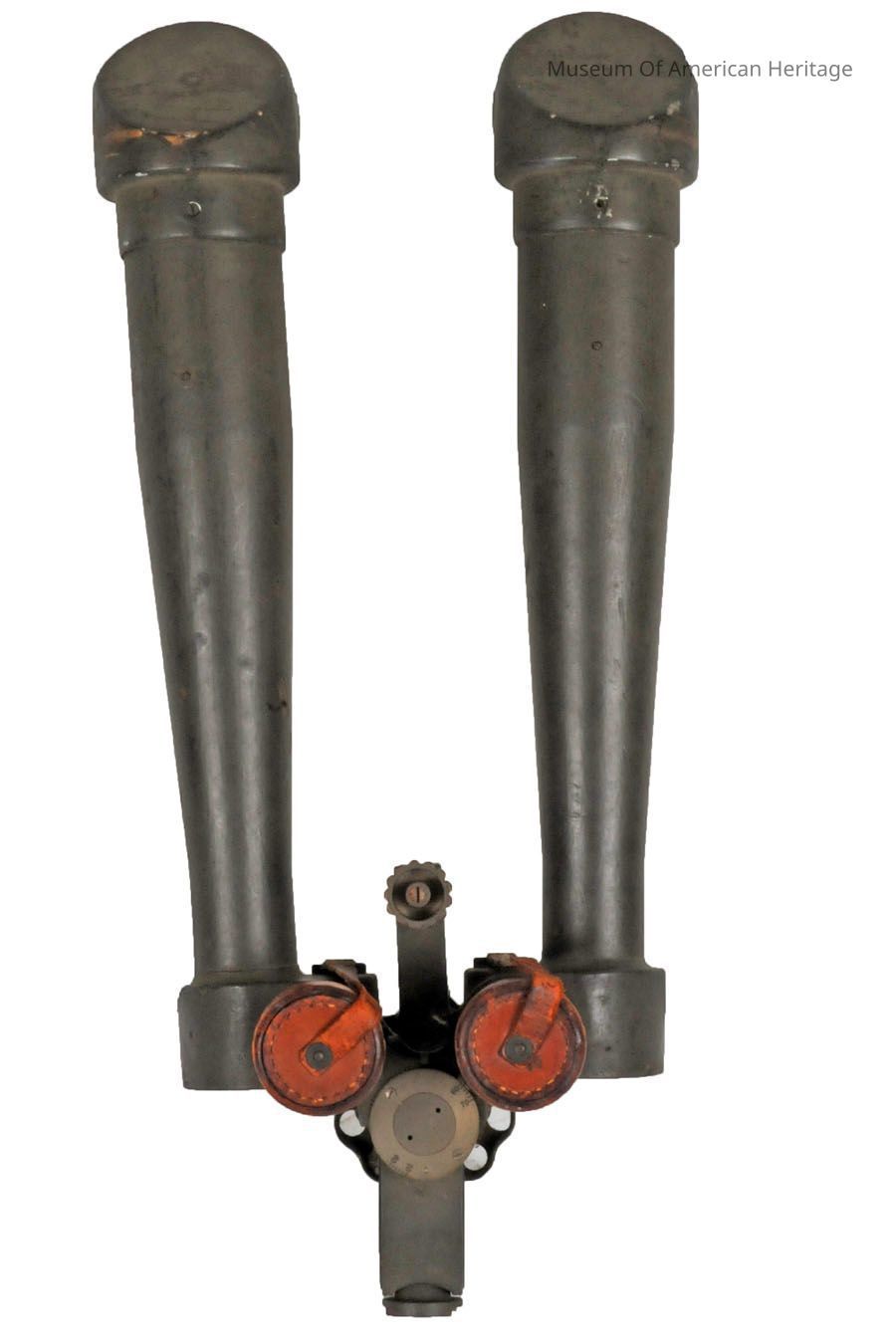
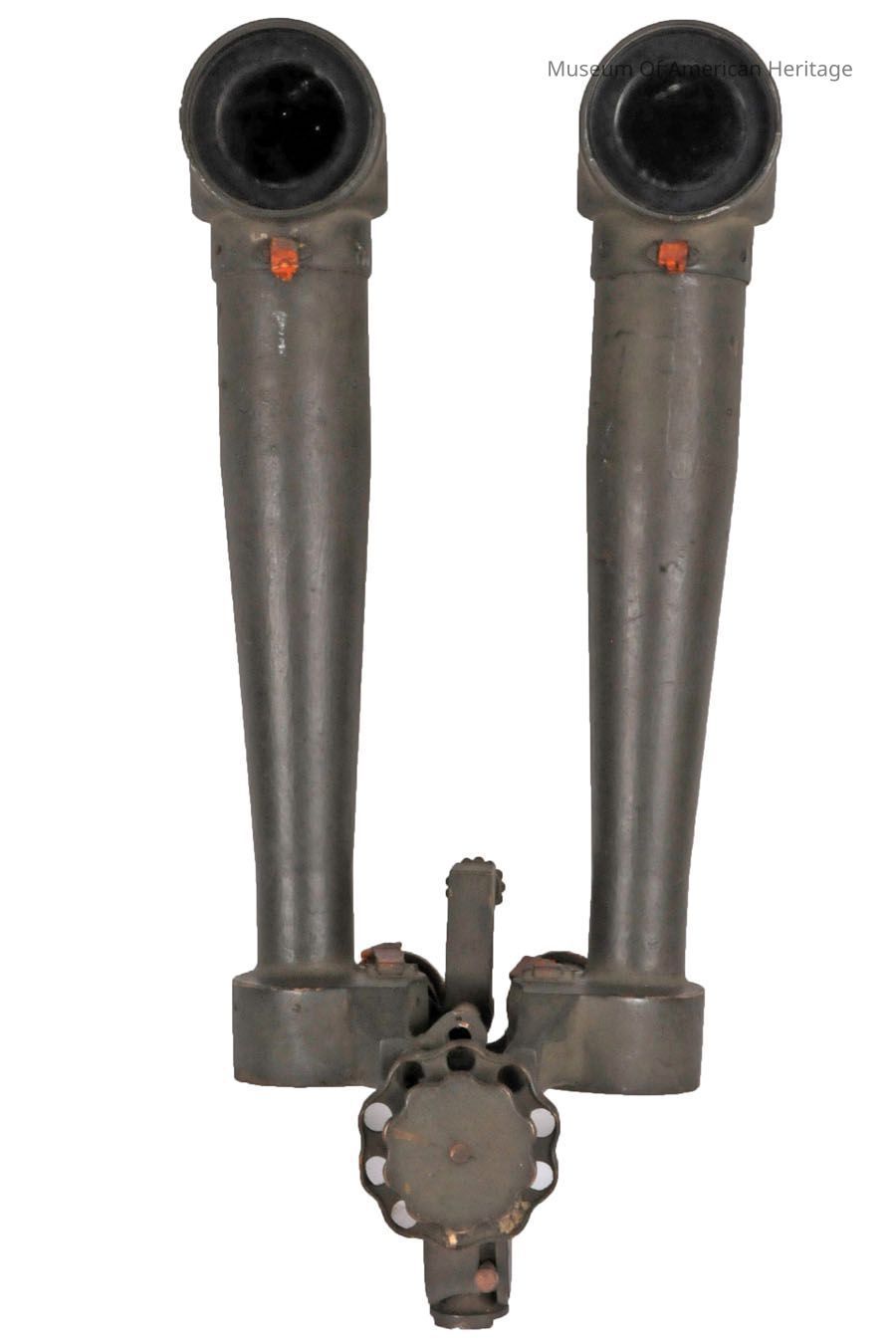
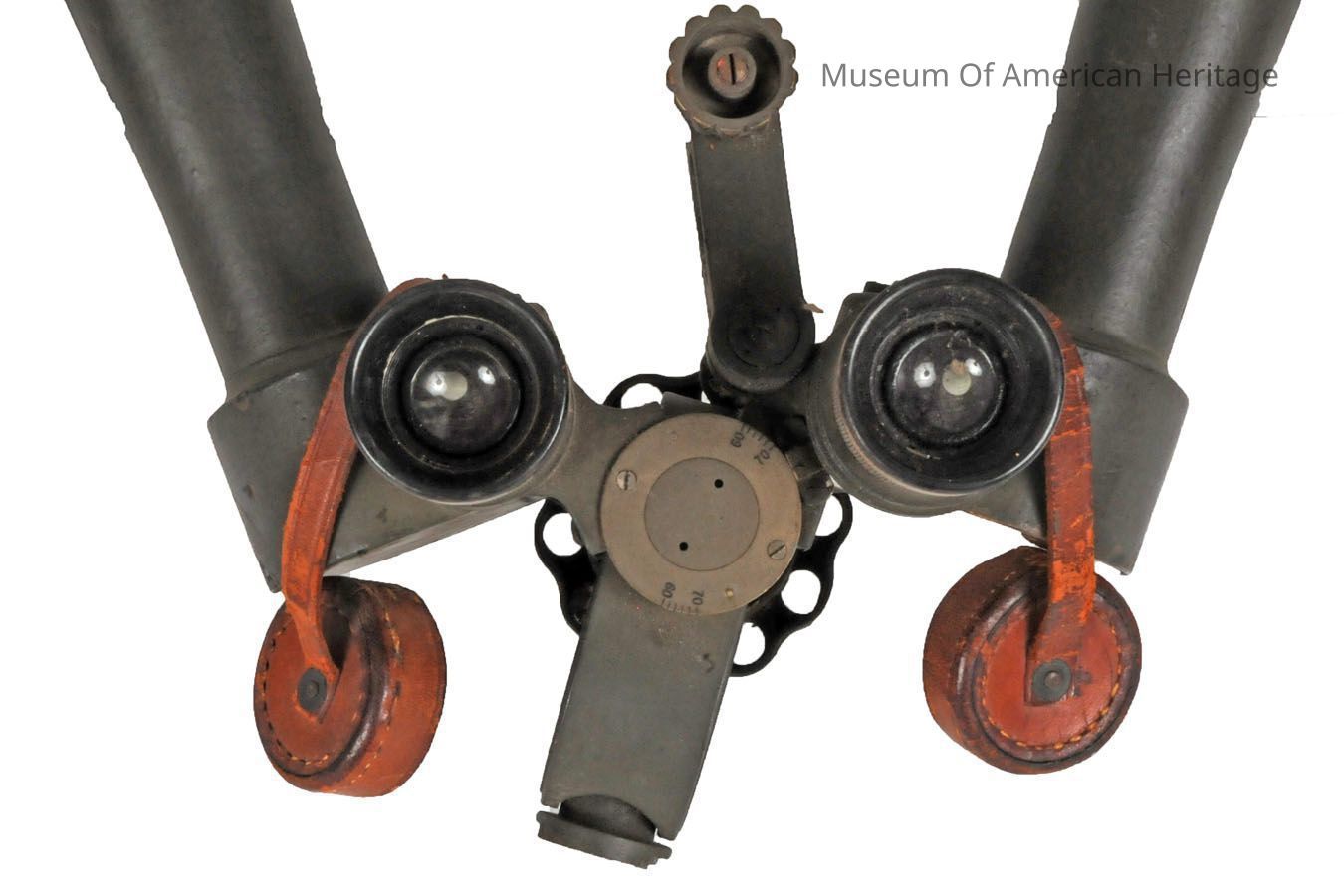
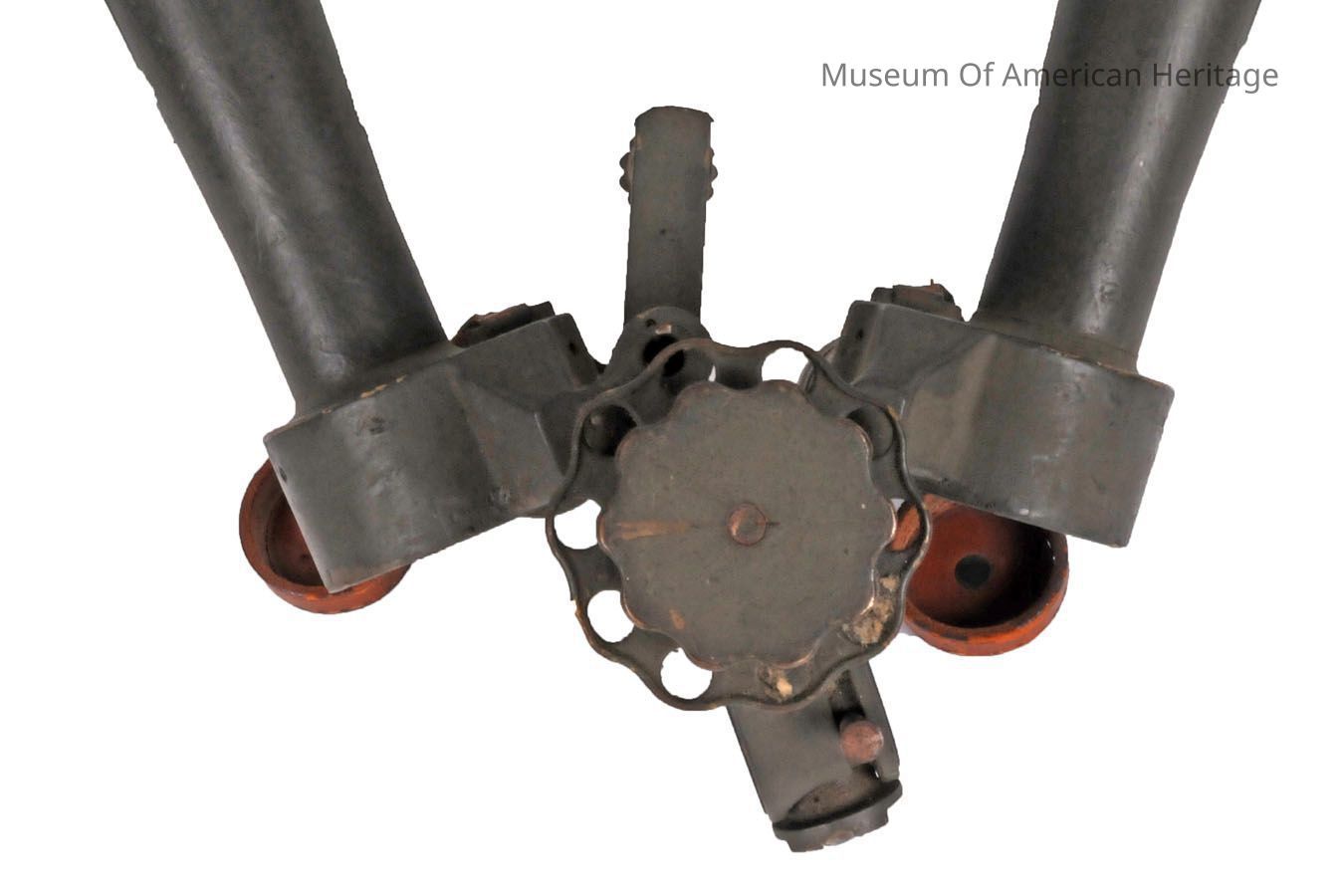
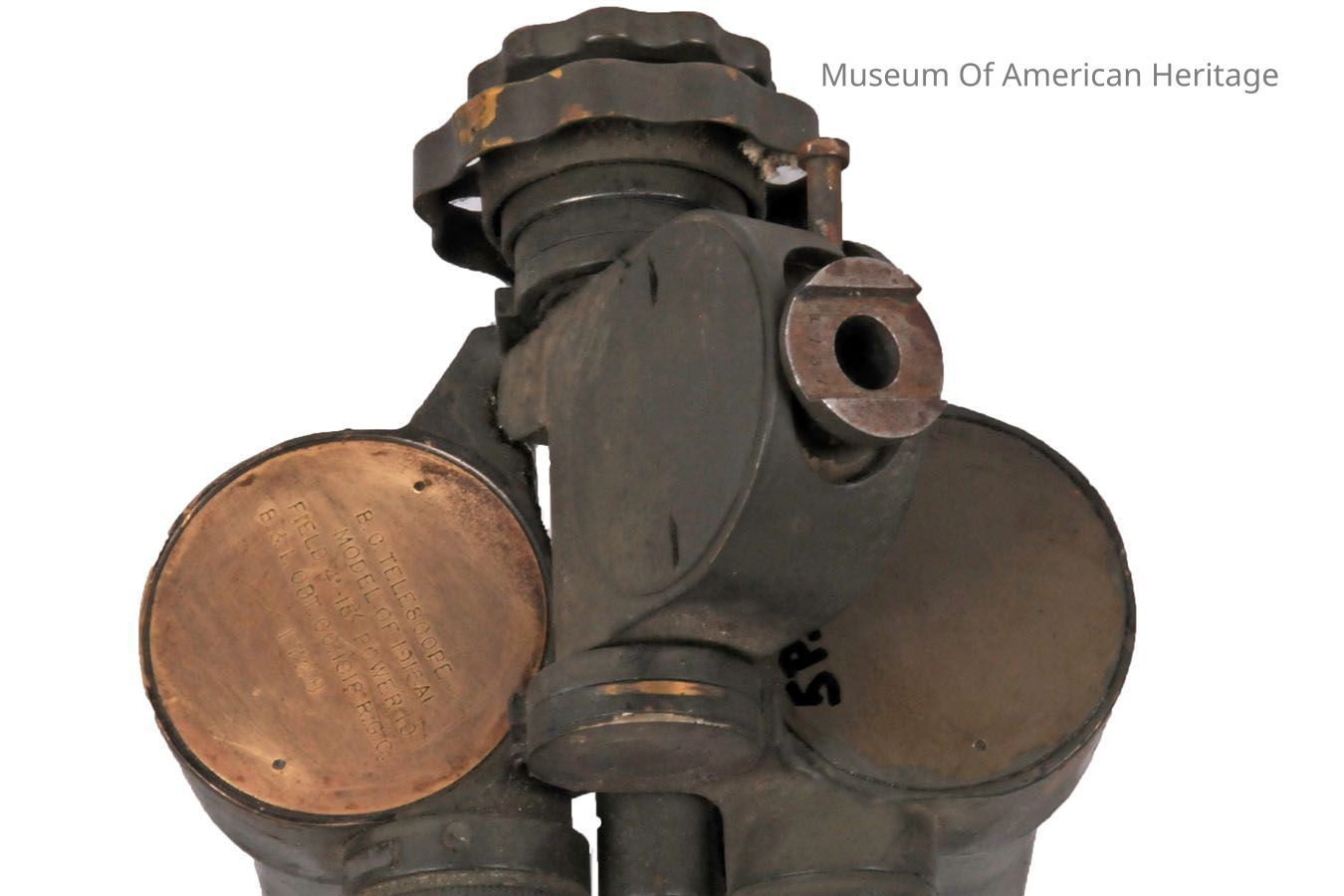
Periscope binoculars such as this Battery Commander (“B.C.”) model were used from trenches during combat in World War I to ensure safe observation and to determine distance to enemy lines. The binoculars were mounted on a tripod and the lenses were positioned just over the trench parapet, thus providing the operator protection from snipers and other enemy fire while ensuring stable, magnified vision. The olive drab green color suggests that the binoculars were made specifically for the U.S. Army.
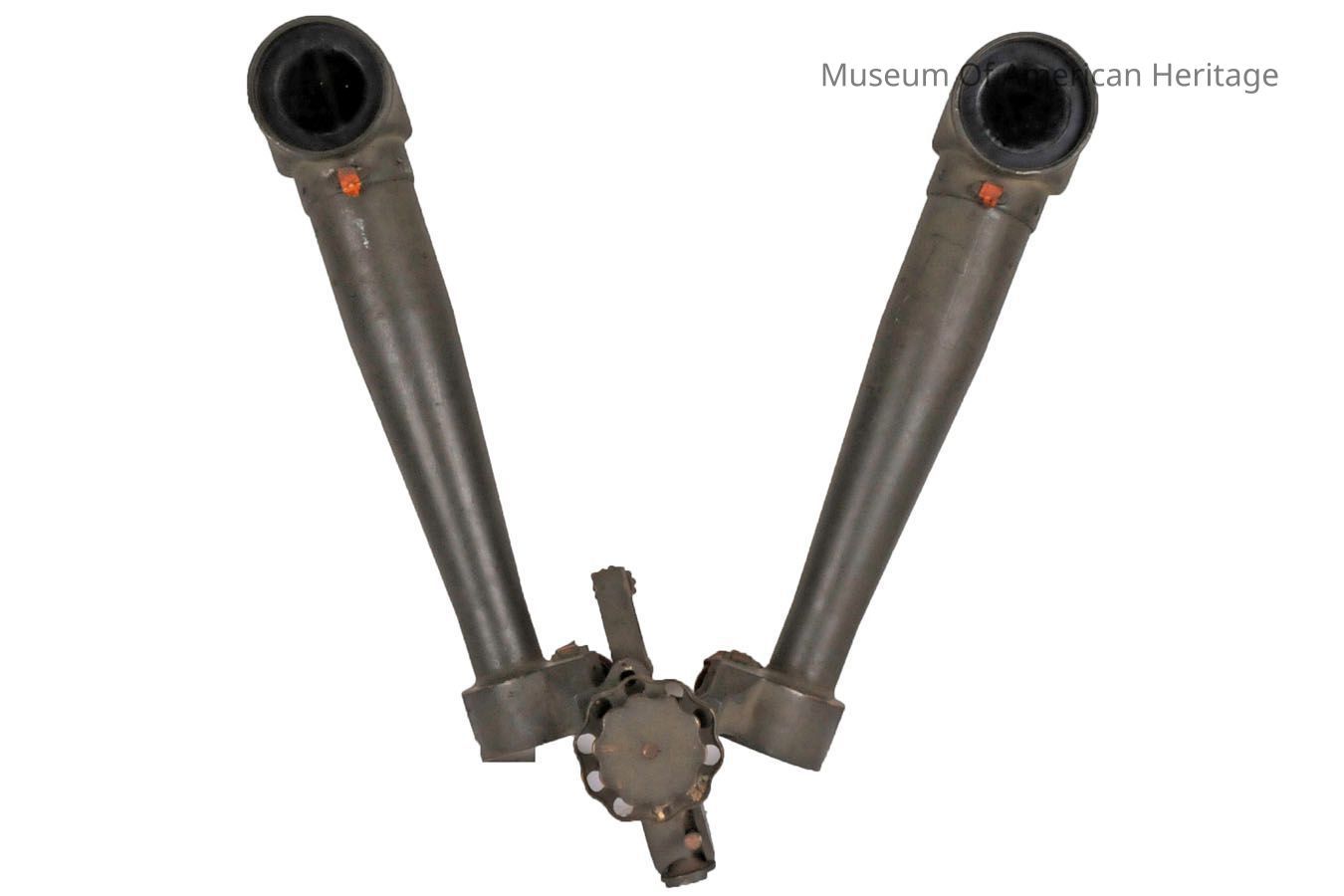
Periscope technology—perhaps familiar to most of us through its use in submarines—works in binoculars through connection of a pair of cylindrical telescopes. Each end of both telescopes has mirrors or prisms set at a 45-degree angle and parallel to each other. As with other binoculars, the soldier would look through the two eyepieces and adjust the focus in each periscope as necessary. The B.C.’s telescopes are 17.5 inches long and could be positioned up to 180 degrees apart (thus contributing to the model’s informal nickname, “rabbit ears”) to improve the perception of objects as being three-dimensional.
These lightweight, portable binoculars have a field of 4 degrees, 15 minutes and a magnification power of 10. They were made by Bausch & Lomb Optical Company and date from between 1915 and 1918.
Periscope technology in World War I also was deployed in tanks, gun turrets, and rifles. Technology today uses lasers to enable vision around corners, and can include night vision.