Note
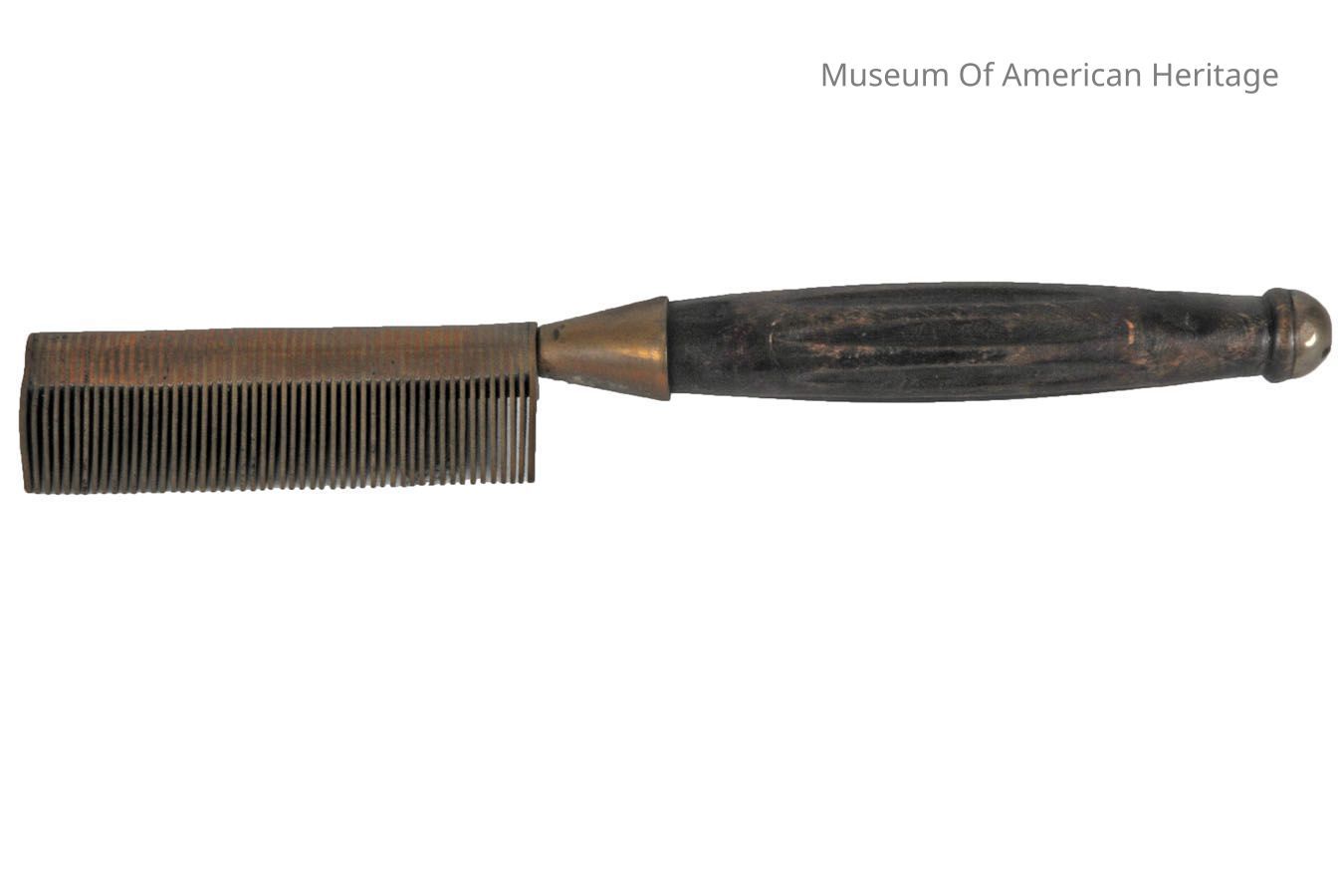
Early-mid 1900s: hot combs evolved from homemade hair-straightening tools to trendy and patented products on the public marketplace.
- A combination of heat and the comb’s fine teeth straightened women’s curly or wavy hair texture from root to tip.
- Early models were heated using an external source, like a stove top; later hot combs were electrical.
- Popularized in America by Black women, who had few hair care products marketed toward them since white people’s hair was considered the default “norm.”
Hair and race in America:
- For Black American women, tools like hot combs were largely popular because straight hair (and other white, Eurocentric beauty standards) signaled credibility, decency, and worthiness in a culture structured upon white-dominant racial hierarchies.
- Pioneering Black women expanded the beauty and hair industries by aiming to meet the needs of Black customers.
- Annie Turnbo Malone and Madam C. J. Walker built commercial and educational empires centered on cosmetic and hair care products for Black women.