Basil II - AV Histamenon
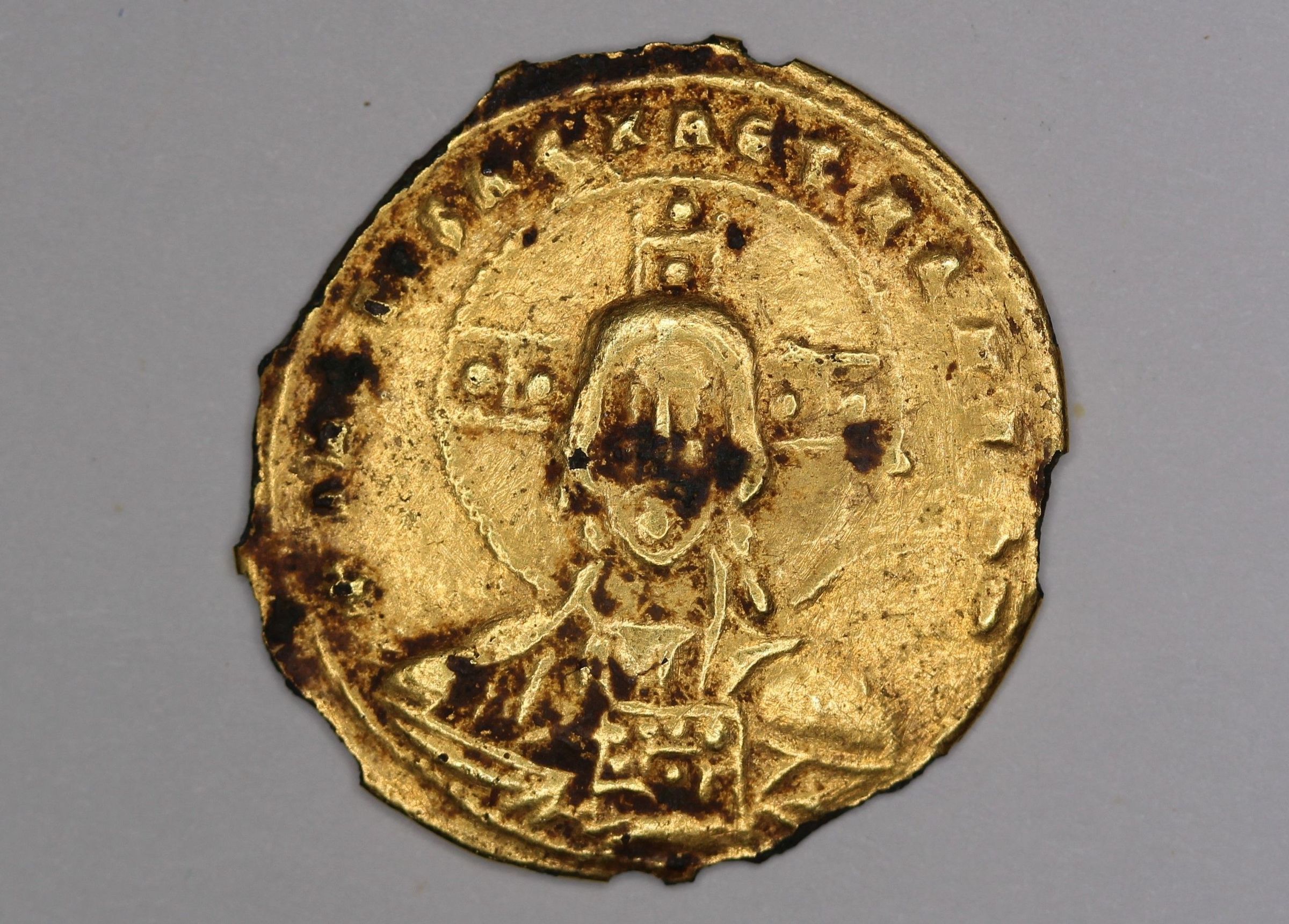
Obverse
Name/Title
Basil II - AV HistamenonEntry/Object ID
C2020-BZ36-695Context
The iconography on the reverse portrays Basil II and his younger brother Constantine VIII. After the death of their father Emperor Romanos II in 963, their uncle General Nikephorus Phokus assumed the throne and married the widow of his brother. Nikephorus Phokus was assassinated in 969 by General John I Tzimiskes and took the throne. The Patriarch refused to allow the marriage of Tzimiskes to their mother Theophano and so he exiled her. Tzimiskes kept Basil II and Constantine VIII in the palace at Constantinople. After Tzimiskes died in 976, Basil II assumed the throne as emperor with his brother Constantine VIII as co-emperor. Both of the brothers are depicted on the reverse holding the distinctive Byzantine patriarchal cross together. This symbolizes their unity as dual-emperors and their bond as brothers united. Both the emperors holding the distinctive patriarchal cross also portrays their unity with the church as this cross was used throughout the Byzantine church. The unity between the emperors is further depicted by being crowned as it portrays they are equal in power and importance. The text surrounding the figures confirms "Basil (and) Constantine Kings of the Romans." The obverse portrays the Byzantine iconography of Christ the Teacher (Pandokrator). This imagery is meant to portray the idea that Jesus Christ taught true philosophy. Therefore, he could be counted among the ancient sages such as Socrates and Plato. In this imagery, Jesus Christ is depicted wearing a traditional philosopher's pallium because he taught his believers a greater form of wisdom compared to what is available on earth. Christ is seated and holding a codex containing the wisdoms and teachings of God. This imagery of Christ directly correlates to the reign of Basil II. By portraying this imagery of Christ as the ultimate teacher and philosopher of the Christian people, Basil II is stating that he is similar to Christ, because he is also present to teach the people of his empire and show them a form of greater Wisdom. During a reign filled with multiple revolts and two civil wars, Basil II is using this imagery to portray his own Christ-like qualities. Thus, Basil II is thus portraying himself as a teacher who will show his people a greater form of wisdom, which will guide them through the tumultuous years.Collection
ByzantineMintage
Mint
ConstantinopleDate made
989 CE - 1001 CETime Period
ByzantinePlace of Origin
City
ConstantinopleManufacture Method
StruckCoin Details
Obverse
Description
Bust of Christ Pandokrator, nimbate, wearing tunic, facing, raising right hand and clasping book to breast with left; in nimbus cross, pellet(line)pellet on each arm.Transcription
(cross)IhS XIS REX REGNANTIhMTranslation
Jesus Christ King of KingsReverse
Description
Bust of Basil II crowned, laureate, facing, holding patriarchal cross in left hand; to right, bust of Constantine VIII crowned, draped, facing.Transcription
✗bASILC CONSTANT bRMTranslation
Basil (and) Constantine Kings of the RomansIssuing Authority
Basil IIDenomination
AV HistamenonEthnography
Cultural Region
Region
BosporusCulture/Tribe
Byzantine