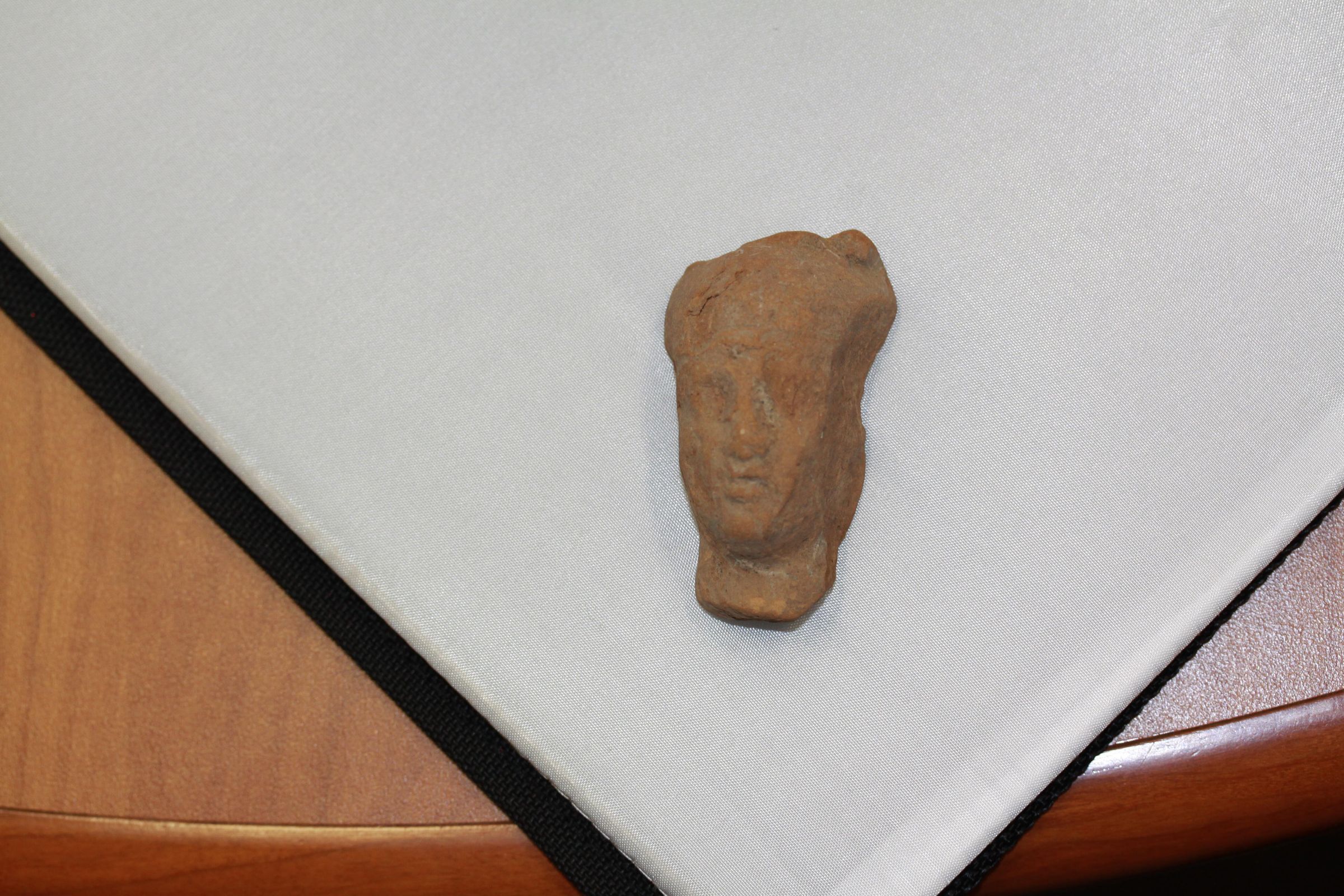
Face of a God or Pharaoh
2016-00-00
Name/Title
Face of a God or PharaohEntry/Object ID
11EG-Mi73-205Description
This head is a fragment from a terracotta figurine. The figurine depicts a man wearing some kind of headdress or perhaps a helmet. The shape of the figurine’s face is an elongated oval. There are two depressions that indicate the eyes of the figurine. The figurine’s nose is long and triangular. The lips of the figurine are plump and slightly separated. The figurine is badly damaged and shows overall wear and encrustation (the facial features of the figurine are not well defined).Context
This figurine was likely made in an open mold and mass-produced. There seems to be no indication that this head belonged to a figurine of a god or pharaoh. Looking at William Flinders Petrie’s analysis of terracotta figurines from Egypt during Roman rule there is potential that the figurine, which this head belonged to, is a generic male figurine, which was likely mass-produced. The terracotta figurines that are identified as gods have specific traits, facial features, and symbols that set them apart from human figurines. This figurine also does not have any symbols that imply it is a pharaoh, although that might be due to the damaged state of the figurine especially the lack of the figurine’s body (statues and figurines of pharaohs are depicted holding specific instruments that indicate their royal power and position). This figurine might have been used as a simple household figurine or toy.Made/Created
Date made
100 BCE - 1 BCETime Period
Bronze AgeEthnography
Culture/Tribe
Egyptian