Histiaia - AR Tetrobol
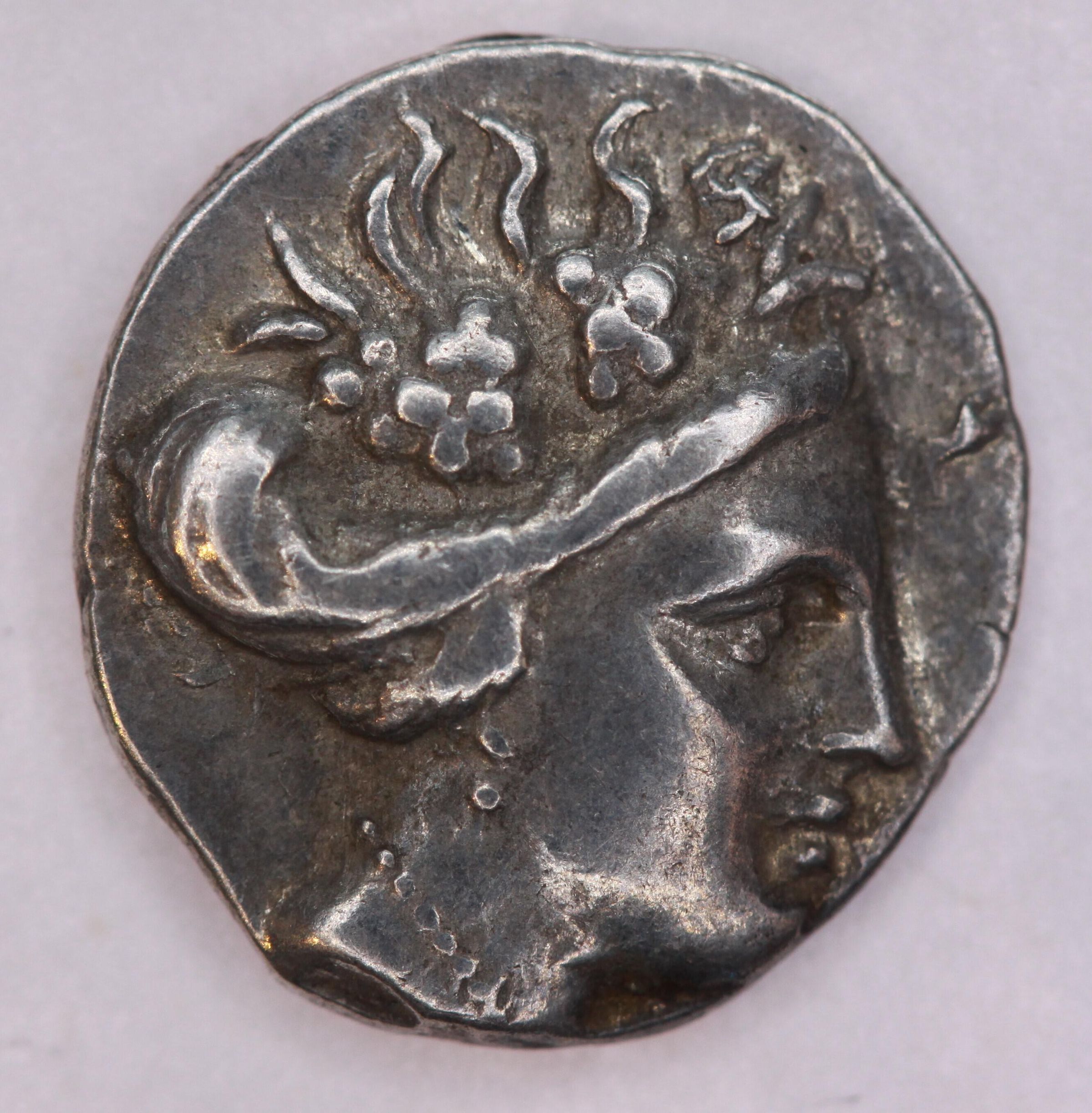
Obverse
Name/Title
Histiaia - AR TetrobolEntry/Object ID
C2017-G72-459Description
A coin of the city-state of Histiaia depicting a local nymph.Context
In Greek myth, Histiaia was a nymph and the daughter of a Boeotian king, Hyrieus, who was a son of the god Poseidon and a nymph named Clonia. While the Euboean city-state Histiaia is thought to be named after her, the exact connection between the nymph and the city-state is unclear. She could have been a patron nymph of the city, meant to symbolize the city's civic identity and perhaps connected to its foundation myth, now lost. Scholars have referred to Histiaia as a bacchic nymph, suggesting that she was a member of Dionysus’ mythical retinue. Nymphs became associated with Dionysus thanks to their connection to satyrs who were often the companions of the god. Additionally, Dionysus was raised by nymphs on Mount Nysa. These possible connections to Dionysus could be why the nymph is depicted on this coin with her hair wreathed with ivy and grapes, which were symbols of the god. The city-state was also known for its grape production. In the Iliad, Homer refers to Histiaia with the epithet “abundant in grapes.”Collection
Hellenistic GreeceMintage
Mint
HistiaiaDate made
196 BCE - 146 BCETime Period
HellenisticPlace of Origin
City
HistiaiaCountry
GreeceManufacture Method
StruckCoin Details
Obverse
Description
Head of the nymph Histiaia, vine-wreathed and hair rolled, wearing necklace, facing right.Reverse
Description
Histiaia seated on prow, right, holding trophy-stand; leftward open crescent in exergue.Transcription
[ΙΣΤΙ] - ΑΙΕΩΝTranslation
Of/belonging to the people of Histiaia.Issuing Authority
HistiaiaDenomination
AR TetrobolEthnography
Cultural Region
Country
GreeceCulture/Tribe
Greek