Pinched-Neck Juglet
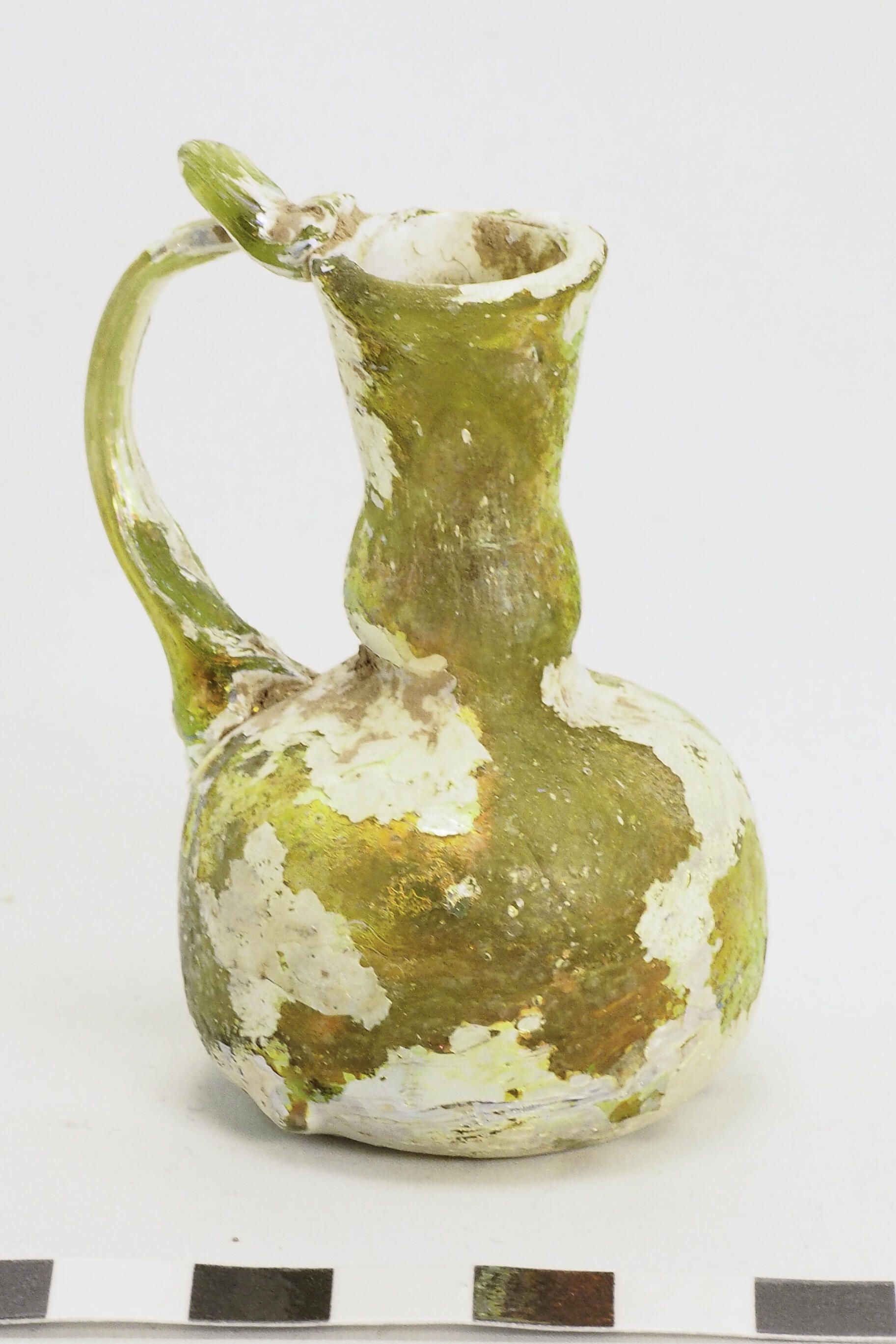
Front
Pinched-Neck Juglet 2019-08-12
Name/Title
Pinched-Neck JugletEntry/Object ID
11NE-Mi7-145Description
The rim is flat with a funnel mouth. The cylindrical neck has a distinct bulge before constricting at the junction with the body. Shoulders are almost flat, gently sloping into the body. The ribbon handle has pinched edges at its lower end, attaching to the shoulder and at its top end, the handle attaches to the rim. Excess glass behind the rim was made into a thumb rest by drawing the remaining glass up and folding it. The body is squat and cylindrical; the base is concave with a pontil mark. The vessel is intact with iridescence and encrustation.Use
Serving VesselContext
In ancient Rome, the meal was eaten in a reclined fashion where diners would lay upon couches which were cushioned for the elite or wooden/stone benches for the lower classes. The elite Patrician families dined off gold or silver dishes, other elites dined off bronze but the lower elites and lower classes dined off glass or pottery. At meals, jugs would be placed on tables filled with wine and beakers next to them for pouring. As ancient Romans ate with their hands, they were brought glass bowls by slaves who poured water from jugs so the Romans could wash their hands in between courses.Made/Created
Date made
100 CE - 300 CETime Period
Roman ImperialEthnography
Culture/Tribe
Roman