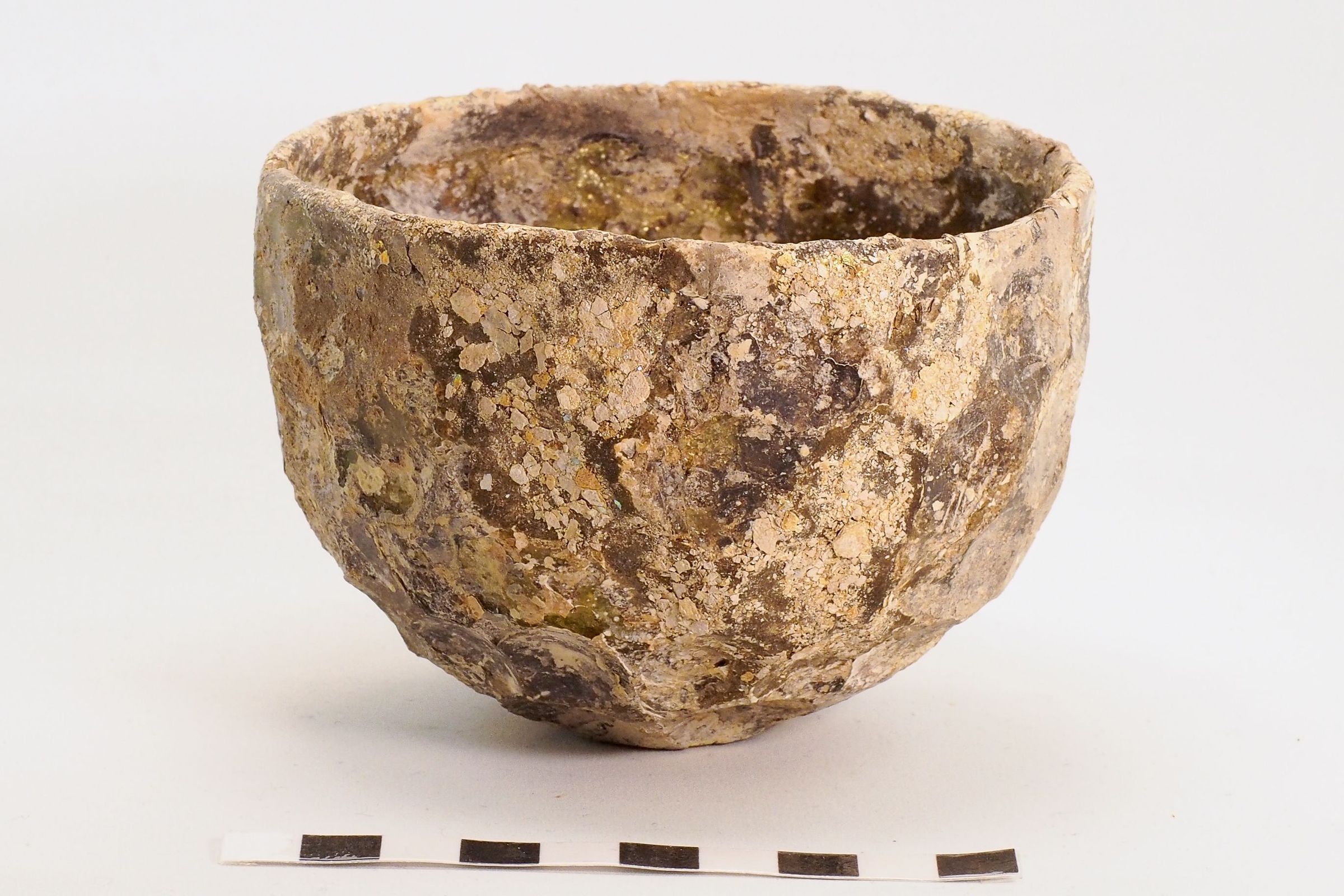
Round-Bottomed Bowl
Louis' Image
Name/Title
Round-Bottomed BowlEntry/Object ID
11NE-Mi2-140Description
The rim is uneven but flat, continuing vertically into the hemispherical body. The body is decorated with five horizontal lines of wheel-cut facets. The base is small and concave. The vessel is intact but heavily weathered, rejoined from fragments with large areas of restoration.Use
TablewareContext
At its advent, the practice of glass cutting was rather difficult due to the hardness of glass. The cut glass vessels also often needed thick walls as cutting facets typically result in a concave pattern. The practice of glass cutting ultimately seems to derive from the Roman glass industry, but it was the Islamic artisans who mastered the practice. The practice was passed from the Romans to the Parthians in the east, to the Sasanians, and finally to their Islamic descendants.Made/Created
Date made
300 CE - 600 CETime Period
Sasanian EmpireEthnography
Culture/Tribe
Near Eastern - Sasanian