Ushabti
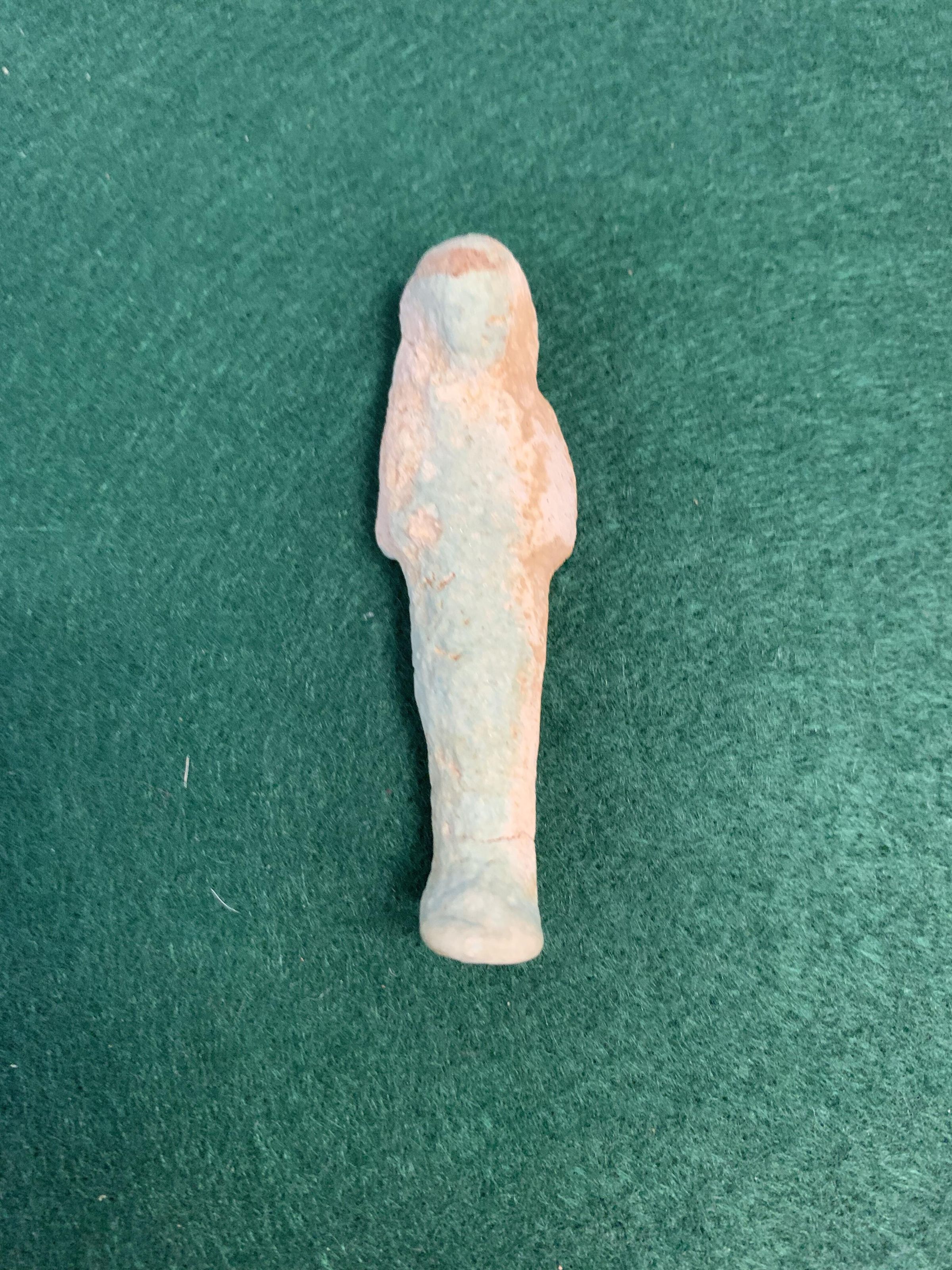
Front null
Name/Title
UshabtiEntry/Object ID
11NE-Mi68-204Description
This shabti is made from faience. It has cyan color glaze and the details are in brown. This shabti is in mummiform shape. It is wearing a tripartite wig and a seshed head-band. Arms which are barley discernible seem to be crossed over the chest. The face and body is quite distorted making its features indiscernible. Sides appear to be trimmed flat but the back of the shabti appears to be slightly raised around the shoulders and lower back. The glaze has been significantly chipped away on the front top half of the shabti. There is also a crack above the feet of the shabti. There also may have been painted facial features, which have now faded away.Use
FuneraryContext
Egyptian funerary statuettes have had various names throughout their lifetime which started in the Middle Kingdom (around c. 2000 BCE) and ended at the end of the Ptolemaic Period (around 30 BCE). In the Middle Kingdom Egyptian funerary statuettes were called shabtis. However, in the Second Intermediate Period these statuettes were known as shawabtis probably after the word for Persea wood which is shawab. During the New Kingdom theses statuettes were again called shabtis. Finally, in the Late Period these statuettes were called ushebtis which means ‘answerers.’ Shabtis in the Third Intermediate Period took on a very specific role within funerary rites of the Egyptians. Also, the number of shabtis increased dramatically, but they became much smaller. There were two types of shabtis namely the ‘ overseer’ shabti and the ‘worker’ shabti. The ‘overseer’(reis) figures wear short-sleeved tunics, kilts, and triangular aprons and carry whips in their hands. The ‘worker’ shabtis are mummiform in appearance. The use of the whip by the ‘overseer’ shabtis may also suggest that the ‘worker’ shabtis were now seen as slaves or servants rather than as “deputies.” Each ‘overseer’ shabti was in charge of supervising ten of the ‘worker’ shabtis. The recommended number of figurines in order to ensure one was properly looked after in the afterlife was four hundred and one since one shabti was needed for every day of the year plus the thirty-six ‘overseer’ shabtis needed to look after the ‘worker’ shabtis. These figurines were crudely made using open moulds. There are two distinguishing features of shabtis in the Third Intermediate Period. The seshed head-band (which was knotted at the back) appears which was seen as an aid to resurrection. This appearance of the seshed head-band seems to be associated with the Theban ‘priest-kings’ buried at Deir el-Bahri because the sheshed head-band is present only in Theban shabtis. Another feature that appears in the Third Intermediate Period is the modeling of the breasts of female ‘worker’ shabtis.Made/Created
Date made
1069 BCE - 525 BCETime Period
Bronze AgeEthnography
Culture/Tribe
Egyptian