Letter

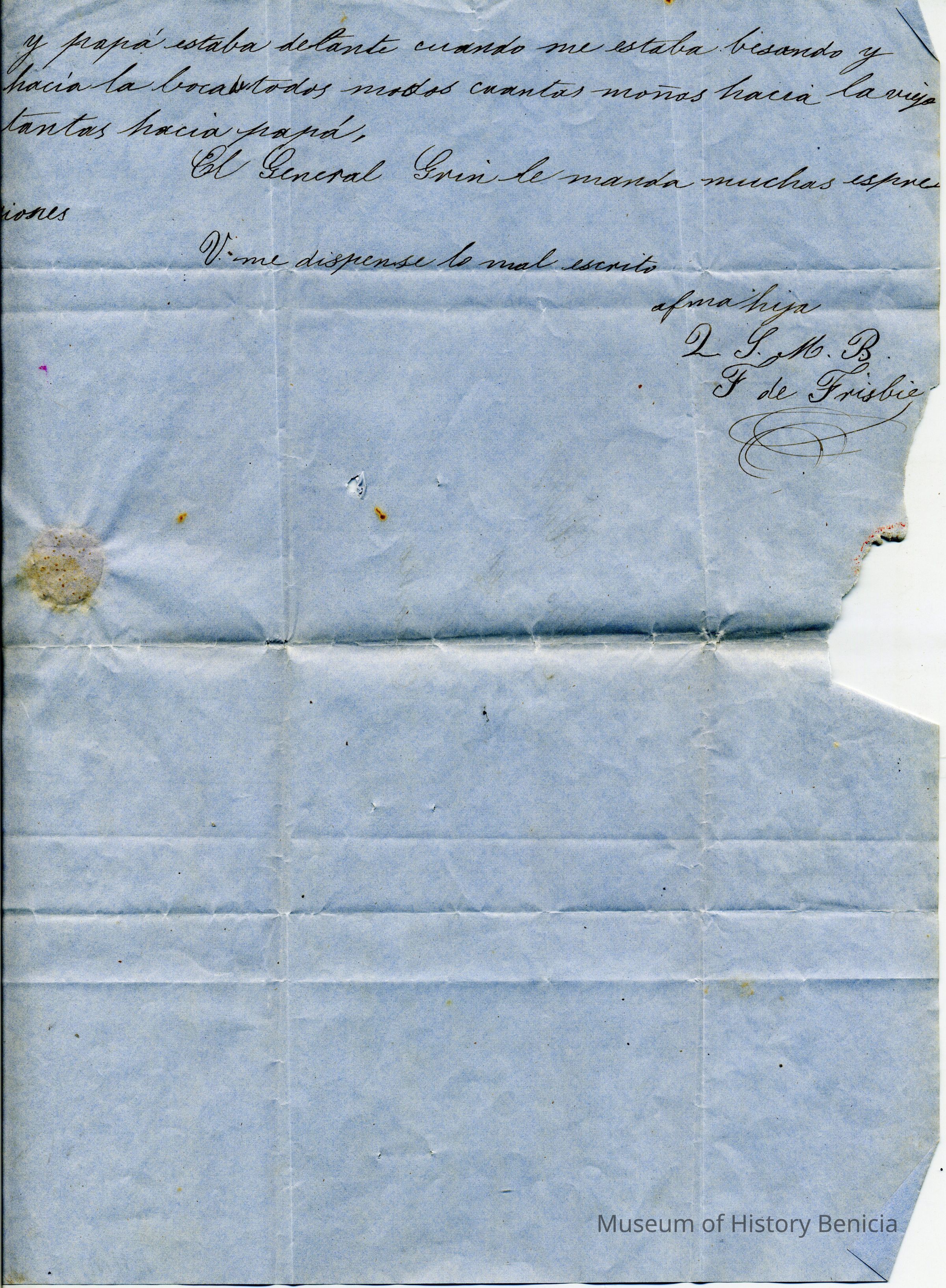
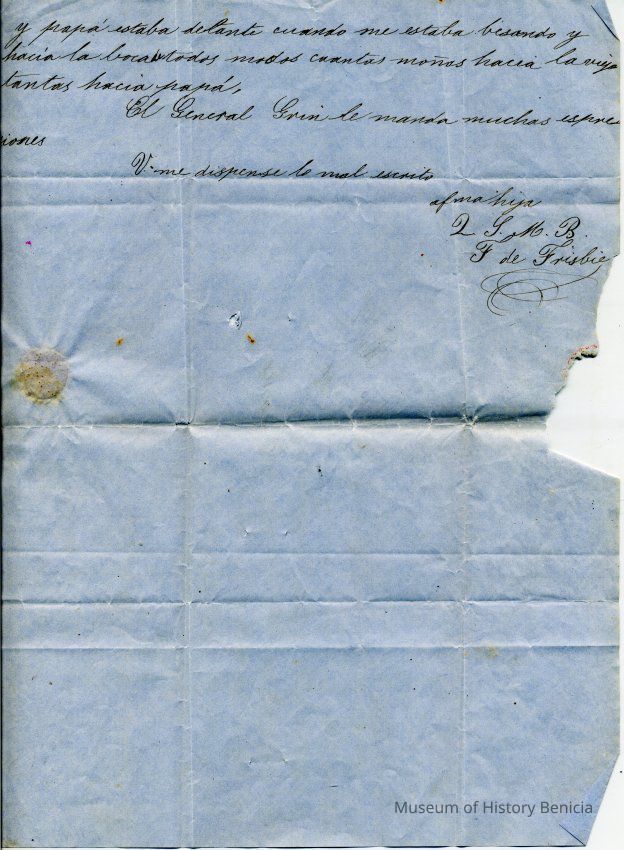
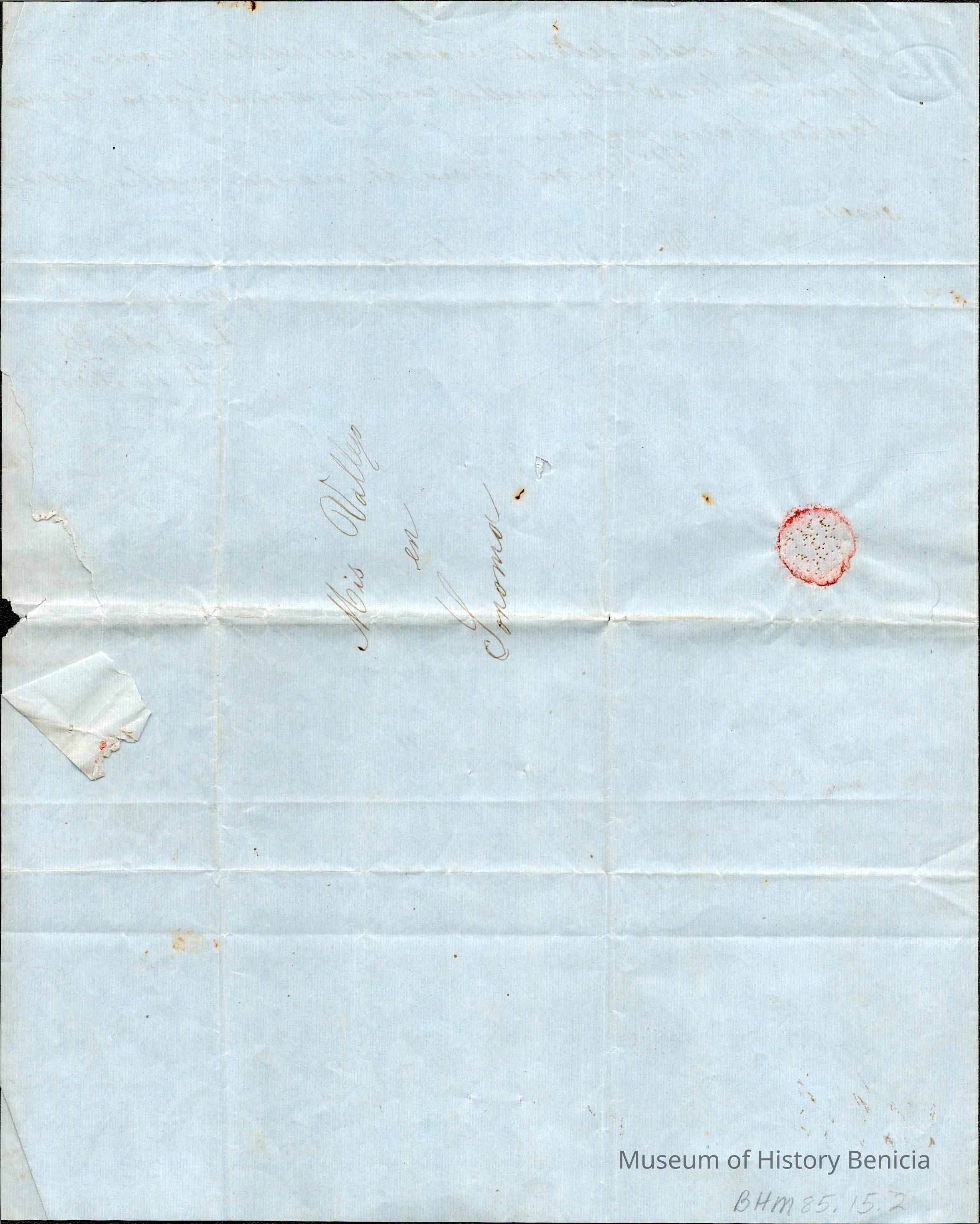
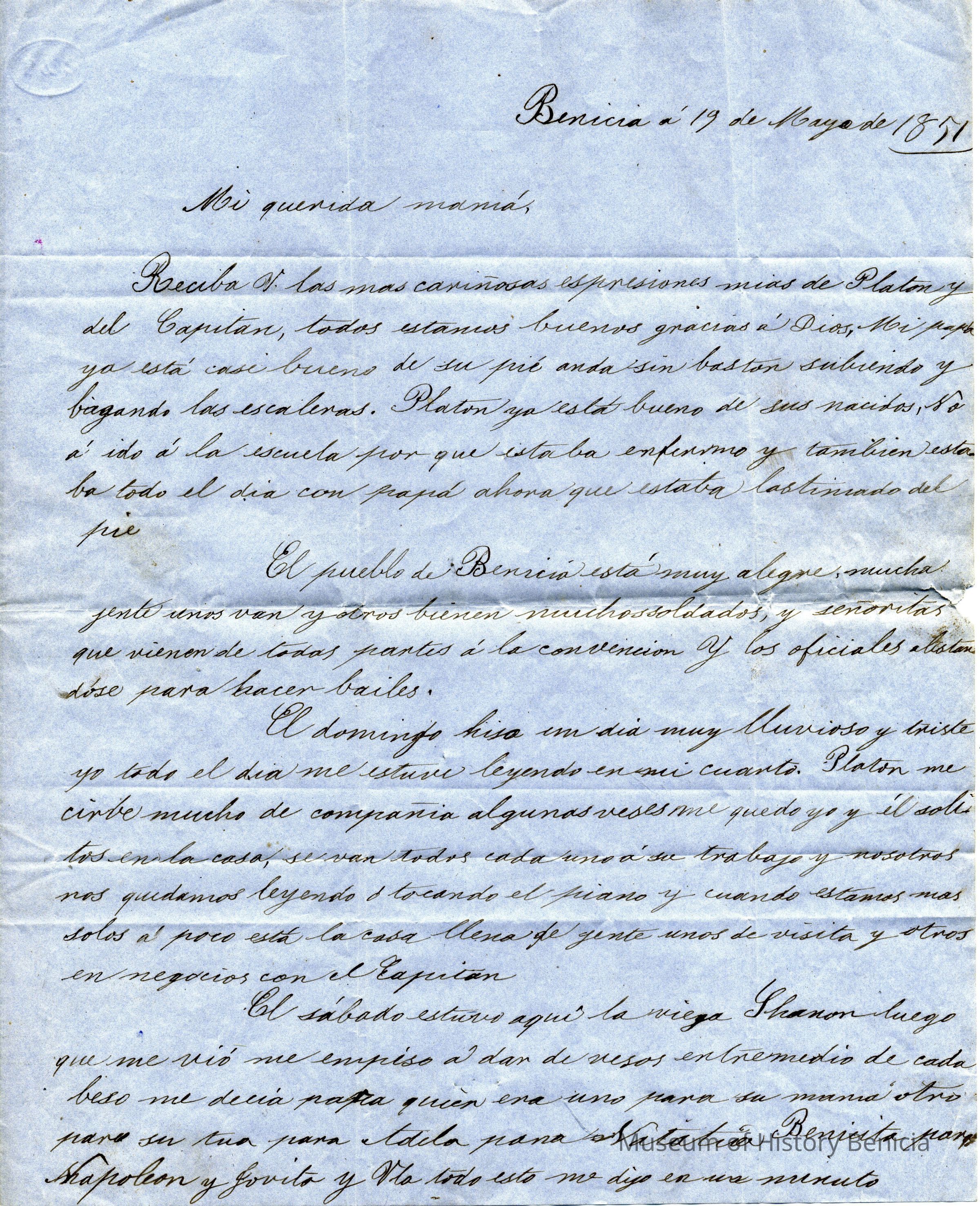
The image shows an old letter dated 05/19/1851, written on a bluish sheet of paper. The text is in Spanish, and written in cursive handwriting, exhibiting a style typical of the 19th century. The paper appears aged and has visible folds and some minor stains. The edges are slightly torn and worn, indicating the passage of time. The letter closes with the words "aprabija" and signatures, followed by decorative flourishes, which add a personal touch to the correspondence. This historical document reflects communication practices of the past, providing a window into the social customs of that era.

The image shows an old letter dated 05/19/1851, written on a bluish sheet of paper. The text is in Spanish, and written in cursive handwriting, exhibiting a style typical of the 19th century. The paper appears aged and has visible folds and some minor stains. The edges are slightly torn and worn, indicating the passage of time. The letter closes with the words "aprabija" and signatures, followed by decorative flourishes, which add a personal touch to the correspondence. This historical document reflects communication practices of the past, providing a window into the social customs of that era.

Name/Title

Letter

Entry/Object ID

1985.015.0002

Scope and Content

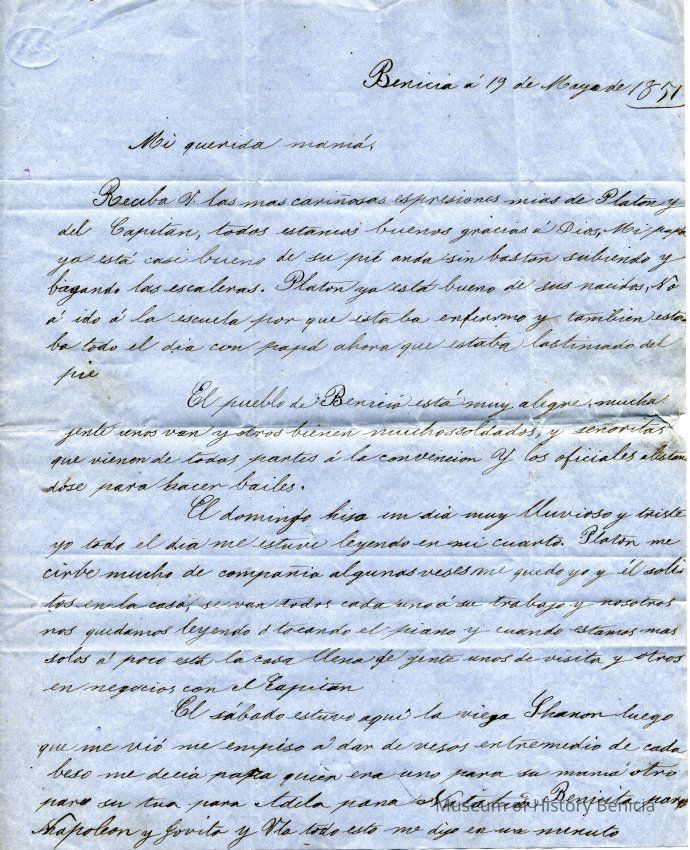
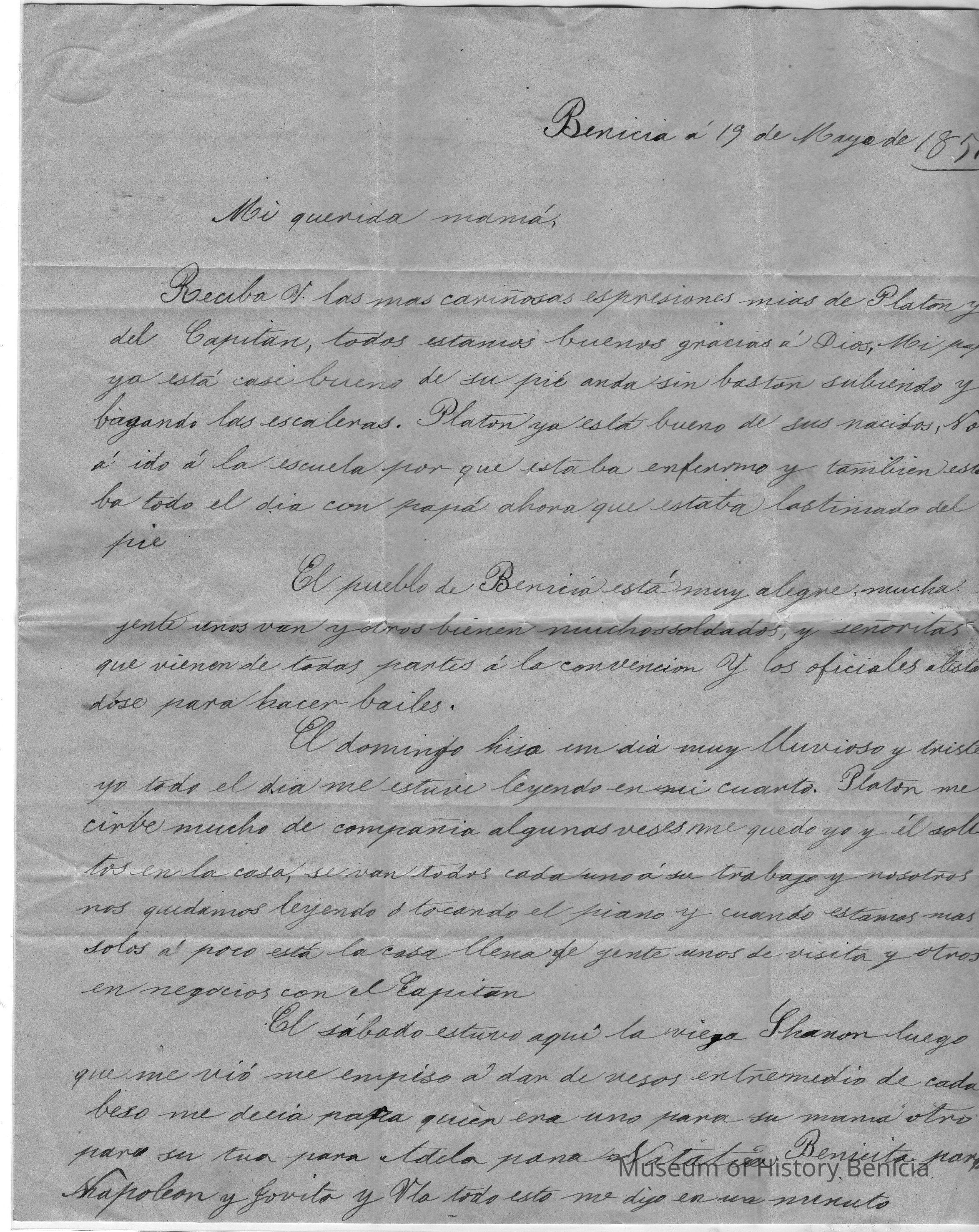
Letter written on blue paper with brown ink and written in Spanish. Single sheet, folded. "Benicia a 19 de Mayo de 1851/. Mi querida mama'...Q.Y.M.B. F de Frisbie" addressed to Mis Vallejo in Sonoma" with wafer on back. Donor was the wife of the grandson of Mariano Vallejo. The image depicts a handwritten letter dated May 19, 1851, from Benicia. The letter begins with “Mis queridas mamás,” conveying affectionate greetings and details about the well-being of family members such as the Captain, Platón, and another person who seems to be recovering from an issue with their foot. The writer mentions the lively atmosphere in Benicia due to many visitors and the organization of dances by city officials. The narrative continues by describing a Sunday filled with reading and music, as well as interactions with family and guests. Additionally, there is a reference to a visit from an individual named Simón and the exchange of fabric for Platón.

Collection

Benicia Historical Museum Collection