Name/Title
What Does Our Museum have to do with Camels?Entry/Object ID
2007.099.0063Scope and Content
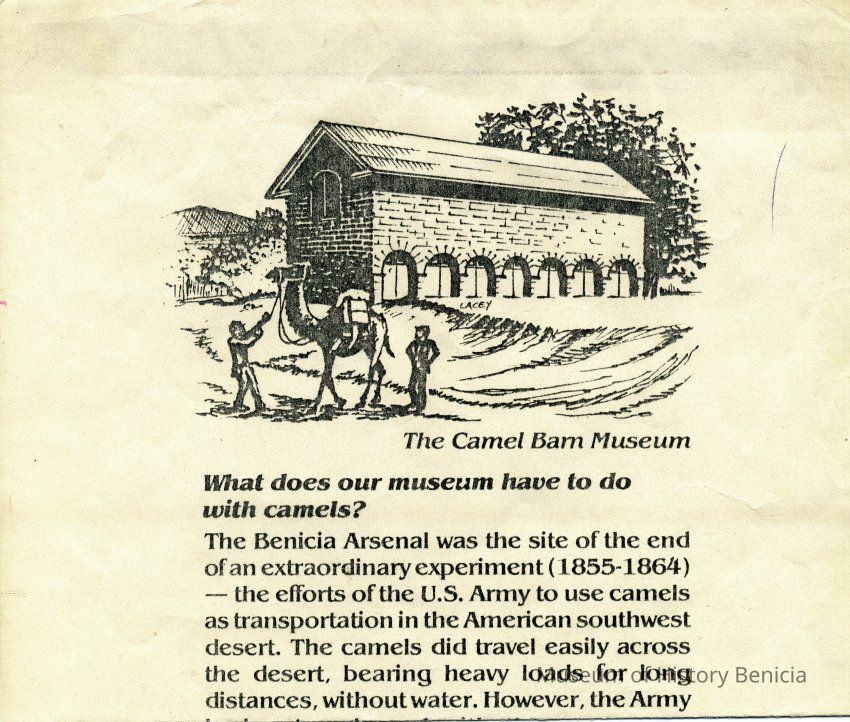
Document explaining what camels have to do with the Camel Barn Museum (now known as The Benicia Historical Museum).
What does our museum have to do with camels?
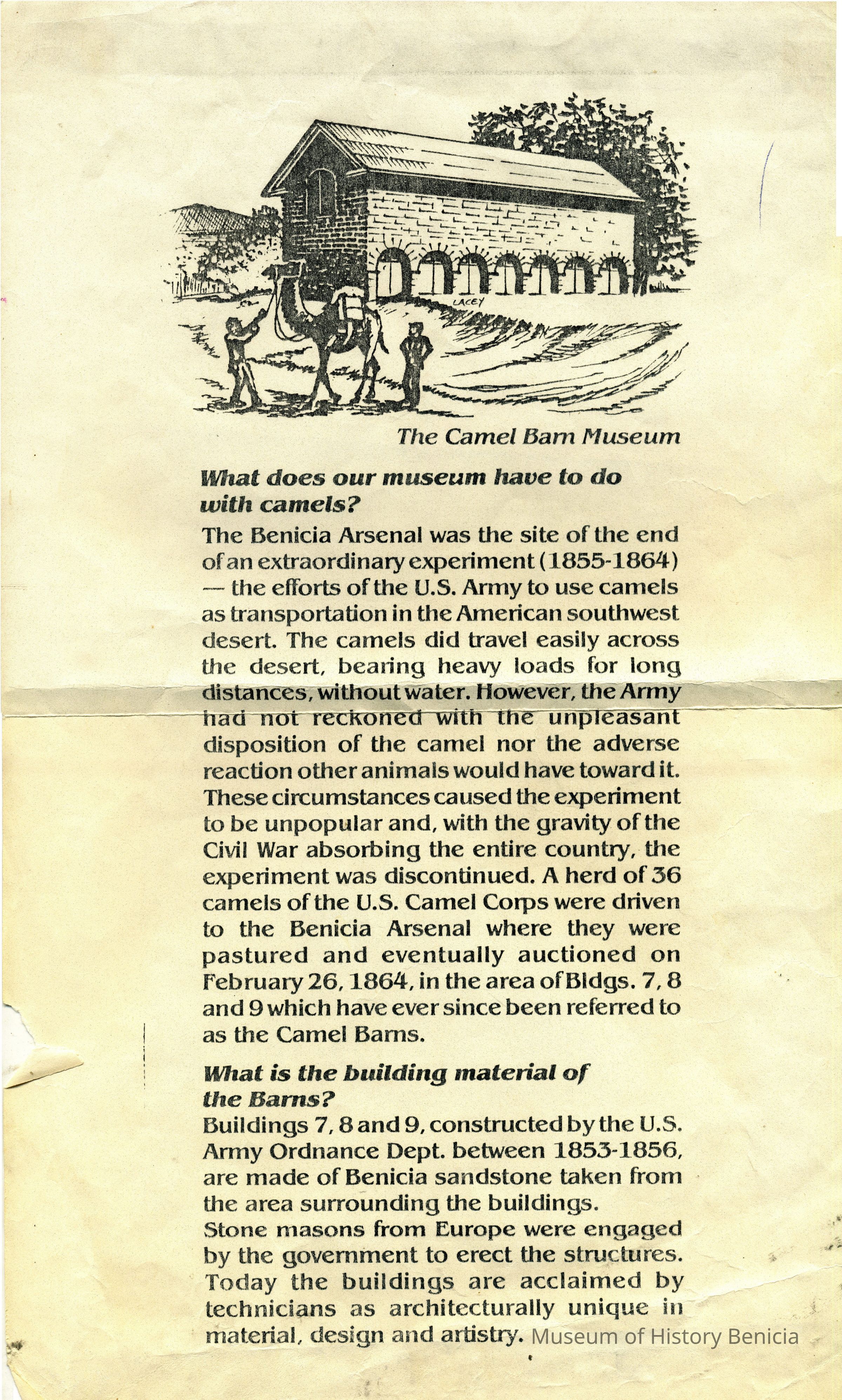
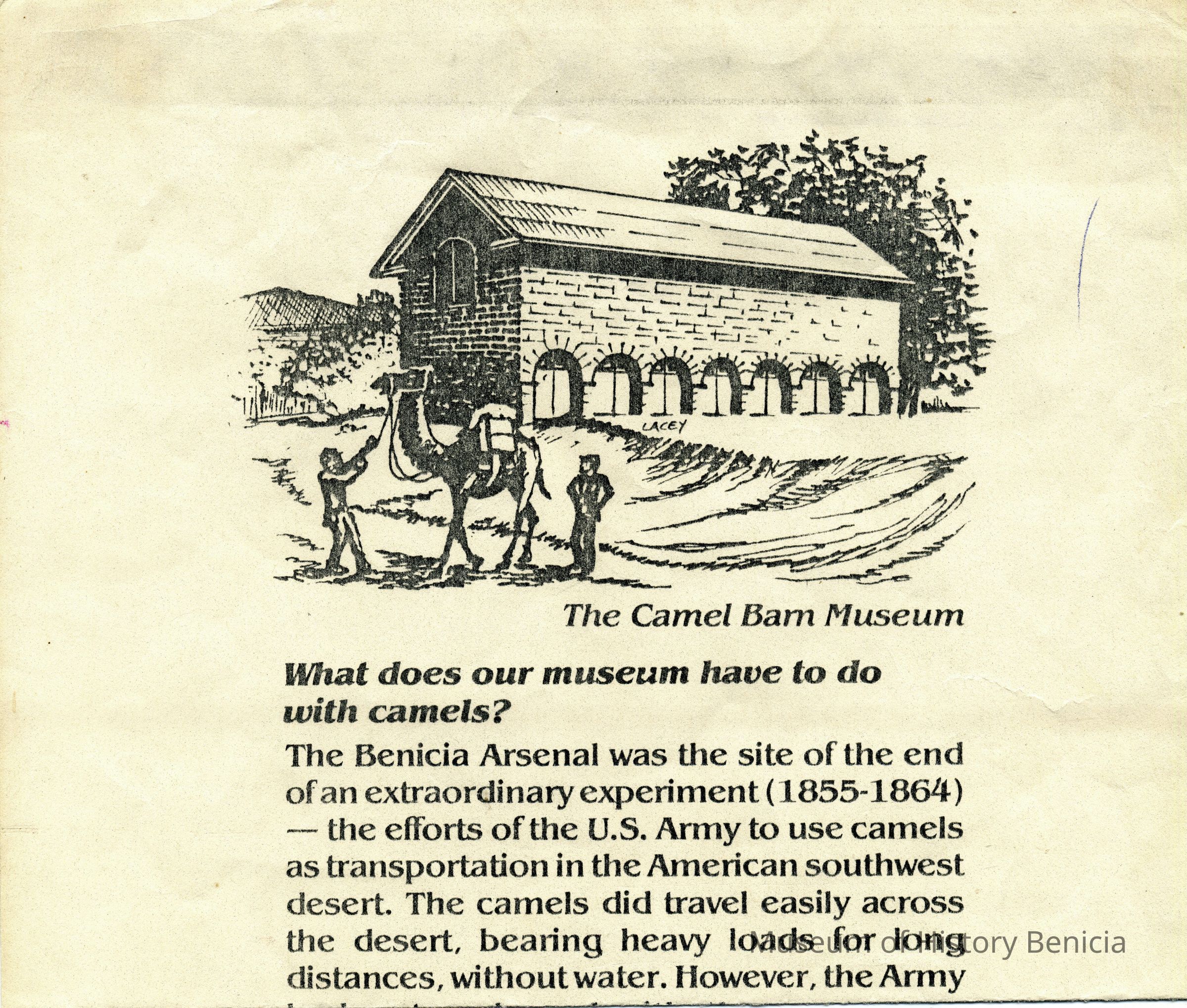
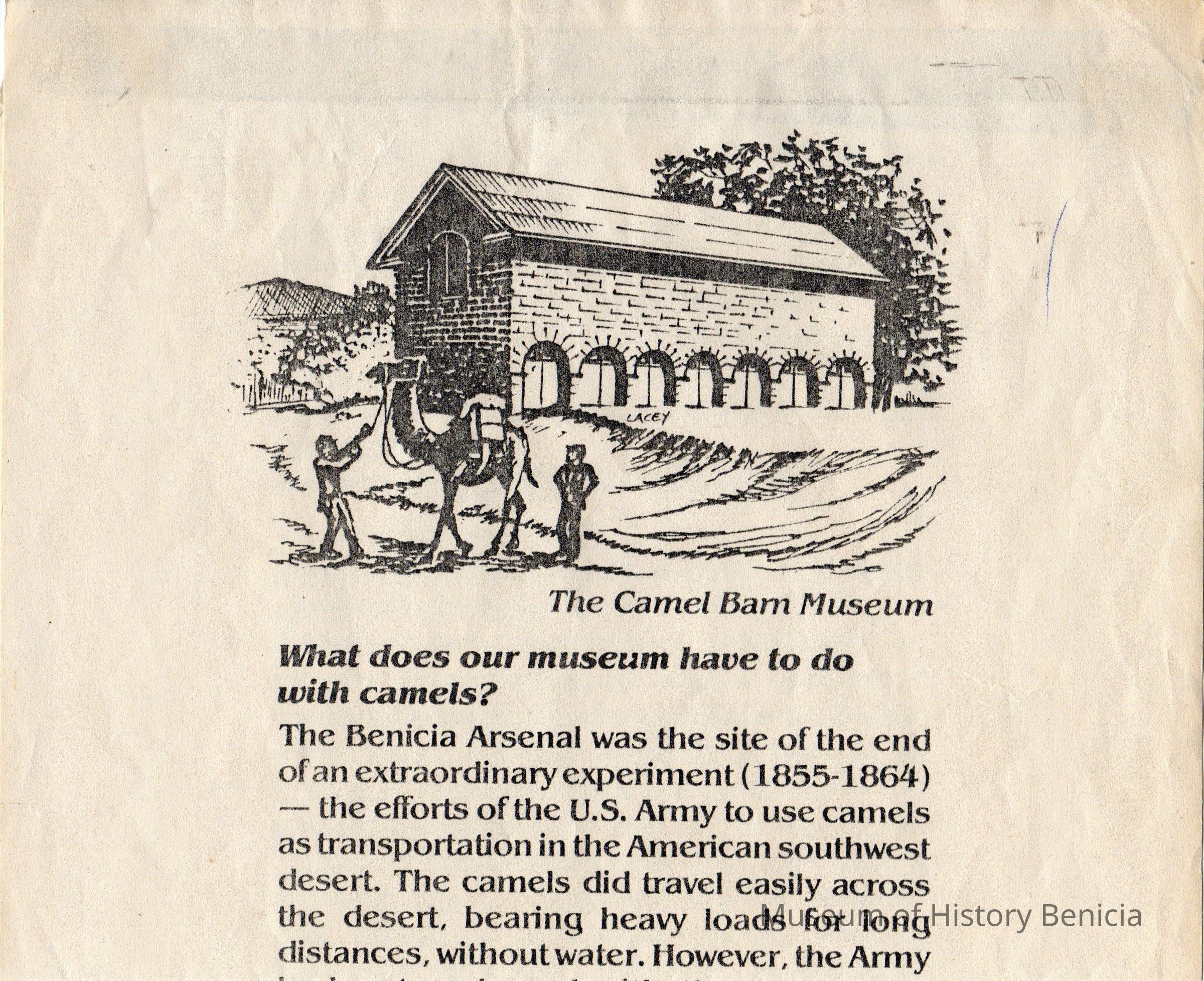
The Benicia Arsenal was the site of the end of an extraordinary experiment (1855 - 1864) -- the efforts of the U.S. Army to use camels as transportation in the American Southwest desert. The camels did travel easily across the desert, bearing heavy loads for long distances, without water. Howerver, the Army had not reckoned with the unpleasant disposition of the camel nor the adverse reaction other animals would have toward it. These circumstances causd the experiment to be unpopular and, with the gravity of the Civil War absorbing the entire country, the experiment was discontinued. A herd of 36 camels of the U.S. Camel Corps were driven to the Benicia Arsenal where they were pastured and eventually auctioned on February 26, 1864, in the area of Buildings 7, 8, and 9 which have ever since been referred to as the Camel Barns.
Note: The camels were housed in a corral behind the buildings (never were in the buildings).
What is the building material of the Barns?
Buildings 7, 8, and 9 constructed by the U.S. Army Ordinance Dept. between 1853 -1856 are made of Benicia sandstone taken from the area surrounding the buildings. Stone masons from Europe (mostly Italians) were engaged by the government to erect the structures. Today the buildings are acclaimed by technicians as architecturally unique in material, design and artistry.Collection
Benicia Arsenal Collection