Name/Title
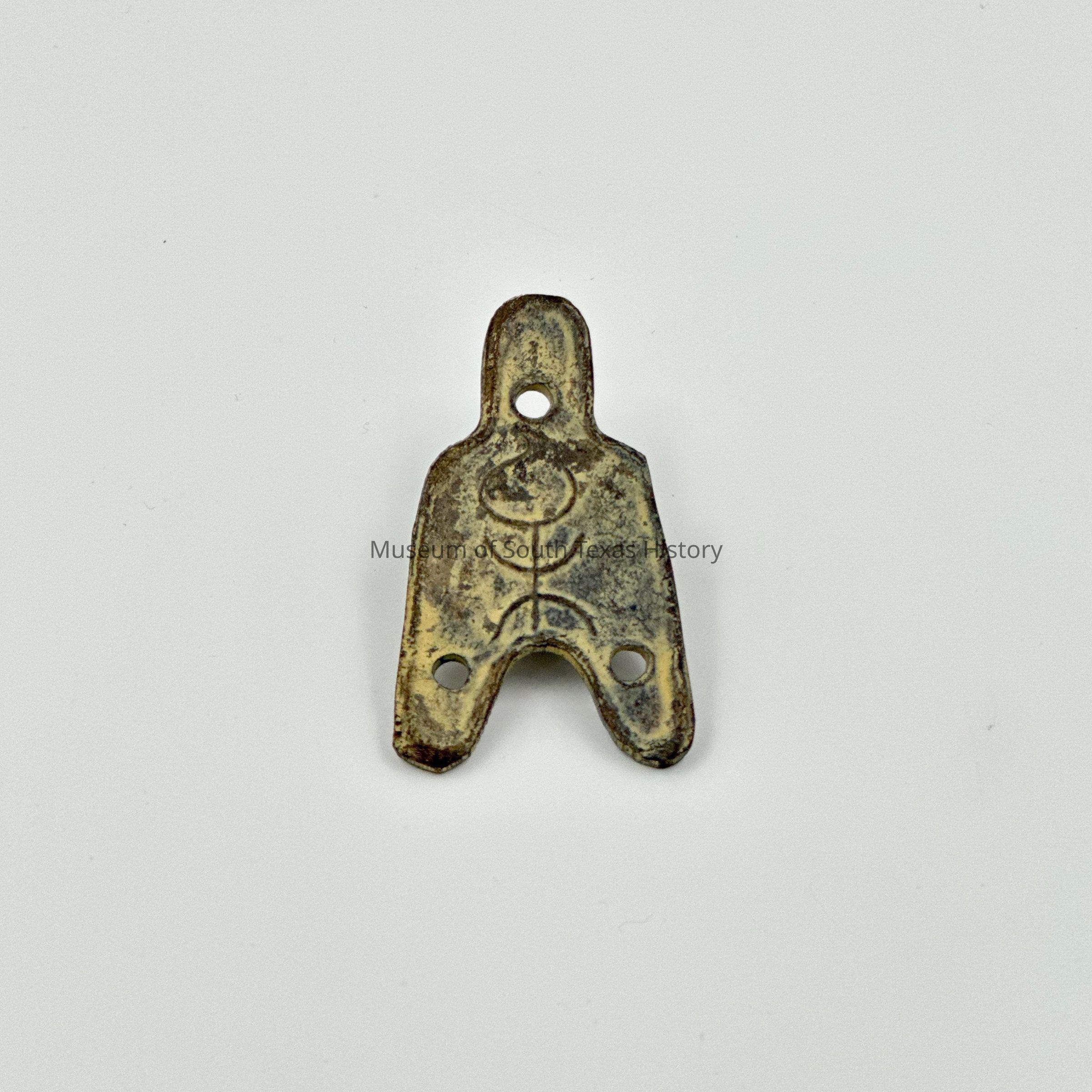
Chinese Iron spade coinEntry/Object ID
2024.002.067Description
Small replica Chinese iron spade coin with clear signs of wear and weathering.Context
Spade money (traditional Chinese: 布幣; simplified Chinese: 布币; pinyin: bù bì) was an early form of coin and commodity money used during the Zhou dynasty of China (1045 to 256 BC). Spade money was shaped like a spade or weeding tool, but the thin blade and small sizes of spade money indicate that it had no utilitarian function. The earlier versions of spade coins tended to have a fragile, hollow socket, reminiscent of a metal shovel.[1] Later versions of spade money had this socket transformed into a thin, flat piece, and over time, inscriptions were added to the spade coins to mark their denominations. Several versions of spade money circulated across the Chinese Central Plains during the Zhou dynasty period until they were abolished by the Qin dynasty in 221 BC in favour of the Ban Liang cash coins.
Under the Xin dynasty created by Wang Mang spade money was reintroduced; there were 12 different types of spade money in the Xin dynasty, ranging in values from 100 to 1000 qián.Collection
Ronald StoneLexicon
Nomenclature 4.0
Nomenclature Secondary Object Term
CoinNomenclature Primary Object Term
MoneyNomenclature Class
Exchange MediaNomenclature Category
Category 08: Communication ObjectsCondition
Overall Condition
Very Good