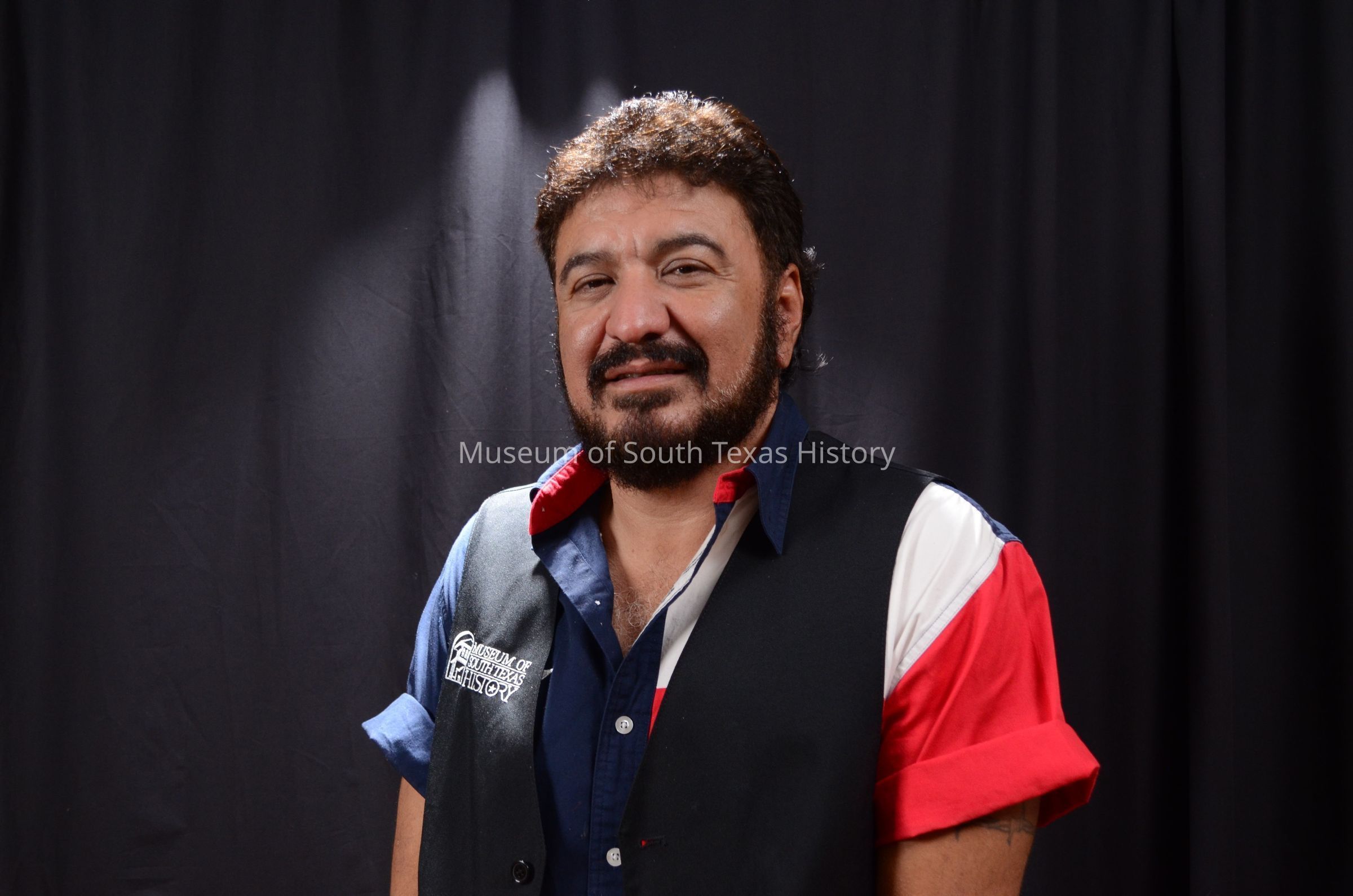
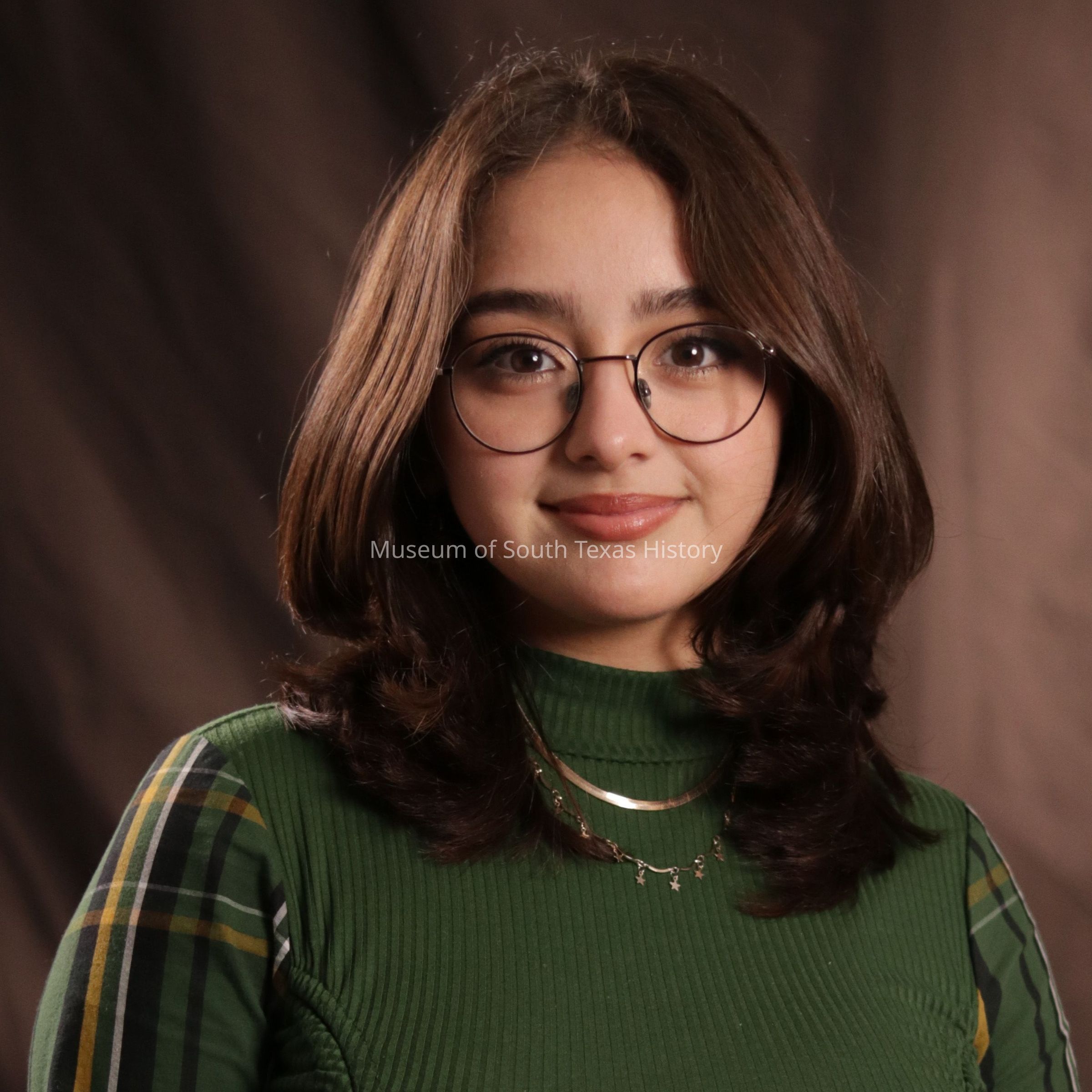
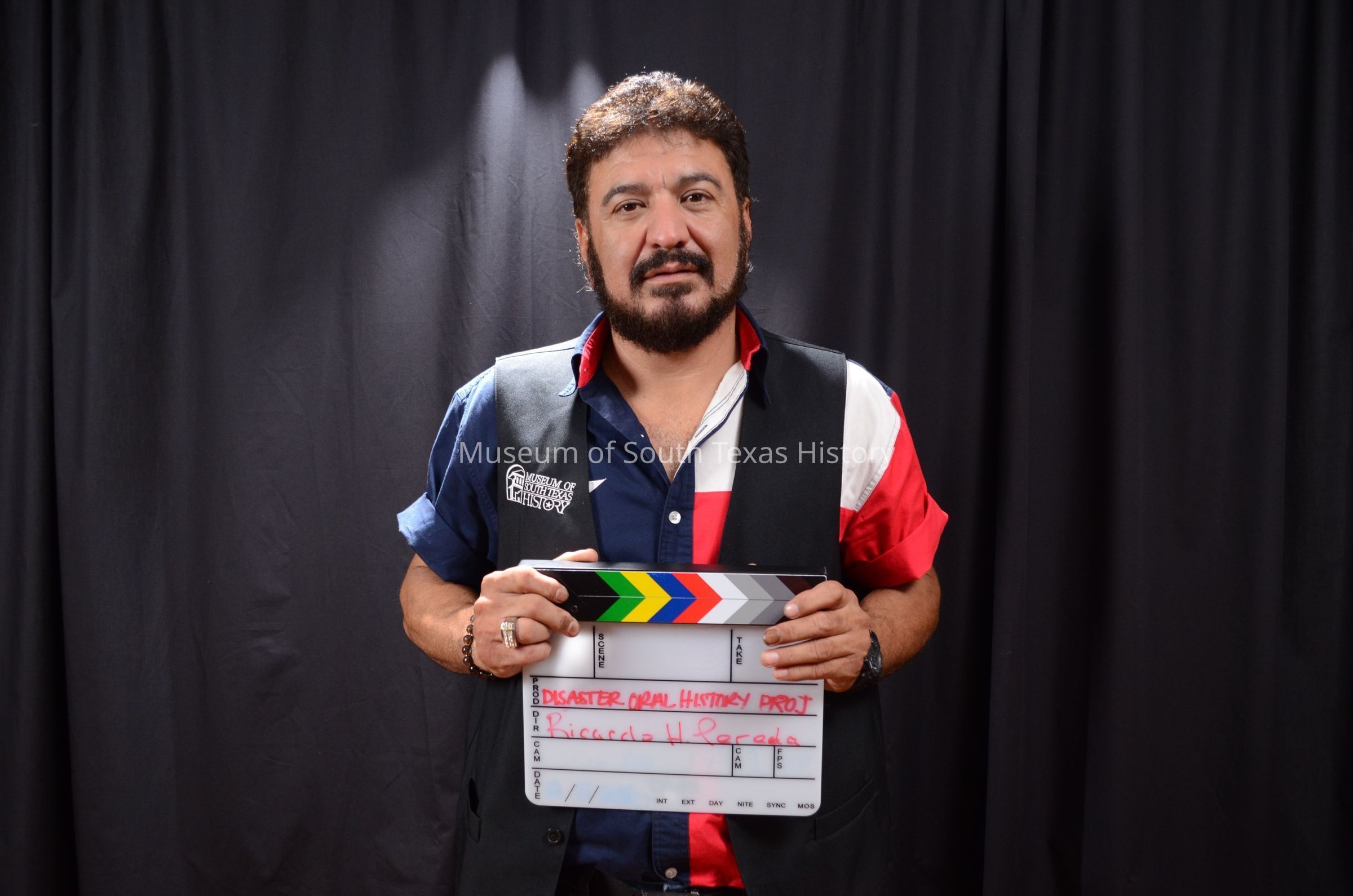
Interviewee
Ricardo PeredaInterviewer
Maryel MonrrealTranscriber
Pamela MoralesOral History Notes
00;00;00;29 - 00;00;30;13
Speaker 1
This is Maryel Monrreal. Today is August 13th, 2022. I am interviewing at 1:57 p.m. Mr. Pereda. This interview is taking place at the Museum of South Texas History in Edinburg, Texas. This interview is part of the Disaster Collection Oral History Project and will be submitted to the museum archives for future researchers. This interview will focus on Hurricane Alan, which took place on August 10th, 1980.
00;00;31;10 – 00;00;34;02
Speaker 1
Can you please state and spell your full name?
00;00;34;09-00;0;44;17
Speaker 2
Ricardo Humberto Pereda. R I c a r d o H u m b e r t o P e r e d a.
00;00;44;26-00;00;47;05
Speaker 1
And can you please tell us your date of birth and where you grew up to?
00;00;47;11-00;00;49;06
Speaker 2
2/3/68. I grew up in Edinburg.
00;00;50;03-00;00;56;08
Speaker 1
Can you please tell us in exact location, including the address of where you were doing your experience with this disaster event?
00;00;56;24 - 00;01;22;29
Speaker 2
Yes. I grew up on Monte Cristo Road, which is my community called La Hielera. Uh, back in the days my street was Davidson Street, and now it's Douglas Street, 3818. Now Douglas Street to be exact. Uh, the, uh, event that I'm talking about is, uh, Hurricane Alan of, uh, August 1980. During that time, I was 12 years old.
00;01;24;00 - 00;01;50;14
Speaker 2
I was in school, and, uh, I was, uh, learning of the preparations that were taking, uh, place in the forecast, in the forecast, and also at school. Uh, we were told I was pretty young. I had never been to a hurricane before, but I was. I was pretty excited. It was, uh, it was something that we were all prepping for in the...
00;01;51;08 - 00;02;45;12
Speaker 2
One of the things I remember vividly was that we were boarding up our house. We had a wooden frame house. I lived with my grandparents, Reynaldo and Amalia Granado during that time and two of my cousins, Elvio Garcia and, uh, of course my brother Gabriel and a cousin Edgar. Anyway, so we boarded our house and, and so was our neighbors were boarding our house, putting plywood. We went to a local, uh, place here that seals wood, not too far from the museum. And, uh, I remember boarding up the house, and we remember going to a H-E-B, which is actually at the museum right now. That building was here, and, um, getting just the basic stuff. We're planning on a three-day kind of survival thing to wait out the storm.
00;02;48;04 - 00;03;17;22
Speaker 2
Uh, we, since the house was frame, a frame house, it wasn't recommended that we wait out the storm there. So, my grandfather at that time worked for Texas Citrus Exchange, which is located on the expressway in Mission. And he was he was a custodian there for many years in the, uh, the director of that institution after my grandfather, along with other employees, that they could find that as a place of refuge in case they needed to wait out the storm.
00;03;19;01 - 00;04;27;01
Speaker 2
So, me and I think about six or seven of the families went along and I remember, uh, waiting out the storm there. We played checkers, we befriended other kids there, we slept there, and I could see through the windows, the office windows, the, uh, the magnitude of the storm was a lot of rainfall, a lot of wind. Uh, especially during the night. It got really dark as morning came about; I could see some of the damage. There were so many trees surrounding the office there at Texas Citrus Exchange. But I could see some of the plants that were there. They were already like on the floor, on the ground. Uh, we waited there another day. So, we spent like two and a half days there. Soon after, uh, things, we got, we got, we got a call that it was okay to go back, you know, into a neighborhood. And that's, uh, I remember as we're approaching the neighborhood, I could see that it was my entire neighborhood was flooded. I lived on the second block, and there is about five blocks to my neighborhood.
00;04;27;08 - 00;05;06;01
Speaker 2
So, four major streets. And I remember that the water was way in the beginning of my street, in the beginning of Monte Cristo. I remember seeing a lot of trees, power lines down, was very dangerous. I remember seeing, uh, some federal aid or something. Some groups couldn't recall. It was FEMA at that time, but the county was there, among other, uh, other relief groups trying to help people, trying to like, uh, some people that didn't go nowhere, were there trying to, like, get them out of the house because, uh, nothing worked.
00;05;06;01 - 00;06;05;18
Speaker 2
The, uh, yeah, at that time we had a, what they call the sewer systems were not, they were not connected to like the regular city plumbing. So, a lot of people couldn't use the bathroom. So, a lot of people were evacuated. And I remember, uh, I had never seen my neighborhood flooded the way it was. And, uh, so I remember, uh, getting there, and, uh, my grandparents are coming inside the house, and I decided to go survey the damage. So, I go as I get on my bicycle, and pretty soon I'm almost to, like, waist deep in water. So, and there was, uh, there was, it was kind of hazardous because towards the end of the canal, you couldn't see where the canal was. So, I was like, I could have run the risk of falling into the canal and probably possibly drowning.
00;06;06;19 - 00;06;39;11
Speaker 2
But I remember going home. And there also, my grandma had a lot of chickens, a lot of domestic animals, pigs, uh, all types of birds, sheep, geese, rabbits. Those unfortunately didn't survive. They, they drowned, the majority of them. And uh, and I remember a lot of, uh, people during that time, we had a lot of outhouses and, uh, and hen houses and, you know, and they’re called cuartitos’, with tools and all of them were floating out in the street.
00;06;39;27 - 00;07;02;24
Speaker 2
Well, it was just in some of the houses also, uh, or detached from their base and kind of were moved scattered because of the flood. And I would say like 98% of houses, there were frame houses. So most of most and specifically the houses toward the, towards the end of the neighborhood, those are the ones that occur that create the most damage.
00;07;02;24 - 00;07;28;21
Speaker 2
And uh, they were uh, pretty much, uh, flooded. I mean, it was, there was hardly anything you can salvage. The water was, I would say, looking back, probably about three, four feet, you know, but it was, it kind of sloped. So, from the beginning in my neighborhood, there wasn't too much water. It was a lot of water. But it wasn't, it was probably like knee deep.
00;07;28;21 - 00;07;54;25
Speaker 2
But as you go further into the neighborhood and down the street, you it was way below the waist. So, uh, so, so you see the, and then we, uh, we saw next couple of days we saw more help, we saw more people. There was, uh, the power company was called CPO, Center Power and Light Company. So they were, they're, uh, cutting down trees.
00;07;55;18 - 00;08;24;17
Speaker 2
Uh, trying to fix the lines because the power's out. But there were a lot of lines on the streets of that that created a hazard with some lifelines in the water. People could get electrical it. Um, and, uh, as the days passed, the water started subsiding. And I remember, uh, I remember the county being in anger because it was incorporated into the cities, was part of the county of Hidalgo.
00;08;25;05 - 00;09;14;13
Speaker 2
So, I remember the, uh, the county bringing pumps to pump the water out or at least try to minimize the, the level of water loss in my neighborhood. I remember, uh, school was closed for the next couple of days, so we didn't go to school. And, uh, and pretty much afterwards, uh, we had damage to our, to our floor and, uh, we didn't have carpet, we had linoleum, but there were the sofas and all those things that, that, uh, get wet. And I remember a lot of people taking out their stuff and just putting it in the front because, uh, they couldn't salvage it was, uh, it was damaged. And uh, basically that was uh, the, uh, August 12th or...
00;09;15;27-00;09;16;08
Speaker 1
August 10th
00;09;16;12-00;09;20;06
Speaker 2
August 10th, 1980, and I was 12 years old at that time.
00;09;21;03-00;09;28;13
Speaker 1
Wow. And how long was your neighborhood flooded? How many days did that span?
00;09;28;23-00;09;34;02
Speaker 2
Well, I would say it took many weeks.
00;09;34;26-00;09;35;07
Speaker 1
Weeks?
00;09;35;04-00;10;22;03
Speaker 2
Yes. Because the, uh, the, uh, that part of Edinburg had kind of slopes. So, uh, yeah, initially my, my block started, the water started receding. But at like two or three weeks later, I remember there was still there still water in the back of the neighborhood. And, uh, the thing about it, it started, uh, started smelling bad. You know, the people there, that town had a lot of houses, so there was a lot of and then a lot of the, uh, just a lot of, uh, what do you call it? Uh, the garbage stuff that was just, you know, so it, it, it started smelling bad. And, you know, you didn't have to go back to as many to catch it from anywhere. Yes.
00;10;22;27-00;10;25;14
Speaker 1
Wow. And you said you were 12 years old at that time, right?
00;10;25;26-00;10;26;07
Speaker 2
Yes, I was.
00;10;26;23-00;10;33;26
Speaker 1
How did you feel being a 12-year-old boy living through that? What were the emotions you felt?
00;10;34;07 - 00;11;01;15
Speaker 2
Well, initially there was a type of excitement because I had never been through that. And just the fact that we were boarding up our house and, uh, we were getting out of there, it's like I never been through a natural disaster. Uh, I had heard people talk about Beulah, which was in the sixties, and how it was, it affected my neighborhood, but it was just I wasn't here. I was born in 68. And so initially it, it was kind of exciting, like something that I had never been through before.
00;11;01;16 – 00;11;30;02
Speaker 2
But and just the fact that we went to go, I had been I had helped my grandfather before cleaning the offices during that time. So, it's just a fact that we spent two and a half days there, three at the most was it was exciting. I met people. We played Monopoly, we played checkers. He kept us occupied. But when I went back to the neighborhood and as I surveyed the damage, I looked at all the damage as I, I kind of like realized the hurricane was not something ...
00;11;30;21-00;11;31;04
Speaker 1
To be excited about.
00;11;31;09 - 00;11;59;08
Speaker 2
To be excited about. It was a category five. And a lot of heavy rainfall and, uh, a lot of damage to people's properties. And I remember my grandmother was very fond of her plants and trees and everything just, was swept away, you know. So yeah, it was and uh, now when I hear about hurricanes I kind of like, got those thoughts always, you know, come to my mind.
00;11;59;13-00;12;04;05
Speaker 1
There's no longer that rush of adrenaline and excitement.
00;12;04;13 - 00;12;16;12
Speaker 2
Nothing at all. No, I know the, uh, the uh, the magnitude of the damage, a hurricane depending on its category. Uh, they can, you know, cause
00;12;16;26-00;12;17;28
Speaker 1
severe damage.
00;12;18;04-00;12;30;01
Speaker 2
Yes. And there's also sometimes the loss of life. Yeah. I didn't hear about nobody losing life. Perhaps in my neighborhood. I don't know about other places, but not specifically there.
00;12;30;26-00;12;44;07
Speaker 1
Wow. Wow, and well, thank you very much, Ricardo, for sharing your story and your experience. Uh, this has been Maryel Monrreal with Ricardo... Pereda.
00;12;44;26 – 00;12;49;23
Speaker 2
Pereda, yes, ma'am. Thank you, Maria, for offering this opportunity to share my story.
00;12;49;29-00;12;52;21
Speaker 1
Thank you. And that concludes our oral history.
00;12;53;00-12;53;06
Speaker 2
Thank you.