Interviewee
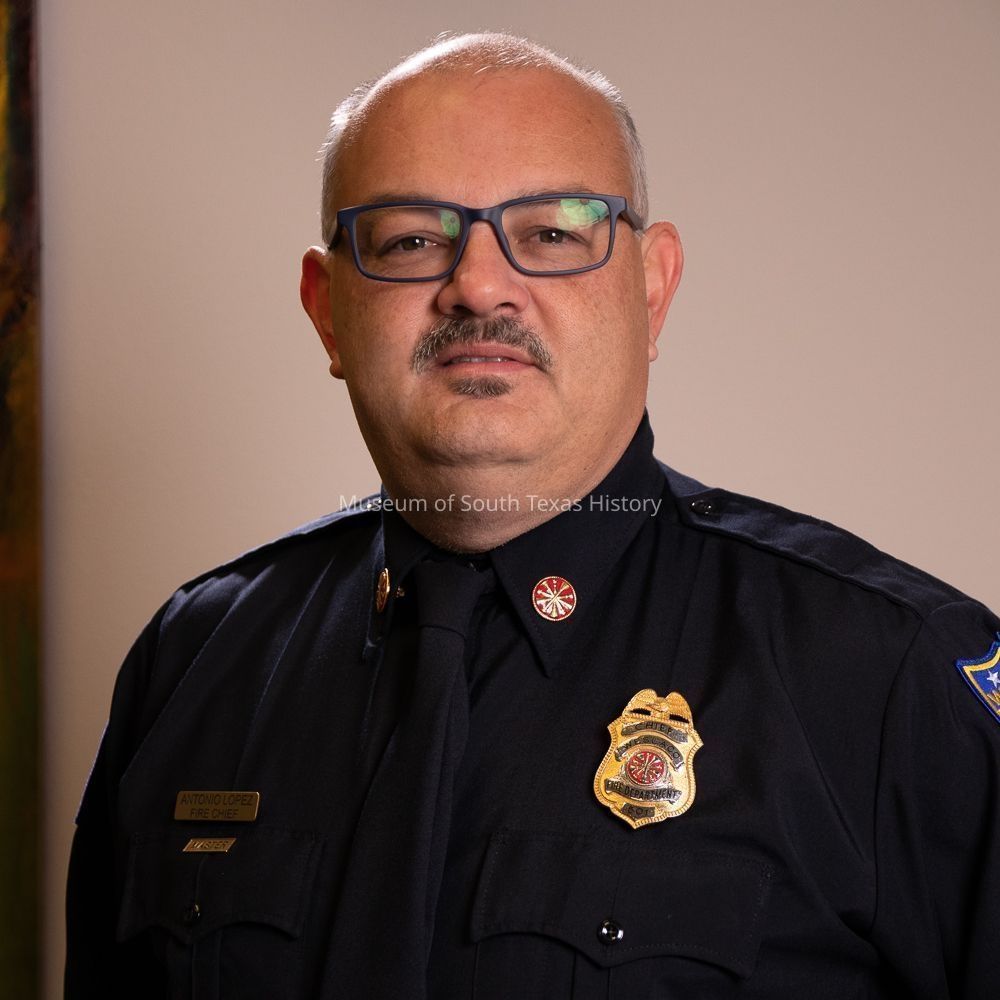
Antonio LopezInterviewer
Osiel UribeInterview Date
Nov 16, 2022Length of Interview
19:19:27Primary Language
EnglishTranscriber
Pamela MoralesOral History Notes
00;00;02;12 - 00;00;28;10
Speaker 1
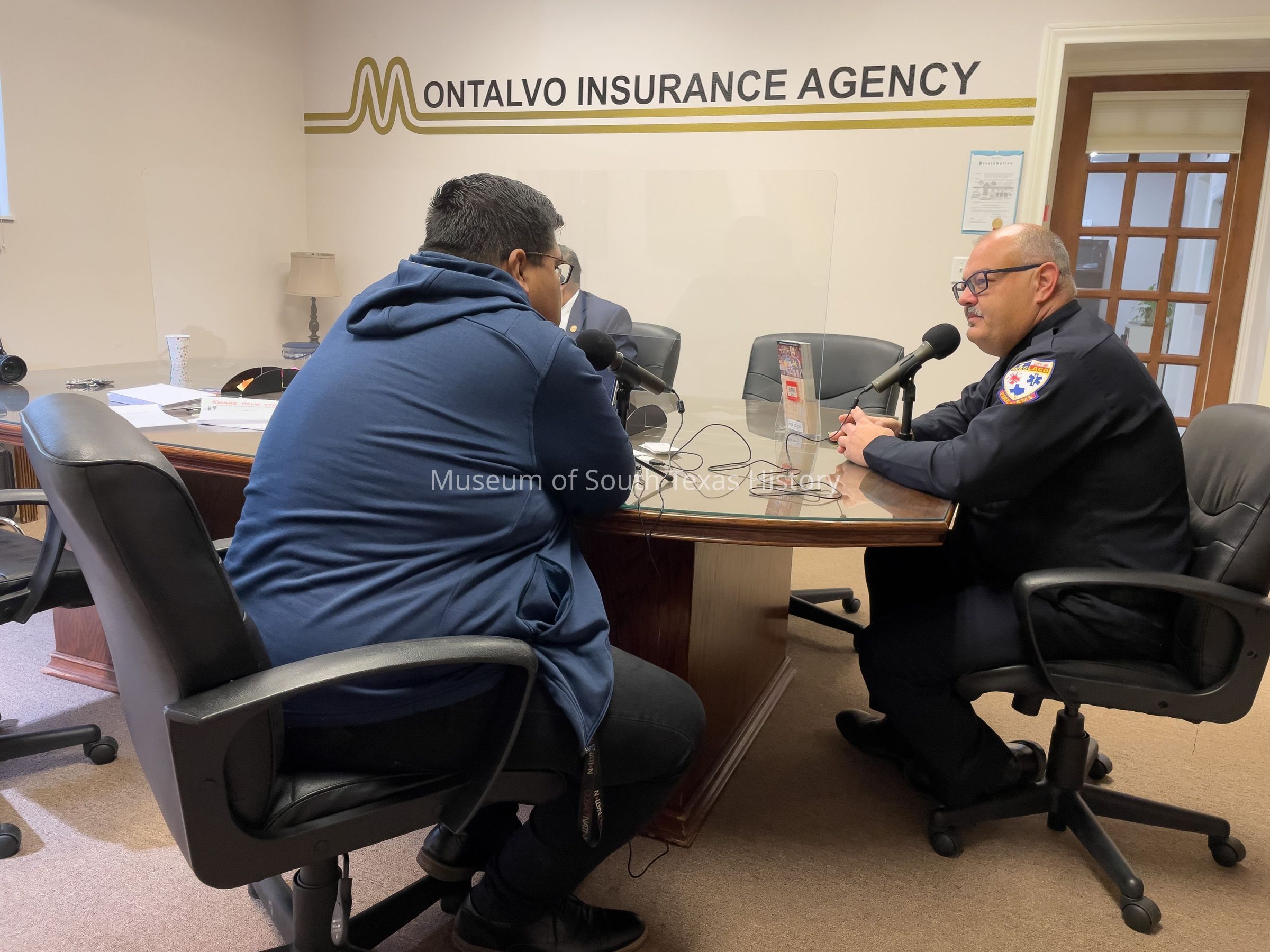
Hello. This is Osiel Uribe. This is November the 16th, 2022. It is 10 a.m.. I am interviewing Mr. Antonio Lopez, fire chief and emergency manager of the City of Weslaco. Welcome. This interview is taking place at montalvo insurance agency in Weslaco, Texas. This interview is part of the Disaster Collection Oral History Project and will be submitted to the museum archives for future researchers.
00;00;29;03 - 00;00;38;24
Speaker 1
This interview will focus on the June 2018 flood, which took place on June 20th in Weslaco, Texas. All right, so could you please state your full name?
00;00;39;02 - 00;00;43;07
Speaker 2
Yeah, Antonio Lopez. I'm the fire chief and emergency manager for the City of Weslaco.
00;00;43;21 - 00;00;45;13
Speaker 1
And could you please spell your full name?
00;00;45;15 - 00;00;49;26
Speaker 2
It’s Antonio. [proceeds to spell name]
00;00;51;05 - 00;00;52;25
Speaker 1
Could you please tell us your date of birth?
00;00;53;09 - 00;00;56;00
Speaker 2
Nine 14 76.
00;00;56;00 - 00;00;58;07
Speaker 1
Thank you. And could you please tell us where you grew up?
00;00;58;18 - 00;01;13;25
Speaker 2
I grew up here in the Mid Valley. I was actually born here in the City of Weslaco Medical Center. Uh, and of course in 1976. And I grew up out of Monte Alto, which is just north of here in the Mid Valley and graduated high school from Edcouch Elsa high school.
00;01;14;18 - 00;01;22;14
Speaker 1
Okay. And could you please tell us the exact location, including any addresses of where you were doing your experience with this disaster?
00;01;23;01 - 00;01;43;15
Speaker 2
So June 2018, flooding, uh, that's one that, you know, for a lot of people living in the Mid Valley is going to be very hard to forget. And for me, you know, we had been monitoring weather conditions from national weather Service for a couple of days. Think of a possibility of some rain coming into the Rio Grande Valley.
00;01;43;15 - 00;02;04;03
Speaker 2
Right. So we had learned from history that, uh, when those type of reports came out and the, if you got a potential for a 2 to 3 inches of rain, expect 4 to 6 inches of rain. We always have to think the worst case scenario in emergency management. So that was, um, that was a weekend actually I believe it was a Saturday.
00;02;04;28 - 00;02;28;19
Speaker 2
So actually we were, I was at home during that time just north of Elsa. That's where I live and um, we’re monitoring conditions and we had some city staff that were already on standby in case we needed some to stand up any emergency operations, you know, within the city. Um, so at that time I was at home, uh, when I first got the first phone call.
00;02;28;19 - 00;02;33;17
Speaker 1
Okay. So, um, you said you mentioned it was on Saturday, right?
00;02;33;25 - 00;02;58;29
Speaker 2
Yeah, I believe so. I want to believe that that date was on a weekend because I was at home that day. So I started receiving some phone calls that, uh, the actually, you know what? Now that I'm thinking about it, it was in the middle of the night because, um, I'm confusing it with the 2015 flood. The 2015 flood that happened in Weslaco was around noontime.
00;02;59;26 - 00;03;21;08
Speaker 2
This one was actually at night. I received the first phone call I remember from dispatch, uh Weslaco 911 Dispatch Center uh, that, uh, patrol officers in the field were reporting back to dispatch that they had started having some nuisance flooding within roadways and it was going to impact some traffic. And they were worried that it was going to impact traffic for the morning rush, you know.
00;03;22;08 - 00;03;41;05
Speaker 2
So I remember getting a phone call around four in the morning from dispatch, uh, and I remember their words exactly how they, how they told me, I answer the phone. And I said, Uh, hello? And they're like, hey Chief Lopez, yeah this is Weslaco Dispatch. Yes. What's going on? And usually those type of phone calls. I only get when there’s something major right.
00;03;41;05 - 00;04;03;08
Speaker 2
Yeah. They don't, they don't usually call and and you know, during those times. Uh, so they called and said, hey chief, um, it's, it's, it's, it's been raining patrol officers are reporting flooding already. Some nuisance flooding on the roadways. Um, and I was like okay and so I knew because it was raining in my house as well.
00;04;03;27 - 00;04;24;23
Speaker 2
And then the dispatcher goes, I said, How bad is it? He goes, Chief, it's bad. So those were that was you know, I'll never forget those words from that dispatcher. So I knew that we had our team of our emergency management team already made up of different departments within the city that are part of our Office of Emergency Management.
00;04;25;20 - 00;04;51;02
Speaker 2
So my first phone call after that, I got up, uh, got dressed, uh, got dressed pretty quick, um, and told my wife I was going into work, um, because we were having some potential flooding in the city. My next phone call was to the mayor, uh, Mayor David Suarez. I remember calling him, it was about maybe 420 in the morning.
00;04;51;02 - 00;05;11;11
Speaker 2
I was already on the road, uh, coming in from the Edcouch Elsa area. Typically that takes me, you know, on a normal day, about a 15 minute drive that day took me about 40 minutes to get from that location from my house to city hall. My words to the mayor was like, Hey, Mr. Mayor. I said, Sir, it's bad.
00;05;11;26 - 00;05;33;21
Speaker 2
It's it's it's raining. It's a, you know, the first hour we’re anticipating maybe about 4 to 5 inches per hour. I'm already on the phone call for the National Weather Service to get an update. Uh, we're going in, sir. We're going into work, and he's like, I'll meet you there. So those were that was the first the first memories of that day.
00;05;35;18 - 00;05;55;18
Speaker 2
And after that day, I probably didn't have dinner with my wife for about seven days. That was how long I had been here at work and stuff. So that that time in history for the City of Weslaco is going to be etched in. You know, as, as one of the worst flooding that we've ever seen here in the city.
00;05;56;19 - 00;06;02;03
Speaker 1
So could you tell me what area from Weslaco was probably the most, uh, hit?
00;06;02;14 - 00;06;28;26
Speaker 2
Well, you know, in the city, being a city of just shy of 50,000 people, 25% of the city was impacted and had more than four or five feet of water in it. So you can just imagine the extent of the flooding. Right. One of the ones that that we can pinpoint and we had the longest time of impact within the city was Las Brisas area.
00;06;28;26 - 00;06;50;00
Speaker 2
This is on the northeast corner of the city. So we we knew that that was one of the areas that we were we were getting reports in it to the emergency operations center that there was a foot of water. And then within an hour, it was two feet of water. And then at the end, we're getting reports of four feet of water in homes.
00;06;50;25 - 00;07;06;10
Speaker 2
So Las Brisas neighborhood is one of the ones for that op- for that operation. That disaster was one of the ones that was impacted the worst. We had that subdivision about 500 homes in that subdivision that were impacted with at least four feet of water.
00;07;06;19 - 00;07;08;28
Speaker 1
Where where exactly is Las Brisas located?
00;07;09;06 - 00;07;16;15
Speaker 2
So Las Brisas is on International Boulevard north of the expressway is on the northeast corner of the city. Uh, city limits.
00;07;16;24 - 00;07;26;26
Speaker 1
Oh, okay. Okay. Okay. So given that you work with the city, is there an approximate cost of damage that you guys estimated.
00;07;27;25 - 00;07;51;10
Speaker 2
For that one? You know, well, we, our initial, you know, in emergency management, the way it works is that when we have a disaster like that, we're we're looking at the initial call of the disaster coming out as emergency managers we’re already thinking of the response. Right. Life safety is, of course, our first priority. But we're also thinking on the initial call that comes out that there's a disaster happening.
00;07;51;10 - 00;08;22;29
Speaker 2
We're also have we're thinking of the the recovery because we have to we have to plan for that recovery as soon as we're responding to it. So we knew that that was going to be a big a big thing for us. And to find out that cost. Right. Of what it was and it was millions of dollars, because you can imagine that 500 homes, FEMA, in order to get the individual assistance back to the citizen, to get FEMA assistance to for rebuild after a flooding, 800 homes have to be impacted.
00;08;23;25 - 00;08;51;23
Speaker 2
And when we did the walk through, we called in FEMA. We brought FEMA in. We actually Lower Grande Valley Development Council, the cog here office lent us one of their transit busses. And we actually had FEMA representatives, along with the city representatives going neighborhood to neighborhood. We had done their first one or two streets of assessment with an assessment team and FEMA.
00;08;51;23 - 00;09;15;22
Speaker 2
I remember them telling me, hey Chief we don't have to go anywhere else, we've seen the the extreme of the disaster. You guys qualify. It was over 800 homes. So it was multimillion dollar response, you know, that we did from the city side. But on the impact side, I could say it was probably I would I would be lying to you if I gave you a number, but it's millions and millions of dollars.
00;09;15;22 - 00;09;29;21
Speaker 2
Imagine the impact. It was just one family losing everything. You can't put any money towards that. So losing pictures, losing their house was something very hard to to walk the streets and see that.
00;09;30;16 - 00;09;40;09
Speaker 1
So I have an understanding that sometimes it's a process to get money from FEMA would you say that Weslaco has recovered from that event.
00;09;41;28 - 00;10;08;18
Speaker 2
From, you know it all started on in 2015. We also had another event that we learned a lot from, so the processes and the networking that we had done with FEMA already. They, FEMA knew how the city layout was. They knew us pretty much by name already because we had worked with them in 2015. So when they were in our offices in 2018, you know, there were still people recovering from the 2015 one.
00;10;08;21 - 00;10;32;06
Speaker 2
So some of them had just finished, you know, fixing their house and then they were impacted by another disaster. So sometimes when you live through disasters like that, not only here in the Rio Grande Valley but anywhere in the world, the first one, you know, you, you, you dust yourself off and you rebuild, right? And that was the thing for the citizens here.
00;10;32;27 - 00;11;04;16
Speaker 2
But when they had just finished rebuilding, they went into another disaster in 2018. So most of the time it would break you. And one of the things that the resiliency in the citizens that we were seeing out in the field was that in 2018, you know, FEMA came out and helped some, but some of them had done some mitigation issues, had taken care of some mitigation issues from the 2015 flood that they were the impact was less.
00;11;04;27 - 00;11;30;23
Speaker 2
So that was that was a great thing to see where the citizen was resilient. And then in 2018, when FEMA came in, they assisted some others that might have been impacted in 15. So I think that that there was a lot of help that came in. But, you know, when the help comes in, it's not going to be 100% to get you back on your feet it’s a small percentage.
00;11;30;23 - 00;12;00;08
Speaker 2
But I think that there was a lot of volunteer groups, a lot of NGOs, you know, like nonprofit groups that were that working volunteer organizations during disasters, the VOAD teams, Red Cross that came through. And if they were able to help that citizen a little bit, they were able to recover. But I would say that to this day, there's probably still families that were impacted in 2018 as taking them years to get back to the new normal.
00;12;00;08 - 00;12;14;16
Speaker 2
You know, they're never going to get back to where they were, you know, June, June 19th of that year. Right. A 2018 the day before. But they are striving to get back to the new normal.
00;12;15;13 - 00;12;26;01
Speaker 1
That leads to my next question. Was there any other support from other cities, county, state? Well, we know that the government in this case FEMA.
00;12;26;15 - 00;12;53;00
Speaker 2
Yes. So, you know, emergency management is it's a monster when you look at it from the outside. But once you're involved in an emergency operations center, you're involved with a Office of Emergency Management. Either if it's a city being local, a regional office, a state or federal emergency management, you know that the help is is there. We just have to ask for it.
00;12;53;19 - 00;13;16;13
Speaker 2
So in 2018, when we were in our full operation swing, that first day of operations, we do assessments of what it is that we have, equipment that we have, and what is equipment that we would need. A lot of times when you're responding to disasters like we did in 2018, us as emergency managers, you have to think of the initial disaster, which was the flooding.
00;13;17;11 - 00;13;54;08
Speaker 2
What is your next disaster? Is it going to be medical health care because of the potentials of the disease, maybe in water? Is it going to be a humanitarian or you're going to have to have sheltering, you know, for long periods of time. So that's another disaster. And then on our side, we we know that any time that you have an incident like that, um, if you're not able to turn on your water, your water faucet in your, in your sink and drink a glass of water, or you're not able to flush the toilets for sanitary reasons.
00;13;54;08 - 00;14;16;27
Speaker 2
Right. That's another disaster. So that's all one of the things that we were that we planned for 2018 flooding that that first day is that our wastewater superintendent, our water and wastewater superintendent. I posed that question. So I said, what is it you need to get the job done. If it's not right now, do you see an issue maybe two or three days from now?
00;14;16;27 - 00;14;59;28
Speaker 2
And he said, oh Chief I don't have enough personnel or enough specialists to be able to handle water breaks to handle, you know, live stations that that failed. And stuff like that so we we requested help from our local and regional and also from state. So on that day, day two day three, we started seeing a lot of resources coming in from other cities in the here in the Rio Grande Valley that had specialty equipment that we needed and or support that we needed to give our fire EMS crews a little break because they had been running nonstop in rescues with over a thousand rescues done during that operation in water rescues.
00;15;01;20 - 00;15;25;14
Speaker 2
So you can imagine when you're on 24 hours without sleep, 48 hours, you know, we need to get some backfill. So we had cities as far as Richmond, City of Austin, City of San Antonio, City of San Antonio sent me a strike team of fire trucks four fire trucks and about 25 firefighters that stayed with us for about four days here in the city of Weslcao.
00;15;25;14 - 00;15;53;13
Speaker 2
Helping us with damage assessment or anything we needed. City of Richmond and City of Austin sent um. We requested the help for sanitation, um, for water works teams. So they sent us their divisions came in with, with trucks, with vector trucks, with dump trucks. The city of Austin sent us a strike team to pick up debris. We had a lot of debris out in the roadways.
00;15;54;16 - 00;16;19;09
Speaker 2
Construction debris that people were bringing out, stuff that was, you know, soaked in their houses. So during that time, during that operation, the first you know, day one to day five, and on to day 14, when we were still in full operations. We had 85 agencies working in the city of Weslaco from local, regional and state and federal.
00;16;19;09 - 00;16;46;24
Speaker 2
And in emergency management one of the things that we do is to be able to bring those types of resources together is the networking that we do outside of disasters. Yeah, that's that's what made us successful in that operation was that we for years, you know, we know that networking is knowing you're having friends in other cities, having friends in other parts of the state as emergency managers to be able to make that one phone call, to be able to get all those resources in to come and help you.
00;16;48;07 - 00;16;53;26
Speaker 1
Awesome. Awesome. All right. So any last words?
00;16;53;26 - 00;17;18;19
Speaker 2
Yeah. You know, and like anything that the the Rio Grande Valley as a whole, you know, not just the city was, but the Rio Grande Valley as a whole. We're really, you know, over 1.7 million people just in Hidalgo County. I would say about 1.3 census is if you look at the census today in 2022, the census might say that Hidalgo county is about 900,000, just shy of a million.
00;17;18;19 - 00;17;44;18
Speaker 2
But we know that we live here. We know that our culture, the way it is, our geographical area along the southern, you know, Texas border along with Mexico, we have families on both sides and we see a lot of traffic of just tourism coming in. So you can actually say that easily. I can actually say that Hidalgo county's about 1.3 million people that live here.
00;17;45;05 - 00;18;19;11
Speaker 2
You know, so when we talk as a region responding to a disaster could be a disaster that includes a couple of weeks ago responded to a major car accident with 17 people in a vehicle rollover. You know, with immigration. It takes the whole region to be able to respond to that. Can you imagine when you have thousands and thousands of people that are impacted how we on that one incident, we are taking care of 17 people in a major car accident to take care of the region.
00;18;19;17 - 00;18;42;12
Speaker 2
Thousands and thousands of people. We have to be doing something right. And us as emergency managers and as fire chiefs and as police chiefs and everything else, that's part of the response. We have those communications every day, you know, so it's not we don't get together the day of the disaster for the first time to know each other by first name.
00;18;42;12 - 00;19;10;08
Speaker 2
Yeah, we know what each other brings to the table, what their specialties are, what equipment you have in your back pocket that you can bring, that your city owns, that you can bring to the game. And I think that's what makes us very resilient here in the Rio Grande Valley with all of the disasters that we see from hurricanes to the freeze, you know, to COVID to everything else that comes in between, that's what makes us very successful, has been part in really attacking.
00;19;10;08 - 00;19;12;16
Speaker 2
Everything as one. And that's what we do the best.
00;19;13;28 - 00;19;19;27
Speaker 1
All right. Thank you very much, Chief. This does conclude our interview.