Glass Vessel (1960-1962)
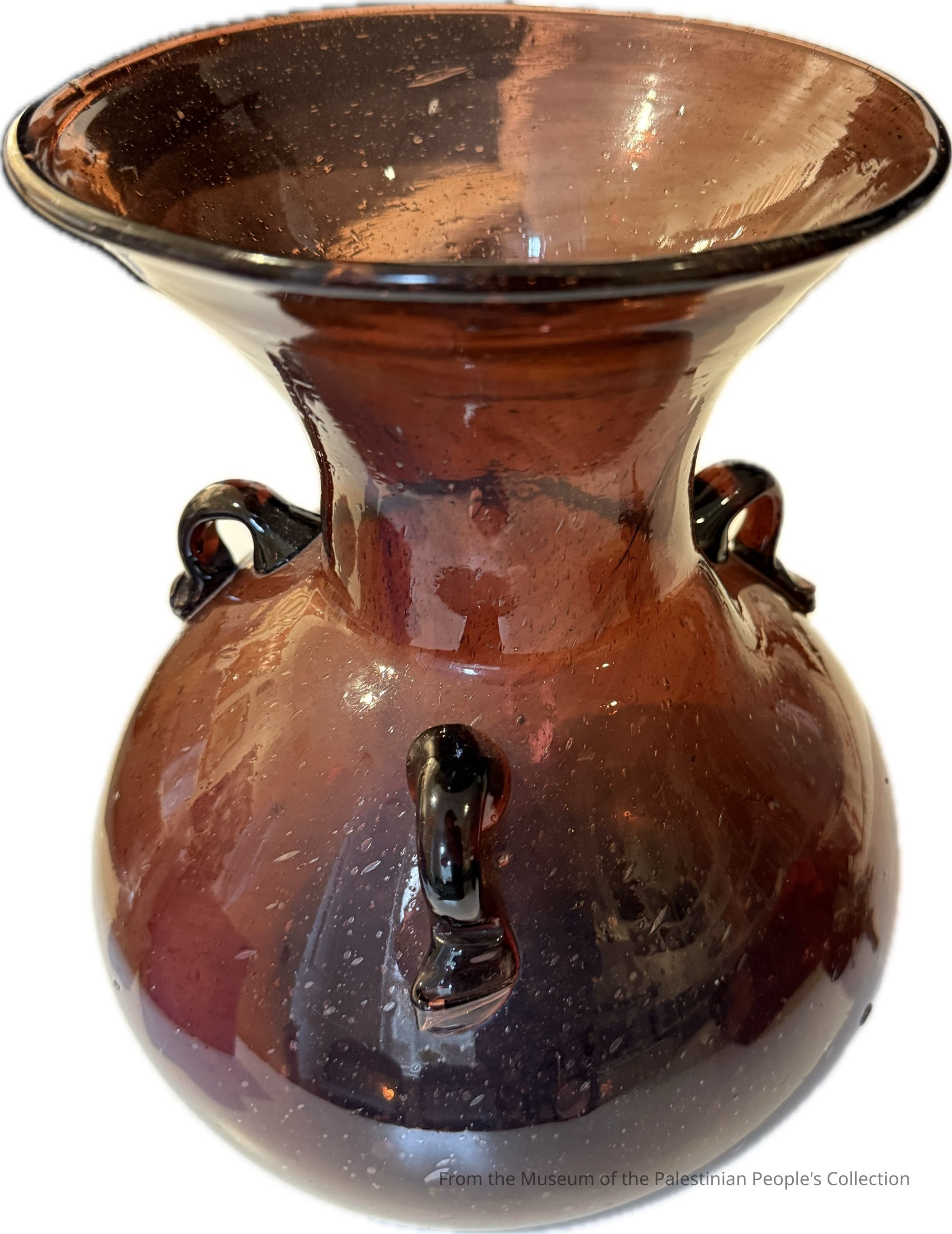
Photograph by Wafa Ghnaim
Name/Title
Glass Vessel (1960-1962)Entry/Object ID
2023.25.28Tags
Bayt wa BaladDescription
Hebron, or al-Khalil, is one of the oldest continuously inhabited towns in the world. Al-Khalil is located 30 km south of Jerusalem and is built on the highest hills of the country, surrounded by villages. In the nineteenth century, the inhabitants of al-Khalil lived primarily from agriculture and trade. Silversmiths produced silver jewelry for nomadic communities in the south, and glassblowers supplied colorful lamps, cups, and vases to tourists. Craftsmen have for centuries worked in a range of media, including glass, ceramics, leather, and fabrics. Al-Khalil has been known for its glass industry for centuries, having originally invented glassblowing as a technique in the first century CE, and continues to produce glass today. This particular glass vessel is known as a “mosque lamp,” which requires a small metal plate with oil and a cotton wick to be lowered into the bulb. The lamp is then hung by three hooks to illuminate spaces. These lamps illuminated not only mosques but also mausoleums, madrasas (schools), khanaqahs (hospices), palaces, and other prestigious buildings. They found renewed popularity during the Mamluk Empire (1250–1517 CE), often featuring calligraphic Islamic inscriptions and various colored glazes. This glass vessel was purchased at Palestine Pottery in Jerusalem, on Nablus Road across from the American Consulate. The shop was founded in 1922 and became known as Jerusalem Pottery in 1948. However, extant ephemera demonstrates that the name Palestine Pottery persisted into the Jordanian administration of East Jerusalem (1948–1967). A business card accompanying the donation reads “Palestine Pottery, Jerusalem, Jordan,” indicating that the earlier name remained in use alongside—or perhaps interchangeably with—Jerusalem Pottery well into the 1960s. Over time, the business shifted its focus primarily to ceramics, with later generations, including the celebrated artist Marie Balian, elevating its tile work into large-scale mural art. Yet the period of Palestine Pottery remains significant for its role in making Palestinian crafts accessible to American tourists, such as hand-blown vessels alongside decorated tiles, and laying the foundations for what is now one of Jerusalem’s oldest continuously operating family craft studios.Collection
Permanent CollectionCataloged By
Wafa GhnaimCategory
Ethnographic Collection