Note Type
Historical NoteNote
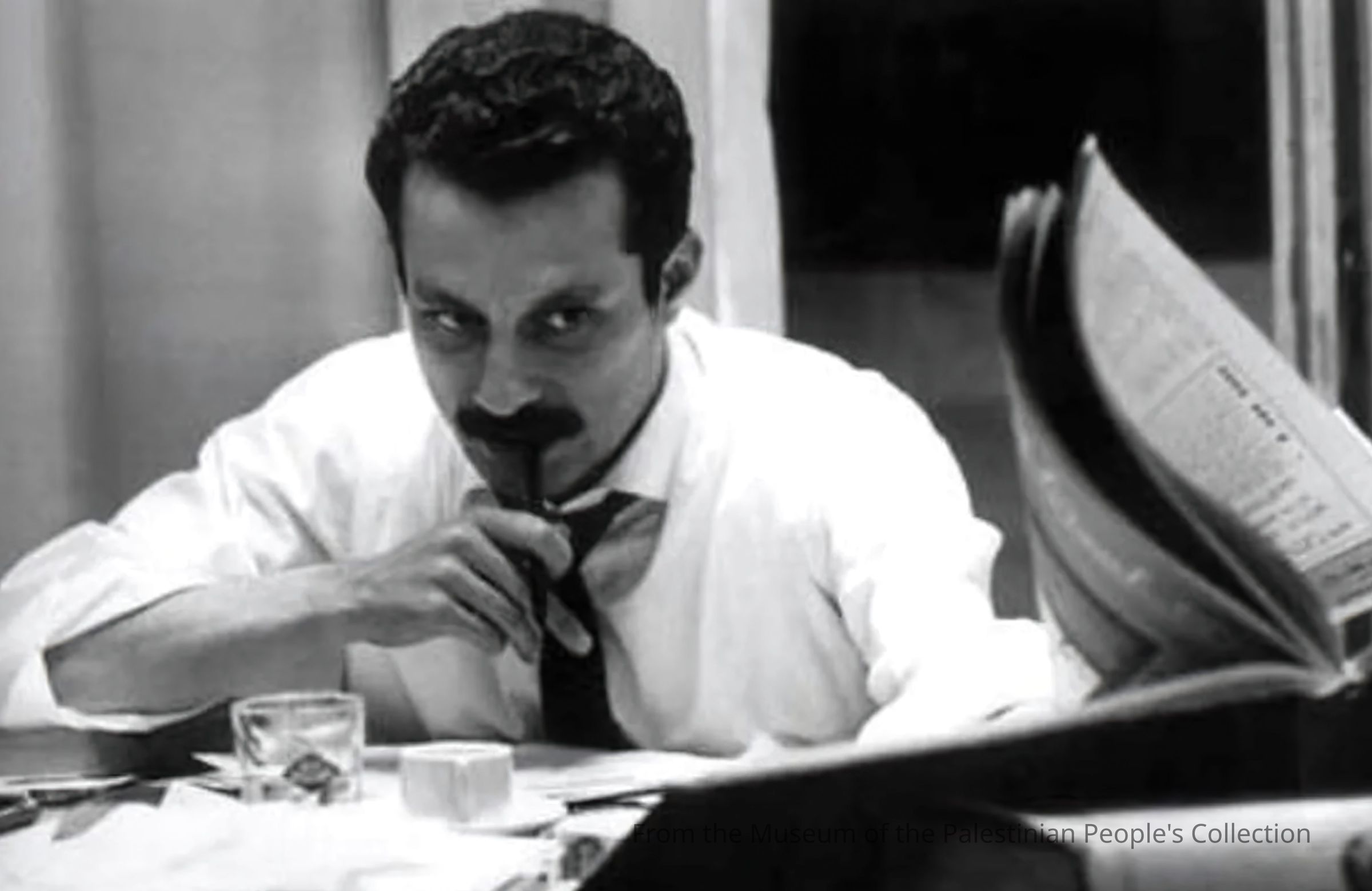
Ghassan Kanafani (1936-1972) was an influential author and prominent member of the Popular Front for the Liberation of Palestine. Born in Akka, Mandatory Palestine, he was educated at a French Catholic missionary school in Jaffa before his family was forced to flee from their home in 1948, first to Lebanon and then to Damascus, Syria. In 1952 he received an UNRWA teaching certificate, and taught the art of short storytelling to children in Palestinian refugee camps. While enrolled within the Department of Arabic Literature at the University of Damascus, he became influenced by Dr. George Habash, founder of the PFLP. After expulsion from the Department due to his involvement with the PFLP's precursor, the Arab Nationalist Movement, he moved to Kuwait in 1956 and again pursued teaching.
Kanafani is considered a pioneer of Palestinian Resistance Literature (adab al-muqawama). His fictitious works are written in straightforward style and greatly emphasize struggles of everyday Palestinian life, and have inspired an entire generation of Palestinian youth. In addition to hundreds of articles, Kanafani published eighteen books before his death - the most famous of which, Men in the Sun (1962), is widely lauded for its depiction of the Palestinian refugee experience. In July of 1972, Kanafani and his niece were assassinated by Mossad. He is remembered as one of the greatest modern Arabic authors, and his works have been translated into seventeen different languages and published in twenty countries worldwide.