Note Type
Historical NoteNote
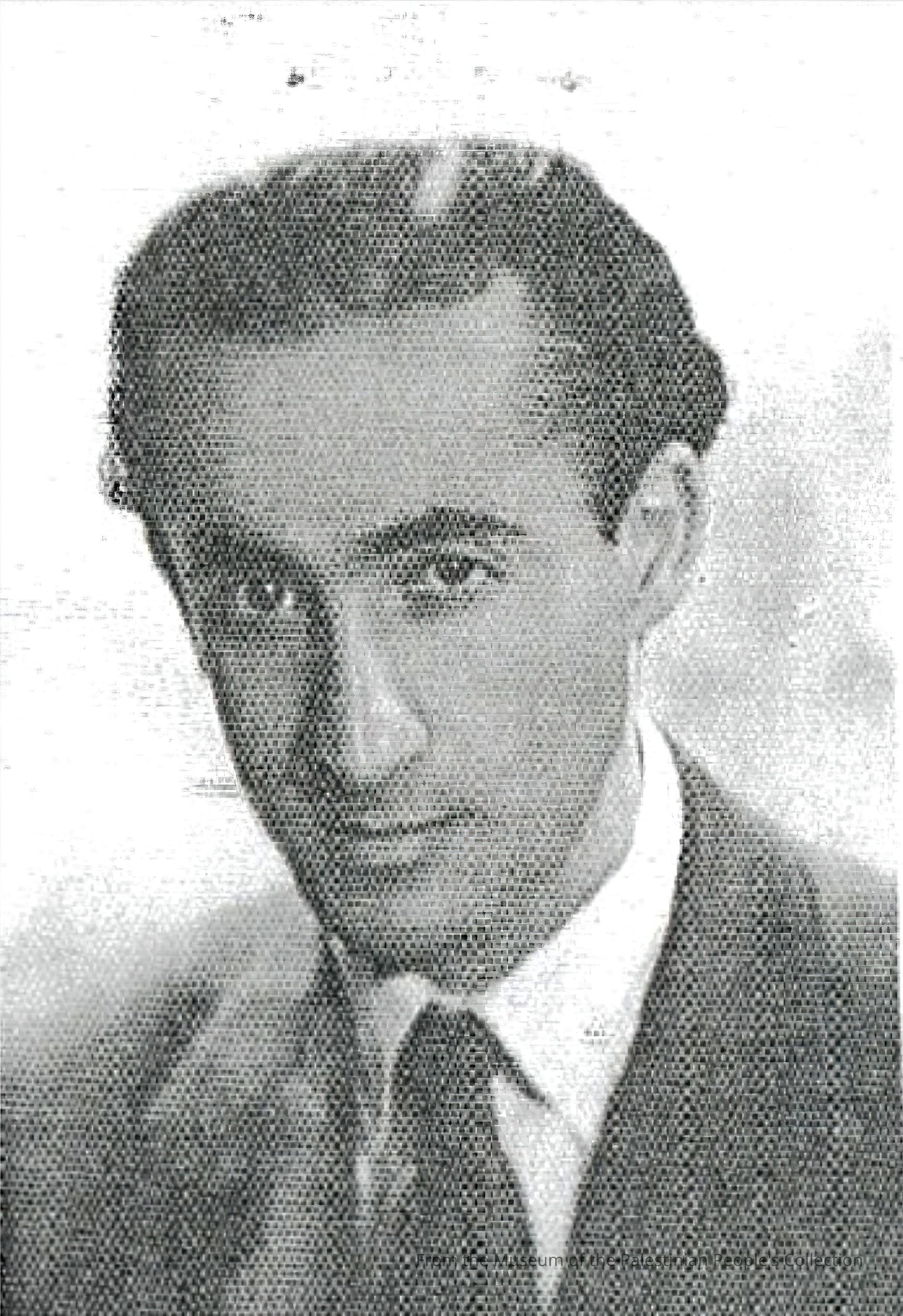
Jabra Ibrahim Jabra (1920-1994) was a Palestinian-Iraqi author, poet, art critic, artist, translator, and intellectual. He was born in Bethlehem, Mandatory Palestine, to a Syrian-Orthodox family. His family moved to Jerusalem, where he attended the Arab College. He later studied at the University of Exeter and then Cambridge, graduating in 1943 with a Bachelor of Arts in English Literature, and a Master of Arts in 1948. From 1943-1948, he taught English Literature in Jerusalem. After losing his home during the Nakba, he taught in exile in Iraq at the College of Arts of the University of Baghdad. Further, he received a Rockefeller fellowship to study literary criticism at Harvard University for two years.
He was a major contributor of the Iraqi art movement and was an active member of the Baghdad Modern Art Group. From 1954-1977, he served as the appointed head of publications at the Iraq Petroleum Company in Baghdad.
Though better known for his writings which focused on modernism and Arab society, Jabra was nonetheless a pioneering Palestinian artist, using oil paint on less commonly-used media and having opened his home in Bethlehem for anyone who wished to see his paintings. He was also a founding member of the One Dimension Group, which projected a rejection of Western art forms and embraced a fusion of individual nationalism and Arab identity. In 1977 he was appointed cultural counselor at the ministry of Culture and Information, and also served as president of the League of Iraqi Art Critics.
Over his lifetime, Jabra produced approximately sixty literary works in English and Arabic. He also translated thirty books from English into Arabic, including various Shakespeare plays. His own literary works have been translated from Arabic into English, French, Spanish, Italian, Slovac, and Serbo-Croatina.
Awards Jabra received include the targa Europa Award for Culture (1983), the Sultan Oweis Cultural Award for Literary Criticism (1989), the JErusalem Medal for Culture, Arts, and Literature (1990), the First Class Recognition Medal (1991), and the Thornton Wilder Award for Translation (1991).