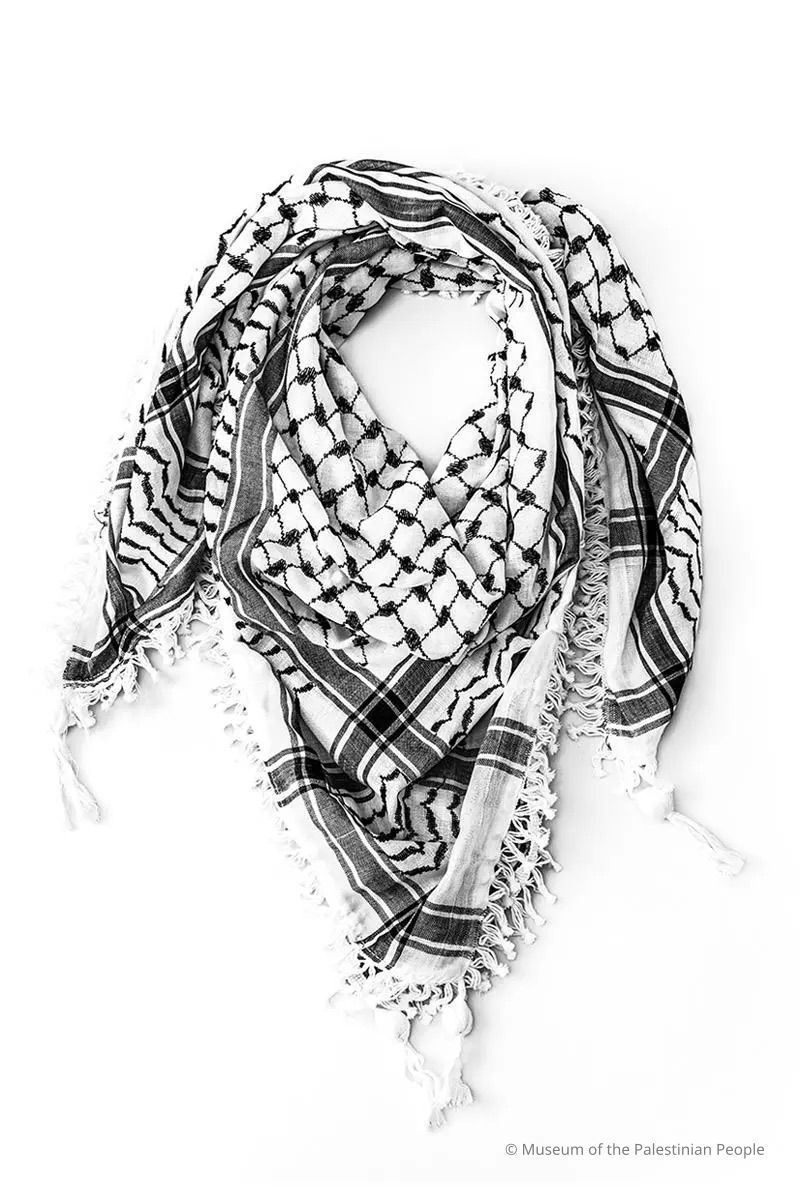
Palestinian Keffiyeh Scarf (Mid 20th Century)
Overview
Tags
On ViewDescription
Until the 1920s, the keffiyeh (traditional square, loose-weave headscarf) was primarily worn by Bedouin men in various colors. Villagers (fellahin) and townsmen wore different headdresses, such as the red tarboosh (fez) and the laffeh (wrapped headscarf). During the 1936–39 Arab Revolt against British rule, the black-and-white keffiyeh became as a unifying symbol of nationalism, worn by all Palestinian men across class and region. The scarf reemerged in the 1960s as an icon of resistance, worn by both men and women, including Yasser Arafat and Leila Khaled. Today, the Hirbawi Keffiyeh Factory is the last in Palestine, and the scarf remains a global emblem of Palestinian identity and solidarity.Cataloged By
Wafa GhnaimCategory
Ethnographic Collection