Decorated Straw Tray, Siniyyeh (1980s - 1990s)
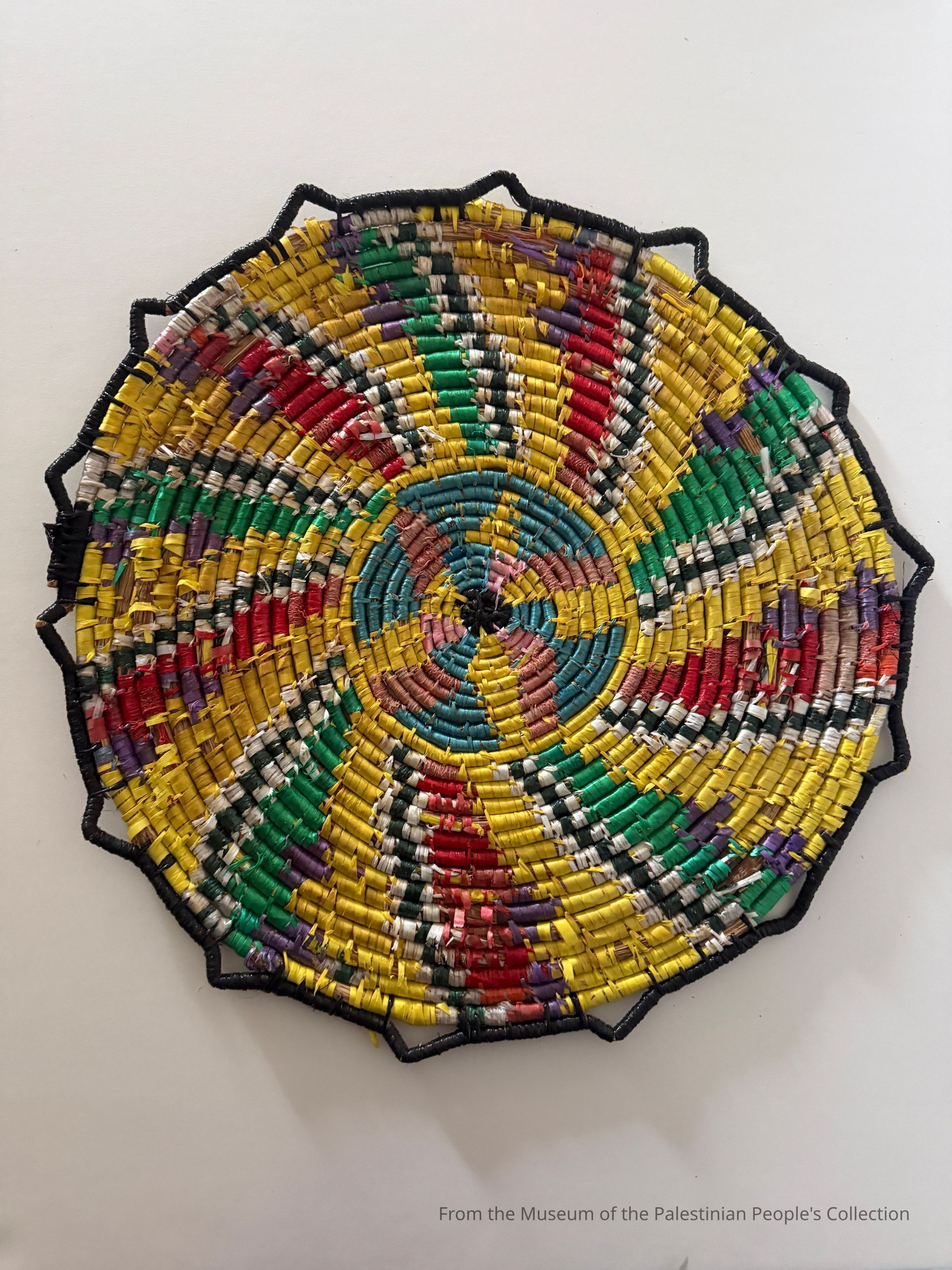
Front, Photograph by Wafa Ghnaim
Name/Title
Decorated Straw Tray, Siniyyeh (1980s - 1990s)Entry/Object ID
2023.06.002Tags
Bayt wa BaladDescription
Palestinian basketry constitutes a significant component of rural material culture, closely tied to agricultural cycles, domestic economies, and women’s artisanal knowledge. As documented by Suad Amiry and Vera Tamari in The Palestinian Village Home (British Museum, 1989), basket-making followed the wheat harvest. After threshing, women selected long, unbroken stalks and reserved them for winter production, when agricultural labor subsided. Basketry was therefore embedded within seasonal rhythms and formed part of the broader system of household self-sufficiency. The technical process required careful preparation of materials. Wheat stalks were soaked in a large copper basin (laqan) to increase flexibility and were kept damp throughout production under a humid cloth to prevent brittleness. Stems intended for decoration were dyed in red, green, purple, and orange. Production began by plaiting three straw stalks to form a central coil. Additional stalks were bound and twisted around this core to create a spiral structure. Using a pointed metal tool known as a mikhraz, makers pierced holes in the expanding spiral and inserted further stems, building the form outward in an even and controlled manner. This coiled technique allowed for the incorporation of geometric and spiral motifs. In some cases, white stems or brown porcupine quills were woven into the surface to create contrast. Basketry objects fulfilled a range of utilitarian and ceremonial functions. Round trays (tabaq) were widely used household items. Less ornate trays (minqaleh) covered dough bowls or carried bread from the tabun oven, while larger trays were placed on the floor to serve food during family meals. In wedding processions, women from the groom’s family carried decorated bridal trays (siniyyeh) containing gifts such as clothing, sugar, coffee, and money, often arranged over freshly cut flowers. Trays were also displayed as interior decoration or placed against the surface of a grain storage bin (khabiyeh). Additional forms included rounded bread containers (juneh), storage vessels for fruit and grain (qub‘ah and qadah), sometimes lined with animal hide to protect contents from humidity, and smaller containers (quteh) used for storing sewing tools, keys, and personal items. Some quteh, decorated with silk fringe (dhababih), were produced specifically for bridal accessories. The present basket, together with another example in the collection (2023.06.001 and 2023.06.002), was made by Hajja Najla Saeed in the 1980s–1990s in her home in Dhinnaba, Tulkarm. The honorific “Hajja” denotes her status as a Muslim woman who completed the pilgrimage to Mecca. According to her grandson, and the donor of the basket Haitham Khraishi, Saeed produced these baskets during a period when plant materials were more readily available in the village than today. The baskets were gifted to her daughter and subsequently inherited by the daughter’s son, Haitham. These objects therefore represent regional techniques and making practices associated with Palestinian basketry, a documented lineage of oral transmission within one family across generations.Collection
Permanent CollectionCataloged By
Wafa GhnaimCategory
Ethnographic Collection